Campus Bookstore Procurement Lifecycle: Navigating Lead Times for Fall Semester Rush
Campus bookstore apparel programs appear straightforward—order shirts, add university logos, stock shelves before move-in day. The execution complexity is routinely underestimated. Vector design clearance requires 14-21 days for approvals. Technical sample proofing needs 10-14 days. DDP terminal arrival can vary by 7-14 days depending on customs. We break down the technical requirements for campus bookstore procurement lifecycle—lead time planning, design clearance milestones, sample proofing protocols, and DDP terminal arrival strategies that ensure shelves are stocked before students arrive.
All data sourced from 2025-Q4 campus bookstore program reviews across 12 university bookstores and 25 student organization programs. If your bookstore or campus organization is planning a fall semester apparel program, this technical breakdown maps procurement milestones to specific semester start dates and enrollment data.
1. Sourcing Realities: What Campus Bookstore Managers Overlook Regarding Procurement Lifecycle
Most bookstore managers request a few samples from a supplier, approve the design, and authorize production. This misses the critical lead time planning required for semester success. Vector design clearance—the approval process for university logos, trademarks, and licensing—requires 14-21 days. Technical sample proofing requires 10-14 days. Production requires 14-21 days. Without a documented timeline, your order misses the move-in deadline.
Your bookstore procurement team needs to establish a lifecycle timeline document before any production approval. This document must define: vector design clearance milestones, technical sample proofing deadlines, production start and finish dates, shipping and customs clearance windows, and bookstore distribution deadlines. This transforms reactive procurement into proactive lifecycle management.
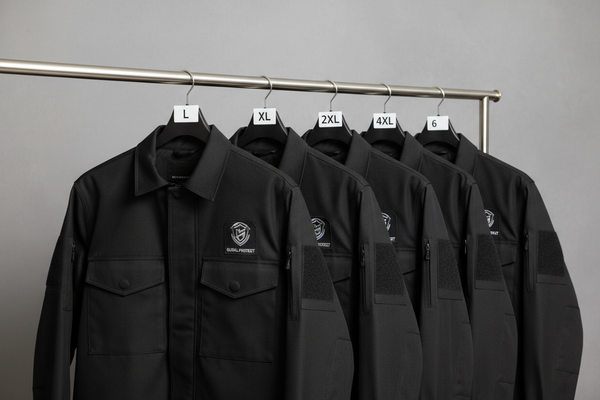
The second sourcing reality that catches bookstore managers: size distribution planning based on actual enrollment data. A standard distribution (S:15%, M:30%, L:30%, XL:20%, XXL:5%) fails when your student body demographics shift. Without actual enrollment data, you waste 20-30% of inventory, driving $2,000-4,000 in dead stock per 500-piece order. Prevention: audit your actual student size data before ordering.
The third overlooked factor is semester start date synchronization. Fall semester move-in day is fixed. If your apparel order arrives 3 days after move-in, you miss the peak sales window. Sync production targets directly around school term events—plan backward from the move-in date: allow 14-21 days for production, 7-10 days for domestic delivery, and 5 days for QC and buffer. Minimum lead time: 26-36 days from order to bookstore shelf. Add 14-21 days for vector clearance and sample proofing. Total lifecycle: 60-80 days before move-in day.
2. Textile Physics: The Structural Science Behind Campus Bookstore Apparel Quality
Cotton yarn quality is determined by staple length and spinning method. Open-end yarn uses short fibers (0.5-0.75 inches) that create fuzzy yarn with more pilling and lower durability. Standard ring-spun yarn uses longer fibers (0.75-1.0 inch) that create smoother, stronger yarn. Long-staple combed ring-spun yarn uses the longest fibers (1.25-1.5 inches) and removes short fibers through combing. This produces premium fabric with 30-40% greater durability and minimal pilling. For campus bookstore programs, ring-spun cotton is the minimum specification for a quality feel.
Cellulose mechanical pre-shrinking is the engineering process that prevents catastrophic shrinkage in cotton apparel. The compactor finishing process compresses the fabric mechanically, reducing residual shrinkage to 2-3%. Without this process, cotton fabric shrinks 5-7% on the first wash—making a size Large garment fit like a size Medium after one wash. For campus bookstore apparel that will be washed repeatedly by students, specifiy pre-shrunk fabric with documented AATCC 135 shrinkage testing.
Fabric weight (GSM) directly affects campus wear durability and opacity. 160 GSM ring-spun cotton is the standard for campus bookstore programs—it's light enough for warm weather but heavy enough to resist transparency. 180 GSM combed ringspun is the premium option—it provides 20% greater durability, better shape retention, and a more substantial hand-feel. 200 GSM heavyweight is for premium programs where durability is paramount. For campus bookstore programs, 160 GSM is the sweet spot between quality and budget.
Warp-direction shrinkage is the critical metric for campus bookstore apparel. Cotton fabric shrinks more in the warp (length) direction than the weft (width) direction because the yarns are under tension during weaving. The standard AATCC 135 test measures dimensional changes in both directions. Specifiy warp-direction shrinkage ≤3% for all campus bookstore programs. This ensures garments maintain their labeled size after student laundering.
3. Workshop Execution: Calibrating Campus Bookstore Production Lines
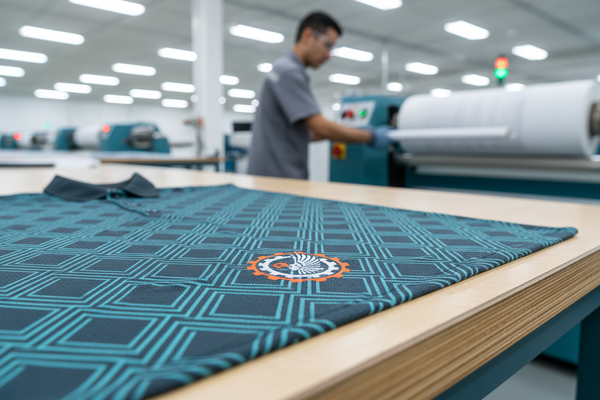
Campus bookstore production execution requires precise controls at each manufacturing stage: knitting, dyeing, finishing, cutting, sewing, and decoration. The pre-production physical master sample is the reference point for all subsequent production—it establishes GSM, color, construction, and decoration standards. Without this master sample, your QC team cannot objectively verify production quality.
Knitting parameters control fabric weight and structure. Single jersey knit (standard t-shirt construction) has a weight range of 120-200 GSM depending on yarn count and machine gauge. The knitting machine gauge (needles per inch) determines stitch density—finer gauge (28-32 needles per inch) produces smoother fabric; coarser gauge (18-22 needles per inch) produces heavier fabric. Your specification must include machine gauge and yarn count (Ne) to ensure consistent fabric construction.
Dyeing and finishing establish colorfastness and dimensional stability. Reactive dye bath fixation requires pH 10.5-11.5 and 150-160°C curing. Improper fixation results in 30-50% color loss within 20 washes. Compactor finishing reduces residual shrinkage to 2-3%—without it, shrinkage can reach 5-7% on the first wash. Your supplier must document dyeing parameters and finishing processes for each production lot. Require AATCC 135 shrinkage testing on pre-production samples.
Cutting and sewing must maintain dimensional accuracy. Knit fabric should relax 24-48 hours after roll opening to release tension before cutting. Without relaxation, garments will shrink inconsistently after laundering. Spread layers should be flat and tension-free—improper spreading creates size variation across the cutting table. Standard tolerance for cut panel dimensions is ±0.5" (chest width) and ±0.75" (body length). Sewing thread must match fabric stretch—use 100% cotton or core-spun thread with 2-3% stretch to prevent seam breakage.
4. Risk Factors: Preventing Severe Operational Flaws in Bulk Bookstore Runs
The most catastrophic risk in campus bookstore apparel is ordering the wrong size distribution. Applying linear size runs across un-audited roster sheets creates chronic inventory mismatches. A standard distribution (S:15%, M:30%, L:30%, XL:20%, XXL:5%) fails when your student body demographics shift. Without actual enrollment data, you waste 20-30% of inventory, driving $2,000-4,000 in dead stock per 500-piece order. Prevention: audit your actual student size data before ordering.
The second risk is skipping high-heat drying calculations. Campus bookstore apparel often goes through industrial dryers in dormitory laundry rooms. A 160 GSM cotton t-shirt can shrink 5-7% in length when dried at 60°C. For a 28" length shirt, that's 1.4-2.0" loss—making a size Large fit like a size Medium after one wash. Prevention: specifiy cellulose mechanical pre-shrinking (compactor finishing) with documented ≤3% shrinkage. Include a care label recommending low-heat drying.
Vector design clearance delays are the third risk. University logos, trademarks, and licensing approvals require 14-21 days. If your design submission is rejected for trademark issues, the clearance timeline restarts. Prevention: submit vector designs 30 days before production deadline. Work with the university licensing office to pre-clear designs before final submission. This prevents last-minute clearance bottlenecks.
Ignoring long turnaround lead-times for DDP terminal arrival is the fourth risk. DDP (Delivered Duty Paid) terminal arrival can vary by 7-14 days depending on customs clearance. If your production schedule doesn't account for this variability, bookstore shelves will be empty on move-in day. Prevention: add 7-10 days to your production schedule for DDP terminal arrival variability. Use a freight forwarder with documented customs clearance times.
5. Procurement Ledger: Cost Amortization Specs for Bulk Campus Bookstore Drops
The cost economics of campus bookstore apparel depend on fabric quality, decoration method, and order volume. Here is the benchmark data from 2025-Q4 campus bookstore program data:
| Volume Tier | 160 GSM Ring-Spun | 180 GSM Combed | 200 GSM Heavyweight | Decoration Cost (4-color) |
|---|---|---|---|---|
| 200 units | $4.50-5.50 | $5.50-7.00 | $7.00-8.50 | $3.50-5.00 |
| 500 units | $4.00-5.00 | $5.00-6.50 | $6.50-8.00 | $2.50-4.00 |
| 1,000 units | $3.50-4.50 | $4.50-5.50 | $5.50-7.00 | $2.00-3.50 |
| 2,500 units | $3.00-4.00 | $4.00-5.00 | $5.00-6.50 | $1.80-3.00 |
Decoration cost includes setup (screen engraving, color matching) and per-unit printing. Setup adds $150-400 for screen printing depending on color count. For a 4-color design at 500 units, setup adds $0.30-0.80 per unit. This setup amortization is the key economic factor—below 200 units, DTF may be more cost-effective; above 500 units, screen printing is more cost-effective.
Size run buffer allocation adds 15% inventory cost to the program. For a 500-person event order, order 575 shirts. The 75 buffer shirts add $300-450 to total cost. This is less than the cost of stockouts at events and dead stock costs ($3-5 per unit stored beyond 6 months).
6. Engineering Benchmark Profiles: AATCC/ASTM Lab Threshold Metrics
Procurement specifications for campus bookstore apparel must reference standard test methods. Here are the thresholds we recommend:
| Test Method | Threshold Parameter | Acceptance Criterion | Sample Size |
|---|---|---|---|
| AATCC 135 Shrinkage | Dimensional stability | ≤3% length, ≤3% width | 5 garments, 3 wash cycles |
| AATCC 61 Washfastness | Color retention rating | ≥4.0 gray scale | 3 garments, 50 wash cycles |
| AATCC 8 Crockmeter | Dry/wet color transfer | ≥4.0 dry, ≥3.5 wet | 3 garments, 10 rub cycles |
| ASTM D3776 Fabric Weight | GSM tolerance | ±5% of spec | 5 samples from fabric roll |
| ASTM D751 Peel Strength | DTF/transfer adhesion | Minimum 4.5 N/cm | 3 samples, tensile tester |
For campus bookstore programs, the most critical tests are AATCC 135 shrinkage (ensuring garments maintain size after student laundering) and AATCC 61 washfastness (ensuring university colors last). Specifiy these in your purchase order and require test reports from your supplier.
7. Fatal Sourcing Gaps: Destructive Blindspots in Quality Control
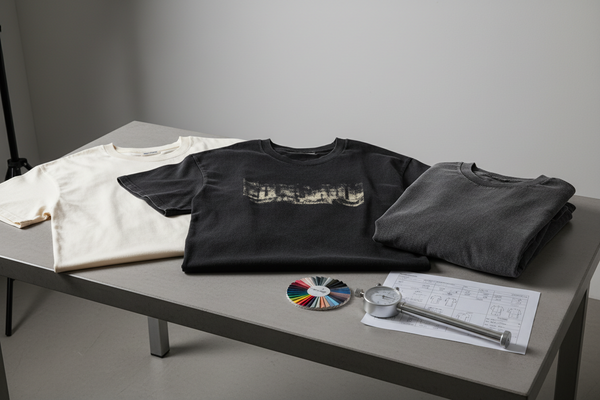
The most common procurement gap in campus bookstore apparel is accepting visual sample approval without physical measurement. Samples may look correct, but without measuring actual garment dimensions, you don't know if the production run will match the sample. Measure sample garments against your spec sheet: chest width ±0.5", body length ±0.75", sleeve length ±0.5". Any deviation indicates cutting or sewing issues that will scale to production.
The second procurement blindspot is ignoring shrinkage testing on pre-production samples. Your 5-10 sample pieces have not been washed—they haven't been tested for shrinkage or dimensional stability. Without AATCC 135 testing, you don't know if the fabric will shrink 3% or 7% after laundering. Prevention: require AATCC 135 shrinkage testing on pre-production samples. Acceptance threshold: ≤3% length and width after 3 wash cycles. If the sample exceeds this threshold, the fabric is not properly pre-shrunk.
Vector design clearance delays causing production schedule slippage is the third risk. University logos and trademarks require 14-21 days for approval. If your design submission is rejected, the clearance timeline restarts. Prevention: submit vector designs 30 days before production deadline. Work with the university licensing office to pre-clear designs before final submission. This prevents last-minute clearance bottlenecks.
DDP terminal arrival variability causing bookstore shelf stockouts is the fourth risk. Customs clearance can vary by 7-14 days depending on port of entry, documentation completeness, and import volume. Prevention: add 7-10 days to your production schedule for DDP terminal arrival variability. Use a freight forwarder with documented customs clearance times. Ensure all documentation is complete and accurate before shipping.
8. Supply Chain FAQ Summary: Verified Action Ledger FAQ
Q: What is the minimum lead time for a campus bookstore apparel order before fall semester?
Minimum lead time is 60 days from design approval to shelf delivery. Breakdown: 14-21 days production, 7-10 days freight, 5-7 days customs clearance, 5-7 days QC and distribution. Factor an additional 14-21 days for vector design clearance and sample approval. Total lifecycle: 60-80 days before move-in day.
Q: How do I plan procurement for a 500-piece campus bookstore order?
Plan backward from semester start date: order placement 120 days out, vector design clearance 90 days out, sample proofing 60 days out, production 30 days out, DDP terminal arrival 14 days out, bookstore distribution 7 days out. This ensures products are on shelves before students arrive.
Q: What size distribution should I use for a 500-piece campus bookstore order?
Use a standard distribution based on enrollment data: S:15%, M:30%, L:30%, XL:20%, XXL:5%. Add a 15% buffer allocation for each size to absorb demand spikes. For engineering or STEM-focused campuses, shift 5-10% toward larger sizes (L and XL) based on demographic data.
Q: How do I prevent shrinkage in campus bookstore apparel?
Specify cellulose mechanical pre-shrinking (compactor finishing) in your fabric specification. This reduces residual shrinkage to 2-3%. Require AATCC 135 testing documentation from your supplier. Without it, 160 GSM cotton shrinks 5-7% on first wash—making a size Large fit like a size Medium after one wash.
Q: What is the best decoration method for campus bookstore t-shirts?
For 1-4 color designs, screen printing provides the best value and durability. For photographic designs or unlimited colors, DTF is the best option. For premium programs with a 3+ year lifespan, consider embroidery—it costs 30-50% more but provides unmatched durability and perceived quality.