Balancing Raw Material Lead Time and Print Standardization for Managers
1. Sourcing Realities: What Procurement Managers Overlook Regarding Organic Cotton Traceability Metrics
When launching a high-volume corporate onboarding swag drop or configuring multi-item welcome portfolios for global technology networks, corporate supply channels routinely fail along a hidden operational fault line. Procurement managers and corporate buyers commonly approach sustainable apparel sourcing with retail-biased assumptions, mistaking a paper certification for a verified, structurally sound supply chain. The standard enterprise workflow involves requesting a digital PDF copy of a Global Organic Textile Standard (GOTS) or Organic Content Standard (OCS) certificate, uploading a vector logo file into an uncalibrated design canvas, and clearing an immediate advance wire transfer based on simple catalog mockups. This transactional approach introduces critical compliance and structural vulnerabilities into your inventory deployment. A standard certificate merely proves that a volume of raw organic fiber entered a processing mill at some point; it does not guarantee that the specific textile panels running through high-velocity customization lines maintain structural integrity, color fastness, or molecular yarn uniformity. When these unverified product lots are deployed into real-world corporate environments, they frequently suffer from rapid aesthetic and physical breakdown, leading to immediate asset depreciation and forcing enterprise teams to absorb premature replacement costs.
To insulate corporate capital from these hidden supply chain failures, procurement directors must abandon passive document collection and establish a rigorous verification framework centered on an On-Site Technical Facility Floor Audit. Relying on paper documents without physically inspecting yarn spinning, circular knitting, and finishing facilities allows low-tier manufacturers to blend organic yarn lots with cheap, short-staple open-end carded carded cotton to clear manufacturing backlogs. This fiber adulteration directly undermines the material performance of the finished fabric, manifesting post-wash as severe fabric torquing, surface pilling, and immediate seam shear failure. Enterprise operations must mandate independent verification at every transformation hub along the supply line—from raw bale tracking to the final assembly floor. By establishing strict contractual control gates that restrict fund releases until third-party field agents verify facility capacities, machine settings, and batch identification numbers, corporate procurement teams achieve real Down-Payment Financial Risk Containment, ensuring that what is delivered matches corporate environmental and physical durability mandates.
2. Textile Physics: The Structural Science Behind Raw Material Lead Time
Evaluating the operational timeline of sustainable apparel sourcing requires an objective analysis of the physical and agricultural constraints that dictate organic cotton fiber preparation. Unlike synthetic polymers or conventional cotton lots treated with stabilizing chemical agents, unadulterated organic cotton matrices are highly volatile raw materials. The absence of harsh chemical defoliants during harvesting leaves a higher volume of natural organic debris embedded within the raw cotton lint, requiring intensive multi-stage mechanical cleaning and combing procedures. When an enterprise program specifies long-staple combed ring-spun cotton fabric shells to secure a premium hand-feel for corporate employee gift lines, these intensive fiber alignment and purification steps add significant processing hours to the early manufacturing stages. This initial fiber preparation represents the foundational driver behind prolonged Raw Material Lead Time, establishing a production schedule that cannot be bypassed through simple factory speed adjustments without risking severe yarn defects.
The structural behavior of these organic yarn strands under mechanical load is measured tightly using a localized Linear Matrix Shrinkage Scale. During the high-speed circular knitting process, raw cotton loops are subjected to continuous mechanical tension from industrial needles, stretching the native cellulose polymer networks along their vertical axes. If the finished fabric rolls are routed directly from the knitting floor to the cutting and print lines without undergoing extensive thermal and moisture relaxation treatments, the material retains a high level of internal structural stress. When the finished custom shirts or hoodies are subjected to standard high-heat laundering cycles inside commercial corporate maintenance systems, moisture acts as a chemical plasticizer, instantly breaking the unstable hydrogen bonds within the stretched cellulose chains. This molecular collapse forces the unaged loop rows to contract abruptly, creating a visible dimensional failure tracked under strict global testing codes as a breach of AATCC Laundering Shrinkage Standards, which warps applied chest graphics and distorts the garment's fit profile.
To secure a reliable Shrinkage Tolerance that complies with strict enterprise procurement parameters, finishing mills must subject the knitted fabric rolls to advanced, non-chemical mechanical compaction processes. The material must pass through an industrial sanforization line where synchronized steam injection boxes, heated steel cylinders, and thick rubber compression blankets apply controlled moisture and compressive force simultaneously. This mechanical intervention pre-collapses the elongated cellulose loop matrix within a highly secure manufacturing environment, forcing the vertical warp and horizontal weft yarn tracks to reach a state of physical equilibrium before automated cutting blades touch the panel fabric. By auditing these processing metrics at the mill level, quality control teams ensure that the finished workwear lots maintain shape, dimensional stability, and seam True-Line geometry through long-term commercial wash configurations.
3. Workshop Execution: Calibrating Embroidery / Print Standardization Output Lines
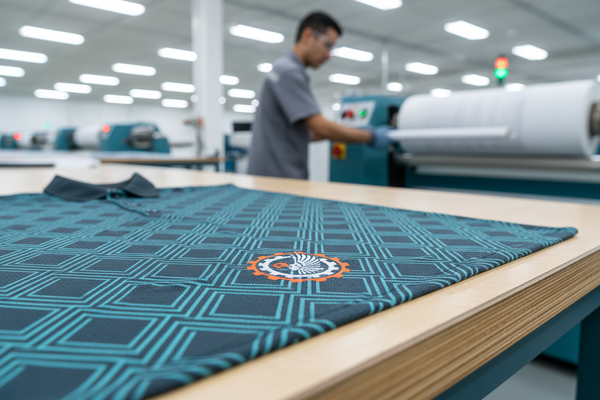
Transforming certified, pre-stabilized organic cotton fabric blocks into an authoritative corporate uniform lot requires precise calibration adjustments across the automated customization workshop floor. The production sequence begins at the high-speed automated cutting lines, where digital multi-ply vacuum knife arrays cut through stacked layers of fabric. If the textile sheets have not achieved full moisture equilibrium following the sanforization phase, the panels will warp slightly as they release from the cutting stack, introducing immediate dimensional errors before decoration begins. Technical directors must ensure that the orientation of the knit loop grain sits perfectly parallel to the main cutting axes, preventing torso panels from twisting or skewing after final assembly sewing.
When design parameters call for corporate identity systems to be executed via high-density direct embroidery, machine settings must be adjusted carefully to protect the organic cotton substrate. Forcing a multi-head industrial embroidery system to run high-speed, dense satin stitch patterns onto a premium knit shell without adjusting needle profiles causes immediate structural damage. The high-velocity impact of thick embroidery needles can easily slice through organic cellulose yarn loops, creating structural micro-tears that transform into visible holes after initial washing cycles. To achieve reliable protection against material damage, the factory floor must use multi-directional non-woven backing stabilizers to absorb needle downforce, while design digitizers must implement vector pull-compensation adjustments within the master code to balance thread-pull tension across active flex zones.
For large graphic fields requiring high-saturation color application, workshop routing transitions to automated screen printing carousels executing strict Embroidery / Print Standardization protocols. This configuration drives specialized water-based or high-solid polyurethane inks through highly taut screen meshes, depositing crisp, uniform ink films onto the organic cotton face. The decorated panels then pass immediately into gas-fired industrial curing tunnels, where technical teams must deploy continuous temperature data loggers to verify that the core ink film hits exact polymerization marks across its entire depth. This thermal exposure triggers an immediate cross-linking reaction within the print polymers, chemically bonding the design to the cotton fibers to prevent color bleeding or cracking under heavy wear. Quality control managers enforce strict QC inspection protocols at the oven gateway, using cross-hatch tape-peel tests and wet-friction crocking runs to verify full polymerization before releasing the batch for final retail packaging.
4. Risk Factors: Preventing Severe Operational Flaws in Bulk Runs
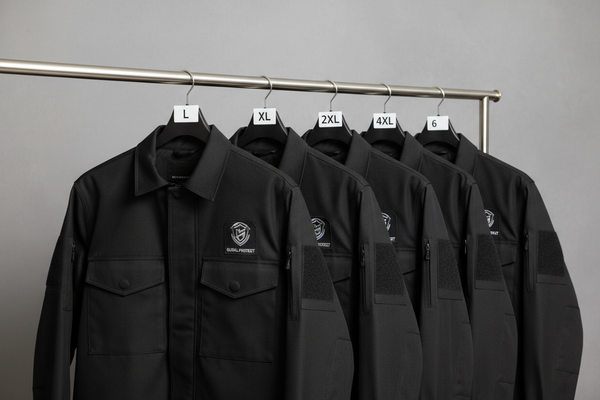
Deploying volume apparel allocations across decentralized global enterprise networks exposes corporate capital to severe operational and material failure risks if supply chains lack built-in redundancy. Sourcing managers frequently fall into the trap of using generalized size charts from retail clothing lines, ordering a basic linear distribution of Small, Medium, Large, and Extra-Large units for their employee cohort. This rigid planning method ignores the statistical reality of real corporate demographics, which follow a shifting binomial curve that clusters tightly around core mid-range dimensions. Applying an un-audited linear purchase order to a real employee directory causes immediate inventory imbalances—the core medium and large stocks sell out instantly, creating unexpected shortages, while a massive surplus of extreme edge sizes sits on warehouse shelves as depreciating dead stock assets. Sourcing directors must implement smart statistical filters on group order portals to align inbound production splits with documented user dimensions, preventing wasted capital on items that will never be worn.
A more critical operational risk involves relying on a single, isolated manufacturing facility to handle massive custom apparel rollouts under tight corporate deadlines. If a primary production facility encounters mechanical breakdowns, regional power grid failures, or strict local environmental regulatory shutdowns, a single-source supply chain faces immediate disruption, threatening key product launch timelines. To insulate corporate investments from these terminal delivery failures, advanced procurement frameworks incorporate a pre-arranged protocol for Redundant Manufacturing Toll Re-Routing. This operational safeguard requires pre-vetting secondary manufacturing hubs that utilize matching machine profiles, identical print mesh setups, and calibrated ink lines. If a primary facility drops below predefined volume efficiency thresholds, active pattern templates and digital decoration assets are immediately transferred to the secondary facility. This redundancy protocol ensures continuous volume output and protects target delivery windows without forcing corporate buyers to pay premium air freight rush surcharges.
Furthermore, sustainable textile materials exhibit high sensitivity to ambient humidity and atmospheric contaminants during prolonged storage inside regional maritime shipping containers. If a volume shipment of organic cotton shirts is packed into standard single-wall corrugated boxes without protective inner moisture barriers, the raw cellulose fibers will absorb environmental moisture during long ocean transit legs. This moisture absorption triggers localized bacterial decay, mold pilling, and severe fiber weakening along folded edges, resulting in high rejection rates at the receiving dock. Quality control teams must mitigate this risk by enforcing strict export packaging standards, requiring that all bulk apparel lots be sealed inside high-density polyethylene polybags equipped with active desiccant packs before container loading. To view detailed compliance checklists that protect transit containers from environmental degradation, analyze our operational overview guides at /blog/related-article-slug.
5. Procurement Ledger: Cost Amortization Specs for Bulk Raw Material Lead Time Drops
Developing an efficient enterprise apparel budget requires deep insight into the complex factory cost allocations that dictate wholesale pricing models. Sourcing premium long-staple organic cotton blanks treated with verified mechanical pre-shrinking treatments requires a higher initial material investment compared to buying cheap open-end carded items. However, an analysis of the total operational life cycle proves that this upfront investment pays off by completely eliminating post-production defect penalties and customer return costs. When you calculate the true cost of specialized technical apparel lines, the financial formulas depend entirely on color separation steps, screen tooling fees, and embroidery digitization paths. For limited capsule runs, these fixed setup expenses add significant costs to every unit produced. By scaling up order volumes within your core mid-sizes, you amortize these setup fees across a larger pool of units, driving down individual production costs.
Furthermore, procurement directors must build explicit financial safety buffers into their logistics planning models to handle the realities of cross-border transport. Air cargo lanes provide fast transport for time-sensitive corporate rollouts, but they expose your project margins to volatile fuel price changes and sudden seasonal freight spikes. Shifting your core ordering schedules to ocean or intermodal ground lanes dramatically lowers your shipping costs per unit. This strategy requires establishing clean manufacturing timelines that account for container tracking buffers, customs clearance holds, and local hub delivery steps. Navigating these parameters smoothly requires a reliable field roadmap to evaluate shipments before they clear your receiving point. Contract terms must clearly define delivery targets, establishing clear financial penalties for unexpected delays that compromise critical institutional event calendars.
6. Engineering Benchmark Profiles: AATCC/ASTM Lab Threshold Metrics
To establish reliable quality control parameters on the factory floor, procurement managers must require independent laboratory validation data that measures physical fabric performance against recognized international standards. Sourcing teams should never rely on vague supplier promises regarding durability. Instead, require formal testing verification conducted under standardized ASTM and AATCC testing methods. The table below outlines the clear engineering performance differences between premium pre-stabilized organic cotton fabric shells and entry-level carded open-end custom blanks:
| Engineering Performance Metric | Standard Test Method | Premium Pre-Stabilized Organic Cotton | Entry-Level Open-End Carded Cotton Blank |
|---|---|---|---|
| Warp-Direction Shrinkage Max Limit | AATCC Test Method 135 | < 1.5% Contract Tolerances | > 5.5% Contraction Structural Deformation |
| Surface Pilling Resistance Grade | ASTM D3512 Random Tumble | Grade 4.5 Clean Surface Profile | Grade 2.0 Heavy Fuzz Fabric Degradation |
| Tensile Bursting Strength Rating | ASTM D3786 Diaphragm Burst | > 380 kPa High Structural Integrity | < 180 kPa Structural Stitch Line Tear Risk |
| Colorfastness Rating Under Laundering | AATCC Test Method 61 Color Change | Grade 4.5 Exceptional Vat Dye Lock | Grade 3.0 Bleeding Under High-Heat Wash |
Analyzing these technical benchmarks proves that accepting unvetted commodity fabric blanks introduces severe structural risks to your inventory rollout. A warp-direction loop contraction rate exceeding 5.5% guarantees that after initial institutional cleaning cycles, your carefully positioned custom designs will deform completely, causing twisted side seams and an unprofessional appearance. Enforcing premium organic ring-spun specifications secures high tensile bursting ratings exceeding 380 kPa, ensuring that the yarn walls easily withstand high-density embroidery thread stress. All procurement documentation must state these quantitative performance boundaries as mandatory baselines for factory line acceptance. Lots that fall below these values should face automatic rejection under a strict Acceptable Quality Limit (AQL) Threshold of 1.0% to protect corporate capital from low-tier factory output.
7. Fatal Sourcing Gaps: Destructive Blindspots in Quality Control
One of the most dangerous blindspots in large-scale corporate procurement is validating the optical compliance of an inbound apparel shipment entirely through digital PDF proof sheets or uncalibrated photos sent via smartphone from the vendor floor. Digital monitors display color fields using trans-illuminated RGB pixel arrays, which vary wildly depending on device settings and ambient lighting. Physical textile inks, on the other hand, reflect light using solid pigments bound to raw organic cotton threads. When you approve a high-volume production run based solely on a digital image, you risk serious color variations across your delivery lots. A shade that appears as a warm, rich corporate charcoal on a laptop screen can easily turn out as a cold, flat off-green when stamped onto physical cotton fibers. Experienced sourcing agents eliminate this risk by requiring a strict Spectrographic Lab Color Validation protocol, using calibrated spectrophotometers to verify that physical lab dips match precise target parameters within a strict Delta-E spectrum range before greenlighting mass production.
A secondary operational gap involves failing to include an integrated logistics safety cushion within your regional delivery timelines, a concept tracked inside enterprise supply networks as a critical timeframe buffer. Procurement managers frequently build scheduling calendars that assume perfect shipping performance, mapping factory output completion dates directly to workforce deployment rollouts. This approach leaves zero room for common transport disruptions like port congestion, customs inspections, and cross-dock delays. When a shipping route experiences an unexpected hold, the lack of a timeline buffer forces enterprise teams to choose between delaying vehicle deployments or paying extreme air freight premiums to rush replacement merchandise forward. Sourcing directors must build a mandatory 15% logistics cushion into all overseas production schedules to protect corporate launch dates from volatile international freight networks, completely isolating the program from terminal cross-docking friction loops.
8. Supply Chain FAQ Summary: Verified Action Ledger FAQ
Why do unverified organic cotton garments experience high fabric twisting and severe warp-direction contraction after industrial laundering?
The structural breakdown of raw organic cotton is directly linked to its microscopic polymer layout and the mechanical stresses applied during knitting operations. Industrial knitting needles pull natural cellulose yarns under continuous tension, forcing the fiber loops into an elongated, high-stress state. When these items are subjected to high-heat drying cycles inside commercial laundry systems, moisture releases those built-in mechanical stresses. Without a professional mechanical stabilization treatment at the finishing mill to pre-collapse the yarn rows, the vertical warp yarns contract drastically while the horizontal weft yarns stay stable, twisting the side seams out of true alignment and destroying the garment's fit.
What are the primary technical trade-offs when selecting between direct embroidery decoration and water-based print standardization lines on fine knit panels?
Direct embroidery provides an exceptional, high-end look for corporate identity branding but inserts thousands of high-tension thread stitches that can pierce yarn loops and cause material puckering on lightweight knit panels. Implementing water-based print standardization lines removes these needle-penetration risks, utilizing advanced liquid pigments that sink directly into the combed cotton fibers to preserve the fabric's natural drape and elasticity. However, water-based printing demands complex multi-stage screen calibrations and precise thermal tunnel curing to cross-link the print polymers completely, whereas embroidery requires smaller physical tooling setup lines for immediate batch changes.
How can corporate supply chain directors mitigate single-source factory shutdown risks during large-scale workforce apparel rollouts?
Enterprise procurement programs must eliminate single-source vulnerabilities by integrating a contractually locked protocol for redundant manufacturing toll re-routing into their initial supply agreements. This safeguard requires pre-vetting secondary production facilities that deploy matching machine configurations, identical screen printing carousels, and standardized ink calibration profiles. If the primary manufacturing facility encounters structural disruptions, labor blockades, or local grid failures, all active pattern dimensions and digital decoration files are immediately rerouted to the secondary facility, ensuring continuous volume output without risking target delivery deadlines.
What quantitative gate-keeping protocols should quality control teams execute at the arrival loading dock to verify volume shipment compliance?
Your technical team must run a strict triple-point gate inspection protocol on a random selection of inbound cartons before signing regional carrier release logs. First, extract precision swatches from five random blanks per lot to calculate fabric mass on a digital scale, verifying the delivery perfectly matches contract GSM specifications. Second, apply heavy multi-axis manual shear stress across all customized embroidery borders to verify that the backing stabilizers remain completely intact. Finally, run a wet-crocking white cloth rub test across high-saturation printed boundaries to confirm full polymerization inside the factory drying tunnels, rejecting any lot that triggers pigment migration.