Sourcing Municipal Agency Infrastructure Procurement Uniform Tenders via Direct Factory DDP
Fiscal Oversight Architecture
This operational guide outlines the exact fiscal metrics and regulatory compliance structures required for municipal agency infrastructure procurement. By replacing middleman broker networks with direct-to-factory contract manufacturing and closed-loop DDP shipping protocols, institutional buyers can ensure fixed-cost budgeting trajectories across multi-year asset lifecycles.
The Hidden Mathematics of Intermediary Broker Markups
Public sector apparel sourcing represents a continuous balancing act between rigid regulatory compliance and long-term fiscal responsibility. For many administrative committees overseeing municipal agency infrastructure procurement, standard procedure dictates releasing public uniform tenders to regional distributors or clothing brokers. While this appears to simplify local procurement paths, it introduces a massive layer of financial inefficiency that quietly drains municipal budgets.
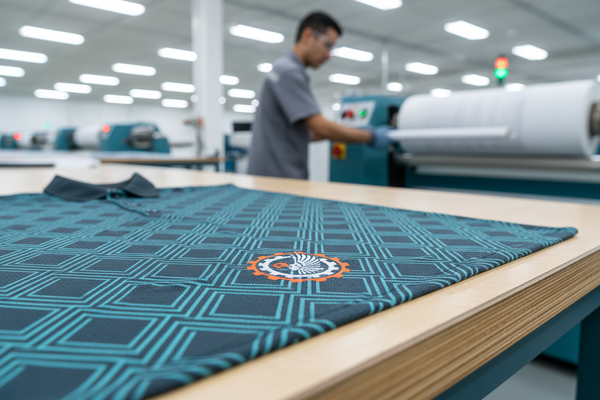
Intermediary brokers operate on high-overhead distribution models. They do not own production spindles, automated cutting tables, or multi-head embroidery tracks. Instead, they act as contract drop-shippers, sourcing standard inventory from overseas mills and applying substantial financial margins before passing the finished lot to city agencies. These markups frequently range from 25% to 45% of the base manufacturing invoice, artificially inflating corporate fleet uniforms costs without adding an iota of technical enhancement or structural reinforcement to the textile matrix.
By bypassing these transactional agents and moving directly to a contract manufacturing framework, public purchasing agents can recapture these lost operational dollars. Direct-to-factory sourcing routes allow city accountants to review raw material costs, actual needle sewing labor metrics, and flat logistics variables. This clarity ensures that tax dollars go directly toward higher-spec fiber composites and dual-needle construction parameters rather than supporting distributor administrative layers.
The Cost-Per-Wear Matrix vs. Flat Asset Depreciation
To establish authentic fiscal control, municipal finance officers must discard single-year procurement templates that evaluate bids based strictly on initial acquisition expense. Cheap garments with a low upfront unit cost almost universally use low-twist carded open-end cotton threads that rapidly pill, thin, and suffer severe side-seam torque after fewer than 15 commercial laundry cycles. When a field uniform deforms prematurely, the city is forced to initiate an unplanned secondary purchasing loop, effectively doubling the projected annual budget line item.
The accurate mechanism for evaluating contract value relies on a multi-year clothing life-cycle amortized cost-per-wear formula. This mathematical framework isolates the real operational cost of an apparel asset by analyzing its long-term physical endurance. The primary equation is structured as follows:
Where I_base represents the direct factory invoice cost, L_decoration is the setup overhead for high-stitch emblem application or high-density screen printing, F_logistics is the guaranteed delivery cost, H_count represents total crew headcount, and W_cycles constitutes the verified wash-durability lifespan before fiber thinning occurs.
When applied to direct factory contract runs, this math proves that high-spec 210GSM or 240GSM combed ring-spun cotton composites provide a far better fiscal trajectory than low-grade promo options. Even if the initial factory invoice is marginally higher than a broker's clearance lot, the extended wear lifecycle drastically reduces the annualized depreciation rate, protecting long-term city asset accounts.
Structural Comparison of Procurement Channels
Evaluating municipal bids requires balancing strict operational metrics. Below is the comparative framework mapping standard intermediary broker models against direct factory contract paths.
| Operational Pillar | Intermediary Distributor Model | ApparelLots Direct DDP Contract |
|---|---|---|
| Financial Markup Overhead | 25% - 45% Distributor Layer Fee | 0% Added Margin (Direct Factory Base) |
| Logistics Accountability | FOB Port Terms (Variable Harbor Fees) | Closed-Loop Door-to-Door DDP |
| Yarn Geometry Standards | Open-End Carded Fiber (High Torque) | Combed Ring-Spun (Balanced Twist) |
| Quality Gate Audit Path | Visual Spot Checks (Variable Standards) | AQL 2.5 Automated Verification Logs |
| Compliance Integration | Manual Size Matching across Sub-Vendors | Automated Teamwear Solutions Tracking |
Eliminating Supply Chain Volatility with Closed-Loop DDP Delivery
The primary area where public sector apparel programs face severe cost overruns is during the cross-border freight corridor. When uniform contracts are settled using loose FOB (Free On Board) or CIF (Cost, Insurance, and Freight) terms, the factory's fiscal liability terminates the moment the ocean container passes the ship's rail at the origin port. This leaves the municipal purchasing desk exposed to an incredibly volatile array of shipping risks, including shifting carrier fees, custom entry holdups, and unexpected port terminal handling charges.
If custom entry documents are flagged due to inaccurate HTS (Harmonized Tariff Schedule) coding or insufficient customs bonding records, containers can sit on harbor docks for weeks. This triggers significant port demurrage penalties that quickly add thousands of dollars to the final delivery bill. Simultaneously, this delay creates operational sorting friction across regional deployment facilities, missing critical deployment dates for public safety or civil service field crews.
Shifting to a direct, closed-loop Delivered Duty Paid (DDP) contract manufacturing model completely shifts this operational liability back to the source factory. Under a structured DDP framework, our logistics desks manage every step of the cross-border corridor. We calculate accurate HTS classifications, pre-file secure import bonds, and absorb all maritime freight risks. Your entire custom uniform lot arrives directly at your public works depot with every tariff fully settled, ensuring clear, predictable fixed-cost budgeting.
"Direct DDP contracts establish a strict fiscal perimeter around municipal funds, removing shipping line volatility from public sector accounts."
Additionally, direct DDP shipping streamlines the final inventory verification track. Because the factory owns the delivery process up to your depot doors, the cargo arrives flat-packed and organized into clear, pre-sorted cartons matching your specific deployment schedules. This avoids unboxing chaos and lets warehouse staff transition assets immediately into service.
Technical Geometry and Pattern Grading for Mass Fleet Outfitting
Sourcing apparel for large civil services requires a deep understanding of pattern geometry and proportional sizing adjustments. A standard municipal workforce consists of thousands of personnel spread across varying active roles, from office staff to heavy machinery mechanics. If the uniform tender relies on basic retail size templates, the resulting garments will lack the accurate structural proportions needed for comfortable, active daily service.
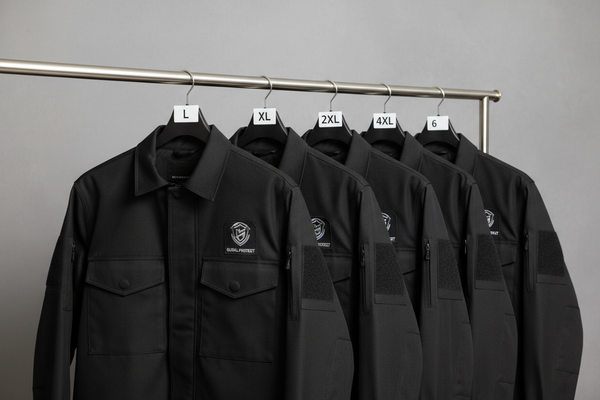
High-spec contract manufacturing relies on advanced US sizing pattern grading paths to distribute fabric dimensions proportionally across the entire size spectrum. When shifting patterns from a standard Medium to a 3XL or 4XL, the engineering team must over-scale high-stress wear points, including armhole clearances, shoulder seams, and pocket entry points. This careful pattern scaling avoids structural tightness on larger individuals while preventing fabric bagginess on smaller staff members.
Simultaneously, the fabric must undergo strict pre-shrinking and anti-torque stabilization steps before cutting lines open. We utilize intensive rotary compaction loops that relax built-in yarn stresses, ensuring our custom cotton blends maintain a strict under 2% shrinkage variance. This structural stability keeps your embroidered corporate fleet uniforms and campus community organization apparel looking straight and centered, completely preventing the side-seam twisting common in low-tier apparel lots.
Integrating Automated Teamwear Solutions Tracking for Public Audits
Modern public accountability standards require strict data tracking across every phase of an apparel rollout. When distributing hundreds of onboarding kits deployment boxes or large-scale municipal uniform packages, manual spreadsheet tracking is slow and highly prone to inventory errors. Missing size curves, lost shipments, and unverified delivery dates can quickly compromise internal program audits.
Integrating an automated teamwear solutions tracking network resolves this vulnerability by assigning unique digital identification profiles to every apparel batch. This digital ledger tracks your custom lots from the initial factory sewing lines through international maritime lanes, straight to final delivery verification at your regional depot. This tracking gives public sector procurement directors access to clear verification logs, ensuring total contract compliance at every step.
This data-backed approach removes the stress from public program reviews. Financial teams can instantly verify that the received size curves match historical headcount requirements, track fabric performance over prolonged wear cycles, and confirm that all cross-border shipping liabilities were legally settled at origin. This alignment helps public purchasing departments run transparent, high-performance uniform programs that preserve tax dollars across multi-year asset lifecycles.