How Are Leading Procurement Officers Standardizing Campus Sizing for Fleet and Onboarding Kits?
Campus Identity Infrastructure: Standardizing Sizing Curves for Multi-Faculty Cohorts
Institutional uniform programs rarely fail because of garment quality alone. Most procurement losses originate from inaccurate size allocation assumptions, fragmented deployment schedules, disconnected onboarding logistics, and inventory ratios that do not reflect actual population measurements. Within large campus systems, a difference of only 3% in projected size distribution can translate into thousands of excess garments occupying warehouse space long after orientation week, graduation ceremonies, faculty events, or student recruitment campaigns have concluded.
For procurement directors responsible for campus community mobilization wear, the challenge extends far beyond selecting fabrics and approving artwork. Modern institutional apparel programs require predictive allocation models, synchronized production planning, multi-design print coordination, and deployment systems capable of supporting enrollment fluctuations across multiple faculties, departments, athletic organizations, research centers, and student service divisions.


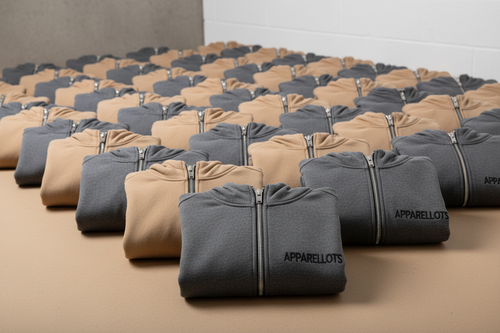
The Business Cost of Poor Campus Sizing Forecasting
Many educational institutions continue relying on historical purchasing assumptions that were created years earlier. Unfortunately, enrollment demographics evolve. Regional body measurements shift. International student participation increases. Athletic participation rates change. Faculty hiring patterns fluctuate. Each of these variables directly impacts garment consumption curves.
When procurement teams utilize outdated ratios such as:
- 10% Small
- 35% Medium
- 35% Large
- 15% XL
- 5% XXL+
they frequently discover inventory imbalances after distribution begins. Actual consumption patterns often reveal substantial differences between faculties, campuses, and geographic regions.
Accurate sizing standardization is fundamentally an inventory engineering exercise rather than a garment purchasing exercise.
The objective is not merely ordering apparel. The objective is matching physical inventory to real-world body measurement distributions while maintaining deployment flexibility throughout the academic calendar.
Building Data-Driven Size Distribution Maps
Campus-wide sizing programs should begin with population mapping. Rather than relying solely on previous orders, procurement departments should establish data collection procedures that aggregate enrollment statistics, historical redemption data, faculty participation records, and onboarding registration metrics.
The resulting size distribution map becomes the foundation for allocation matrix construction.



| Size | Typical Population Range | Inventory Risk Level | Forecast Accuracy Importance |
|---|---|---|---|
| S | 8% - 18% | Medium | High |
| M | 22% - 34% | High | Critical |
| L | 25% - 36% | High | Critical |
| XL | 12% - 22% | Medium | High |
| 2XL | 4% - 12% | Low | Moderate |
| 3XL | 1% - 5% | Low | Moderate |
Size distribution maps should be segmented according to student populations, administrative staff, faculty personnel, athletic departments, alumni organizations, volunteer teams, and event support groups. Each cohort displays unique measurement characteristics requiring separate analysis.
Allocation Matrix Engineering for Multi-Faculty Procurement
Faculty-Level Distribution Analysis
A university containing engineering, nursing, business, education, law, and athletics divisions may exhibit dramatically different consumption patterns across departments. Applying a single institution-wide size ratio frequently creates allocation inefficiencies.
Instead, procurement teams should build faculty-specific matrices.
| Faculty | S | M | L | XL | 2XL | 3XL |
|---|---|---|---|---|---|---|
| Engineering | 10% | 27% | 31% | 20% | 9% | 3% |
| Business | 16% | 33% | 28% | 15% | 6% | 2% |
| Nursing | 21% | 35% | 24% | 12% | 6% | 2% |
| Athletics | 8% | 22% | 34% | 23% | 10% | 3% |
This segmented strategy substantially improves inventory turnover while reducing post-event excess stock.
Event Promotional Campaign Scheduling Under Tight Deadlines
Large-scale campus activation programs frequently involve fixed launch dates tied to orientation weeks, graduation ceremonies, recruitment campaigns, alumni fundraising events, donor conferences, and intercollegiate competitions.
Missed deadlines create consequences extending beyond apparel inventory. Delays affect brand visibility, participant engagement, sponsorship commitments, volunteer readiness, and public perception.
Effective event promotional campaigns require synchronized planning between:
- Artwork approval departments
- Procurement offices
- Manufacturing facilities
- Decoration teams
- Packaging operations
- Freight coordinators
- Campus distribution personnel
Rapid Response Production Structures
Modern institutional programs increasingly utilize flexible batch manufacturing schedules rather than single production runs. This approach allows multiple design versions to be manufactured simultaneously while maintaining consistent fabric specifications.
Typical production controls include:
- 160 GSM to 220 GSM cotton programs
- 180 GSM to 280 GSM blended jersey systems
- Double-needle shoulder reinforcement
- Heat-transfer identification labeling
- Campus-specific barcode tagging
- Batch-level quality auditing
These controls support accelerated replenishment schedules when enrollment numbers exceed initial forecasts.
Onboarding Kits Packaging as a Logistics Discipline
New student onboarding increasingly relies on preassembled welcome kits containing apparel, identification materials, informational resources, orientation schedules, campus maps, and branded accessories.
The packaging process therefore becomes a logistics operation rather than a simple fulfillment activity.
Each onboarding package must be accurately matched to:
- Recipient identity
- Faculty assignment
- Garment size
- Program category
- Distribution location
- Delivery timeline
Large institutions distributing 10,000 to 50,000 onboarding kits annually often implement serialized container systems to maintain traceability throughout deployment.
The efficiency of onboarding distribution is determined before cartons leave the factory floor, not when they arrive on campus.
Kitting Container Logistics and Consolidated Deployment Models
Container optimization significantly influences freight costs, labor requirements, and deployment speed. Institutional apparel programs frequently involve multiple campuses spread across regional, national, or international locations.
Without consolidated kitting structures, receiving departments must manually sort thousands of garments after delivery.
Pre-sorted container models reduce labor consumption while accelerating deployment timelines.
| Distribution Method | Sorting Labor | Deployment Speed | Error Probability |
|---|---|---|---|
| Bulk Carton Delivery | High | Low | High |
| Faculty Segmented Kitting | Medium | High | Low |
| Individual Serialized Kits | Very Low | Very High | Very Low |
Teamwear Solutions Fleet Tracking and Inventory Visibility
Fleet tracking technologies have expanded beyond transportation management and now play an increasingly important role in apparel deployment programs.
Procurement departments managing campus-wide apparel initiatives benefit from real-time visibility into:
- Production progress
- Decoration completion status
- Packaging completion rates
- Container loading schedules
- Freight transit milestones
- Campus receiving confirmations
When integrated with allocation matrices, fleet tracking data creates a continuous feedback loop supporting future forecasting accuracy.
Measurement Feedback Systems
The most successful institutional uniform programs collect post-distribution metrics after every campaign. Returned garments, exchange requests, unused inventory levels, and replenishment orders provide valuable insight into future sizing adjustments.
Rather than treating distribution as the final stage of a project, leading procurement teams treat deployment as a measurement exercise that continuously improves forecasting precision across subsequent purchasing cycles.


Fabric GSM Engineering and Specification Control for Institutional Uniform Programs
Successful institutional apparel procurement begins long before production scheduling, packaging workflows, or freight planning enter the discussion. The foundation of every reliable campus uniform deployment program is specification control. Fabric weight, yarn structure, shrinkage tolerance, seam construction, colorfastness performance, and decoration compatibility collectively determine whether a garment remains serviceable through repeated use across an academic year.
Many procurement teams focus heavily on unit pricing while underestimating the operational consequences of inconsistent fabric engineering. A garment that varies significantly in weight, dimensions, or shrinkage characteristics between production lots creates inventory complications, exchange requests, and dissatisfaction among recipients.
For campus community mobilization wear, onboarding kits packaging programs, and event promotional campaigns, consistency across every production batch is often more important than achieving the lowest initial purchasing cost.
Understanding GSM as a Procurement Performance Metric
GSM, or grams per square meter, represents one of the most widely used measurements for evaluating fabric density. While GSM alone does not determine garment quality, it provides a useful baseline for comparing materials intended for different deployment environments.
| Fabric Weight | Typical GSM Range | Common Institutional Use | Durability Rating |
|---|---|---|---|
| Lightweight | 140–160 GSM | Short-duration promotional events | Moderate |
| Standard Weight | 180–200 GSM | Orientation programs and student organizations | High |
| Heavyweight | 220–260 GSM | Faculty uniforms and municipal service apparel | Very High |
| Premium Heavyweight | 280 GSM+ | Long-term deployment programs | Exceptional |
For large educational institutions, 180 GSM to 220 GSM fabrics frequently provide the most balanced combination of durability, wearer comfort, decoration stability, and freight efficiency. Heavier fabrics may improve longevity but increase shipping weight, carton density, and transportation costs.
Fiber Composition Strategy for Multi-Faculty Distribution Programs
The composition of a garment influences not only appearance but also long-term inventory performance. Procurement officers should evaluate fiber selection according to the expected use environment rather than relying solely on marketing descriptions.
100% Cotton Systems
Cotton remains a common choice for onboarding kits and student-focused programs because of its familiarity and comfort characteristics. Ring-spun cotton constructions typically offer improved surface smoothness compared to open-end alternatives, making them suitable for detailed graphic applications.
- Excellent print receptivity
- Strong consumer acceptance
- Comfortable hand feel
- Potential shrinkage management requirements
Cotton-Polyester Blends
Blended constructions often provide greater dimensional stability and improved resistance to repeated laundering cycles. For large-scale institutional programs requiring consistent sizing retention, blends can reduce exchange volumes resulting from post-wash garment changes.
- Improved shape retention
- Reduced shrinkage exposure
- Enhanced color consistency
- Faster drying performance
Performance Technical Fabrics
Athletic departments, municipal fleet personnel, and campus operations teams frequently require moisture-management systems engineered for active environments. These fabrics prioritize functional performance rather than casual lifestyle wear characteristics.
- Moisture transport channels
- Quick-drying structures
- Enhanced abrasion resistance
- Extended service life
Sizing Curve Standardization Across Manufacturing Facilities
One of the most overlooked challenges in institutional procurement involves maintaining consistent measurements across multiple production runs. Garments labeled as Large should deliver the same dimensional profile regardless of whether they are produced in the first batch or a replenishment order six months later.
To achieve this consistency, specification packages should define measurement tolerances across all critical points.
| Measurement Point | Target Tolerance | Procurement Priority |
|---|---|---|
| Chest Width | ±1.5 cm | Critical |
| Body Length | ±2.0 cm | Critical |
| Shoulder Width | ±1.0 cm | High |
| Sleeve Length | ±1.5 cm | High |
| Neck Opening | ±0.5 cm | Moderate |
These controls become increasingly important when institutions distribute thousands of garments across multiple campuses and require future replenishment orders to match previously issued inventory.
Decoration Engineering for Event Promotional Campaigns
Event promotional campaigns often involve complex decoration requirements that extend beyond a single logo placement. Multiple faculties, sponsors, departments, and event partners may require unique graphic configurations while maintaining consistent garment specifications.
This creates a production environment where decoration planning becomes closely tied to manufacturing efficiency.
Screen Printing Applications
Screen printing remains a preferred method for large-volume institutional orders due to production efficiency and long-term durability. The process performs particularly well when artwork remains consistent across substantial quantities.
- Strong wash durability
- High-volume production suitability
- Consistent color reproduction
- Economical for large runs
Embroidery Programs
Faculty apparel, administrative uniforms, and municipal service garments frequently utilize embroidery due to its professional appearance and extended service life.
- Professional presentation
- Long-term durability
- Excellent institutional branding
- Suitable for repeated laundering
Heat Transfer Identification Systems
Many onboarding kits packaging programs incorporate serialized identifiers, faculty-specific graphics, or individual naming conventions. Heat transfer systems allow variable-data customization without requiring separate embroidery programs for every recipient.
Quality Assurance Protocols Before Shipment Release
The final inspection process should never be treated as a simple visual review. Institutional procurement projects often involve thousands of units, making systematic quality auditing essential.
Inspection programs should evaluate:
- Fabric weight verification
- Dimensional consistency
- Decoration alignment
- Color matching accuracy
- Carton labeling precision
- Barcode readability
- Kitting completeness
- Packaging integrity
For multi-campus deployments, carton identification systems should correspond directly with allocation matrix records. This alignment reduces receiving errors and simplifies inventory verification during distribution.
A shipment that arrives on time but contains inaccurate size allocations creates the same operational disruption as a delayed shipment. Delivery performance and allocation accuracy must be evaluated together.
Supporting Teamwear Solutions Fleet Tracking Through Product Identification Standards
As institutional apparel programs increase in complexity, product identification systems become increasingly valuable. Teamwear solutions fleet tracking relies on consistent data structures that connect manufacturing records, packaging information, freight documentation, and receiving confirmations.
Many organizations now implement serialized carton identifiers linked directly to allocation matrices. This allows procurement departments to verify:
- Production completion status
- Packaging completion percentages
- Container assignment records
- Transit milestones
- Campus delivery confirmation
- Distribution completion reporting
The result is a transparent deployment ecosystem where inventory movement remains visible from factory release through final recipient distribution.



Balancing Garment Performance with Logistics Efficiency
The strongest institutional apparel programs balance garment engineering with logistics practicality. Extremely heavy fabrics may improve durability but increase freight expenses. Lightweight constructions may reduce transportation costs but create replacement demand if service life expectations are not achieved.
Procurement officers therefore benefit from evaluating garments as complete operational assets rather than isolated textile products. Fabric selection, sizing standardization, decoration planning, onboarding kits packaging, event promotional campaigns, and teamwear solutions fleet tracking all operate within the same deployment system.
When specification control, manufacturing consistency, and logistics planning operate together, institutions gain measurable improvements in inventory utilization, distribution speed, recipient satisfaction, and long-term procurement efficiency.
Cross-Border Freight Planning and Campus Distribution Networks
Effective institutional uniform programs require more than accurate sizing and consistent fabric specification—they demand end-to-end logistics engineering. Large campuses often span multiple regions or countries, meaning procurement teams must navigate complex shipping channels, customs regulations, and delivery timelines while maintaining uniformity in kitting, packaging, and fleet tracking.
Freight Mode Selection and Cost Optimization
Selecting the appropriate transport mode is critical for balancing cost, lead time, and inventory risk. Air freight provides rapid delivery for urgent onboarding kits packaging but carries higher costs per unit. Sea freight offers lower cost per garment but requires advanced planning due to longer transit times. Hybrid models often combine both methods to maintain operational flexibility.
| Freight Mode | Transit Time | Cost per Unit | Operational Risk | Best Use Case |
|---|---|---|---|---|
| Air Freight | 2–7 days | High | Moderate | Last-minute event promotional campaigns, urgent replenishment |
| Sea Freight | 21–35 days | Low | Low | Planned semester onboarding kits, bulk campus deployment |
| Express Ground | 1–5 days | Medium | Moderate | Regional campus shipments, intra-national rapid deployment |
Container Consolidation for Multi-Campus Deployment
Consolidating garments into containers based on faculty, size, and campus location ensures that shipments remain traceable and reduces post-arrival sorting. Each container is assigned a unique identifier linked to the allocation matrix and fleet tracking system.
Container optimization involves:
- Segmentation by campus and faculty
- Minimizing dead space while avoiding compression damage
- Integration with serialized kitting systems
- Pre-sorting for rapid unloading and deployment
Customs, Import Duty, and Regulatory Compliance
Cross-border distribution demands meticulous attention to customs documentation, import tariffs, and regional textile regulations. Each country’s harmonized tariff code, fabric content declaration, and labeling requirements must be incorporated into packing lists and commercial invoices to prevent delays and penalties.
Documentation Best Practices
- Use HS codes aligned with textile classification standards.
- Maintain detailed packing lists referencing container IDs and size breakdowns.
- Include material composition, batch number, and production facility origin.
- Ensure that all certificates (e.g., fire retardancy, ISO compliance) accompany shipments as required.
Multi-Warehouse Fulfillment Networks
Large institutional programs frequently operate with multiple fulfillment centers strategically located to minimize transit time to campuses. This decentralized approach reduces shipping costs and enhances delivery reliability.
Warehouses are typically organized as follows:
- Central production hub: coordinates batch scheduling and decoration
- Regional consolidation hubs: manage cross-campus shipments and customs clearance
- Campus-based satellite depots: facilitate final delivery and on-site kit distribution
Backward Scheduling and Critical Path Analysis
To align shipments with semester calendars, onboarding weeks, and campus events, procurement teams implement backward scheduling techniques. This method calculates required production start dates based on shipment lead times, decoration durations, and kitting completion deadlines.
| Task | Lead Time | Critical Dependencies | Notes |
|---|---|---|---|
| Production Run | 7–14 days | Fabric receipt, decoration artwork approval | Batch-level quality checks recommended |
| Decoration & Print | 3–5 days | Production completion | Multi-design coordination required for event campaigns |
| Kitting & Packaging | 2–4 days | Decoration completed | Serialized container labels aligned with allocation matrix |
| Freight & Customs Clearance | Variable (2–35 days) | Kitting complete, documentation ready | Air or sea selection per urgency |
| Campus Delivery | 1–5 days | Customs cleared, satellite depot receipt | Coordinate with event start date or onboarding week |
Inventory Tracking and Cross-Campus Visibility
Centralized dashboards linked to serialized container identifiers allow procurement and logistics managers to track inventory in real time. This integration ensures that any delays or allocation discrepancies can be identified immediately, minimizing disruption to campus events and onboarding activities.
Fleet tracking also supports rapid corrective action:
- Redistribution of surplus inventory between campuses
- Adjusting batch sizes for subsequent orders
- Immediate updates to student or staff assignment databases
- Real-time monitoring of kitting completion rates for event preparation
Risk Management and Contingency Planning
Cross-border operations inherently involve risk: customs delays, shipment misrouting, and regional disruptions are common challenges. Contingency planning includes:
- Maintaining safety stock in regional warehouses
- Pre-booking alternate freight carriers
- Flexible batch production to accommodate last-minute adjustments
- Communication protocols with campus coordinators for emergency kit fulfillment
Well-executed logistics strategies allow institutional uniform programs to maintain consistent campus presence without overstressing procurement or warehouse resources.
Conclusion of Section 3
By integrating cross-border freight planning, multi-warehouse fulfillment networks, container consolidation, backward scheduling, and real-time fleet tracking, procurement officers can ensure that multi-campus deployments for onboarding kits and event promotional campaigns are executed with precision. These systems reduce inventory risk, maintain delivery reliability, and support data-driven future allocation adjustments.
Advanced Size Curve Mathematics for Institutional Uniform Programs
At the highest level of institutional apparel procurement, sizing is no longer treated as a static ratio problem. It becomes a predictive modeling exercise where historical enrollment data, demographic shifts, faculty composition, and regional anthropometric distributions are translated into continuous allocation curves. These curves define how inventory is distributed across S to 3XL categories with minimal deviation across production cycles.
The primary objective is to reduce variance between predicted and actual consumption. Even a 2–4% deviation in size curves can result in significant overstock accumulation in large-scale campus deployments involving tens of thousands of garments.
Core Allocation Function Model
A simplified institutional sizing model can be expressed as:
Inventory(Si) = Total Population × Distribution Factor(Si) × Faculty Weighting × Seasonal Adjustment Coefficient
Where each variable represents:
- Distribution Factor: baseline size probability derived from historical datasets
- Faculty Weighting: adjustment for demographic differences between academic disciplines
- Seasonal Adjustment: correction for climate-driven apparel layering behavior
Deadstock Prevention and Inventory Flow Optimization
Deadstock represents one of the highest hidden cost categories in institutional uniform programs. It occurs when incorrect size allocation, delayed deployment, or fragmented ordering cycles result in unsold or unused garments occupying warehouse capacity.
Preventing deadstock requires aligning procurement cycles with real consumption velocity rather than calendar-based ordering schedules.
| Cause of Deadstock | Operational Impact | Mitigation Strategy |
|---|---|---|
| Overestimation of Large/XL demand | Excess warehouse storage costs | Faculty-level demand segmentation modeling |
| Delayed onboarding distribution | Missed seasonal usage window | Backward scheduling aligned with academic calendars |
| Inflexible production batch sizes | Unbalanced inventory ratios | Rapid response batch scheduling with modular production runs |
When properly implemented, allocation matrices reduce deadstock exposure by aligning production volume with real-time consumption signals extracted from prior distribution cycles.
Multi-Cohort Allocation Engineering
Large institutions are composed of multiple cohorts, each with distinct apparel consumption behavior. These include undergraduate populations, graduate programs, faculty groups, administrative staff, athletic teams, and temporary event personnel.
Each cohort requires a unique size distribution curve and cannot be effectively served using a single uniform model.
Cohort-Based Adjustment Logic
- Undergraduate Cohorts: higher variability in sizing distribution due to age diversity and international enrollment
- Graduate Cohorts: more stable distribution curves with reduced extreme size demand
- Athletic Cohorts: increased concentration in L–XL categories with higher durability requirements
- Administrative Staff: predictable curves with emphasis on long-term wear stability
Applying cohort-specific adjustments significantly improves allocation precision across multi-campus systems.
Institutional Uniform Program KPIs
To evaluate procurement performance, institutions must move beyond cost-per-unit analysis and adopt operational KPIs that reflect end-to-end program efficiency.
| KPI Metric | Definition | Target Range |
|---|---|---|
| Size Allocation Accuracy | Match between predicted and actual distribution | 92%–97% |
| On-Time Deployment Rate | Shipments arriving before scheduled events | 95%+ |
| Deadstock Ratio | Unused inventory percentage after deployment cycle | <5% |
| Kitting Error Rate | Mismatches in packaged onboarding kits | <1.5% |
These KPIs allow procurement teams to evaluate institutional uniform programs as continuous systems rather than isolated purchasing events.
Multi-Year Inventory Optimization Strategy
Institutional apparel programs are inherently cyclical. Enrollment patterns repeat annually, yet rarely remain identical. Therefore, procurement strategies should incorporate multi-year feedback loops to refine allocation accuracy over time.
Each cycle should capture:
- Actual size consumption vs forecasted distribution
- Return and exchange frequency by cohort
- Faculty-level variance in utilization rates
- Impact of event promotional campaigns on demand spikes
This dataset becomes the foundation for refining allocation matrices in subsequent procurement cycles.
Governance Structure for Institutional Procurement Control
Effective governance ensures consistency across procurement, logistics, and distribution departments. Without standardized control frameworks, even highly accurate sizing models can fail during execution due to coordination gaps.
Recommended Governance Layers
- Procurement Oversight Committee: validates allocation models and approves budget thresholds
- Logistics Coordination Unit: manages freight scheduling, container consolidation, and fleet tracking
- Campus Distribution Teams: handle final-mile delivery and onboarding kits packaging
- Data Analytics Unit: monitors KPI performance and updates allocation algorithms
This layered structure ensures accountability across every stage of the institutional uniform lifecycle.
Integrated System Behavior Across Campus Networks
When allocation mathematics, deadstock prevention logic, cohort segmentation, and governance structures operate in unison, institutional uniform programs transition from reactive procurement cycles into predictive supply systems.
In this model, onboarding kits packaging, event promotional campaigns, and teamwear solutions fleet tracking are no longer isolated operational tasks. They become interconnected components of a continuous apparel distribution ecosystem that evolves with each academic cycle.
Precision in institutional apparel programs is achieved when data, logistics, and garment engineering operate as a single synchronized system rather than independent workflows.
Final System Perspective
The evolution of campus sizing infrastructure reflects a broader shift in institutional procurement philosophy. Organizations are moving away from volume-based purchasing toward data-driven allocation systems capable of adapting to real-world demographic variability, logistical constraints, and multi-campus deployment requirements.
When properly implemented, these systems reduce waste, improve delivery accuracy, and support scalable expansion across global education networks, municipal service fleets, and enterprise training environments.