Guide to Controlling Warp-Direction Shrinkage in Cotton Custom Embroidery for Campus Clubs
1. What This Means in Real Procurement Context
Managing a high-volume custom apparel deployment across a decentralized campus network or coordinating tight batch delivery windows for Greek Life cohorts is an operational challenge that cannot be resolved through generic catalog product selections. Sourcing managers and student organization coordinators routinely approach bulk apparel procurement using retail-biased assumptions. They select a style placeholder from a digital catalog, upload a vector graphic, broadcast a linear sizing spreadsheet across an un-audited student roster, and wire the deposit to the vendor. When these uncalibrated production lots encounter real-world campus environments, the procurement model collapses. A high-volume student deployment faces mechanical and situational demands that consumer-grade retail garments are not built to survive. These items move immediately from low-activity academic lecture halls to high-friction outdoor rallies, multi-day athletic tournaments, and continuous laundering cycles. This specific operational pattern creates a high-friction reality known inside textile mills as Active Campus Wear Stress. If the initial production run utilizes low-tier textile blanks that lack structural stability, the custom launch suffers from immediate quality degradation. Fabric surfaces experience rapid fuzz pilling, decoration boundaries distort along critical seams, and structural stitch fields buckle within three standard laundering cycles. For brand managers targeting a steady market position on platforms like /collections/custom-hoodies, protecting project capital requires moving past basic aesthetics and mastering the fundamental engineering metrics of the textile substrate.
When turnaround times narrow during peak seasonal event windows, the pressure on delivery timelines intensifies. Student coordinators often panic and accept production workarounds from unvetted middle-tier brokers who promise rapid offshore assembly turns. This approach introduces severe risks of material failure. Accelerating production without verifying fiber origin or machine parameters guarantees delivery defects. Protecting project margins requires establishing a structured manufacturing timeline that utilizes pre-vetted blank inventories instead of relying on flash offshore production. When an event window closes fast, coordinators should bypass custom-dye fabric runs entirely and select ready-to-ship blank stocks held in regional distribution hubs. This tactical step opens immediate automation tracks for decoration, cutting processing times from weeks to days. By booking local ground freight networks clear of the gate date, you eliminate international customs bottlenecks and completely bypass air cargo surcharges.
[shortcode_article_summary]2. Material Science Explanation
To insulate volume garment orders against structural failure under continuous washing and drying cycles, we must analyze the microscopic engineering properties of the base knitting loop layout. The structural stability of any custom cotton garment depends entirely on its foundational GSM Weight Density. This technical metric establishes the absolute weight and thickness of the knitted panel, representing the mass of the fabric per square meter. Higher grammage levels provide more raw fiber content per square centimeter, giving the finished item the structural substance required to handle heavy customization treatments without suffering from stitch-line shear failure. Selecting a thin, uncalibrated jersey fabric means the individual yarn strands lack the mechanical mass to support dense decoration vectors, leading to material failure when exposed to daily physical stress lines.
Raw cotton is a natural organic material composed of complex cellulose polymer chains arranged in alternating amorphous and crystalline zones. During the high-speed industrial knitting process, automated circular weaving needles subject these delicate organic fiber rows to continuous mechanical tension. This force stretches the yarn loops out along their vertical paths, locking the entire fabric length into a state of structural strain. If the material goes straight from the cutting machines to the decoration tables without intermediate processing, it carries a high risk of structural instability. When a finished item experiences standard laundering cycles, moisture acts as a chemical plasticizer, breaking the weak hydrogen bonds holding the stretched cellulose chains in place. When the fabric is exposed to industrial high-heat drying cycles inside commercial campus laundry centers, the thermal energy forces the unaged cellulose links to collapse back into their natural, relaxed configurations.
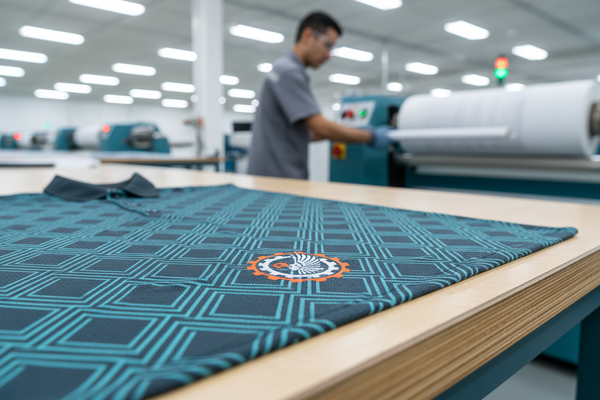
This sudden polymer contraction creates a visible structural defect called Warp-Direction Shrinkage. If the fabric contracts unevenly along its longitudinal warp axes while the horizontal weft rows remain stable, the entire garment matrix experiences severe torque distortion. Side seams twist out of true alignment, neckbands warp out of round, and the flat surface needed for crisp decoration is lost. To block this physical contraction vector before custom cutting lines begin, high-tier finishing mills must subject raw knit rolls to intensive Cellulose Stabilization protocols. This protective method utilizes a specialized engineering system equipped with steam injectors, heated steel shoes, and heavy rubber compaction belts. By applying controlled moisture and matching mechanical pressure simultaneously, the machinery forces the elongated cellulose loop rows to pre-collapse within a secure manufacturing environment. This industrial compaction step pre-shrinks the material, ensuring the finished product maintains its dimensional shape through long-term laundering cycles.
3. Manufacturing Process Breakdown
Transforming a stabilized blank fabric panel into an authoritative custom asset requires a multi-stage manufacturing workflow. Every point along the factory line must be calibrated precisely to preserve the structural boundaries of the garment. The process begins at the automated cutting tables, where high-pressure laser or digital knife arrays slice through stacked textile layers. If the fabric has not achieved full structural equilibrium after the pre-shrinking phase, the panels will warp slightly as they release from the cutting stack, introducing immediate dimensional errors into the assembly line before a single stitch line is executed. The grain direction of the knit loops must sit perfectly parallel to the cutting axes to prevent the torso panels from twisting after the garment pieces are assembled.
Once the cut panels pass initial sorting checks, they move directly to the customization floor. When your design parameters call for heavy branding fields, achieving absolute Embroidery Puckering Protection requires careful setup of the machinery. The automated embroidery station must use a thick, multi-directional non-woven embroidery backing material behind the target fabric zone. This specialized backing matrix acts as an independent stabilizing anchor, intercepting the high-velocity downward impact of the needle rows and distributing thread tension evenly across the knitting loops. As the embroidery needles cycle at high speeds, the continuous interaction between the top reinforcement threads and the bottom bobbin loops applies a constant inward pulling force to the base fabric web. If the master design files lack proper pull-compensation programming, this tension will pull the native cotton loops together, creating unsightly puckering lines around the edges of the embroidered design. Experienced digitizers eliminate this structural flaw by embedding vector design modifications directly into the automated stitch code. These modifications expand the design borders along high-tension axes, perfectly offsetting the natural physics of thread contraction.
For large-scale graphic requirements that call for intense color application, the workflow switches to high-solid screen printing lines. This process forces specialized plastisol or water-based inks through high-mesh taut tension screens, depositing clean, sharp design layers onto the cotton face. The printed panels then slide into long, gas-fired industrial curing tunnels, where the ink layer must hit exact thermal curing marks across its entire depth. This heat exposure triggers an immediate cross-linking reaction within the ink polymers, fusing the graphic to the cotton fibers and preventing color washing or cracking under daily wear. When turnaround times narrow, factories can activate flexible batch scheduling matrices, utilizing ready-to-ship blank canvas inventories to bypass custom milling steps and drop graphics directly onto stabilized substrates.
4. Risk Factors & Failure Cases
The real-world procurement pathway for student organizations is filled with operational risks that can quickly destroy project margins. The most common source of financial waste is the classic Roster Size Distribution Error. Sourcing managers frequently fall into the trap of using generalized size run averages from old wholesale charts, ordering a simple linear distribution of Small, Medium, Large, and Extra-Large sizes for their group. This layout ignores the statistical reality of actual student populations. Sizing demands across a modern campus cohort do not distribute evenly across a flat linear scale. Instead, they gather in a shifting binomial pattern that skews toward specific mid-range fit profiles depending on regional demographics and garment styles. When you apply an un-audited linear purchase order to a real student roster, you create immediate inventory imbalances. The core mid-size stocks sell out instantly, while extreme edge sizes sit un-utilized on the storage shelves as dead stock. This dead stock represents wasted capital that erodes the real profit margins of the production run. Brand managers must implement strict statistical filters on group order portals to align inbound production splits with documented user dimensions.
A secondary point of failure involves severe structural breakdown on the decoration line, a risk that increases when running advanced multi-colored embroidery work on un-stabilized lightweight blanks. If a low-tier supplier substitutes cheap single-direction backing sheets for premium non-woven stabilizers to trim operational costs, the base fabric will fail under intensive stitch patterns. As the garment handles real-world physical wear, the micro-perforations created by the rapid needle strikes tear open under strain, causing the entire embroidered emblem to distort, sag, and detach from the chest surface. Furthermore, matching heavy dimensional patches with unstable, low-GSM garments leads to immediate substrate failure during active wear fields. When a dense chenille or thick felt patch is fused via heat transfer or stitched onto an un-stabilized face panel, the weight difference overpowers the surrounding knit loop network. Under the tension of movement and wash cycles, the lighter fabric tears along the perimeter bonding lines, destroying the garment. To see comprehensive strategies for avoiding these production errors on custom product lines, check out our technical analysis over at /blog/related-article-slug.
5. Cost Structure Analysis
Executing a successful high-volume apparel run requires clear insight into the underlying factory cost allocations that drive wholesale pricing matrix models. Many corporate program buyers focus entirely on the raw unit cost, forgetting that setup expenses, decoration tool changes, and material yields shape the final invoice bottom line. Sourcing premium ring-spun blanks that feature verified mechanical pre-shrinking treatments requires a higher initial material investment compared to buying cheap open-end carded items. However, looking at the total operational lifecycle reveals that this upfront investment pays off by completely eliminating post-production defect penalties and customer return costs. When you calculate the total cost of screen printing lines, the financial calculations depend entirely on the total color count of your graphic layout. Each distinct color vector requires its own independent stencil screen creation process, film output step, and automated press station calibration run. For small order sizes, these fixed technical setup overheads add significant costs to every unit produced. By scaling up order volumes within your core mid-sizes, you amortize these setup fees across a larger pool of units, driving down individual production costs.
[SHOPIFY_SLOT_2 | strategy=product_search | query=hoodie | limit=4 | fallback=custom-apparel-categories]Furthermore, you must build explicit financial safety buffers into your logistics planning models to handle the realities of cross-border transport. Air cargo lanes provide fast transport for time-sensitive campus events, but they expose your project margins to volatile fuel price changes and sudden seasonal freight spikes. Shifting your core ordering schedules to ocean or intermodal ground lanes dramatically lowers your shipping costs per unit. This strategy requires establishing clean manufacturing timelines that account for container tracking buffers, customs clearance holds, and local hub delivery steps. Navigating these parameters smoothly requires a reliable field roadmap to evaluate shipments before they clear your receiving point. Contract terms must clearly define delivery targets, establishing clear financial penalties for unexpected delays that compromise critical institutional event calendars.
[shortcode_practical_tips]6. Technical Comparison Profile
To establish clear, objective quality control benchmarks on the production floor, buyers must require independent laboratory validation data that measures physical fabric performance against recognized international standards. Sourcing teams should never rely on vague supplier promises regarding durability. Instead, require formal testing verification conducted under standardized ASTM and AATCC testing methods. The table below outlines the clear engineering performance differences between premium pre-stabilized ring-spun cotton fabric shells and entry-level carded open-end custom blanks:
| Engineering Performance Metric | Standard Test Method | Premium Pre-Stabilized Ring-Spun Cotton | Entry-Level Open-End Carded Cotton Blank |
|---|---|---|---|
| Warp-Direction Shrinkage Max Limit | AATCC Test Method 135 | < 1.8% Contract Tolerances | > 5.5% Contraction Structural Deformation |
| Surface Pilling Resistance Grade | ASTM D3512 Random Tumble | Grade 4.5 Clean Surface Profile | Grade 2.0 Heavy Fuzz Fabric Degradation |
| Tensile Bursting Strength Rating | ASTM D3786 Diaphragm Burst | > 340 kPa High Structural Integrity | < 190 kPa Structural Stitch Line Tear Risk |
| Colorfastness Rating Under Laundering | AATCC Test Method 61 Color Change | Grade 4.5 Exceptional Vat Dye Lock | Grade 3.0 Bleeding Under High-Heat Wash |
Analyzing these technical benchmarks shows that choosing entry-level open-end fabrics introduces serious long-term quality risks to your inventory. A warp-direction contraction rate exceeding 5.5% means that after a few high-temperature wash cycles, your carefully positioned custom designs will deform completely. This deformation creates a twisted look that destroys the visual appeal of your products. Mandating premium ring-spun construction guarantees that your custom items preserve their shape, alignment, and comfort metrics throughout their operational lifecycle.
7. Common Sourcing Mistakes
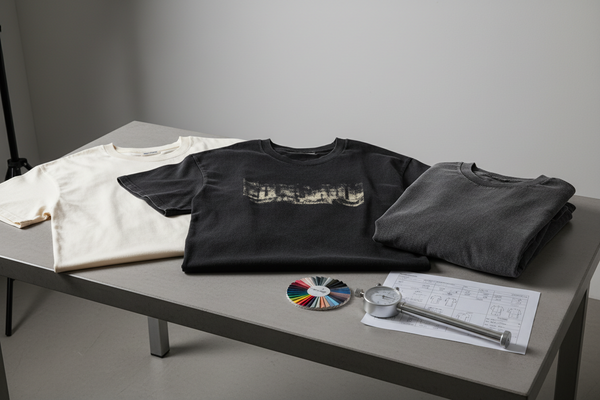
One of the most frequent mistakes made by procurement managers is verifying fabric color accuracy entirely through digital PDF proof sheets or uncalibrated smartphone photos sent from the factory floor. Digital monitors display color spaces using trans-illuminated RGB pixel arrays, which vary wildly between different devices and screen settings. Physical textile inks, on the other hand, reflect light using solid pigments bound to raw organic cotton threads. When you approve a high-volume color run based on a digital image, you risk serious production errors, including major shade variations across your delivery lots. A shade that appears as a warm, rich espresso brown on a high-end laptop screen can easily turn out as a cold, flat mud-tone when stamped onto physical cotton fibers. Experienced sourcing agents eliminate this risk by requiring physical lab dip color swatches that are reviewed inside a standardized light box under strict D65 natural daylight settings before greenlighting mass production.
Another frequent problem is the hidden breakdown of custom branding elements caused by poor substrate matching. Sourcing managers often try to save money by pairing thin, lightweight summer jersey shirts with thick, heavy corporate embroidery emblems. When the multi-head embroidery needles stitch a dense design into a delicate knit base, the heavy thread mass overpowers the fine cotton strands. Without a solid foundation of dense yarn loops, the fabric surface surrounding the customization zone will warp and tear under real-world usage. This creates an untidy appearance that looks unprofessional and reflects poorly on your brand. Protecting your organization against these errors means addressing the core practical questions before contracts are locked down.
[SHOPIFY_SLOT_3 | strategy=product_search | query=apron | limit=4 | fallback=custom-apparel-categories] [shortcode_buyer_questions]8. Supply Chain FAQ Summary
How can bulk apparel buyers reliably calculate true warp-direction shrinkage limits before signing off on cross-border manufacturing contracts?
To verify real material performance before processing high-volume bank wires, you must require your supplier to provide independent laboratory test sheets run under AATCC Test Method 135 protocols. This technical test subjects the raw cotton fabric rolls to multiple continuous commercial wash runs at high temperatures, establishing a clear, objective measurement of dimensional stability. If the verified lab report shows a warp-direction contraction metric exceeding 2.0%, the material fails to meet premium apparel standards. In that case, the fabric rolls must return to the processing mill for additional stabilization treatments before entering the cutting line.
What specific production metrics control embroidery puckering distortion when setting up high-density emblems on structured cotton hoodies?
Eliminating edge puckering defects requires careful management of three distinct production variables on the factory floor. First, the embroidery machine operators must install a multi-directional non-woven backing sheet behind the fabric panel to act as a solid anchor. Second, technical teams must use calibrated digital tension gauges to lock down needle thread pull metrics, preventing excessive stitch contraction. Finally, production digitizers must write explicit pull-compensation overrides directly into the master vector stitch files, expanding the graphic boundaries by a calculated millimeter factor to offset the natural inward pull of the thread lines.
Why does using un-audited linear size run sheets create immediate inventory overhead imbalances for custom campus organization drops?
Relying on flat linear size run breakdowns assumes that student size profiles distribute evenly across all options. In the real world, student populations cluster in a shifting binomial curve centered on core mid-range sizes, while edge sizes show very low volume requirements. When you force a linear purchase order onto a real-world student group, you automatically trigger an immediate supply imbalance. Your core mid-size stocks sell out on the first day, leaving you with an unexpected shortage, while your extreme edge units sit un-utilized in boxes as depreciating dead stock assets.
What steps should procurement teams implement at the arrival dock gate to ensure inbound customs lots match contract quality metrics?
Your quality control team must run a strict triple-point inspection gate protocol on a random sample of inbound boxes before signing the carrier release logs. First, verify the actual fabric grammage using digital precision scales to confirm the product matches your specified GSM weight density targets. Second, perform a sharp cross-directional tension pull check along all customized borders to verify that the non-woven backing has not split or failed. Finally, run a wet-friction white fabric rub check across all screen-printed areas to confirm that the inks have cured fully inside the factory drying tunnels.