Calibrating Thread Count and Grammage for High-Density Embroidery and Screen Printing: A Technical Playbook for Design Teams
1. Sourcing Realities: What Design Teams Overlook Regarding Enterprise Apparel Customization
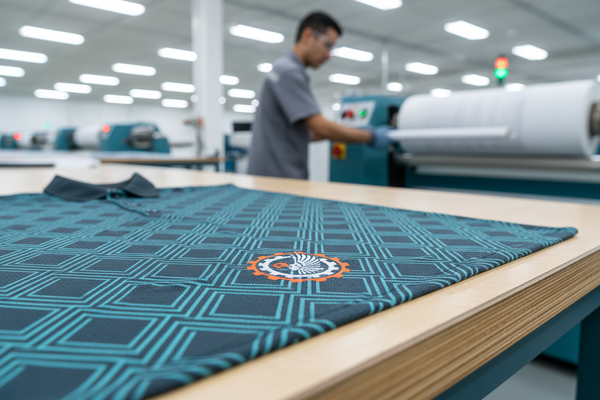
Enterprise procurement operations frequently break down at the intersection of graphic design intent and industrial textile capabilities. Design teams routinely construct intricate, multi-layered vector geometries utilizing highly saturated color palettes, assuming that modern decoration equipment can seamlessly translate these digital files onto any apparel surface. This assumption ignores the physical constraints of mass production. A logo configured for a digital display exists independently of mechanical forces; when forced onto a physical textile, it must interact with yarn boundaries, torque factors, and thermal thresholds that govern high-speed production lines.
When executing a large-scale corporate clothing program, selecting an inappropriate decoration method can severely compromise product lifecycles and inflate total cost of ownership. For example, applying a complex, multi-layered emblem onto a lightweight knit fabric introduces localized stress concentrations. The primary sourcing risk centers around structural compatibility: the mechanical properties of the design must balance the physical capabilities of the underlying fabric layer. Without calculating this balance before production begins, organizations face systemic product defects, including edge distortion, fabric puckering, and premature print failure during commercial laundering cycles.
Furthermore, sourcing teams often delegate material and decoration decisions entirely to downstream fulfillment vendors without establishing rigid structural guidelines. This lack of oversight allows factories to substitute inferior components—such as low-tensile spun rayon threads or un-stabilized plastisol inks—to lower their internal production costs. To protect corporate apparel investments, buyers must shift from subjective aesthetic evaluations to a data-driven framework rooted firmly in textile physics. This strategy ensures that all designs are systematically reviewed against the physical realities of the manufacturing floor.
2. Textile Physics: The Structural Science Behind Thread Count Constraints
Every woven or knitted textile possesses a finite capacity to withstand external mechanical deformation. This capacity is determined by its structural configuration: yarn count (expressed as single counts, e.g., 30s, 40s), linear density (denier), and total weight per unit area (grams per square meter, or GSM). When an embroidery machine drives a hardened steel needle through a fabric panel thousands of times, it temporarily displaces the structural yarns. If the fabric's thread count is too low or the knit structure is loose, the background yarns cannot support the heavy concentration of embroidery threads, causing a structural failure known as Stitch Density Panel Weight Disproportion.
To mathematically assess whether a fabric can support a specific decoration design, production engineers calculate the maximum stitch load using the following structural safety equation:
When the needle density exceeds this structural limit, the background yarns suffer permanent mechanical damage, leading to severe puckering along the design's perimeter. This issue becomes particularly acute when attempting to stitch large, solid shapes onto lightweight 140 GSM ring-spun cotton. The dense network of embroidery threads exerts continuous compression on the elastic knit loops, twisting the fabric panel out of shape along its horizontal and vertical axes.
Conversely, screen printing depends heavily on the fabric's surface topography and capillary absorption characteristics. High-thread-count fabrics made from combed, ring-spun yarns present a uniform, flat surface that allows screen printing squeegees to cleanly deposit a consistent, thin ink layer. Loose, low-thread-count open-end fabrics present an irregular surface with protruding fiber ends. These loose fibers pierce the ink layer, degrading fine lines and creating an inconsistent surface finish that compromises print clarity and wash fastness.
3. Workshop Execution: Calibrating Embroidery and Screen Print Output Lines
Industrial production requires precise mechanical calibration to ensure consistent quality across thousands of units. In automated embroidery operations, maintaining stable thread tension is critical. If the tension on the upper polyester thread or the lower bobbin case deviates by even five grams of force, the embroidery borders will distort, pulling the background fabric inward. Technicians must configure digital embroidery files with customized pull-compensation values. This calibration step dynamically expands the design along its horizontal axis during digitization to counteract the natural fabric contraction that occurs when dense thread structures are stitched into position.
Screen printing production lines require precise adjustments across three primary variables: screen mesh geometry, squeegee pressure, and ink formulation parameters. When printing highly detailed corporate logos, production teams utilize high-mesh screens (ranging from 230 to 305 threads per linear inch) to accurately control the ink deposit thickness. Depositing ink onto textured fabrics requires managing Dimensional Fabric Texture Adhesion; the ink must physically grip the outer contours of the fabric fibers without dripping into the lower valleys of the knit pattern, which causes blurred edges and inconsistent color density.
The following diagram outlines the critical operational parameters required to achieve a clean, high-density ink deposition layer on automated screen printing presses:
Managing the interaction between ink layers is critical during multi-color printing runs. After depositing the initial white underbase layer, the print panel must pass beneath an intermediate flash-dryer. This step must be carefully controlled: the flash dryer must apply just enough heat to partially gel the surface resins ($95^\circ\text{C}$ to $105^\circ\text{C}$) while keeping the lower ink layer responsive. Over-flashing cures the underbase completely, preventing subsequent color layers from bonding chemically and leading to premature flaking and delamination during use.
4. Risk Factors: Preventing Severe Operational Flaws in Bulk Runs
The most severe threat to product quality when printing on synthetic or poly-blend garments is Polyester Sublimation Cross-Linking Chemistry. When polyester fibers are heated above $150 during the final ink curing process, the synthetic disperse dyes inside the fiber transform into a gas. These gaseous dye molecules migrate upward into the overlying screen-printed ink layer, permanently discoloring the design. For example, a crisp white corporate logo printed over a crimson red polyester fleece panel can degrade into a dull pink hue within days of leaving the production line if the curing ovens are incorrectly calibrated.
To systematically eliminate dye migration, production teams must implement a multi-layered defense strategy on the factory floor:
* Deploy premium, low-bleed ink systems formulated with active chemical blockades that physically intercept migrating gaseous dye molecules. * Lower the curing tunnel operating temperature below $130 while extending the conveyor dwell time to ensure complete ink cross-linking without triggering dye sublimation. * Print a specialized, high-density carbon or grey blocker underbase layer directly onto the fabric before depositing any colored pigments.
When working with modern digital films, production managers must closely monitor the variables that cause DTF Shear Peel-Off Degradation. Direct-to-Film customization relies on a dry hot-melt polyurethane adhesive powder to bond the printed ink film to the garment's surface. If the heat-press stage applies insufficient pressure or experiences temperature drops across the platen, the adhesive powder will fail to fully melt and penetrate the fabric structure. This incomplete thermal bond results in rapid delamination, causing the design to crack and peel off after only a few laundry cycles.
Similarly, using incorrect ink formulations can trigger Organic Substrate Ink Non-Compatibility. Standard plastisol and synthetic silicone inks rely on mechanical interlocking to grip the surface of synthetic polymers. When these inks are applied to raw, un-primed organic cotton fibers, they cannot establish a permanent chemical bond. Without a compatible primer or an appropriate water-based ink system, the printed film will crack along the fabric's natural flex lines, causing the design to fail standard automated rub and scratch resistance evaluations.
5. Procurement Ledger: Cost Amortization Specs for Bulk Thread Count Drops
Evaluating the financial performance of an enterprise corporate apparel program requires tracking how production volume scales against decoration complexity. Screen printing is capital-intensive during initial setup due to the costs associated with digital color separation, film production, emulsion coating, and screen exposure. However, once the press is fully configured, the marginal cost per print drops rapidly. For large orders exceeding 500 units, screen printing offers unparalleled economic efficiency because the upfront setup costs are amortized across a large volume of units.
Embroidery operations follow a very different cost structure. The pricing model is governed almost entirely by the absolute stitch count of the design, which directly determines the running time of the multi-head embroidery machines. A complex 15,000-stitch logo takes the same amount of machine runtime per garment whether processing a small batch of 24 units or a large run of 10,000 units. Sourcing managers must analyze these distinct cost trajectories to select the optimal decoration method for their program's volume requirements.
To visualize these dynamics clearly, the following matrix breaks down the total per-garment production cost (including fabric procurement, machine prep, and labor) across varying order volumes:
When managing complex apparel rollouts, procurement teams must look past low initial quotes and evaluate total lifecycle costs. Choosing a low-cost print vendor who uses standard high-temperature plastisol inks on synthetic garments frequently results in high return rates due to dye migration and fabric distortion. Investing in premium low-cure ink systems or stabilized embroidery configurations significantly increases the garment's operational lifespan, lowering overall replacement costs and protecting the organization's initial capital outlay.
6. Engineering Benchmark Profiles: AATCC/ASTM Lab Threshold Metrics
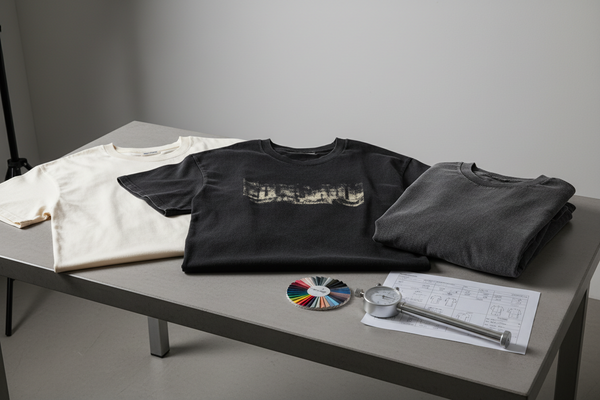
To ensure consistent quality and remove subjectivity from vendor evaluations, procurement buyers must include quantifiable material performance metrics in all supply contracts. Every production lot should be tested against established AATCC and ASTM laboratory standards to verify that the decorated garments can withstand the rigors of daily wear and commercial laundering. Vendors must provide certified laboratory test results from an independent testing facility before receiving approval for final bulk production and distribution.
The following table establishes the minimum technical performance thresholds that both embroidery and screen print programs must achieve during pre-production verification:
| Performance Characteristic | Standard Test Method | Screen Printing Minimum Threshold | Embroidery Minimum Threshold |
|---|---|---|---|
| Accelerated Wash Durability | AATCC Method 61 (2A) | color change after 50 cycles | No filament fraying or backing delamination |
| Crocking Resistance (Friction) | AATCC Method 8 | Dry: Grade 4.5; | Dry: Grade 4.5; |
| Dimensional Change (Shrinkage) | AATCC Method 135 | Maximum warp and weft variation | Maximum perimeter puckering variance |
| Fabric Weight Verification | ASTM D3776 | variance from target GSM specification | variance from target GSM specification |
| Tensile Bursting Strength | ASTM D3786 | No structural degradation of printed film | across embroidered zone |
Implementing these standardized engineering thresholds protects buyers from variance in fabric quality across production runs. If a delivered shipment fails to meet these lab metrics—for example, if a screen print lot exhibits significant color loss under AATCC Method 61 testing—the procurement team has clear contractual grounds to reject the defective lot. This analytical approach forces factories to maintain strict process controls throughout the manufacturing cycle.
7. Fatal Sourcing Gaps: Destructive Blindspots in Quality Control
A common quality control blindspot in volume apparel production is failing to evaluate Vector Node Tensile Modulation during the initial file preparation phase. When artwork contains sharp angles or tightly grouped vector points, standard automated software creates dense clusters of needle penetrations in a small area. During high-speed manufacturing, this concentration of needle strikes acts like a perforation line, significantly weakening the fabric substrate. If the quality control team does not actively manage these vector points, the decorated fabric will tear easily under normal wear and tear.
Another major production oversight occurs when factories mix different fabric styles or production lots within a single decoration run without updating the machinery calibrations. For instance, a screen printing line calibrated for a 100% organic cotton substrate cannot run poly-blend garments without adjusting flash-cure settings and ink chemistry. Failing to update these parameters leads to widespread adhesion failures and severe dye migration, as the factory floor staff often discover the defect only after thousands of garments have already passed through the curing ovens.
Finally, many QA managers focus their inspections exclusively on the front face of the decoration, completely neglecting the reverse side of the garment panel. The backing configuration of an embroidered logo directly determines its long-term comfort and dimensional stability. If a factory attempts to save money by switching from a stable, non-woven cutaway backing to a cheap, heat-soluble tearaway backing on a lightweight knit garment, the logo will lose its structural support after its first wash cycle. This oversight leads to immediate fabric distortion, causing the garment to fail quality standards early in its lifecycle.
8. Supply Chain FAQ Summary: Verified Action Ledger FAQ
Q: How can design teams determine if an intricate corporate logo requires an embroidery backing matrix change?
A: Design teams must evaluate the logo's total stitch density against the target fabric's weight per unit area. If the artwork requires more than 8,000 stitches and is being applied to a fabric lighter than 180 GSM, the factory must use a minimum 2.5-ounce non-woven nylon cutaway backing. Sourcing teams should never accept temporary tearaway stabilizers for knitwear programs, as they do not provide the long-term support needed to prevent fabric distortion over extended wash cycles.
Q: What production adjustments are required when screen printing on highly elastic performance fabrics?
A: Printing on high-stretch performance apparel requires adding specialized elastomeric stretch agents directly to the plastisol or water-based ink mixture. This modification alters the cured ink's performance characteristics, increasing its elasticity to match the natural stretch of the synthetic fabric. This adaptation prevents the print from cracking and splitting when the garment is pulled or stretched during use.
Q: How does a sourcing team verify that an ink lot has completed full polymer cross-linking during manufacturing?
A: The sourcing team should perform a standard on-site solvent rub test using a white cloth saturated with isopropyl alcohol or methyl ethyl ketone. Rub the damp cloth firmly across the cured print surface twenty times. If significant pigment transfers onto the white cloth, the ink film has not reached its required polymerization temperature inside the curing tunnel, indicating that the lot must be re-cured to avoid rapid wash-out failure.
Q: What contractual steps protect corporate buyers from lot-to-lot color fastness variations?
A: Sourcing contracts should require vendors to perform spectrophotometric color matching on every production lot, ensuring color consistency remains within a strict tolerance of relative to the approved master Pantone reference standard. Furthermore, every shipment must include certified lab test results demonstrating compliance with AATCC Method 61 guidelines, shifting the financial responsibility for quality verification directly onto the manufacturing factory.