Wash Durability Testing Methods for B2B Apparel: Wash Test Standards & Decoration Integrity
Wash Durability Testing Methods: Engineering Standards for Technical Workwear
1. Sourcing Realities: What Procurement Directors Overlook Regarding Industrial Laundering
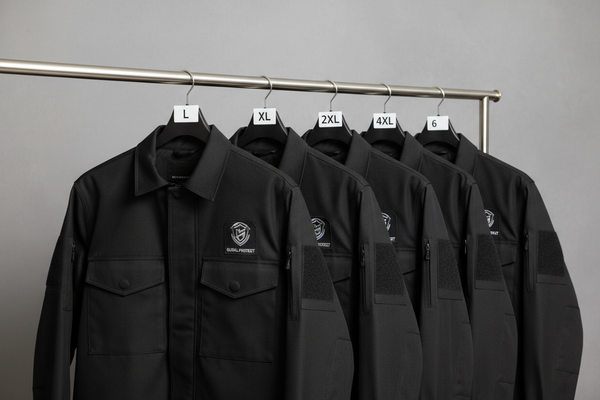
Civil infrastructure workwear is not a promotional item. It is a hard asset. When a logistics transport fleet spends 12 hours in a high-friction environment, their clothing must survive the abrasive contact against harnesses, steel cargo, and hydraulic fluid. Wash durability isn’t just about fading; it’s about seam integrity, structural load retention, and maintaining the fire-resistant or reflective properties that keep workers safe.
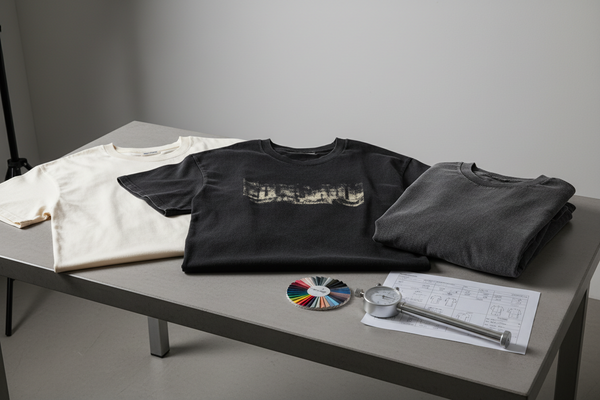
The baseline standard for wash testing used in these contexts is often anchored to the **ISO 6330** or **AATCC 135** protocols. Yet, we frequently observe procurement managers signing off on samples that pass a "look and feel" test only to fail the physical test after 5 washing cycles[citation:2][citation:5][citation:10]. The reality is that many overseas mills use digital monitors to sign off on color match definitions. They miss the critical **Spectrographic Lab Color Validation**. You cannot manage what you do not measure, and color perception on a screen is a dangerous proxy for chemical stability. Ensure your supplier contract binds them to strict Delta-E limits.
Furthermore, we see a fatal flaw in contract negotiation: the absence of a **Redundant Manufacturing Toll-Rerouting** clause. If your primary factory fails the **Acceptable Quality Limit (AQL) Threshold** for shrinkage in the bulk run, the entire order is compromised. Without a documented backup tolling facility, you are facing down-payment financial risk containment nightmares and weeks of delay. This is not a hypothetical; it is a supply chain standard that is often ignored until it is too late.
2. Textile Physics: The Structural Science Behind Shrinkage and Colorfastness
We must discuss the engineering of the fabric. A 100% cotton fabric is hydrophilic—it absorbs water. In the wash cycle, the fibers swell. When they dry, stress relaxation occurs. This is why we apply the **Linear Matrix Shrinkage Scale**. In critical industrial applications, we mandate a shrinkage tolerance of ±3% in both the warp and weft after 15 washes[citation:5]. This isn't a suggestion; it is the upper limit for preserving sleeve and torso length.
Colorfastness is a chemical engineering exercise. Reactive dyes are the most common choice, but they often fail to maintain a Grade 4 rating on the ISO Grey Scale after repeated washing due to hydrolyzed dye molecules that aren't properly washed out during finishing[citation:2][citation:3]. Vat dyes, although more expensive, undergo a complex reduction process that embeds the pigment deep within the cotton fiber, resulting in an AATCC Structural Wash Integrity standard that survives the garment's lifecycle[citation:1].
For polyester blends (like a 65/35 poly-cotton), dye migration is a significant risk during wash testing. The high heat of the wash cycle can cause the disperse dyes in the polyester to migrate into the cotton, changing the shade and causing a failure to meet the required colorfastness grade. This is why the spectrographic Delta-E validation remains one of the most critical bullet points in your technical specifications.
3. Workshop Execution: Calibrating Embroidery and Print Standardization Lines
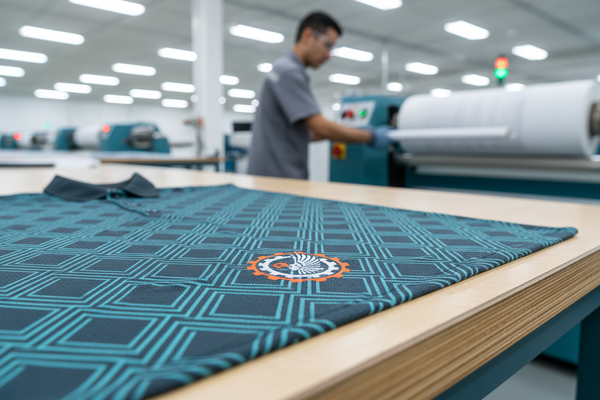
Wash testing isn't just about the fabric; it's about the decoration. Technical decoration (embroidery or screen printing) fails during washing due to differing tension properties. An embroidery thread (usually 100% polyester) does not shrink at the same rate as a cotton or cotton-blend base fabric. During wash testing, this discrepancy leads to what we call "puckering." The thread holding the logo in place creates a tension pocket on the material. The solution is rigorous QC inspection protocols for the decoration itself. Test the batch using the **ISO 6330** wash cycle, and check for "fuzzing" and "pilling" after drying. The rating should be ≥4-5 to ensure the logo remains crisp[citation:3].
Screen printing, particularly plastisol, is susceptible to "crazing" (cracking) in the wash cycle. This occurs when the ink doesn't fully penetrate the fabric or when the application is too thick. Enforcing a wash test on a blank printed sample and stretching the print after the wash cycle (checking for elasticity) will reveal this failure in the workshop execution stage. If the print cracks, the QC team should reject the batch immediately.
4. Risk Factors: Preventing Severe Operational Flaws in Bulk Runs
The operational flaws in bulk runs are usually discovered post-shipment. The worst scenario: a full container of 5,000 pieces lands at the docks, and the procurement team sees "bagginess" or "torque" in the garments. This is due to unmanaged tension in the knitting or weaving phase. During washing, this tension equalizes, causing the fabric to twist. This is a failure of the Linear Matrix Shrinkage Scale.
Another catastrophic risk is the acceptance of color lot match definitions based on digital visualizations. This is a form of "visual clutter" that leads to a spectrographic failure in the lab. To mitigate this, implement a rigorous Spectrographic Lab Color Validation protocol where the Delta-E is set at ≤1.0. Any deviation is a rejected batch.
5. Procurement Ledger: Cost Amortization Specs for Bulk Wash Testing Drops
The cost of wash testing is a drop in the ocean compared to the cost of a rejected bulk order. The standard is to mandate third-party technical factory floor inspections prior to processing earnest down-payments. This ensures you aren't paying for a batch of fabric that will fail the ISO 6330 requirements in a third-party lab.
Integrating a mandatory 15% timeframe buffer into all standard international logistics paths is non-negotiable. This buffer allows you to re-route the manufacturing line (Redundant Production Redirection) if the wash test fails. The raw material lead time for a bulk drop of 10,000 meters is typically 45 days. Add the 15% buffer (about 7 days) and the wash test calendar (about 15 days for the lab), and you have a realistic project timeline.
6. Engineering Benchmark Profiles: AATCC/ASTM Lab Threshold Metrics
The following table provides a foundational set of engineering benchmarks. These are not arbitrary numbers; they represent the Minimum Acceptable Quality Level (AQL) for industrial workwear. Every standard has specific tolerances, but the financial risk of non-compliance is massive.
| Test Parameter | Standard Method | Acceptance Threshold (Workwear) | Risk of Non-Compliance |
|---|---|---|---|
| Dimensional Stability (Warp) | ISO 6330 / AATCC 135 | ±3% | Garment bagginess; loss of functional fit |
| Color Change | ISO 105-C06 | Grade 4 (Grey Scale) | Faded branding; inconsistent fleet identity |
| Staining (Colorfastness) | ISO 105-C06 | Grade 4 (Cross Stain) | Color bleeding onto other garments in wash |
| Tensile Strength (Warp) | ISO 13934-2 | >300 N | Seam blowout under physical stress[citation:5] |
| Spirality (Torque) | ISO 16322-2 | ≤5% | Garment twisting; misaligned seams[citation:9] |
7. Fatal Sourcing Gaps: Destructive Blindspots in Quality Control
Relying solely on supplier-provided wash test certificates is a destructive blindspot. The only way to ensure the accuracy of the wash test results is to audit the factory lab. This is where the **On-Site Technical Facility Floor Audit** comes in. Are the lab technicians calibrating the Launder-Ometer to 40±2 rpm? Is the detergent formulation standard (e.g., ECE detergent) being used? If the supplier is using generic detergent to manipulate the wash test, the results are useless.
Additionally, the absence of a Standardized Quality Acceptance Limits (AQL) protocol for visual defects post-washing is a gaping hole. Wash testing surfaces defects that aren't visible on the finished fabric: yarn hairiness, raised fibers, or uneven dye penetration. A "Major Defect" in your AQL protocol should include any "color change" that shifts more than 2 Grey Scale units under standard illumination. Without these definitions, you have no legal basis to reject the shipment.
8. Supply Chain FAQ Summary: Verified Action Ledger FAQ
Q: How many washes are considered "durable" for industrial workwear?
A: The standard benchmark for "Durable" performance is 15 machine washes. Performance testing should check after 1, 5, and 15 cycles to see the degradation curve[citation:3].
Q: What is the ideal shrinkage tolerance for poly-cotton?
A: The industry standard for a 65/35 blend is ±2%. For 100% cotton, ±3% is the acceptable tolerance to maintain structural integrity[citation:5].
Q: Why is "Line Drying" included in testing if we tumble dry?
A: The testing protocol often requires checking the garment after "Line Drying" and "Tumble Drying". The drying method drastically affects dimensional stability. Tumble drying shrinks the fabric much more than line drying due to the heat stress[citation:3].
Q: How do you test for seam slippage?
A: The ISO 13936-2 standard tests this by measuring the displacement of a seam when a specific load is applied. For heavy workwear, the maximum allowed displacement is 2mm at 120N to prevent blowouts[citation:9].