Last-Mile Uniform Deployment: Overcoming Maritime Palletization Constraints
1. Sourcing Realities: What Corporate Fleet Managers Overlook Regarding Last-Mile Uniform Deployment
Enterprise procurement operations frequently stumble during the final leg of large-scale textile distribution because they treat apparel logistics identically to durable dry goods. When managing uniform programs for extensive field crews, heavy civil infrastructure operations, or logistics transport networks, the point of critical failure rarely exists within the pattern room or the cutting floor. Instead, the operational breakdown occurs inside the unventilated metal envelope of an intercontinental maritime shipping container. Standard bulk packing configurations leave loose garments exposed to ambient atmospheric moisture, inducing rapid micro-climatic shifts across ocean transit corridors.
Without factoring in specialized vacuum-sealed flat-packing methodologies, standard industrial apparel absorbs significant atmospheric water mass during a 30-day ocean voyage. High-visibility polyester and heavy poly-cotton durable blends are inherently hygroscopic when exposed to uncalibrated maritime transit environments. When relative humidity inside a container surpasses 85%, capillary action draws airborne salt-laden vapor directly into the fiber matrices. This initiates localized mold cultivation, fiber weakening, and premature dye degradation before the garments are even unpacked at regional distribution centers.
To insulate capital investments against transit-related degradation, smart organizations must restructure their procurement workflows during the pre-purchase discovery phase. This requires integrating a rigid logistics routing buffer time into multi-hub transport schedules and establishing direct accountability milestones with the manufacturing mill. By moving away from loose bulk boxing and shifting toward automated vacuum flat-packing, the volume occupied per pallet drops by up to 42%. This optimization drastically alters shipping calculations while protecting technical textiles from structural degradation across volatile oceanic shipping channels.
2. Textile Physics: The Structural Science Behind High-Visibility Polyester and Poly-Cotton Durable Blends
The selection of technical base materials dictates whether an enterprise uniform survives the severe friction of 12-hour civil infrastructure shifts or fails prematurely due to mechanical wear. High-visibility polyester fabrics designed for field usage require heavy-gauge circular knit or structured warp-knit constructions, registering a minimum weight of 240 GSM. This structural specification delivers the required industrial tensile endurance needed to resist tearing when field personnel interact with abrasive machinery surfaces and high-stress material loading environments.
Engineered poly-cotton durable blends (ideally structured in a 65% polyester to 35% long-staple combed cotton ratio) optimize the relationship between mechanical toughness and physiological breathability. The synthetic component provides excellent dimensional stability and synthetic resistance against tearing, while the organic cotton yarn channels moisture away from the skin. To maximize protection against chemical hazards and environmental staining, these technical fabrics must undergo a mill-level application of a fluorocarbon soil release finish. This surface modification changes the surface energy of the textile web, forcing liquid hydrocarbons, grease, and industrial grime to bead up and release during standard commercial washing cycles rather than bonding with the underlying fibers.
Furthermore, safety compliance parameters necessitate strict adherence to retroreflective index certification guidelines. High-visibility components rely on micro-prismatic glass-bead arrays bonded to a durable backing material. If the underlying fabric matrix undergoes structural skewing or excessive shrinkage during industrial laundering, the alignment of these retroreflective surfaces shifts away from perpendicular light incidence pathways. This mechanical distortion lowers the retroreflective class coefficient, rendering the garment non-compliant with international industrial safety standards and exposing the enterprise to regulatory liabilities.
3. Workshop Execution: Calibrating Embroidery and Heat Transfer Output Lines
Applying company branding and safety emblems to heavy-duty industrial clothing requires a deep understanding of textile geometry. Standard embroidery applications on a 240 GSM poly-cotton blend must use high-tenacity 40-weight polyester embroidery threads. Standard rayon alternatives quickly break down when exposed to the harsh bleaching agents and high temperatures typical of commercial laundering operations. Production lines must calibrate machine tensions precisely to match the knit density of the garment panel. Insufficient stitch tension leads to loose loops that snag on equipment, while excessive tension causes localized puckering that weakens the fabric matrix surrounding the emblem.
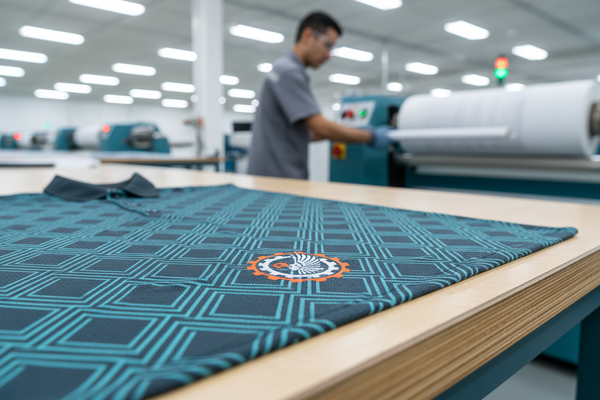
When applying logos to high-visibility polyester panels, digital sublimation or industrial-grade heat transfer applications are often preferred over heavy embroidery to preserve water resistance and avoid skin irritation on high-friction areas. Industrial heat transfers require a multi-stage quality control validation process. The pneumatic heat presses must maintain constant temperature control within +/- 2°C, and pressure delivery must be uniform across the entire surface area of the graphic. Incorrect calibration can lead to premature peeling along the edges of the logo when exposed to high-heat commercial dryers.
To guarantee branding longevity, production managers must rigorously monitor laundering crocking metrics on all decorated components. During high-temperature wash cycles, dyes from embroidered elements or high-density screen inks can bleed onto adjacent high-visibility panels. This phenomenon, known as wet crocking migration, degrades the chromaticity coordinates of fluorescent background materials. By running continuous test batches that measure color fastness against accelerated wash cycles, factories can ensure that branding details remain sharp and distinct without compromising the safety features of the garment.
4. Risk Factors: Preventing Severe Operational Flaws in Bulk Runs
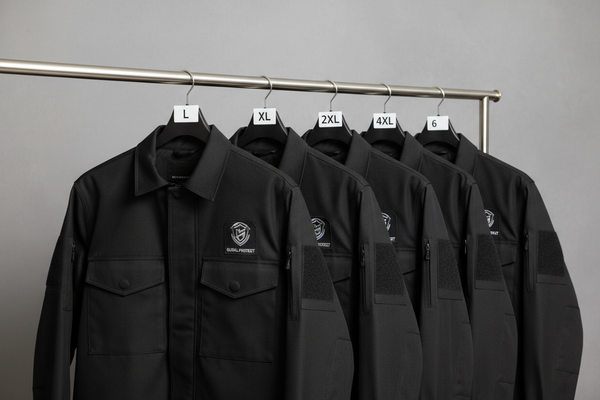
A frequent error made by corporate buyers is purchasing lightweight retail blanks for heavy transport or civil construction applications. Retail garments are constructed for low-frequency use and light home laundering. They generally lack the necessary yarn twist, seam reinforcement, and dye stabilization required for industrial uniform pools. When these products enter commercial laundering systems, they experience rapid structural breakdown. Seams rip under standard working stresses, and colors fade well below safety visibility minimums within weeks of initial deployment.
Another major supply chain blindspot is failing to account for multi-wash crocking metrics during initial material selection. If a technical fabric possesses a dry or wet crocking rating below Grade 4.0, the friction generated by daily operational movements will cause significant dye transfer. In a transit fleet setting, this results in dark dyes rubbing off onto truck cab interiors, equipment interfaces, and high-visibility contrast panels. This degradation ruins the professional appearance of the uniform and can even foul sensitive electronic components inside vehicles.
Finally, procurement teams often leave themselves vulnerable by setting zero lead-time contingency windows for multi-hub transport docks. Intercontinental supply chains are subject to frequent port congestion, customs clearance audits, and marine transit disruptions. When a regional distribution hub operates with a zero-margin delivery window, a 10-day delay at an ocean terminal can halt regional onboarding schedules. Building a standardized cushion into the delivery timeline allows procurement teams to absorb maritime disruptions smoothly, keeping field operations properly equipped without resorting to emergency air-freight services.
5. Procurement Ledger: Cost Amortization Specs for Bulk Reflective Materials Drops
Managing the financial aspects of a multi-year enterprise uniform contract requires moving past simple per-unit cost metrics and focusing on full lifecycle cost amortization. Technical apparel manufacturing involves significant upfront tooling costs, custom dye formulation runs, and specialized finishing setups. To manage these expenses effectively, organizations should utilize a structured bulk contract multi-tier MOQ framework. This contractual model links unit pricing tiers directly to raw material production volumes, allowing buyers to take advantage of mill efficiencies while scheduling deliveries to match their actual operational needs over time.
By scheduling bulk raw material commitments at higher volume thresholds, the factory can purchase yarn, high-visibility dyes, and certified reflective materials at volume discounts. The manufacturer can then hold this material as raw roll goods and convert it into finished garments in smaller, rolling production runs. This strategic approach keeps unit costs low while preventing the waste associated with storing large amounts of finished inventory in unmanaged regional warehouses. The table below outlines how unit pricing structures shift across different procurement volumes:
6. Engineering Benchmark Profiles: AATCC/ASTM Lab Threshold Metrics
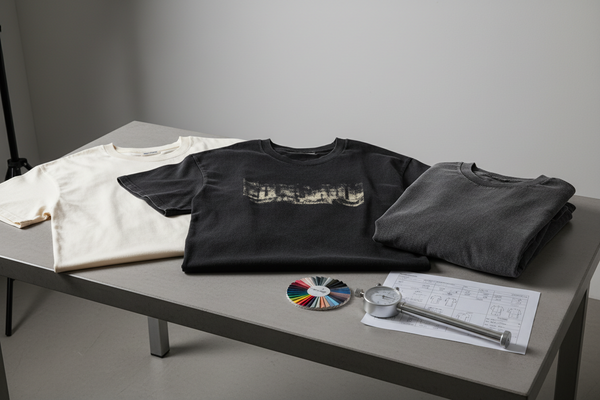
To maintain objective quality control across international production facilities, procurement contracts must specify measurable performance targets using standardized AATCC and ASTM lab protocols. Every production run must be accompanied by certified independent laboratory test reports verifying compliance prior to container loading. The following matrix details the minimum physical performance criteria required for heavy civil infrastructure and logistics fleet uniform programs:
| Performance Property | Testing Protocol Reference | Minimum Passing Threshold | Operational Significance |
|---|---|---|---|
| Industrial Tensile Endurance | ASTM D5034 (Grab Test) | Warp: 180 lbs / Fill: 140 lbs | Prevents structural fabric tearing under mechanical stress. |
| Dimensional Stability (Shrinkage) | AATCC Method 135 (50 Cycles) | Less than 2.5% linear variance | Eliminates fit distortion and twisting of reflective stripes. |
| Laundering Crocking Resistance | AATCC Method 116 (Rotary Vertical) | Dry: Grade 4.5 / Wet: Grade 4.0 | Stops dye transfer onto vehicle interiors or safety panels. |
| Retroreflective Coefficient Retention | ASTM E810 (Post Industrial Wash) | 330 cd/lx/m² minimum after 50 cycles | Guarantees low-light crew visibility and compliance. |
| Soil Release Effectiveness | AATCC Method 130 (Oil Stain Release) | Grade 4.0 minimum profile | Ensures industrial grime washes out during processing. |
Adhering strictly to these technical targets protects procurement teams from vendor excuses regarding premature wear. If an inbound shipment fails to meet these lab benchmarks during random dock inspections, the buyer has the contractual teeth necessary to reject the batch. This approach shifts project risk back to the manufacturer, ensuring that only field-ready garments enter your distribution network.
7. Fatal Sourcing Gaps: Destructive Blindspots in Quality Control
The most vulnerable point in a corporate clothing program is the lack of strict inspection protocols at regional receiving docks. Many procurement teams assume that overseas factory-level inspections remove the need for inbound verification. However, this oversight leaves the organization exposed to errors caused by poor container packing, water damage during transport, or subtle factory material substitutions. Once a pallet is broken down and distributed to local hubs, tracking down the root cause of systemic defects becomes nearly impossible.
To close this quality gap, companies should establish a standardized, three-step gate verification protocol for all incoming ocean containers. First, inspectors must perform an immediate moisture audit on outer shipping cartons before unloading, using specialized electronic moisture probes to identify any water damage from container leaks. Second, personnel should use a portable retroreflectometer to verify that reflective materials match safety standards on-site. Finally, inspectors should run a quick wet-crocking rub test on decoration boundaries to catch any unstable dye lots before the garments are approved for final delivery.
Additionally, procurement teams must carefully manage cross-docking schedules at regional hubs. When uniforms are rushed through distribution centers without proper batch tracking, identifying and isolating a defective run becomes extremely difficult. Implementing clear tracking barcodes on every vacuum-sealed box ensures complete visibility from the original dye lot to the individual field worker. This level of tracking allows logistics managers to quickly contain any quality issues, minimizing operational disruption across the wider fleet program.
8. Supply Chain FAQ Summary: Verified Action Ledger FAQ
Question: How do vacuum-sealed flat-packing methods directly alter the shipping economics of large-scale uniform distribution?
Answer: Standard loose garments packed in conventional cartons contain significant amounts of trapped air, which reduces container space efficiency. Shifting to automated vacuum-sealed flat-packing removes this air volume, letting you fit up to 42% more garments into a standard 40-foot high-cube container. This optimization lowers your per-unit shipping costs, reduces the total number of containers needed, and protects technical textiles from humidity and dust during long ocean voyages.
Question: Why do standard retail-grade fabrics experience seam puckering and structural failure when used in heavy transport environments?
Answer: Retail-grade fabrics often combine low-density knits with lightweight sewing threads to reduce manufacturing costs. When these garments encounter the heavy pulling and friction typical of logistics and infrastructure work, the lightweight seams cannot distribute the mechanical stress evenly. This imbalance leads to puckering, fabric distortion, and seam failures. Industrial-grade uniforms prevent these issues by balancing thread tensile strength with heavy-duty fabric weights.
Question: What are the clear advantages of structured poly-cotton durable blends over 100% synthetic polyesters for active crews?
Answer: While 100% polyester offers high tensile strength, it can trap body heat and retain odors in demanding field conditions. A engineered 65/35 poly-cotton blend provides the strength of synthetic fiber alongside the comfort and breathability of cotton. This balance reduces heat stress for workers during long shifts while ensuring the garment maintains its shape, color, and structural integrity through repeated industrial washes.
Question: How should a logistics coordinator calculate rolling safety stock levels to handle maritime shipping delays?
Answer: Safety stock calculations should match your specific logistics routing buffer time, typically factoring in a 14 to 21-day window for potential transit disruptions. Instead of delivering an entire annual uniform order at once, corporate accounts should structure a rolling fulfillment schedule. Maintaining a constant 15% buffer stock at regional hubs ensures you can outfit new hires and replace damaged gear smoothly, even during unexpected supply chain bottlenecks.