How to Choose Easy-to-Sell Backpack Stock Lots for Boutique Resale?
If you are trying to build a boutique or resale inventory that feels practical, current, and easier to move than size-sensitive clothing, backpack stock lots are one of the most realistic places to start. The trick is not just finding bags at a low cost. The real question is how to choose the kind of backpack stock that people actually want to carry in daily life.
Quick answer
The easiest backpack stock lots to resell are usually simple daily-use styles: lightweight, neutral colors, practical pockets, easy-to-match shape, and a price point that still leaves room for markup. Styles that feel too niche, too trendy, or too awkward to use in real life often look interesting in a supplier image but move slowly once they hit a real store shelf.
In this guide
- What makes backpack lots easier than many clothing lots
- Why some bag lots sell and others stall
- What real buyers usually want from this category
- How to choose a backpack stock lot step by step
- Comparison table: easy-sell vs risky stock
- Common mistakes new buyers make
- A product example from this category
- A simple checklist before ordering
- Where to go next on ApparelLots
- Buyer questions
The reality check: why backpack stock lots are often easier than apparel lots
A lot of newer buyers assume clothing is the easiest place to begin because apparel feels like the center of fashion retail. That sounds logical at first, but in real day-to-day resale, clothing creates a long list of little decisions that slow buyers down. You have to think about size runs, fit issues, fabric expectations, seasonal timing, color preferences, return rates, styling questions, and whether a piece looks good on different body types. If your shop is already set up for that, great. But if you are still building your inventory strategy, accessories can be much more forgiving.
Backpacks sit in a practical middle ground. They still give your store a fashion feel, but they do not bring the same size stress that apparel does. A customer does not need to try on a sling bag or wonder whether the shoulder width looks right. The decision is simpler: does it look good, is it easy to use, and does it fit daily life? When the answer is yes, the sale becomes much easier.
That is why casual backpack lots, sling bags, and crossbody-friendly utility shapes often perform well for boutiques, general accessories stores, casual fashion pages, student-focused shops, and even small gift-style stores. People do not need a special occasion to buy them. They fit into commuting, short trips, walking around the city, campus life, weekend errands, and everyday carry.
This matters even more in a market where many shoppers are trying to buy smarter. In recent years, a lot of customers have shifted away from “buy it because it is trendy right now” toward “buy it because I will actually use it.” That does not mean trend is dead. It means the sweet spot is where trend meets function. And that is exactly where practical backpack stock lots can do well.
There is also another advantage buyers do not always think about at the beginning: merchandising is easier. A clothing item often needs a full styling context. A customer may need to imagine the right pants, right shoes, right fit, right season. A daily-use backpack asks for less mental work. Customers can picture it immediately. That instant understanding is a big part of why some stock lots move faster than others.
None of this means every backpack lot is a good buy. It only means the category gives you a cleaner starting point. You still need to look at use case, design balance, pocket structure, visual appeal, and whether the lot fits the type of customer you are trying to attract. When buyers skip that part and just chase the cheapest carton, they end up with the classic slow-moving pile: inventory that is technically cheap, but expensive in time, storage, and stalled cash flow.
Why some backpack lots sell quickly and others just sit there
The easiest way to think about this is simple: some bags fit into real life, and some only look good in supplier photos. That sounds blunt, but it is usually true.
Buyers get pulled toward product images that feel dramatic, over-designed, or “different.” But real customers often choose the bag they can imagine using tomorrow morning. The one that works with a hoodie, a neutral jacket, school clothes, a weekend outfit, or a casual travel look. The one that can carry a phone, earbuds, small cosmetic items, keys, wallet, maybe a notebook or compact tablet, and still not feel bulky.
That is why simple shapes with one or two strong functional points usually do better than styles trying to do too much. Multi-pocket organization, lightweight feel, easy zip access, comfortable strap length, and a clean silhouette matter more than decorative details that look exciting for five seconds and annoying after two weeks.
Color also matters. Neutral shades are not boring when your goal is resale. Black, beige, light khaki, grey, and other calm everyday tones tend to work well because they match more outfits. Even when customers like trend, they often still buy practical colors for bags because they want the item to survive more than one outfit cycle. Boutique buyers sometimes underestimate how powerful “goes with everything” can be.
Another difference between easy-sell and slow-sell stock is whether the product feels too age-specific. If a bag only works for one narrow style group, you need a store audience that is already very focused. That can work, but it raises risk. A more flexible silhouette gives you more room. Teen customers may carry it one way, college buyers another way, and casual adults another way. That wider usability tends to help sell-through.
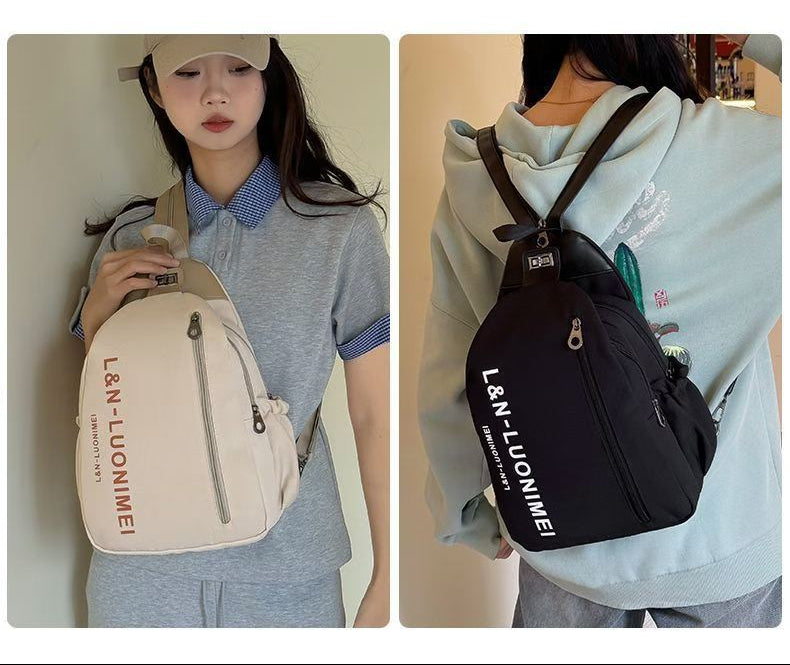
The product photos you shared are a good example of this kind of flexible stock. The bag shape feels casual and modern without being hard to place. It is lightweight, has multiple pockets, and looks suitable for short outings, city walking, quick travel, or just everyday use. The design reads as approachable. That is a strong resale sign.
One of the best buyer habits you can build is this: every time you see a lot you are considering, stop and ask, “Would a customer understand this product in three seconds?” If the answer is yes, that is a very good sign. If the answer is “well, I would need to explain why it is cool,” the lot may still work, but it is harder.
 |
360pcs Wholesale Casual Sling Backpack Lot – Multi-Pocket Lightweight Crossbody Bags for Daily Travel & Urban Use – Assorted Colors Small Backpack Stock for Boutique ResaleLOT TYPE: Mixed color / same style lot (high consistency, easy merchandising) | INSPECT |
| 260 Sets Bulk 4-Piece Aesthetic Bear Backpack Combo - High-Value Kawaii Bundle with Tote, Crossbody & Pouch - Full Inventory Liquidation - Student Gear Stock LotLOT TYPE: | INSPECT | |
| 390 Units Bulk Lifestyle Mini Backpacks - 3-Color Assorted Nylon Daily Rucksacks - Factory Clearance Liquidation - High-Margin Boutique Accessories Stock LotLOT TYPE: Single-category, assorted sizes/colors.Assorted Colors (Black, Khaki, Beige). | INSPECT | |
 |
190 Units Wholesale Aesthetic Penguin Character School Backpacks - Kawaii Animal Themed Student Gear - 4-Color Assorted Stock Lot Liquidation - High-Margin Boutique Stationery AccessoriesLOT TYPE: Assorted Colors (Penguin/Animal Aesthetic). | INSPECT |


What real customers usually want from this category
When boutique owners talk about what actually sells in accessories, the conversation usually comes back to the same thing: people want products that make daily life easier without feeling dull. That balance matters a lot. Nobody wants something that looks purely utilitarian and forgettable, but most customers also do not want a bag that is so dramatic it becomes hard to wear.
In practical terms, customers looking at a casual backpack or sling-style bag are usually checking for a few things, even if they never say it out loud. They want to know whether it feels light enough to carry for a few hours, whether the strap sits comfortably, whether it holds their everyday basics, whether it looks neat with casual clothing, and whether it still feels current without trying too hard.
If your customer base includes students, young office workers, casual streetwear shoppers, gift buyers, travel-light shoppers, or people who like hands-free daily bags, this category often makes sense. It also works well in stores where the customer buys based on a lifestyle mood rather than a single technical feature. A customer may not say, “I am shopping for a multi-pocket nylon sling backpack with balanced utility styling.” They may just think, “This would be handy for weekends,” or “This goes with my hoodie and sneakers,” or “This would be useful for travel days.”
That kind of quiet, instant yes is what you want.
This is also where boutique positioning matters. The same exact bag can feel like a student basic in one store, a casual commuter bag in another, and a practical fashion accessory in another. Good resellers know they are not only buying a product; they are buying a product story that feels natural for their audience. If your audience leans relaxed and wearable, the bag does not need to be sold as something dramatic. It can simply be styled as part of an everyday routine.
You can think of this category as a bridge item. It connects fashion, convenience, and gifting. That makes it useful in more than one retail context. It can sit near casual outerwear, hoodie collections, seasonal accessories, back-to-school edits, gift sections, travel basics, or weekend lifestyle curation. Whenever an item can live in multiple retail stories, its resale potential usually improves.
How to choose a backpack stock lot step by step
1) Start with real use, not supplier hype
Before looking at cost, carton count, or how “hot” the style looks in a wholesale listing, begin with one question: where would this bag naturally fit into everyday life? If you can answer that quickly, the product already has a stronger chance.
A bag that works for school runs, café errands, day trips, walking commutes, transit use, or casual travel has a built-in reason to exist. A bag that only works in a very specific styling mood may still sell, but it depends much more on trend timing and audience fit.
2) Choose shapes people already understand
Some shapes are familiar enough that customers trust them immediately. Sling backpacks, compact one-shoulder bags, clean mini backpacks, and simple crossbody utility bags often fall into that category. The more strange or overbuilt the shape, the more your store has to do the selling work.
Familiar does not mean boring. It means the product does not need a long explanation.
3) Pay attention to pocket structure
A lot of buyers look at the outside first and forget to think through use. Pocket structure matters because it changes the feeling of ownership. A front zip pocket, a main compartment, side access, and a small internal divider can make the bag feel much more “kept together” to the customer. A bag can look good on the outside but disappoint if the inside is chaotic.
The product images you shared highlight multiple compartments and a practical storage layout. That is not just a feature list point. It supports the daily-use story. It tells the buyer the product is meant to be carried, not just looked at.
4) Look for lightweight material feel
Customers often equate heavy with sturdy, but in smaller daily bags, too much weight can become a negative. People want bags that hold essentials without turning into a burden. That is especially true in casual markets, student markets, and travel-light markets.
Lightweight fabrics with decent shape retention tend to work well in this category because they feel comfortable and easy. They also tend to make merchandising easier, since the bag can be hung, stacked, or front-displayed without becoming awkward.
5) Stay close to neutral colors
Neutral colors often do more work for you over time. If you are building inventory for wider resale, black is still one of the safest choices in casual bag categories because it feels clean, practical, and easy to pair. Beige, cream, khaki, and muted greys can also work well, especially when you want a softer lifestyle feel.
Loud colors can move in the right store, but for a stock lot strategy, neutral is usually safer because it reduces the chance that half the carton will feel hard to style.
6) Think about your customer’s outfit, not just the product photo
Supplier images often show the item in isolation or in a polished styled image. A reseller needs to imagine something different: does this bag work with the kind of clothes your customer already buys? Hoodies? Casual knits? Streetwear basics? Light jackets? Travel looks? Weekend denim? If yes, it has stronger everyday power.
The more natural the pairing, the easier the add-on sale.
7) Be honest about defect tolerance in clearance buying
When you buy overstock, tail orders, or clearance-grade inventory, you are usually gaining better value by accepting some imperfection risk. That is normal. The key is making sure the product category can absorb that risk well.
Bags often handle small cosmetic issues better than some fashion categories. A light storage mark, a minor thread issue, or a small inconsistency may not affect usability. That does not mean defects do not matter. It means the product still has resale potential if the lot is priced correctly and the issues are within a manageable range.
8) Buy with sell-through in mind, not just margin in theory
One of the most common wholesale mistakes is calculating profit as if every unit will sell at the top possible price. In real resale, speed matters. A simpler, lower-risk backpack lot that turns steadily can be more valuable than a more “fashion” lot that looks exciting but lingers.
This is especially important for smaller buyers. Fast, healthy turnover keeps your cash moving. Slow inventory creates emotional pressure, storage pressure, and decision fatigue. The best lot is not always the one with the biggest markup fantasy. It is often the one with the most believable path to regular sales.
Comparison table: easy-sell backpack stock vs riskier backpack stock
| What to compare | Easier-to-sell stock | Riskier stock |
|---|---|---|
| Shape | Simple, familiar, easy to wear daily | Awkward, unusual, too trend-specific |
| Color | Black, beige, grey, muted tones | Hard-to-style loud shades |
| Function | Clear pocket layout, useful compartments | Looks nice but not practical |
| Audience | Works across students, commuters, casual shoppers | Only fits one narrow style group |
| Merchandising | Easy to display and explain | Needs heavy styling to sell |
| Clearance tolerance | Still usable even with minor imperfections | Defects become very visible or damaging |
If you look at the table honestly, you can see why practical sling backpacks and casual small backpack styles are such common entry points for resale buyers. They are not trying to reinvent the category. They just do a useful job in a wearable way.
Common mistakes buyers make with bag stock lots
Buying too much too early
Some buyers get excited because the product category feels safer than apparel, so they jump straight into a larger quantity than their customer base can absorb. Even in easier categories, inventory still needs a sales path. A product can be good and still move too slowly if your channel is not ready.
Choosing for personal taste only
This happens all the time. A buyer chooses a bag because they personally think it looks cool. That is not useless, but it is not enough. You are not only buying for yourself. You are buying for the overlap between your aesthetic and your customer’s behavior.
Ignoring use case
If you cannot tell what the bag is for, the customer probably cannot either. “Looks interesting” is weaker than “perfect for daily carry,” “great for quick travel,” or “easy hands-free weekend bag.”
Thinking price alone creates demand
A lot may be very cheap, but if the product feels wrong, the low cost only means you now own more of the wrong item. Good resale comes from the balance of cost, usability, and presentation.
Forgetting the store context
A perfectly decent bag can still perform badly in the wrong store environment. If your audience is minimal and neutral, a heavily decorated bag may feel off. If your audience likes sporty utility, an overly delicate bag may underperform. Product fit is not only about the object. It is also about the storefront mood.
What smart buyers usually do
They choose stock that matches how their customers already dress, move, and shop. They also build around products that can be sold in more than one mood: casual fashion, daily use, gifting, travel, campus, or streetwear basics.
What stressed buyers usually do
They chase the cheapest number, grab what looks trendy in a supplier image, and hope the audience will figure it out later. That usually turns into slower sell-through and more discounting.
A real product example from this category
A good example of this kind of lower-risk accessory stock is a casual sling-style backpack with a compact body, soft structure, multiple zip compartments, and a neutral everyday look. In other words, the type of piece that feels easy to carry with a hoodie, light jacket, knit top, or weekend outfit rather than something that only works in one trend cycle.
On ApparelLots, a product in this direction would fit naturally as a practical accessory lot for resellers who want something wearable, simple, and easy to merchandise. A bag like this works because it does not ask the customer to change their routine. It fits into the routine they already have.
See this related product example here: 360pcs Wholesale Casual Sling Backpack Lot – Multi-Pocket Lightweight Crossbody Bags for Daily Travel & Urban Use – Assorted Colors Small Backpack Stock for Boutique Resale
What makes that kind of product workable is not flashy branding language. It is the combination of familiar shape, daily utility, and styling flexibility. A customer can wear it crossbody, on one shoulder, or as part of an off-duty look. The storage is understandable. The silhouette is neat. The color options feel wearable. The whole product says “easy.”
Easy is underrated in wholesale. Easy to wear. Easy to display. Easy to explain. Easy to picture in real life. Those are all strong signs.
Checklist: what to confirm before you order a backpack stock lot
- Does the shape look natural for daily wear, not just supplier photography?
- Would your customer understand the product in three seconds?
- Does it have enough pockets or storage to feel genuinely useful?
- Are the colors easy to pair with everyday casual outfits?
- Can you imagine selling it in more than one context: boutique, travel, gifting, student use, commuter use?
- Does the lot fit your current store mood instead of fighting it?
- If this is clearance stock, are you comfortable with a small percentage of minor imperfections?
- Can you price it in a way that still feels fair and easy for your customer?
- Do you have a simple display or content angle ready for it?
- Would you still like the product if the trend noise disappeared tomorrow?
That last question is especially useful. Trend can help, but if the product only works because of a passing look, the risk goes up. The most durable stock usually still makes sense even when the mood online changes.
How this category fits boutique owners, resellers, and smaller retailers
Different buyers can use the same category in slightly different ways. A boutique owner may position casual backpack stock as part of a lifestyle edit: weekend pieces, city essentials, relaxed everyday accessories. A reseller may focus more on practical demand and steady turnover. A smaller retailer may use it as an add-on category that raises order value without creating heavy size-management work.
That flexibility is part of the value. You are not locked into one narrow story. The product can sit in a back-to-school mood, an off-duty mood, a casual travel mood, or a giftable basics mood. That is much harder to do with many clothing items, which are often pinned to season, silhouette, and size structure.
There is also an operational advantage. Accessories are often easier to photograph, easier to bundle, and easier to sell through short-form content, lifestyle shots, flat lays, or simple front-display merchandising. That does not guarantee a sale, but it lowers the amount of work needed to make the product understandable.
For buyers who are trying to balance margin with lower complexity, this kind of stock can be a useful middle lane. Not ultra-basic to the point of being forgettable, but not so fashion-specific that it becomes risky for broad resale.
Where this kind of product usually performs best
In general, practical backpack and sling bag lots tend to perform best in stores or channels that already lean toward casual dressing, simple accessories, daily-use products, or young lifestyle shopping. That includes boutique stores with a relaxed aesthetic, casual fashion pages, campus-adjacent customer bases, commuter-friendly accessories edits, everyday gift curation, and travel-light product mixes.
The category also works well when it is not asked to carry the entire store on its own. Bags like this often do well as part of a wider merchandise rhythm. They can sit beside caps, socks, lightweight outerwear, knitwear, tees, and simple accessories. They make sense as part of a real outfit and a real day.
In that sense, the product is collaborative. It supports other products instead of fighting them.
What makes this a realistic beginner-friendly buying angle
When people talk about “beginner-friendly wholesale,” they sometimes mean very different things. Some mean low entry price. Some mean easy to understand. Some mean low return risk. Ideally, a beginner-friendly category does more than one of those things at once.
Casual backpack stock often comes close because it is easier to understand than many apparel categories, easier to explain visually, easier to cross-sell, and easier to fit into daily use. That does not remove all risk, but it lowers the chance of getting trapped in complex sizing issues or styling confusion right away.
It is also a category that teaches good buying habits. You learn to think about use case, audience fit, practicality, display angle, and sell-through potential. Those habits will help you later whether you keep selling accessories or expand into apparel lots, footwear, or mixed category buying.
In other words, simple categories can still teach strong inventory judgment.
Where to go next on ApparelLots
Upward link: pillar page
Start with the main knowledge hub here: Wholesale Clothing Knowledge Hub
Helpful pages
Horizontal links: related reading
Buying Guides
Browse sourcing-focused articles for boutique owners and resellers.
Stock Lots
Explore articles about lot structure, resale logic, and sourcing decisions.
Buyer Questions
Read answers to common wholesale and inventory planning concerns.
Category Insights
See how different categories behave in real boutique resale.
Logistics
Understand shipping, handling, and practical inventory movement topics.
Pricing & Profit
Read about resale margin thinking without turning everything into price chasing.
Downward links: related products
Casual Sling Backpack Lot
Easy daily-use bag category with compact shape and multiple pockets.
Bags & Accessories
Browse related accessory stock that fits casual resale channels.
Stock Lots Type
Compare different inventory structures and buying approaches.


Looking for practical stock that is easier to move?
Start with categories that feel useful in real life. Accessories with simple function, neutral styling, and easy everyday appeal can be a smart first step for boutique resale.
Buyer questions
Are backpack stock lots easier to resell than clothing lots?
Very often, yes. Bags remove the size issue, which already lowers one major resale headache. They can still underperform if the style is wrong, but the category itself is usually easier to manage than apparel for newer buyers.
What kind of backpack lot is best for a boutique?
Usually the best starting point is a clean, practical, neutral-toned style that fits casual daily use. Think lightweight, useful pockets, and a shape that works with common outfits rather than only one styling niche.
Should I choose trendier styles or simpler styles?
Simpler styles usually create steadier resale. Trend can help, but when you are buying stock lots, a practical style with broad appeal often gives you a healthier balance of sell-through and lower risk.
Do minor imperfections make clearance backpack lots impossible to sell?
Not always. In many overstock or tail-order situations, small issues do not affect usability. What matters is whether the lot is still attractive, functional, and priced sensibly for the clearance context.
Can this category work for online resale too?
Yes, especially when the product photographs clearly and the use case is easy to explain. Daily bags often work well online because shoppers understand them quickly without needing complex fit guidance.
What is the biggest mistake beginners make here?
Chasing the cheapest lot instead of the easiest lot to sell. Those are not always the same thing.
Final thought
If you are trying to choose stock that feels realistic for today’s casual retail environment, practical backpack lots are worth a serious look. They are not magic, and they are not guaranteed sellers just because they are cheap. But when the shape is easy, the pockets make sense, the colors are wearable, and the styling feels natural, this category can be one of the cleaner ways to build resale momentum.
Good wholesale buying is usually less about chasing the loudest product and more about recognizing the product that quietly fits real life. That is often where the steady sales come from.
Suggested tags for this article: Buying Guides, Stock Lots, Buyer Questions