The Honest Reseller‘s Roadmap: Where to Buy Wholesale Clothing Lots Online Without Getting Burned
Stop overpaying for basic inventory. Learn how the world's most successful resellers find "Silk of Cotton" lots for pennies.
Explore Stock LotsIn This Guide
The Luxury You Didn't Know You Could Afford
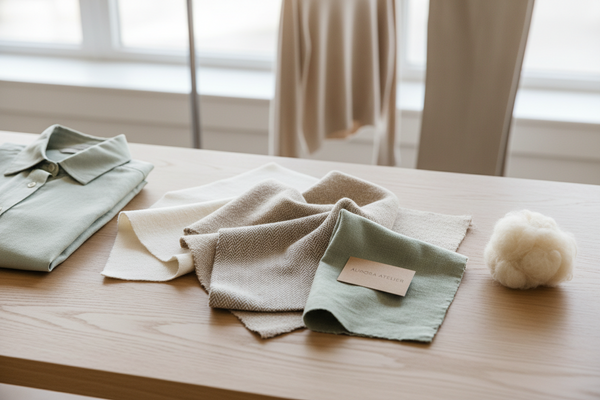
If you're a boutique owner, you know the struggle: your customers want luxury, but your budget says "basic." Most shop owners get stuck in the middle, buying standard cotton shirts that feel rough and look generic. But there is a secret fabric that high-end brands like Ralph Lauren and Lacoste use to bridge that gap—Mercerized Cotton.

Imagine a cotton shirt that has the sheen of silk but the breathability of your favorite T-shirt. That’s mercerized cotton. By treating the cotton fibers with a specialized solution, factories create a fabric that is stronger, more vibrant, and—most importantly—looks incredibly expensive. you are looking at a profit margin that most retailers only dream of.
Mercerized vs. Regular Cotton: A Reseller’s Comparison
| Feature | Standard Cotton | Mercerized Cotton |
|---|---|---|
| Visual Appeal | Matte, dull finish. | Silky, glossy luster. |
| Durability | Prone to pilling/thinning. | High strength, resists pilling. |
| Color Depth | Can fade after 10 washes. | Deep, rich colors that last. |
| Perceived Value | $10 - $15 | $30 - $60 |
Where Do These Lots Come From? (Sourcing Transparency)
You might be wondering: "How can a $40 shirt sell for $1.50?" It's not magic—it's the reality of global manufacturing. Sometimes, a major retailer cancels an order due to a shipping delay. Other times, a factory produces slightly more than the contract required. These are called Tail Orders or Stock Lots.
For the factory, these 80,000 shirts are taking up valuable space. They would rather clear them at a loss to make room for the next season's production. This is where you, the savvy reseller, step in. By buying in bulk, you are solving the factory's problem and rewarding yourself with high-quality inventory at an unbeatable price.
The Boutique Owner's Checklist for Stock Lots
- Check the sizing conversion (Asian vs. US/EU).
- Verify the fabric composition (100% cotton vs. blends).
- Account for the 3% defect tolerance in your pricing.
- Calculate the "Landed Cost" (Price + Shipping + Customs).
- Review the packaging (Bulk vs. Individually bagged).
Want to see what's in stock?
Our inventory moves fast. Check out our latest premium mercerized cotton and streetwear lots before they're gone.
Frequently Asked Questions
Can I buy just 100 pieces? +
Why is there a 3% defect rate? +
Continue Your Sourcing Journey:
- Up: Wholesale Clothing Knowledge Hub
- Browse: Buying Guides
- How it works: Our Sourcing Process
A few years back, I watched a dozen YouTube videos of people finding iPhones in Amazon return pallets. I was convinced I‘d stumbled on a money printer. So I found a sketchy liquidation site and bid $600 on a “High End Electronics” lot. When the freight truck dropped it in my driveway, I didn’t find iPhones. I found twelve broken humidifiers, a box of tangled Christmas lights, and—I am not kidding—a used waffle maker with old batter still crusted in the grooves.[reference:22]
That $600 loss was my tuition fee. It taught me that in wholesale clothing sourcing, the source is everything. Buy from the wrong place, and you‘re just paying to take out someone else‘s trash. Buy from the right place, and you stop being a “picker” and start being a business.[reference:23]
This guide is for everyone who doesn’t want to learn that lesson the hard way. Whether you‘re running a boutique, flipping on Poshmark, or just trying to build a side hustle from your garage, I’ll show you exactly where to find wholesale clothing lots online — what works, what doesn‘t, and who to trust when you’re ready to click buy.
Before You Spend a Penny: Three Non‑Negotiable Steps
You’re excited. I get it. But skip these steps and you‘re gambling, not sourcing.
✅ Step 1: Get your resale certificate
Most legitimate wholesalers won’t even show you pricing without a valid Resale Certificate or Sales Tax ID. Platforms like B‑Stock and many sellers on Faire require it. It costs next to nothing and takes about two weeks. Do it first.[reference:24]
✅ Step 2: Know your business model
Are you a boutique curator? A discount retailer? A vintage specialist? Your sourcing strategy changes dramatically based on what you‘re selling. Platforms like BULQ and B‑Stock Target returns are safest for part‑time resellers working from a garage. DirectLiquidation and Walmart truckloads are for operators with warehouse space.[reference:25][reference:26]
✅ Step 3: Join the flipping communities
Reddit’s r/Flipping has over 450,000 members who‘ve spent years evaluating suppliers. They share real experiences — who delivers quality, who disappears with your wire transfer. Read before you buy.[reference:27]
The Four Main Channels for Wholesale Clothing Lots
There are four primary ways to buy clothing in bulk online. Each suits a different kind of business. Here‘s the honest breakdown.[reference:28]
1. Liquidation Marketplaces (High Risk, High Reward)
These are platforms where you buy returns, overstock, and shelf pulls from major retailers. Pallets and truckloads. B‑Stock Solutions runs the official liquidation auctions for Amazon, Walmart, Target, Costco, and Home Depot. You‘re buying directly from the retailer — no middleman picking out the good stuff first. The catch? You usually have to buy by the truckload or high‑count pallet, and competition is fierce.[reference:29]
Liquidation.com is a classic for a reason. They sell everything from shelf‑pull cosmetics to consumer electronics. My strategy: filter for “Shelf Pulls” rather than “Customer Returns.” Shelf pulls are items that just didn’t sell in the store — brand new in the box. Returns are a gamble.[reference:30]
Via Trading offers pallets of clothing in a wide range of categories. New listings appear constantly — mostly buy‑now, but some let you make an offer. They offer manifested overstock, customer returns from Kohl‘s, and huge unmanifested loads.[reference:31]
2. Beginner‑Friendly Fixed‑Price Platforms
BULQ is great for beginners because they offer cases, not just pallets. You can buy a box of apparel for $200 instead of a pallet for $2,000. New inventory drops three times daily at 11 AM, 2 PM, and 5 PM ET. All cases and pallets come with guaranteed manifests. Flat‑rate shipping of $30 per case to anywhere in the US.[reference:32]
3. Online Wholesale Marketplaces (Low MOQ, Less Risk)
If you‘re not ready for pallets, these are your entry point. Faire, FashionGo, and LA Showroom connect you with thousands of brands. Faire offers net‑60 payment terms for qualifying retailers, free returns on first orders, and low MOQs (often $200–$500 total). The trade‑off? You’re competing with many other boutiques for the same designs.[reference:35][reference:36]
OrangeShine specializes in plus‑size and curve‑friendly inventory — a valuable niche. Wholesale Fashion Square offers pre‑packed lots at 50–70% below wholesale.[reference:37]
4. Jobber Lots & Rag Houses (The Treasure Hunt)
Want big brands without the big risk? Jomar Wholesale sells “jobber” lots — overstock directly from brands like Free People, Urban Outfitters, and Zara. I once bought a Jomar box of Free People dresses for roughly $12 per unit and sold them on Poshmark for $45–$60 each.[reference:38]
Helpsy Source saves clothing from landfills and bundles it for resellers. You can buy boxes of “Men‘s Vintage Flannels” or “Women’s Activewear.” They‘re transparent about condition — a “Grade A” box generally won’t have stains.[reference:39]
Platform Comparison: Where Should You Start?
| Platform | Best For | Typical Lot Size | Manifest? | Risk Level |
|---|---|---|---|---|
| B‑Stock | Volume resellers, warehouse ops | Truckloads / high pallets | Yes (detailed) | Medium |
| BULQ | Garage‑based beginners | Cases / small pallets | Yes (guaranteed) | Medium‑high |
| Liquidation.com | All experience levels | Pallets to truckloads | Varies | Medium |
| Via Trading | Clothing specialists | Pallets (500‑1500 pieces) | Manifested options | Low‑medium |
| Faire / FashionGo | Boutique owners | Low MOQ ($200‑500) | Product listings | Low |
| Jomar / Helpsy | Brand‑name seekers | Boxes to pallets | Grade‑based | Low |
Manifested vs. Blind Lots: This Decision Will Make or Break You
A manifested lot comes with a detailed itemized list — every SKU, quantity, condition grade, and often estimated retail value. You can model expected revenue before you spend a dollar.[reference:40]
An unmanifested (blind) lot is sold with no item list. You only see what arrives after you pay. It costs less upfront — because the seller didn‘t pay staff to sort it — but the uncertainty is real.[reference:41]
💡 The rule I learned the hard way: Manifested lots trade predictability for higher per‑unit cost. Unmanifested lots trade price for uncertainty and greater sorting work. For your first 3–5 purchases, always buy manifested. The transparency is worth every penny.[reference:42]
A general rule of thumb in the industry is to provide 95% or better manifest accuracy. If a seller can‘t guarantee that, walk away.[reference:43]
Common Mistakes That Cost Real Money
- Buying blind as a beginner. Mystery pallets are gambling, not sourcing. Stick to manifested lots with condition notes.
- Ignoring total landed cost. That $400 pallet might cost $250 to freight ship and another $50 in storage. Calculate before you bid.
- Trusting marketing hype over community feedback. Suppliers with Trustpilot scores below 2 stars have over 1,000 verified complaints — many with photo evidence of defects.[reference:44]
- Buying from unverified Instagram sellers. If a deal seems too good to be true on social media, it is. Scammers thrive where there‘s no accountability.
- Panicking over the 3‑5% defect allowance. True wholesale liquidation has a small defect percentage — it’s why the price is low. That‘s not a scam; it’s how clearance pricing works.
- Skipping supplier verification. Request sample orders, check business registries, and ask for references from other US‑based buyers.[reference:45]
- Paying via wire transfer. Use credit cards or platform payment systems that offer chargeback protection. Wire transfers leave you helpless if goods never arrive.
How to Actually Calculate Your Profit (Before You Buy)
Most beginners look at the pallet price and stop there. That‘s a mistake. Here’s the real formula:
Landed Cost = Product Price + Shipping/Freight + Customs Duties + Warehousing + Payment Fees
Example — a 500‑piece clothing pallet at $2.00 per unit:
- Product: $1,000
- Freight (LTL across US): $250
- Storage / handling: $50
- Total landed: $1,300 → $2.60 per unit
If you sell at $12 per piece, your gross margin is $9.40 per unit. If you forget to factor freight and sell at $10, your margin drops to $6.40 — or disappears entirely.[reference:46]
Reading the Manifest Like a Pro
When you get a manifest, don‘t just glance at it. Treat it like a treasure map. Here’s what to check:
- Brand names that actually sell on your platform. Free People moves fast on Poshmark. Random no‑name brands sit forever.
- Condition grades. “Grade A” = like new. “Grade B” = light wear. “Grade C” = noticeable damage. Know what you‘re getting.
- Seasonal relevance. A manifest full of winter coats in July is a problem unless you’re willing to hold inventory for six months.
- Check sell‑through rates on eBay. Search completed listings. If similar items never sell, they won‘t sell for you either.
European Sourcing: A Growing Opportunity
If you’re in the EU or willing to import, European liquidation platforms offer strong options. Merkandi is a pan‑European wholesale and liquidation directory. Stocklear is France‑based and focuses on customer returns in fashion. Restposten24 is a large German B2B marketplace. William George & Co and John Pye Auctions are major UK auction houses handling surplus stock.[reference:47]
The process is similar to US platforms: register with your VAT/business ID, review manifests, bid or buy at fixed price, arrange freight, and inspect against manifest after delivery.[reference:48]
What Actual Resellers Say (Community Wisdom)
I‘ve spent countless hours reading r/Flipping threads. Here’s what experienced buyers consistently say:
🗣️ On B‑Stock: “Direct access to top retailer liquidation auctions. Supports different lot sizes and conditions. No middleman commission.”[reference:49]
🗣️ On BULQ: “Great for beginners because of small case lots, but inspect everything. I bought a ‘New’ case that was clearly customer returns.”[reference:50]
🗣️ On manifests: “A manifest is your map. Never buy a mystery box if you want to run a serious business. You need to know exactly what UPCs are in that box.”[reference:51]
🗣️ On jobber lots: “Jomar changed my business. Free People dresses for $12 each sold for $45–$60. That’s real margin, not hype.”[reference:52]
Start Small, Learn Fast, Scale What Works
Wholesale sourcing is a skill, not a slot machine. The resellers who succeed long‑term don‘t hit a jackpot on their first pallet. They start small, make mistakes on small lots, learn the patterns, and then scale.
Your first‑purchase checklist:
- ✅ Budget: $200–$500 (BULQ case or Via Trading small lot)
- ✅ Platform: BULQ or B‑Stock Target returns (beginner‑friendly)
- ✅ Lot type: Manifested, shelf pulls or Grade A only
- ✅ Research: Checked r/Flipping for supplier reviews
- ✅ Landed cost calculated: Freight + fees included in your per‑unit cost
- ✅ Exit plan: Know where you‘ll sell (Poshmark, eBay, Facebook Marketplace, flea market)
Final Thoughts: You Don’t Need to Get Burned
The wholesale clothing world has plenty of opportunities — and plenty of traps. The difference between a profitable reseller and someone who loses $600 on a mystery pallet is preparation. Get your resale certificate. Join the flipping communities. Order samples. Read the manifest. Calculate landed cost. Start small.
And when you‘re ready to take the next step, we’d love to help. Browse our current wholesale lots, reach out with questions, or just ask for advice — we‘ve been where you are.
You’ve got this. Happy sourcing.