How to Choose Winter Outerwear Stock Lots for Your Boutique (Faux Shea – apparellots Skip to content

Your cart is empty

How to Choose Winter Outerwear Stock Lots for Your Boutique (Faux Shearling & Korean Velvet Focus)

How to Choose Winter Outerwear Stock Lots for Your Boutique (Faux Shearling & Korean Velvet Focus)

This guide helps boutique owners, resellers, and small retailers choose winter outerwear stock lots that actually sell – with a focus on Korean velvet and faux‑shearling jackets. It covers where to find overrun lots (B‑Stock, Faire, direct factory contacts), how to evaluate fabric and zipper quality without touching the product, the critical difference between Asian and US sizing, and why a 3% defect tolerance is normal for clearance pricing. Real‑world examples include a factory‑overrun lot of 800 velvet shearling jackets at $6/unit, with a step‑by‑step breakdown of landed cost, photography strategy, and margin math. The article also includes common mistakes (e.g., ignoring freight weight, buying mixed lots) and practical tips for a first bulk order. No hype – just measurable advice for profitable winter inventory.

For The primary buyer is the small boutique owner or part‑time reseller (selling on Poshmark, Depop, Etsy, or at flea markets) who has limited storage and capital. Secondary personas include the online fashion retailer looking for a single‑style hero product to build a collection around, and the discount store buyer seeking cheap, warm inventory for cold‑weather events. All share a need for clear sizing translation and realistic defect expectations.
 Home All Apparel Collection ApparelLots Journal
How to Choose Winter Outerwear Stock Lots for Your Boutique (Faux Shearling & Korean Velvet Focus) Where to Buy Cheap Clothing in Bulk Online?Cheap Clothing in Bulk: The Reseller‘s Map to Wholesale Deals That Actually Work How to Choose the Right Clothing Inventory for Your First Store: A Smart Buyer’s Blueprint From Zero to Full Racks — How to Source Clothing Inventory When You’re on a Shoestring Budget Why Korean Velvet is the MVP of Boutique Loungewear: The Secret to Finding High-Margin "Aesthetic" Fabrics How to Start Buying Bulk Clothing for Resale: Where to actually find bulk clothing? The Honest Reseller‘s Roadmap: Where to Buy Wholesale Clothing Lots Online Without Getting Burned How to Choose Women’s Clothing Stock Lots: A Beginner’s Sourcing Guide From Racks to Recovery: A Complete Guide to Liquidating Your Clothing Business The Boutique Owner’s Blueprint: How to Buy Wholesale Clothing for a Small Business?Mastering Wholesale Clothing Sourcing and High-Margin Liquidation Strategies How to Source Women’s Sweater Stock Lots Without Getting Burned? How I Score Designer Handbags for 70% Less – Insider Tips From a Wholesale Pro Where to Buy Affordable Wholesale Work Pants and Durable Cargo Lots for Resale How to Flip a Massive Summer Tee Liquidation Lot (Real World Strategy) Wholesale Men’s Polo Shirts: Best Quality Styles, Wrinkle-Free Options & Bulk Buying Guide Where Boutiques Really Source Inventory (And How Surplus Stores Scale Stock Fast Without Overpaying) The Ultimate Wallet & Bag Carry Guide: What to Carry, Where to Buy, and How to Stay Organized Wholesale Clothing in Bulk: Where Smart Retailers Source Their Inventory How are people acquiring bulk amounts of big name clothing items? I see lots of Anthro/free people brand Step-by-Step Sourcing Guide for Boutique Owners-How to Buy Wholesale Clothing for a Retail Store? Where Do Boutiques Get Their Inventory?liquidation pallets, trade shows, and direct manufacturing - all in one place. Boutique Sourcing Guide: How to scale your winter profits with high-fill power liquidation inventory. How to Source Women’s Knitwear Stock Lots That Actually Sell (Beginner-Friendly Guide) Where Savvy Boutique Owners Find Inexpensive Workwear: The Definitive Sourcing Guide for High-Margin Inventory Where to Buy Inexpensive Work Clothes for Your Boutique: A Reseller’s Guide to Professional Stock Lots What Are Apparels? The Definitive Guide to Clothing &Wholesale Industry The Playground Revolution: Why Wholesale Kids' Activewear is Your Retail Store's Secret Weapon Source Women’s Knitwear Stock Lots That Feel Easy to Sell in Boutique Stores How Much Markup Should You Put on Wholesale Clothing? A Practical Pricing Guide for Boutiques, Resellers, and Small Retail Buyers What Does American Apparel Mean Now? A Practical Buying Guide to Everyday U.S.-Style Clothing for Boutiques and Resellers How to Choose the Best Website for Buying Clothes in Bulk — A Practical Guide for Boutiques, Resellers, and Small Retail Buyers How to Price Custom T-Shirts Without Guessing — A Practical Margin Guide for Small Brands, Print Shops, and Resellers How to Choose Women’s Faux Leather Bomber Jacket Stock Lots That Actually Feel Easy to Resell? How to Choose Women’s Summer Dress Stock Lots That Actually Feel Easy to Sell? How to Source Basic Clothing Stock Lots for Resale? How to Choose Women’s Knit Cardigan Stock Lots That Feel Easy to Resell? Cotton vs. Polyester: Which Fabric Wins for Bulk Activewear? How to Choose Easy-to-Sell Backpack Stock Lots for Boutique Resale? How to Choose Women’s Blazer Coat Stock Lots That Don’t End Up Feeling Too Formal or Too Hard to Sell? How to Source Women’s Sweater Stock Lots That Actually Feel Easy to Sell? How to Source Full Truckloads of Wholesale Clothing Without Getting Stuck With Slow-Moving Inventory? Why these tops fit the current mood in women’s fashion resale? Why Easy Matching Knit Dress Sets Keep Getting Picked First by Small Boutiques? Why Ribbed Knit Dresses Keep Selling Out in Small Boutiques (And What Buyers Often Miss When Sourcing Them in Bulk) How Small Boutiques Actually Source Affordable Winter Jackets That Still Sell Out How Small Boutiques Actually Sell Simple Ribbed Tank Tops Without Turning Them Into a Trend Gamble? How to Tell if a Knit Top Will Actually Sell Before You Buy the Lot? Why Clean Fitted Knit Tops Keep Showing Up in Easy-Selling Summer Outfits Why Simple Layering Pieces Sell Faster Than Trendy Items Why Minimalist Knit Pieces Are Quietly Becoming Boutique Bestsellers

How to Choose Winter Outerwear Stock Lots for Your Boutique (Faux Shearling & Korean Velvet Focus)

No fluff: real talk about fabric feel, sizing conversion, defect tolerance, and making money with cold‑season stock

If you‘re browsing winter outerwear lots and all you see are puffer jackets, you’re missing a huge opportunity. One of the most profitable, under‑discussed categories is Korean‑style velvet or faux‑shearling jackets – soft, fluffy, and exactly what customers search for when they want “cozy but not heavy.” The challenge? A lot of wholesale lots are cut for Asian sizing, and many first‑time buyers get burned by ignoring defect tolerance or shipping math. Let‘s walk through how to pick the right winter outerwear stock for your boutique or resale shop.
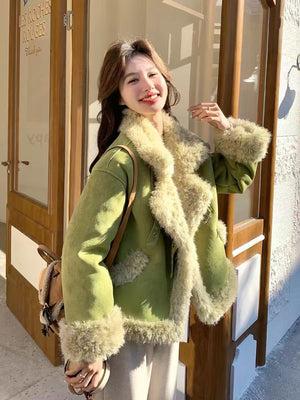
💡 Quick reality check: The best‑selling winter jackets aren’t always the most technical. They‘re the ones that feel good when you hug them. Korean velvet with faux shearling lining consistently outperforms cheaper polyester fleece in direct consumer feedback.

📍 Where to Find Winter Outerwear Lots (That Aren’t Full of Returns)

You have two main paths: overstock from Korean factories (clean, unbranded, good fabric) or mixed lots from US liquidators (more risk of random styles). For a boutique owner, the sweet spot is a single‑style overrun lot – same fabric, consistent sizing, easy to photograph and list.

Good places to start:

  • B‑Stock (search “outerwear” and filter “shelf pulls”)
  • Wholesale central on Faire (filter “women’s jackets”, look for unbranded Korean supply)
  • Direct Alibaba sourcing with Trade Assurance – but you MUST order samples first.

A real‑world example: 800pcs Korean Velvet Sheepskin Jacket Lot – Sizes S/M/L – factory overrun, $6/unit, 3% defect tolerance. That’s the kind of lot we’re talking about.

🧥 How to Evaluate Fabric & Warmth (Without Touching It)

When you can’t physically handle the lot before buying, ask suppliers for:

  • A video clip of someone brushing the fabric (you want to see if it sheds or matts).
  • Weight per jacket – for a mid‑weight winter jacket, aim for 700–900 grams (light but warm).
  • Composition % – 100% polyester pile is standard for faux shearling. “Korean velvet” usually means a dense knit face with a plush back.

✅ Quick fabric checklist

  • ✅ Soft, not scratchy (run your hand over it).
  • ✅ No chemical smell (factory odor should air out in 24h).
  • ✅ Lining feels plush, not like cheap felt.
  • ✅ Zippers move smoothly – YKK is nice, but generic brass works.

📏 Sizing Conversion: Asian “L” vs US “L” (This Is Critical)

Most Korean/Chinese winter jackets are cut for a smaller frame. An Asian XL is often a US M. But for oversized, streetwear‑style coats like the Korean velvet shearling jackets, the cut is intentionally roomy. So an Asian M might actually fit a US women‘s M comfortably. Always ask for a flat lay measurement chart.

Asian size labelUS women’s size (relaxed fit)US men’s approximate S4–6 / XS–S— M8–10 / M–LXS L12–14 / XLS–M XL16–18 / 1XL

If you‘re buying a lot that only goes up to “L”, you’re serving customers up to a US 14 comfortably. That‘s a huge segment – don’t assume you need 2XL.

🧠 Pro tip: Ask the supplier for photos of typical “defects” before you buy. If it’s just a loose thread, nobody will care. If it’s a crooked zipper, that’s a different story.
  • Ignoring the weight per carton – air freight gets expensive fast. For heavy jackets, sea freight is your friend.
  • Not ordering a sample – you need to feel the pile and check the zipper.
  • Assuming all faux shearling is the same – cheap quality sheds and looks matted after one season.
  • Buying mixed lots of random jackets – you end up with 8 weird styles and none of them sell. Single‑style lots are much easier to market.
  • Start with 200–300 pieces max for a test season (unless you have storage and a solid resale channel).
  • Calculate landed cost – add $2–3 per unit for sea freight, duties, and handling.
  • Photograph several jackets together – a flat lay of 10 jackets shows the lot‘s consistency.
  • List early – September is the sweet spot for winter outerwear, not December.
  • Bundle as “set” with beanies or scarves – increases AOV.
🔥 Real reseller math: At $6 per jacket + $2 landed, your cost is $8. Sell at $29–35 on Depop/Poshmark. You pocket $21–27 per jacket. That‘s 250%+ margin.
Lot typeProsCons Single‑style (e.g. Korean velvet jacket)Easy to style, bulk photography, consistent sizingLack of variety for customers who want different silhouettes Mixed winter outerwearCurated variety, more listing opportunitiesHigher risk of unsellable odd pieces, more storage mess

For a first‑time buyer, I‘d lean single‑style. Master one hero product, then expand.

🏷️ How to Price & Position Faux Shearling Jackets

Position them as “vegan shearling” and “cruelty‑free fluffy coat”. Modern shoppers love that angle. Avoid calling them “faux fur” – that implies a different texture. “Shearling jacket” or “fluffy trucker jacket” works better. On Etsy, the same unbranded jacket sells for $49–69. On TikTok, they go viral as “cloud jackets”.

📌 Related Resources & Next Steps


❓ Buyer Questions (FAQ) – Winter Outerwear Lots

❄️ How many pieces should I buy for a test season?

For a small boutique or side reseller, 100–200 pieces is a safe test. If you buy a full 800‑piece lot, make sure you have storage and a clear outlet (e.g., flea market, Poshmark closet, or a live sale event).

🧥 Will faux shearling shed?

Low‑grade ones will. High‑density polyester pile (like Korean velvet) has minimal shedding. Always request a sample to test with a lint roller.

📏 What if the Asian sizes fit differently than described?

That’s why you ask for a measurement chart and compare to a jacket your customers already own (e.g., a Levi‘s trucker jacket). Add a size conversion note in your listing.

💸 Why can’t I buy just 50 pieces of this lot?

Overrun lots are priced for “take‑all”. But some suppliers will split for a small upcharge. Ask nicely – sometimes they say yes.

Bottom line: Winter outerwear lots (especially velvet shearling) are gold if you understand sizing, defect tolerance, and marketing angles. Don‘t overcomplicate it. Order a sample, start with 200–300 units, and sell the “cozy, cloud‑soft” vibe.

📚 Expert Insights

📌 Key Takeaways

Single‑style lots outsell mixed lots for winter outerwear because you can style, photograph, and market a hero product consistently.

Asian sizing ≠ US sizing – always ask for a flat lay measurement chart and compare to a jacket your customers already own.

Defect tolerance is a feature, not a flaw. The 3% allowance is why you get 6jacketsinsteadof6jacketsinsteadof18 factory‑direct.

Faux shearling sells better when labeled as “vegan sheepskin” or “cruelty‑free fluffy coat” – modern shoppers respond to that language.

Start with 200–300 pieces unless you have warehouse space and a proven resale channel. Test first, then scale.

Land cost changes everything – add $2–3 per jacket for sea freight and duties before calculating your margin.

💡 Tips

Order a sample before buying hundreds of jackets. Check the zipper, the pile shedding, and how it fits a real person.

Ask for a video of the fabric – a short clip showing someone brushing the pile reveals quality better than any photo.

Calculate landed cost on a spreadsheet – include product, freight, customs, and storage. Then set your resale price.

Photograph the lot as a flat lay of 10 jackets – shows consistency and reduces customer questions about “will mine look like the photo?”

Bundle shearling jackets with beanies or scarves – increases average order value and clears accessories at the same time.

List early – September is the sweet spot for winter outerwear, not December. Give yourself 6–8 weeks to sell before peak holiday.

Sell the 3% defects as mystery grab bags for $10 each – turns a tolerance into a profit center.

📖 Terms

Korean VelvetA dense knit fabric with a soft, lint‑resistant brushed surface. Feels plush but not heavy.Faux ShearlingA synthetic pile fabric (usually polyester) designed to mimic sheepskin. Warm, cruelty‑free, and machine‑washable.Single‑Style LotA wholesale lot containing only one design or silhouette, typically in multiple sizes and colors.Defect ToleranceThe percentage of units in a clearance lot that may have minor flaws (e.g., loose threads, small marks). Standard is 2–3%.Overrun / Tail OrderExtra inventory produced beyond the original buyer‘s order, sold at steep discounts to clear space.PileThe raised, fluffy surface of fabric like shearling or velvet – affects softness and insulation.Landed CostTotal per‑unit cost after product price + shipping + duties + handling. The only number that matters for profit.

⚠️ Mistakes

  • Ignoring the weight per carton – air freight gets expensive fast. For heavy jackets, sea freight is your friend.
  • Not ordering a sample – you need to feel the pile and check the zipper before committing to hundreds of units.
  • Assuming all faux shearling is the same – cheap quality sheds and looks matted after one season.
  • Buying mixed lots of random jackets – you end up with eight weird styles, and none of them sell. Single‑style lots are much easier to market.
  • Overlooking the 3% defect tolerance – beginners panic over loose threads, not realizing that‘s why the price is so low. Plan for it instead of complaining.

Search