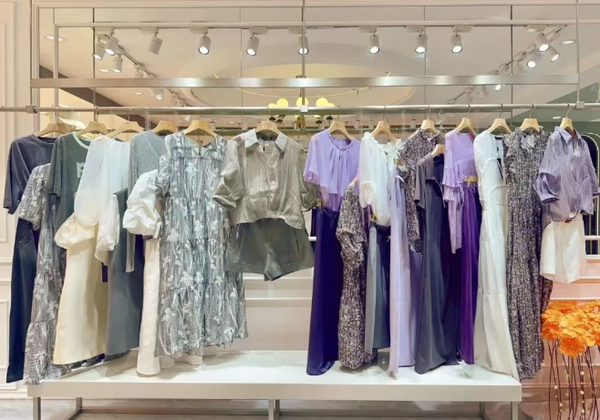
How to identify and buy high-value women’s clothing stock lots for profitable resale.
🧠 Before you place a bid
✅ Manifest type clear? (shelf pull / customer return / mixed?)
✅ Grades defined? (A / B / cream / branded)
✅ Category fit for your local market?
✅ 5‑cost ROI calculated?
✅ 10‑20% waste factored in?
📑 Contents
- 1. What “high‑value” actually means
- 2. How to evaluate a stock lot (step‑by‑step)
- 3. Manifest types: shelf pulls vs returns
- 4. Grading systems & what they hide
- 5. The 5‑cost ROI framework
- 6. Stock lot terminology every buyer needs
- 7. Common mistakes & how to avoid them
- 8. Buyer questions to ask every supplier
- 9. US vs EU sourcing differences
- 10. Practical tips from experienced resellers
Scrolling through liquidation listings feels like a treasure hunt. You see photos of neat stacks of women’s blouses, designer jeans, maybe a rack of coats that look brand new. The price per piece looks ridiculous. You start imagining how much you could sell them for. Then you catch yourself and wonder: is this actually a good deal, or am I about to buy someone else’s problem?
🧭 1. What “High‑Value” Actually Means in Women’s Clothing Lots
New buyers often assume “high‑value” means famous brand names—Zara, H&M, Free People, or Nike. Those can be profitable, but branding is only one signal. Real wholesale profitability depends on three overlooked drivers:
- Sell‑through velocity – unbranded dresses that move in 30 days generate healthier cash flow than designer jackets that sit for eight months. The most profitable bulk clothing sells fast, not just at high margins[reference:23].
- Grade clarity – Vague terms like “good condition” are useless. Professional buyers insist on defined grades (Cream / A / Brand / B) that describe wear, appearance, and resale readiness[reference:24].
- Market alignment – A mixed lot of summer dresses is high‑value in year‑round warm climates, but becomes low‑value overnight if it lands during winter in a seasonal market[reference:25].
The buyers who consistently profit evaluate all three factors. Not just price per piece.
🔍 2. How to Evaluate a Women’s Stock Lot Before You Spend Anything
Step 1 – Read the manifest (or walk away)
The manifest is your single most important document. If a seller won’t provide one, or gives you something vague like “women’s lot, 100 pieces, assorted styles”, treat that as a huge risk[reference:26]. A useful manifest includes categories, sizes, condition notes, and ideally a brand list. No manifest = no clarity = price your bid very low.
Step 2 – Understand the manifest source
| Manifest type | What it means | Risk level |
|---|---|---|
| Store returns | Items returned by customers; previous retail prices visible | Medium |
| Shelf pulls | Overstock, discontinued, or floor samples – usually most accurate | Low |
| Customer returns | Mixed consumer returns – less dependable but often cheaper | High |
| Mixed unmanifested | “We threw things in a box” – no meaningful transparency | Very High |
Shelf pulls > store returns > customer returns. Unmanifested lots can work for bin stores but require ten times the labor.
Step 3 – Verify grades clearly
Grade definitions separate professional buyers from hobbyists. Common reliable grades[reference:27]:
- Cream / Premium – near‑perfect, boutique‑ready, waste <5%
- Grade A – clean, resale‑ready through marketplaces (Poshmark, Depop), waste 5‑10%
- Branded – known labels, often cut‑label or overstock, waste 5‑15%
- Grade B – minor flaws, best for flea markets or bulk sales, waste 15‑25%
Always ask: “What percentage of this lot falls into each grade?” If the supplier can’t answer specifically, you’re taking on their quality risk.
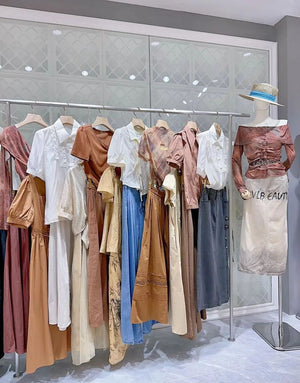
📋 3. Manifest Types: Shelf Pulls vs Customer Returns
Understanding manifest accuracy is the difference between predictable inventory and a gamble. Store return manifests tend to show previous retail prices and are moderately reliable. Shelf pull manifests list overstock or discontinued items and are the most consistent[reference:29]. Customer return manifests can be the wild west—lower prices but less dependable, and you’ll often see odd sizes or missing items.
Rule of thumb: For your first five lots, stick with shelf pulls or well‑documented store returns. They cost more per piece but teach you the business without punishing mistakes.
🏷️ 4. Grading Systems – What They Hide
Low‑value stock almost always hides behind vague grade descriptions. “Good quality” or “mixed A/B” without written standards usually means higher waste ratios[reference:30]. Professional graders use defined systems that let you predict resale speed and waste. When evaluating a lot, get the grade definition in writing.
Profit impact of grading: A clear grade breakdown lets you allocate pieces to the right channel. Cream pieces → your curated boutique section. Grade A → online resale platforms. Grade B → clearance or mystery boxes. Without this clarity, you’re sorting everything yourself and losing money on labour.
📊 5. The 5‑Cost ROI Framework (Stop Looking at Purchase Price Only)
New buyers calculate profit as “purchase price vs expected revenue”. That’s dangerously incomplete. Experienced lot buyers use a five‑cost framework[reference:31]:
- 1. Acquisition cost – the actual price you pay the supplier
- 2. Freight & shipping – often underestimated. A “cheap” pallet can double after cross‑country LTL fees
- 3. Processing & handling – labour to unbox, sort, inspect, tag. If it takes 10 hours, that’s a real cost
- 4. Storage – even your garage or spare room has an opportunity cost
- 5. Selling costs – platform fees, payment processing, photography
| Cost category | Example amount (150‑unit women’s pallet) |
|---|---|
| Purchase price | $400 |
| Shipping (LTL freight) | $85 |
| Processing (4h @ $20/h) | $80 |
| Storage (2 months, pallet space) | $40 |
| Waste/damage estimate (15%) | $60 (value loss) |
| True landed cost | $665 |
Even if you sell 80% at $12/piece ($1,440 gross), minus platform fees (~15% = $216), net is ~$1,224 – a very solid return, but nowhere near the “$400 into $3,000” hype you see online. Accurate cost accounting is what separates occasional profit from sustainable profit.
📚 6. Stock Lot Terminology Every Women’s Apparel Buyer Should Know
- Stock lot – excess or surplus inventory sold at discount (canceled orders, overstock, end‑of‑season)[reference:32]
- Mixed lot / Zakup – multiple styles/sizes/brands in one bundle, lower cost + higher labour[reference:33]
- Single‑style lot – one SKU in bulk; predictable but less variety
- Manifest – itemized list of what’s inside a lot. Manifested = known, unmanifested = gamble[reference:34]
- Shelf pulls – store extras or discontinued items, usually new with tags, high reliability[reference:35]
- Customer returns – items sent back by shoppers; cheaper but highly variable condition[reference:36]
- Joblot – British term for mixed clearance bundles; unsorted, “sold as seen”
- Cut label – branded items with tags removed to avoid trademark issues; deep discounts
Knowing these terms changes how you read listings. A “customer return manifest” at premium pricing might be a bad deal. A “mixed pallet, unmanifested, joblot” is a low‑price, high‑labour proposition—fine for a bin store, terrible for an online reseller.
❌ 7. Common Mistakes That Kill Profit
- Buying emotionally – “I love this, so my customers will love it.” You are not your market. Separate personal taste from demand.
- Trusting photos without video – Catalog photos can be years old. Request live video of actual stock or dated photos[reference:37].
- Ignoring the 10‑20% waste rule – Even clean lots have defects. Plan for unsellable items in your ROI[reference:38].
- Chasing the lowest price per piece – Cheap unmanifested lots cost you hours of sorting labour. A slightly more expensive manifested lot often yields higher net profit.
- Forgetting market fit – Size XL blazers might be gold in one region and death in another. Know your channel’s demographic.
🇺🇸 US microenvironment
🇪🇺 EU microenvironment
❓ 8. Buyer Questions to Ask Every Supplier
1. “Can you provide a full manifest with sizes, categories, and condition grades?” +
2. “What percentage of this lot is Grade A vs Grade B?” +
3. “Can I see a live video of the actual stock?” +
4. “What’s your typical defect or unsellable percentage?” +
5. “What is your on‑time delivery and reorder rate?” +
6. “Is shipping and customs included in the quoted price?” +
🌍 9. US vs EU Differences When Buying Women’s Lots
Manifests & transparency: US liquidation platforms (B‑Stock, DirectLiquidation) have relatively standardized manifest formats. EU platforms are more fragmented—some provide excellent details, others assume you’ll inspect locally[reference:40]. MOQs & lot sizes: US suppliers often offer smaller test lots (50‑200 units). EU suppliers sometimes have higher minimums, though this is changing as more suppliers adopt flexible low‑MOQ models[reference:41]. VAT & cross‑border: Intra‑EU buyers need VAT registration. US buyers generally don’t deal with cross‑border VAT unless they import directly. Category preferences: EU resellers tend to favor mid‑tier European brands (Mango, Zara, & Other Stories) compared to US resellers who often prioritize accessible US mall brands. Stock lots heavy on European fast fashion move faster in EU markets.
💡 10. Practical Tips From Experienced Resellers
- Start with manifested shelf pulls. They cost more but teach you the business without punishing mistakes. After 5‑10 lots, you’ll have data to consider unmanifested bargains.
- Keep a simple spreadsheet tracker. Log purchase price, shipping, processing hours, sell‑through rate by category, and actual profit. Patterns emerge after 3‑6 months.
- Test small across multiple suppliers. Spread your first $1,000‑1,500 across 3‑4 suppliers with manifests[reference:42]. The one with best quality‑price ratio gets repeat orders.
- Factor your own labour honestly. A mixed lot that takes 10 hours to sort has a real labour cost. Calculate profit per hour, not just per item.
- Build relationships, not just transactions. Suppliers remember buyers who pay on time and communicate clearly. Over time, those buyers get early access to new manifests, better pricing, and honest defect estimates[reference:43].
Ready to source women’s stock lots more intelligently?
Explore overstock, manifest‑based lots, and boutique‑ready assortments. No hype, just clean wholesale inventory for small retailers.


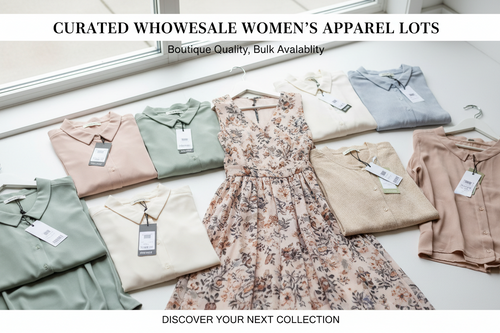

Let's talk shop. If you run a boutique or an online fashion store, you know the "inventory trap." You buy from a traditional wholesaler, pay $40 for a dress, and hope to sell it for $80. After shipping, marketing, and taxes, your profit is... well, thin. This is why more smart retailers are turning to women’s clothing stock lots.
But there’s a catch. Not all stock lots are created equal. Some are just "trash" being cleared out. Others—like the 256-Pcs-LSXY-Aesthetic-Womens-Summer-Stock-Lot—are gold mines of designer overstock. Today, I'm sharing the secret sauce of how to pick the winners.
1. The "Aesthetic" Factor: Why Style Beats Price Every Time
In 2026, the term "wholesale" has changed. Buyers don't just want cheap; they want a look. Current trends like the "Sweet-Cool" style or "Retro Forest" are driving massive traffic on TikTok. When you are looking for where to buy wholesale clothing lots online, don't just look at the price tag. Look at the silhouettes.
2. Understanding the Reality of "Liquidation"
Many beginners make the mistake of expecting 100% perfection in a liquidation lot. Real talk: if you're getting a $120 shirt for $19, there’s a reason. Usually, it's just over-produced inventory from a major brand like LSXY or RACI.
Always budget for a 3% defect rate. This is the industry standard. Smart resellers simply fix a loose thread or offer a "minor defect" discount, which actually builds trust with customers!
3. The Math: Pricing for Profit
How do you actually make money? Let’s look at the numbers. Most people sourcing affordable clothing stock lots aim for at least a 3x markup. If your landed cost per piece is $22 (after shipping), you should be able to retail those pieces for $66 minimum.
| Category | Sourcing Cost | Est. Retail | Profit Potential |
|---|---|---|---|
| Designer Dresses | $19.80 | $89.00 | High (4.5x) |
| Boutique Shirts | $19.80 | $59.00 | Medium (3x) |
| Trend Skirts | $19.80 | $69.00 | High (3.5x) |
4. Common Sourcing Mistakes to Avoid
- Buying too big too soon: Start with a "Small Lot" (like 256 pcs) before jumping into full containers.
- Ignoring the size mix: Ensure the lot covers S through XL. US and EU customers need variety.
- Chasing the "Bottom Dollar": A $2 shirt is usually a $2 shirt. You can't sell it in a boutique. Aim for the "High-Value Liquidation" tier.
Want to see a real-world example?
Check out our latest Liquidation Stock Lots or dive into our Wholesale Knowledge Hub for more insider tips.
Frequently Asked Questions
Can I choose specific styles in a mixed lot? +
Are these clothes brand new? +
Related Reading: Buying Guides for New Resellers | Shipping & Logistics FAQ