The Boutique Owner’s Blueprint: How to Buy Wholesale Clothing for a Small Business?Mastering Wholesale Clothing Sourcing and High-Margin Liquidation Strategies
Moving from a "Fashion Lover" to a "Fashion Business Owner" requires a fundamental shift in how you view a garment. It’s no longer about what you would wear; it’s about the ROI attached to every thread.
Chapter 1: The Harsh Reality of Wholesale.How to Buy Wholesale Clothing for a Small Business
Most small business owners start their journey by typing "Wholesale Clothing" into Google. What they find is a sea of middlemen, jobbers, and drop-shippers who have already taken a 30% to 50% cut of the profit. If you want your boutique to survive the competitive landscape of modern e-commerce, you cannot afford to buy at the end of the chain.
To win, you must understand the difference between Standard Wholesale and Liquidation Stock Lots. Standard wholesale involves buying from a catalog at a set price. Liquidation involves buying the "Tail Orders"—the high-quality surplus from major production runs. This is where the real money is made.

Where to Buy Inexpensive Work Clothes for Your Boutique: A Reseller’s Guide to Professional Stock Lots

What Are Apparels? The Definitive Guide to Clothing &Wholesale Industry

The Playground Revolution: Why Wholesale Kids' Activewear is Your Retail Store's Secret Weapon
Chapter 2: Deciphering Quality in a Virtual Market
One of the biggest anxieties for small businesses is buying sight-unseen. How do you know the "premium cotton" isn't actually a thin, transparent polyester blend? This is where professional sourcing techniques come into play.
The "Fiber Burn" Analysis
While you can't burn a sample through a computer screen, you can ask for the Fabric Weight (GSM). Grams per Square Meter is the universal language of textile quality. For a high-quality t-shirt, you want to see 180-220 GSM. Anything under 140 GSM is likely sheer and low-durability. Professional wholesalers will always provide this data.
Knitwear Inspection
Look for the "Gauge." A higher gauge indicates a finer, more tightly knit sweater. For boutique-grade "aesthetic" pullovers, a 12-gauge knit offers the perfect balance of drape and durability.
Denim Logic
Weight matters. 12oz to 14oz denim is the standard for premium retail. If a wholesaler is selling "wholesale denim" without a weight manifest, walk away.
Chapter 3: The Logistics of the "Landed Cost"
Let's talk about the math that kills businesses. A lot of 1,000 dresses priced at $3.00 each looks like a steal. But let's look at the actual Landed Cost:
| Expense Item | Cost Calculation | Total Impact |
|---|---|---|
| Unit Price | 1,000 units x $3.00 | $3,000 |
| Sea Freight | Standard LCL (Less than Container Load) | $850 |
| Customs & Duties | Approx. 15% (varies by region) | $450 |
| Last-Mile Delivery | Warehouse to Door | $200 |
| Actual Cost per Unit | $4,500 / 1,000 | $4.50 (50% higher than sticker price!) |
If you didn't factor in that extra $1.50 per unit, your marketing budget for those dresses just disappeared. Always calculate your landed cost *before* the wire transfer.
Chapter 4: Sourcing from "Tail Orders" and Surplus
Why buy from a standard wholesaler when you can buy the surplus of a brand? Major retail brands often over-produce by 3-5% to account for errors. When the production run is perfect, that extra stock—known as "Tail Orders"—is sold off at liquidation prices to clear warehouse space.
These items are not rejects. They are the same fabric, same cut, and same quality as the brand-name items, often with the labels removed to protect the brand's retail integrity. For a small business, this is the "Holy Grail" of sourcing. You get boutique quality at a fraction of the traditional wholesale cost.
Chapter 5: Spotting the Scams
The internet is full of "wholesale" sites that are actually just fancy storefronts for Alibaba resellers. Here is how to vet your source:
- The Social Proof Test: Does the wholesaler have a physical warehouse address? Google Maps it. If it's a residential house, they are a middleman.
- The Manifest Test: Real wholesalers provide a manifest. If they say "assorted styles" without a detailed breakdown of sizes and materials, you are buying their "trash" inventory.
- The Payment Test: Legitimate B2B companies in the US and Europe will often accept Credit Cards or provide a Proforma Invoice for bank transfers. If they only accept "Friends and Family" crypto or wire, run.
-
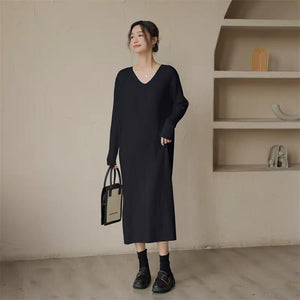
600pcs Ribbed Knit Maxi Sweater Dresses Bulk Clearance – Plus Size L to XXXL Relaxed Fit – Soft Stretch Everyday Winter Dresses for Boutique Resale Stock Lot
LOT TYPE: Single-style bulk lot (multiple sizes mixed L–XXXL)Stock: 600Price: $2.50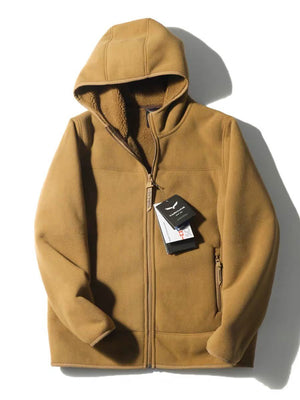
2000+ pcs Bulk Hooded Fleece Jacket Clearance Lot – Sherpa Lined Outdoor Zip Hoodie – Winter Warm Workwear Outerwear Stock for Boutiques & Resellers
LOT TYPE: Single-style overstock lot (tail order / canceled production)Stock: 2000Price: $13.00
600pcs Women’s Ribbed Scoop-Neck Tank Top Clearance Lot – 2 Color Everyday Layering Basics – $1.30 Tail-End Stock for Small Boutiques, Casualwear Resellers & Summer Outfit Sellers
LOT TYPE: Single-style, 2-color clearance lotStock: 600Price: $1.30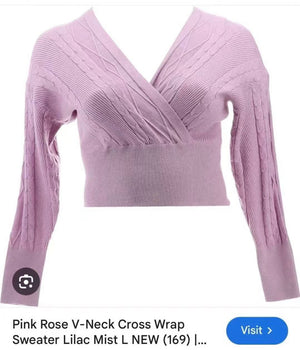
3300pcs Pink Rose Cross-Wrap Cropped Knit Sweater – Women’s Boutique Ribbed V-Neck Cable Texture Top – Soft Lilac Everyday Going-Out Layer – $3 Factory Surplus Stock Lot for Small Boutiques & Online Resellers
LOT TYPE: Single-style women’s knitwear stock lot Pink Rose branded Lilac / pink-purple tone Cropped cross-wrap V-neck sweaterStock: 2200Price: $3.00
Chapter 6: The Psychology of the Resell
Sourcing is a mechanical task; selling is a psychological one. When you buy a high-quality stock lot of hollow-out knit pullovers, you aren't just selling a sweater. You are selling the feeling of "unlocked luxury."
Use the story of the source. Inform your customers that you curate limited-edition factory surplus. This builds an aura of exclusivity. Because your sourcing cost was low, you can afford to invest more in professional photography and "unboxing" experiences—the two things that drive social media virality for small boutiques.
Chapter 7: Managing the 3% Rule
In the world of bulk wholesale and liquidation, there is an unwritten rule: The 3% Defect Tolerance. Out of every 100 units, expect 3 to have a loose thread, a missing button, or a slightly wonky tag. This is the trade-off for getting the inventory at 70% off retail value.
Smart business owners don't complain about the 3 units; they fix them. Keep a high-quality fabric steamer and a simple sewing kit at your workstation. Spending 5 minutes "refreshing" a garment can turn a "defect" into a $40 sale.
Ready to Source Like a Pro?
Stop buying through middlemen. Access our direct-factory surplus and liquidation stock lots today. High margins, vetted quality, and no-nonsense manifests.
View Current Inventory