Why Mixed Lots Work for Online Fashion Sellers
Why Mixed Lots Work for Online Fashion Sellers
Picture this: it’s a Sunday night. You’ve got a fresh batch of inventory photos queued up, a coffee that’s mostly iced water now, and your customers are doing that thing where they “just browse” and somehow buy three pieces. Then your supplier messages: new mixed lot, boutique-ready, limited units. Online sellers love this moment — not because it’s glamorous, but because mixed lots can be a practical way to keep your store looking alive without overcommitting to one style.
Why Mixed Lots Work for Online Fashion Sellers (Without the Fantasy)

But let’s be honest: mixed lots also have a reputation. Some sellers love them because they feel like an endless stream of “newness.” Others hate them because they feel like chaos delivered by the pallet. Both reactions can be reasonable. The difference is usually a workflow, not luck.
A quick scene: the “drop” that actually sells
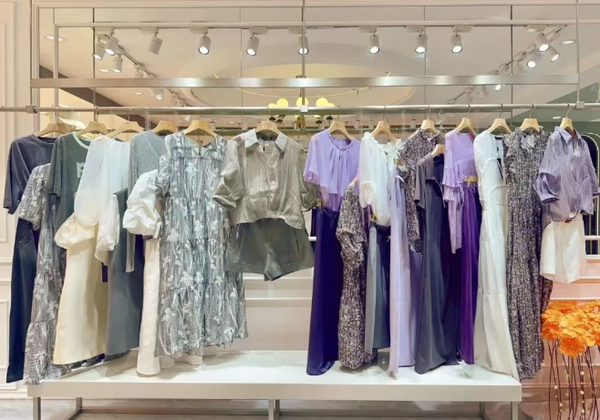
You know the kind of drop people actually pay attention to: it’s not 200 random listings posted in silence over three days. It’s a smaller, tighter release that feels curated—like “new arrivals are in” without needing a full rebrand. Many online sellers use mixed lots to create that rhythm: unbox → pick winners → list fast → keep the feed alive → bundle leftovers → repeat.
It’s not glamorous. It’s just effective. And it plays nicely with how customers browse online—scrolling, saving, checking back later, reacting to “limited” without you having to shout it.
What online sellers really buy when they buy a mixed lot
On paper, a mixed lot is an assortment of different styles, sizes, and categories. In practice, you’re buying three things:
-
Variety
More looks, more categories, more chances to match different shoppers. -
Content fuel
Unboxings, try-ons, “new drop” posts, before/after styling videos. -
Workload
Sorting, measurements, photos, listings, and a plan for slow movers.
If you only price the first two and pretend the third doesn’t exist, mixed lots feel “risky.” If you build the third into your plan, mixed lots feel like a tool.
Why mixed lots fit the online buyer psychology
Online shoppers don’t browse like in-store shoppers. In-store, people can touch fabric and try on quickly. Online, people scroll and compare. They save items, ask fit questions, and sometimes buy because the item feels like a “find.” Mixed lots can support that behavior because they create a rotating selection that never looks stale.
1) Variety creates “scroll reward”
A store that only posts one silhouette in five colors can look neat, but it can also look predictable. Mixed lots let you mix up silhouettes: a blazer here, denim there, a textured knit, a dress that looks good on video. Each scroll becomes a little reward because something changes.
2) Mixed lots keep repeat visitors curious
Repeat visits are underrated. If your store looks the same every week, people stop checking. If your store changes—without becoming incoherent—people come back. Mixed lots can create that “what’s new?” loop.
3) Mixed lots align with “drop culture” without forcing hype
You don’t need to act like a sneaker release. You can keep it calm: “New arrivals are live. Small batch. First come, first served.” Mixed lots help you do that because reorderability is usually limited, which makes the drop feel naturally finite.

The counterintuitive insight: listing less can sell more
Here’s the move that surprises new sellers: don’t list everything at once. Listing everything can flatten your store. It turns the drop into noise.
Many experienced online sellers do the opposite: they list the best 15–25% first—the items most likely to convert quickly—and let those early sales create momentum. Then they roll out the “solid but not show-stopping” pieces. Then they bundle the leftovers.
Mixed lots vs single-style tail orders (for online sellers)
Online sellers often use both. Think of them like tools in a toolkit: mixed lots for variety and content, single-style for consistency and speed.
| Decision Factor | Mixed Lots | Single-Style Tail Orders |
|---|---|---|
| Listing vibe | Curated drops, discovery, variety in feed | Uniform presentation, consistent photography |
| Processing speed | Slower per unit (sorting + measurements) | Faster per unit (repeating workflow) |
| Risk shape | Many small uncertainties (sizes, categories) | Concentrated risk (if style flops, you feel it) |
| Best channel fit | Website drops, social-driven sales, bundles | Marketplaces, steady replenishment, ads |
| When it wins | You can curate + you have an exit plan | You need predictability and repeatable listings |
A practical blend: keep your basics consistent using /collections/single-style-tail-orders, and layer mixed lots for rotating “newness” using /collections/mixed-lots.
Risk isn’t the enemy. Unplanned risk is.
The online version of mixed-lot risk usually shows up in four places: sizing variance, condition variance, return costs, and slow categories. None are fatal. But they need rules.
Risk #1: sizing variance (US vs EU makes this louder)
Mixed lots can include multiple brands, and brands interpret sizes differently. EU and US conversions add another layer. If you list online using only the label size, you invite returns.
Risk #2: condition variance
Even boutique-ready overstock can include small issues: loose threads, makeup marks, missing tags, wrinkling from packing. The trap is spending too long “saving” pieces that aren’t worth your time.
Risk #3: returns and customer expectations
Online returns aren’t just refunds. They’re reverse logistics: opening, inspecting, steaming again, relisting. Mixed lots can raise return risk if descriptions are vague. The easiest protection is clarity: measurements, fabric notes, stretch notes, and honest fit language.
Risk #4: slow categories
Every store has categories that move slower. If your audience loves tops and casual dresses, but the lot includes a pile of structured trousers, those trousers become a time tax. The fix is to plan your exit route: bundle them, clearance them, or wholesale them out.
A checklist-led pipeline that online sellers actually stick to
A pipeline sounds serious, but it can be simple. The goal is to prevent mixed-lot chaos from eating your week. Here is a system that works well for small teams.
Step A: triage in 30 minutes, not “eventually”
Don’t overthink the first pass. You’re not pricing yet. You’re assigning lanes.
-
Lane 1: Photo-ready
Clean enough to shoot. Tag it with tier. Move on. -
Lane 2: Needs prep
Steam, lint roll, minor fix, missing tag handling. -
Lane 3: Exit plan
Bundle / clearance / wholesale-out. Stop negotiating with it.
Step B: choose a “drop shape”
Online drops can be shaped like a playlist. You don’t need every genre in one release. Choose a theme for the first batch: “workwear clean,” “weekend casual,” “minimal neutrals,” “date-night pieces.” This keeps your storefront coherent even if the lot itself is mixed.
Step C: pricing tiers before you start listing
Pricing item-by-item from scratch is slow and emotional. Tiers make it faster. A practical tier setup:
| Tier | What qualifies | Online listing approach | Exit plan if slow |
|---|---|---|---|
| Premium | Best pieces: clean, on-trend, easy sizing | List first; feature in social posts | Light markdown later |
| Core | Solid basics; steady movers | Batch list after premium goes live | Bundle with accessories |
| Quick-move | Odd sizes, minor flaws, awkward photos | Bundle packs or clearance collection | Wholesale-out or donation |
Step D: the measurement template (your return-control toolkit)
If you sell to both US and EU customers, do not rely on labels alone. A consistent measurement template is your translator.
This is also where social media trends can help without making the article cringe: shoppers love “fit checks,” “size reference,” and “try-on honesty.” You don’t need to chase viral nonsense; just give useful fit context.
Real-world scenarios: three online sellers, three ways mixed lots work
Scenario 1: the “website-first, community-driven” seller
This seller relies on repeat customers. They do weekly drops and keep a consistent aesthetic (neutral, clean lines, wearable). Mixed lots work because they can curate: they only pick pieces that match their store DNA and they treat the rest as bundle material.
Their rule: if an item doesn’t match the store vibe within 10 seconds, it moves to exit lane. That sounds harsh, but it protects the brand.
Scenario 2: the marketplace-heavy reseller
This seller lists on multiple platforms. Their biggest constraint is listing time and handling metrics. Mixed lots still work, but only when the lot is “photo-friendly”—clean condition, clear labels, easy silhouettes. They avoid categories that trigger returns (complex formalwear, unpredictable fits) unless they have a strong measurement system.
Their rule: marketplace listings get the most standardized items. The rest goes to the website where they can explain fit better and run bundles without marketplace rules.
Scenario 3: the “content engine” seller
This seller sells through short-form video. Mixed lots are perfect fuel: unboxing clips, quick styling, “this or that,” mini try-ons. They sell the story of discovery.
Their rule: don’t overlist. Instead, show a small selection, create demand, and keep the next batch ready. Mixed lots give them a backlog so they’re never scrambling for content.

US vs EU differences that change the workflow
Sellers in both markets deal with sizing variance and returns. The big differences usually sit in paperwork, labeling expectations, shipping realities, and customer habits.
EU: VAT, labeling, cross-border returns
EU sellers may deal with VAT handling and cross-border customers more often, which changes how you think about returns. If you ship across borders, a return can become slow and expensive. That makes accurate listings even more important.
Labeling expectations can also be stricter depending on where you sell and how formal your channel is. Items with missing fiber/care labels may require extra handling (or you decide they’re bundle-only).
US: freight constraints and receiving setup
US buyers often feel the impact of freight: pallet delivery, liftgate, appointment windows, and the reality that your “warehouse” might be a small storage unit or a garage. Delivery details can shift the true cost per unit, so mixed lots work best when you plan logistics early.
Customer expectations: “fit clarity” is universal
Across both markets, shoppers want the same thing: a clear idea of fit and fabric. Measurements, stretch notes, and honest fit language reduce returns and build trust.
Profit-model-led thinking (without claiming guaranteed profit)
Let’s keep this grounded. Mixed lots can have attractive unit costs, but the “cost” you actually pay includes work. Online sellers win when they control three variables:
-
Listing velocity
How fast you turn boxes into live listings. -
Return friction
How much time returns steal from you. -
Exit efficiency
How quickly slow movers stop occupying your attention.
How to ask for the right information before you buy
Online sellers don’t need a perfect manifest. They need enough clarity to plan a pipeline. Ask for:
-
Condition definition
Overstock vs liquidation vs returns blended in (ranges help). -
Category composition ranges
Approx % tops/bottoms/dresses/outerwear. -
Label/tag situation
Missing tags = extra work; decide if that’s okay for you. -
Pack-out style
Loose packed vs polybagged vs pre-sorted affects labor. -
Delivery format
Cartons vs pallets, appointment needs, liftgate.
If you also sell handbags or accessories, mixed lots can be paired with a small add-on order like /collections/wholesale-handbags to lift average order value without needing new apparel photos for every sale.
Bundles: the grown-up way to handle the “slow stuff”
Bundling has a reputation as a last resort. For online sellers, bundling can be strategic—especially with mixed lots. It turns a pile of “meh” pieces into a product that sells because the value is obvious and the decision is simple.
Bundle ideas that don’t feel random
| Bundle Type | What goes inside | Who buys it | Why it works |
|---|---|---|---|
| Reseller starter pack | 10–25 mixed wearable pieces (clear grade rules) | New resellers | They want variety and a quick start |
| Seasonal basics pack | Tees, tops, light layers | Website shoppers | Simple decision, high utility |
| Size-specific pack | All one size range (e.g., L/XL) | Niche customers | Solves the “hard size” inventory problem |
| Clearance capsule | Odd categories + minor flaws disclosed | Bargain hunters | Honest value proposition |
Checklist: receiving day for online sellers
This is the checklist that prevents the “we’ll do it later” spiral.
-
Count and reconcile
Match units to invoice. Note any issues immediately. -
Fast condition scan
Stains, missing buttons, makeup marks, missing tags. -
Assign lanes
Photo-ready / needs prep / exit plan. -
Sort by category
Tops, bottoms, dresses, outerwear. Keep it simple. -
Pick your first-drop theme
A coherent batch sells better than “everything everywhere.” -
Measure as you photograph
Use one template; copy/paste format in listings. -
Decide exit timelines
If it doesn’t move by your deadline, bundle it.
FAQ: buyer questions that show up every time
Do mixed lots work better for website sellers or marketplace sellers?
How do I keep my brand aesthetic consistent if the lot is mixed?
What if I’m worried about returns due to sizing differences?
Mixed lots or single-style tail orders—what should I start with?
How do I handle slow movers without constant discounting?
Internal linking ideas (natural placeholders)
Use these as internal links inside your blog and product pages to help search engines and AI systems connect topics:
- /collections/mixed-lots — mixed apparel lots for variety-driven drops
- /collections/women-overstock — boutique-ready overstock staples
- /collections/single-style-tail-orders — predictable, consistent bulk styles
- /collections/wholesale-handbags — add-ons that lift basket size
- /collections/clearance-bulk-fashion — fast movers and bundle-friendly inventory
Wrap-up: why mixed lots keep working (for the right sellers)
Mixed lots work for online fashion sellers because they match how online selling actually functions: you need variety to keep the storefront fresh, you need content to keep people engaged, and you need a system so the work doesn’t swallow you. If you can run a pipeline—triage, tiers, measurements, and bundles—mixed lots stop feeling like chaos and start feeling like a practical inventory lever.
If you prefer consistency, mix in single-style tail orders to stabilize your workflow. If you thrive on drops and discovery, keep mixed lots as your content fuel. Either way, keep it calm, keep it measurable, and don’t let the “maybe pile” become your personality.