Single-Style vs. Mixed Lots: Which Is Better for Your Business Model?
In the apparel wholesale world, the most critical decision isn't just *what* to buy, but *how* the inventory is structured. Should you go deep into a single winning SKU, or broad across a diverse Mixed Lot? Your answer will determine your marketing costs, fulfillment speed, and ultimately, your net profit.

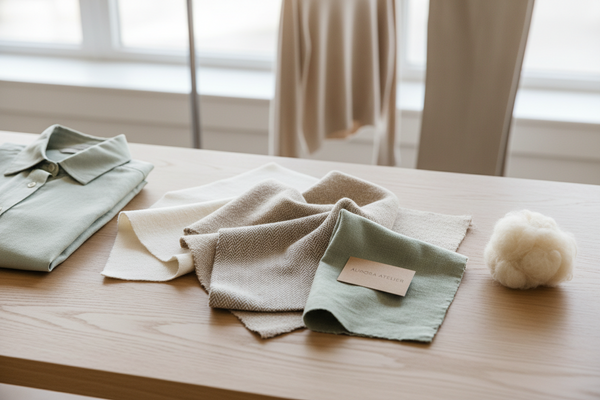
Single-Style Model
Buying 500 pieces of one specific denim jacket. Deep inventory, narrow selection.
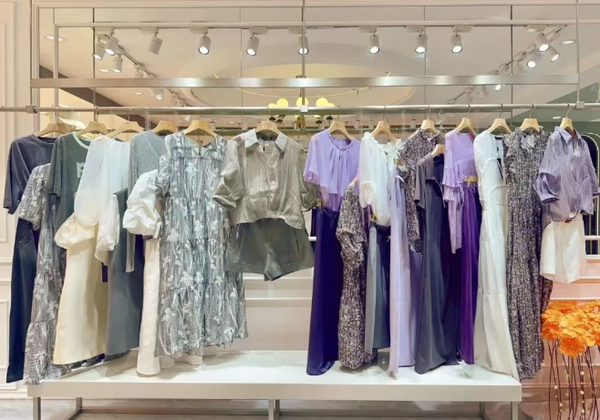
Best for: ScalersMixed Lots Model
Buying 500 pieces consisting of 50 different styles. Shallow inventory, extreme variety.
Best for: Boutiques1. The Deep Dive: Single-Style Mastery
Single-style sourcing is the backbone of high-volume e-commerce. When you buy a massive quantity of one item, you are betting on Predictability.
The Advantages
- Operational Simplicity: One SKU means one product photo session, one description, and one bin location in your warehouse.
- Paid Ads Optimization: If you are running Facebook or TikTok ads, you need deep stock. There is nothing worse than a viral ad for a product that is sold out.
- Quality Consistency: Since every piece is identical, your QC (Quality Control) process is lightning-fast.
The Hidden Risks
The "Deadstock Trap." If the style doesn't resonate with the market, you are stuck with hundreds of identical losers. Liquidation becomes your only exit strategy.
2. The Variety Play: Mixed Lots Power
Mixed lots (also known as "Assorted Lots" or "Jobber Lots") are the secret weapon for independent boutique owners and physical market sellers.
Why Mixed Lots Win in Retail
Modern consumers crave uniqueness. A mixed lot allows you to offer a "New Arrival" every single day. For a buyer, it creates a sense of Scarcity and Discovery.
- Lower Risk: If 5 styles in a 50-style lot don't sell, the other 45 styles cover the loss.
- High Perceived Value: Mixed lots often include high-end brand surplus that you could never afford to buy in single-style bulk.
- Market Testing: Use mixed lots to "scout" what categories are trending before committing to a single-style big order.
3. Strategic Comparison: 2026 ROI Matrix
| Feature | Single-Style | Mixed Lots |
|---|---|---|
| Inventory Turnover | Fast (if trending) / Zero (if not) | Steady & Constant |
| Marketing Effort | High (Focused Campaigns) | Low (Visual Merchandising) |
| Profit Margin | 100% - 200% | 300% - 600% (High Perceived Value) |
| Warehouse Complexity | Very Low | High (Sorting & Tagging) |
4. Which One Matches Your Business?
Scenario A: The "Ad-Driven" Scaling Model
If your business relies on Instagram, TikTok, or Amazon, you need Single-Style. You need the ability to sell 50 units a day of the exact same item without thinking about it.
Scenario B: The "Boutique/Community" Model
If you have a loyal following on WhatsApp, a physical store, or a curated Instagram page, Mixed Lots are your best friend. Your customers come to you to see "What's new?", and Mixed Lots provide that answer affordably.
The ApparelLots Pro Strategy
The most successful 2026 buyers use a 70/30 Hybrid Model:
- 70% Mixed Lots: To keep the storefront fresh and margins high.
- 30% Single-Style: For your "Evergreen" bestsellers (like basic tees or denim) that provide stable cash flow.
Summary: Choose Your Growth Path
There is no "wrong" choice, only a "misaligned" one. Single-style sourcing builds a Machine; Mixed-lot sourcing builds a Brand. At ApparelLots, we specialize in both—providing verified brand surplus for your variety needs and direct factory stock for your scaling needs.
Buyer FAQ
Q: Can I request a size breakdown for Mixed Lots?
A: Generally, Mixed Lots come in "Pre-assorted" ratios. However, our 2026 manifests provide a detailed range so you aren't stuck with only XS or 3XL.
Q: Why is the margin higher on Mixed Lots?
A: Because you are buying "problem-solving" inventory for the factory (clearing their variety), which allows us to pass a much lower cost-per-piece to you.