Is Wholesale Clothing Under $5 Still Profitable ?
In a global economy defined by rising inflation, the search for the "Under $5" unit price has become the Holy Grail for discount retailers and volume sellers.
| Price Bracket: | $1.00 - $4.99 per unit |
| Target Margin: | 50% - 300% ROI |
| Stock Type: | Factory Overruns / Seasonal Liquidations |
| Quality Grade: | Grade A (Brand New with Tags) |
| Fulfillment: | In-stock, immediate global shipping |
The "Under $5" Economy: A Reality Check
The short answer is: Yes, it is extremely profitable—but only if you understand the underlying logistics. In the apparel industry, a $5 garment usually falls into one of three categories: factory overruns, cancelled orders, or end-of-season warehouse liquidations.
When you source at this price point, you aren't paying for the manufacturing cost alone; you are capitalizing on a brand's need to liquidate space. For a factory, holding 10,000 units of an unsold $20 shirt costs more in storage than selling it to you for $4.50. This is the gap where independent retailers build their wealth.

The Math of Success
If you purchase 1,000 units of summer dresses at a wholesale price of $4.50:
- Estimated Landed Cost (Shipping/Duty): $1.20/pc
- Total Investment per Unit: $5.70
- Suggested Retail Price: $14.99
- Net Profit per Unit: $9.29 (163% ROI)
Strategic Sourcing: What to Buy Under $5
Not all garments are created equal at this price point. To maintain profitability, you must choose inventory that maximizes the value-to-shipping ratio.
1. Lightweight Essentials
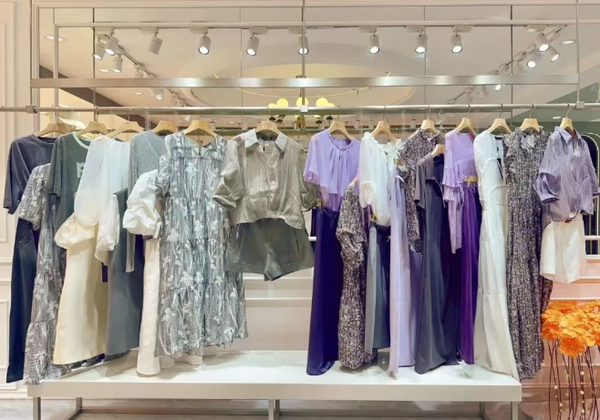
T-shirts, tank tops, leggings, and light summer dresses are the kings of the $5 category. Because they are light, you can fit more units into a single shipping carton, drastically reducing your "Landed Cost."
2. Factory Overstock (NWT)
Always prioritize New With Tags (NWT) stock. At the sub-$5 level, some wholesalers try to push "returns" or "customer salvage." Avoid these. The real profit is in pristine factory overruns where the quality matches high-street retail stores.

3. "Trans-seasonal" Basics
Basics like cotton hoodies or joggers often go on clearance for under $5 at the end of winter. Buying these in February to sell in September is a classic "Buy Low, Sell High" strategy used by the world's largest discount chains.
The Logistics Trap: Managing Your Margins
The biggest threat to "Under $5" profitability isn't the quality—it's the shipping. If you buy a $4 jacket that weighs 1kg, the shipping cost might be $6, making your total cost $10. Suddenly, the "deal" is gone.
To win, successful buyers use Volumetric Optimization. This means buying a mix of items that can be packed tightly, or working with wholesalers who have pre-negotiated freight rates with carriers like DHL or Maersk. When your shipping cost per unit stays under $1.50, your $5 inventory becomes a gold mine.

Why Boutique Owners are Moving to Low-Cost Lots
Consumer behavior has shifted. While luxury has its place, the "Impulse Buy" market is growing. A customer might hesitate to buy a $60 dress, but they will buy three $15 dresses without a second thought. By sourcing under $5, you can offer these "guilt-free" price points while still earning a higher percentage margin than luxury boutiques.
Frequently Asked Questions
Q: Is the quality poor for items under $5?
A: Not if you buy overstock. These items were originally intended to sell for $25-$40. The price is low because of inventory pressure, not manufacturing defects.
Q: What is the typical MOQ for these prices?
A: Most reputable stocklot suppliers start their $5 lots at 50 to 100 pieces per style/assortment.