How Small Boutiques Can Test Quiet-Luxury Knit Sets Without Overbuying
A practical guide for boutique owners, resellers, and small retailers who want to try a polished women’s knit set lot without turning a cheap buy into slow inventory.
There is a reason so many small shops keep circling back to wholesale women’s knit matching sets. They are easy to photograph, easy to style, and easy for real customers to understand. A shopper does not need a long explanation when she sees a soft top and matching wide-leg pants in a calm neutral tone. It already looks like an outfit. It already feels wearable. And for boutiques, that matters.
The catch is that not every “good deal” on matching sets is actually a good buy. Sometimes the cost looks great on paper, but the fit is too narrow. Sometimes the colors are fine, but the one-size label creates too much return friction. Sometimes the style is nice, but the lot is still big enough to freeze your cashflow if you do not have a clear sell-through plan. That is where experienced buying gets a little less emotional and a little more practical.
- How to judge whether a one-size knit set lot fits your customer base
- Why cheap source cost is only part of the real margin picture
- How to handle a normal overstock defect allowance without drama
- What US and EU buyers should think about differently
- How to merchandise a small knit set lot so it moves calmly instead of getting stuck
Let’s use a realistic example: a women’s soft knit top-and-pants set lot with 100 sets total, 2 colors, one-size construction, and a $3.50 source price. That type of lot gets attention because it looks boutique-friendly while staying in a cost band small retailers can still test. It is not the kind of buy that needs container-level confidence. It is more like a careful “let’s test this category without losing our heads” move.

Why this kind of set works in the first place
A lot of boutique inventory fails because it asks too much from the shopper. A statement piece may be beautiful, but it needs styling. A trend item may photograph well, but it can date quickly. A matching knit set is simpler. It tells the customer what to do immediately. Put both pieces on, add a bag, maybe a boot or sneaker, and the look is finished.
The sets in this lane also hit a sweet spot between loungewear and dressed-up casual. They can sit on a boutique floor next to boots and a coat, but they can also be sold online as “soft travel outfit,” “elevated knit co-ord,” or “cozy café look.” That flexibility matters because small shops do not always have the luxury of buying inventory that only works for one mood.
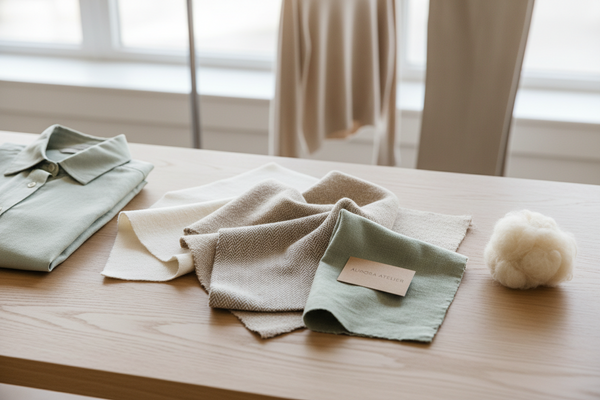
For the lot we are discussing here, the color direction matters too. Neutral charcoal and warm taupe or cocoa shades usually have a longer selling window than sharp novelty colors. They are easier to photograph across different lighting conditions, easier to style with accessories, and less likely to cause the “I love it online but not in person” problem. That does not mean every neutral sells. It means the starting point is calmer and usually easier for a small retailer to work with.

The first real question: does one size work for your audience?
This is where a lot of buyers either save themselves or create a headache. “One size” is not automatically good or bad. It just needs to match the kind of customer you already serve. If your shop has a strong audience of shoppers who like draped knits, flexible fit, and outfit-driven buying, one-size sets can work. If your customer base is extremely size-specific, highly fit-sensitive, or used to fuller graded runs, this becomes much harder.
In practical terms, a one-size knit set like this is usually safest when translated into approximate Western sizing language instead of repeated literally. For example, you might sell it as “best for US women’s XS-M, with fit varying by height and body shape.” That is much more helpful than just repeating the supplier note. It also reduces return friction because the customer can picture herself more clearly.
The smartest way to think about it is this: you are not buying a full knitwear program. You are buying a focused outfit story. That means your product copy, mannequin styling, live-selling script, and fit notes need to do a little more work than usual.
A simple fit translation approach
Instead of writing vague language, give customers and your sales team a clean reference point. For a lot like this, the most usable conversion would often be around US XS-M / EU 34-40, with some flexibility depending on stretch and body proportions. You can also note that customers around US 2-8 are likely to get the easiest fit, while some US 10 shoppers may still wear it in a more body-skimming way.
This kind of language makes your store look more trustworthy. It also filters out avoidable frustration before checkout. That is especially important if you are planning to sell the lot through your site, social commerce, or live video where impulse buys are common.

Cheap does not mean easy: do the landed cost math first
A $3.50 source price looks attractive. And honestly, it is attractive. But boutique owners who stay healthy long term usually stop the conversation right there and ask the more boring question: what does this look like after freight, customs, payment fees, handling, steaming, packing supplies, and markdown room?
That is where landed cost becomes the real cost. A lot of small retailers do this backwards. They fall in love with the unit price, imagine a retail number, and only later realize the margins were never as comfortable as they sounded in the first place.
| Cost Layer | What to Include | Why It Matters |
|---|---|---|
| Source Cost | $3.50 per set | The starting number, not the final truth |
| Freight & Delivery | Air, sea, courier, local delivery, handling | Low-cost goods can get distorted by shipping surprisingly fast |
| Duties / VAT / Customs | Import taxes, brokerage, importer-of-record costs | Especially relevant for EU buyers and cross-border resale planning |
| Receiving Cost | Inspection labor, steaming, repacking, tagging | Matching sets need clean presentation to feel premium enough |
| Markdown Buffer | Planned promo room for slower colors or late-season clearance | Protects you from panic discounting later |
For many boutiques, the better question is not “Can I retail this high?” It is “Can I retail this calmly, leave room for a soft promotion later, and still feel good about the margin?” That is a healthier way to buy.
What the 3% defect tolerance really means
In closeout apparel, especially tail orders and stocklots, a minor defect tolerance is normal. It is not a scandal. It is part of the deal structure. A lot priced at $3.50 per set is not trying to be first-choice, full-price, fresh factory inventory. It is trying to be a useful value buy for businesses that know how to work with overstock.
The problem comes when buyers say they understand liquidation norms, but their receiving workflow still assumes perfection. That mismatch creates most of the frustration. If you go into the purchase expecting every single set to be boutique-floor perfect straight out of the carton, the price point and the category are probably not aligned with your expectations.
Minor defect tolerance in a knit set lot can mean loose yarn ends, light pressure marks from packing, tiny stitch inconsistencies, or finishing variation that does not affect wearability. That should be reflected in your inspection process. Open cartons early, group by color, check waist elasticity consistency, inspect high-friction seams, and note anything outside the agreed range during the claim window.

Why small lots can be smarter than “bigger better deals”
There is a certain kind of inventory stress that only small-business owners understand. You buy a huge lot because the price feels too good to ignore, then you spend the next two months trying to justify why half of it is still sitting there. That is why a 100-set lot can actually be a healthier move than a much larger “amazing deal.”
A 100-set lot lets you do a few smart things. First, you can test whether your audience actually responds to the silhouette. Second, you can see whether one-size language causes friction in your sales channel. Third, you can learn how the two colors perform without being buried in leftover inventory. And fourth, you can protect cashflow. Cashflow is not glamorous, but it is what keeps boutique buying fun instead of stressful.
This is especially true if your store likes to rotate product stories often. A smaller lot leaves room for other categories: bags, outerwear, sweaters, accessories, mixed lots, and seasonal tail orders. It gives you options. Options are underrated.
How to merchandise a knit set so it feels more expensive
Cheap inventory does not have to look cheap. But it does need help. Matching knit sets do best when the whole presentation says “easy, polished, wearable.” That means your store photos, mannequin styling, and product copy should lean into simplicity instead of noise.
For example, this set category pairs naturally with a structured tote, a soft shoulder bag, ankle boots, clean sneakers, or a long neutral coat. If you already carry related accessories, use them. A matching set on its own is nice. A matching set styled into a complete mood is much stronger.
This is one reason it makes sense to internally link the product from other relevant parts of your store. A reader browsing Women’s Sweaters or exploring Under $5 wholesale apparel deals is already warm traffic for this type of item. The same goes for educational content in your Wholesale Clothing Knowledge Hub.
Simple styling angles that usually work
- “Soft travel outfit” with tote and flat shoes
- “Weekend coffee look” with coat and ankle boots
- “Comfy but polished” with gold-tone accessories
- “Quiet luxury outfit under budget” with a neutral handbag
- “Easy try-on set” for live selling and boutique reels
US vs EU buyers: what changes in the decision
The product itself may not change much, but the buying framework often does. US buyers usually think first about freight speed, domestic resale timing, and margin room after local handling. EU buyers often need to be a little more careful around VAT, importer-of-record responsibility, customs handling, and customer returns expectations in their market.
That does not mean EU buyers should avoid a knit set lot like this. It just means the math should be a little tighter. If you are selling into a market where returns are more expected or more regulated, honest fit language becomes even more important. A one-size product with vague wording can become expensive very quickly once return friction enters the picture.
| Buying Area | US Buyer Focus | EU Buyer Focus |
|---|---|---|
| Import Planning | Freight timing, state-level resale readiness | VAT handling, customs paperwork, importer-of-record clarity |
| Product Copy | Fit notes, lifestyle angle, fast sell-through language | Fit precision, returns clarity, compliance-minded wording |
| Margin Planning | Markdown room and promo flexibility | VAT-inclusive pricing logic and return-risk cushion |
| Receiving | Fast sorting and content creation | Fast sorting plus documentation for claims and customs records |
This is why pages like How It Works, Shipping Policy, Returns & Claims, and Help Center (FAQ) matter on a B2B site. Buyers are not just buying the set. They are buying the process around the set.
A clean receiving checklist for this kind of lot
You do not need an elaborate warehouse system to inspect 100 sets well. You need consistency. If you receive this lot and inspect it lazily, every downstream decision gets messier: pricing, claims, content, and sell-through.

Receiving checklist
- Count total sets against the packing list immediately on arrival.
- Separate by color before doing any quality notes.
- Check top-to-pant matching accuracy for each color group.
- Spot-check waistband elasticity and recovery.
- Inspect side seams, hem finish, and neckline stitching.
- Look for visible knit pulls, major stitch gaps, or severe surface marks.
- Photograph any issues that appear beyond the agreed tolerance.
- Submit any claim within the agreed claim window.
- Steam, fold, or hang the best pieces first for immediate content use.
- Tag with clear fit language before the lot hits the sales floor or website.
How to talk about this lot without sounding pushy
Calm selling usually works better for knit sets than hard-pressure selling. The piece already looks easy. Your wording should match that. Instead of shouting “must-have” or “viral,” you can use more grounded phrases like “easy outfit,” “neutral knit set,” “soft everyday matching look,” or “a simple boutique outfit for cooler days.” That tone feels more believable and often converts better for adult shoppers who want wearability over noise.
This matters even more in B2B content. If you are writing for resellers or boutique buyers, talk like someone who understands stock, not like someone trying to flip hype. Use language around landed cost, sell-through, low-MOQ testing, defect tolerance, and claim-window discipline. Buyers in this category usually trust measured language more than overpromises.
If you want to reference the example listing directly inside related content, you can insert the buyer-facing product link here: current product link provided for this inventory example.
Where this lot fits in a broader boutique inventory mix
A small knit set lot works best when it is not carrying the whole business by itself. Think of it as one clean chapter inside a broader assortment. It pairs well with outerwear, boots, totes, soft sweaters, and a handful of flexible basics. If your boutique is already buying from categories like women’s knitwear, under-$5 clearance apparel, or carefully curated single-style lots, this kind of set can slot in naturally.
It also makes sense for stores that like a “tight edit” instead of giant cluttered assortment. One simple matching set in two colors can often sell more cleanly than ten unrelated tops fighting for attention. This is especially true on social media, where outfit clarity matters. The customer sees the full look in one frame and decides faster.
When to reorder and when to walk away
Reordering should not be based on vibes. It should come from what actually happened. Did the first color group move faster? Did fit questions overwhelm customer service? Did returns stay manageable? Did the item sell only with discounting, or did it hold price calmly? These are the questions that tell you whether you found a real category winner or just a short-lived good idea.
If the lot sells through steadily, content creation is easy, and the fit notes are not causing too much friction, that is a signal worth paying attention to. If the opposite happens, it does not mean the inventory was “bad.” It usually just means the match between the product and your audience was off. That is a useful lesson too.
One of the healthier habits in overstock buying is learning to walk away without resentment. A low source price is not a reason to repeat a category that did not behave well for your store. Small boutiques stay sharper when they treat inventory as data, not as ego.
Final take
A women’s knit matching set lot at $3.50 can be a smart buy. But it becomes a smart buy only when you handle it with adult discipline: honest fit translation, proper landed-cost math, a realistic view of defect tolerance, and a clear sales angle. The look itself is easy. The buying process is where most of the real work lives.
For many small boutiques, a 100-set, two-color, one-size lot is actually a useful middle ground. It is big enough to test the category properly, but not so big that it automatically traps your cash. It suits stores that prefer neutral, wearable fashion stories and know how to present one-size inventory with transparency instead of wishful thinking.
If that sounds close to your customer base, this is the kind of stock that can make sense. Not because it is loud. Because it is simple, wearable, and easy to slot into everyday retail life.
Frequently Asked Questions
Are one-size knit sets too risky for boutiques?
Not always. They are risky when the boutique serves a broad fit range but uses vague sizing language. They can work well when the customer base already responds to flexible-fit fashion and the store explains the fit honestly.
What is the biggest operational risk with this type of lot?
Usually it is not the style. It is delayed inspection, poor fit translation, and weak landed-cost planning. Those are the things that turn a cheap lot into annoying inventory.
Should boutiques sell these as lounge sets or fashion sets?
Usually both. The strongest retail angle is “comfortable but put together.” That gives you more content and styling flexibility.
How should EU buyers think about this differently?
Pay closer attention to VAT, importer-of-record responsibility, customs planning, and returns expectations. One-size products need especially clear fit language in markets with stronger return habits.
What pages should B2B buyers review before placing a stock order?
It helps to review About Us, How It Works, Shipping Policy, Returns & Claims, and Help Center (FAQ) before moving forward.
Looking for current knitwear inventory, mixed lots, or single-style tail orders?
Browse the current assortment, compare lot structures, and request today’s available stock when the timing works for your business.
Request Current InventoryYou can also explore related categories through the knitwear collections and the Wholesale Clothing Knowledge Hub.