From 0 to Profit: How Elena Launched Her Boutique and Hit Month 1 ROI with Mixed Lots
The Zero to One Roadmap: How a First-Time Owner Achieved Profit in 30 Days
A Blueprint for Small Boutique Success
The leap from dreaming about a boutique to actually owning one is often cited as the hardest part of the entrepreneurial journey. Most aspiring fashion moguls believe they need $50,000, a massive warehouse, and a fleet of influencers to make their first dollar. Elena, a former administrative assistant from Ohio, proved that theory wrong. With a total startup budget of just $2,500 and a strategic partnership with **ApparelLots**, she turned her "0 to 1" moment into a profitable reality in less than 30 days.

This is not a story of overnight fame; it is a story of **smart sourcing**. Elena didn't have the luxury of buying hundreds of units of a single designer brand. Instead, she leaned into the power of **Mixed Lots**. She understood a fundamental truth about retail: in the beginning, variety is more valuable than volume. This case study breaks down her methodology, from her first order to her first profit distribution.
Phase 1: The Strategy of Variety
Elena’s first hurdle was the "Selection Anxiety." Most wholesalers force buyers to purchase a full "Size Run" (S-M-L-XL) of a single style. For a small boutique, this is incredibly risky. If that specific dress doesn't sell, your entire capital is tied up in dead stock. Elena chose a different path: **The ApparelLots Mixed Lot.**
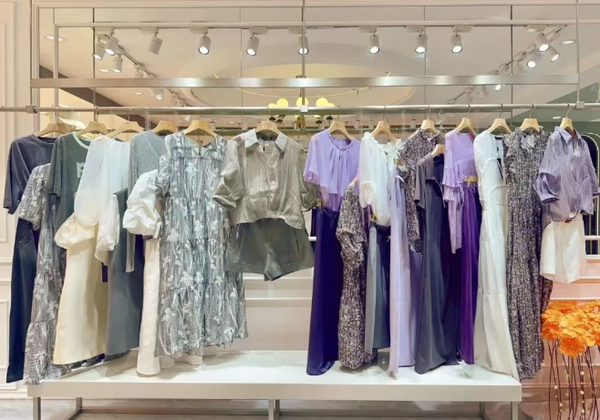
She purchased two premium Mixed Lots—one focused on "Contemporary Women's Apparel" and another on "Accessories & Knits." This gave her over 120 unique pieces across 15 different brands. To her customers, her new online shop looked like a curated boutique with dozens of options. To her ledger, she was only in for a few hundred dollars per category.
Phase 2: Lean Operations & Branding
Elena’s launch strategy was built on "The Unboxing." She didn't wait for a professional photo shoot. The day her ApparelLots boxes arrived, she filmed a "Live Unboxing" on TikTok and Instagram. She showed her followers the quality of the fabrics, the original tags, and her excitement. This transparency built immediate trust.

Because she had so much variety from the Mixed Lots, every minute of her video showed something new. Her audience wasn't seeing a 'sales pitch'; they were seeing a 'discovery process.' By the time she finished the video, she had 15 DMs asking for pricing.
Phase 3: The Keystone Pricing Model
Profitability in the first month is a math problem. Elena used a **Keystone+ Pricing Strategy**. Since her average unit cost from the Mixed Lots was roughly $8.00, and many of the items were premium brands with MSRPs over $50.00, she had massive "Perceived Value" on her side. She priced her items between $28 and $45.
- Total Inventory Cost: $1,600 (Shipping included)
- Operating Expenses (Apps/Shipping Supplies): $550
- Total Startup Cost: $2,150
- Average Sale Price: $34.00
- Break-Even Point: 64 Units
Because her inventory was so diverse, her customers often bought 2 or 3 items at a time to "complete the look." This increased her Average Order Value (AOV) and accelerated her path to profitability. She reached her break-even point on Day 18. Every sale after that was pure profit.
Phase 4: Customer Feedback & Reinvestment
The most important lesson Elena learned from her first 30 days was that **data is better than intuition.** By using Mixed Lots, she was able to see exactly what her customers gravitated toward. Did they want the bohemian dresses? Or the structured blazers? Because she had a little bit of everything, she didn't have to guess.

By the end of Month 1, she had sold 85% of her initial inventory. She took her profit and immediately reinvested it into a larger, more targeted pallet from ApparelLots, focusing on the categories that sold out fastest. She had successfully moved from "0 to 1" and was now on the path from "1 to 10."
5 Key Takeaways for Aspiring Boutique Owners
- Focus on Cash Flow, Not Perfection: Don't spend $2,000 on a website. Spend $500 on a website and $1,500 on inventory.
- Embrace the Mix: Mixed Lots are the cheapest way to learn what your customers like. They are your research and development department.
- Content is Currency: Your sourcing journey is your best marketing material. Show the boxes, show the tags, show the hustle.
- Price for Profit: Don't be afraid to charge what the item is worth, not just a small markup on what you paid.
- Partner with Professionals: Sourcing from a reliable partner like ApparelLots ensures that even "mixed" inventory is high-quality and retail-ready.
Elena’s story is a testament to the fact that the barrier to entry in fashion retail has never been lower, provided you have the right sourcing strategy. You don't need a fortune to start; you just need a lot of courage and a few good Mixed Lots.