Flexible Bulk Apparel Customization Guide for Institutional Sourcing
The Blueprint for Flexible Bulk Apparel Customization in Corporate and Institutional Sourcing
Procuring custom clothing for an enterprise fleet, an educational institution, or a municipal government department has traditionally been restricted by rigid supply chain structures. Traditional garment manufacturers routinely impose massive, inflexible minimum order quantities (MOQs) that force organizations to tie up critical capital in unallocated dead stock. However, modern procurement paradigms have shifted toward flexible batch production runs—a contract manufacturing framework that adapts precisely to actual organizational headcounts while maintaining direct-factory pricing metrics.
1. Overcoming the Friction of Arbitrary Factory Minimums
For most institutional buyers, the primary vulnerability in custom apparel sourcing is over-ordering simply to satisfy vendor thresholds. When ordering specialized garments for a distinct administrative division, a campus event staff, or public works field operators, forcing a high-volume commitment creates immediate storage and budgeting inefficiencies.
Technical Framework: Flexible batch runs allow organizations to split production slots into scalable increments. This infrastructure supports direct colorway and sizing distribution based on actual team rosters rather than rounded-up factory estimates, mitigating initial capital exposure without sacrificing textile grade parameters.
By shifting to an asset-light, demand-driven fulfillment model, corporate procurement officers can execute pilot programs or complete rolling re-orders. This setup ensures that if a municipal agency or corporate department expands its staff count mid-quarter, subsequent garment lots can be dispatched seamlessly with zero changes to design topography or color metrics.
2. Technical Specifications: Eliminating Size Discrepancies and Fabric Distortion
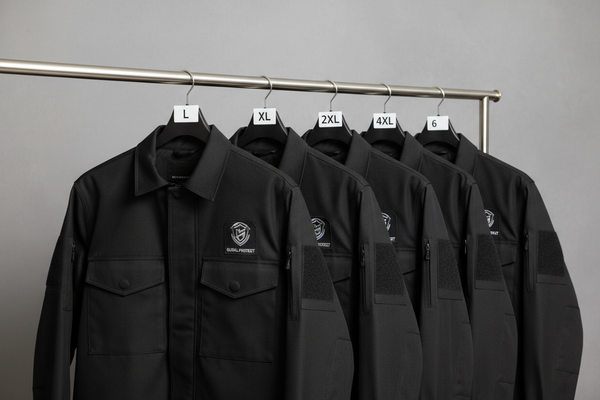
A frequent error in high-volume teamwear deployment is relying on generic retail sizing charts. True commercial-grade uniform programs require standardization to strict US sizing grading curves, ensuring consistent fit profiles across expansive, diverse employee or student populations.
- GSM Fabric Weight Selection: Selecting the correct Grams per Square Meter (GSM) ensures product longevity. Mid-weight fleece hoodies perform optimal at 320–360 GSM, whereas technical pique polo apparel requires a stable 210–240 GSM weave matrix to maintain structure through intensive daily laundering.
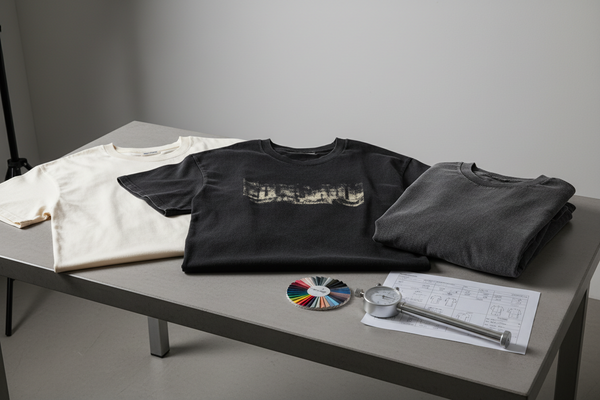
- Shrinkage Mitigation Protocols: Raw cotton composites inherently shrink under commercial thermal drying cycles. True contract-grade apparel must undergo systematic pre-shrinkage testing to lock down dimension stability thresholds to under 3% variance.
- Dye Lot Color Drift Controls: When ordering consecutive batches across multiple quarters, locking the chemical dye lot coordinates prevents color drift—ensuring a tech firm’s or university's navy blue or espresso brown branding identity remains absolutely uniform over time.
3. Advanced Brand Decoration Engineering: Embroidery vs. Technical Printing
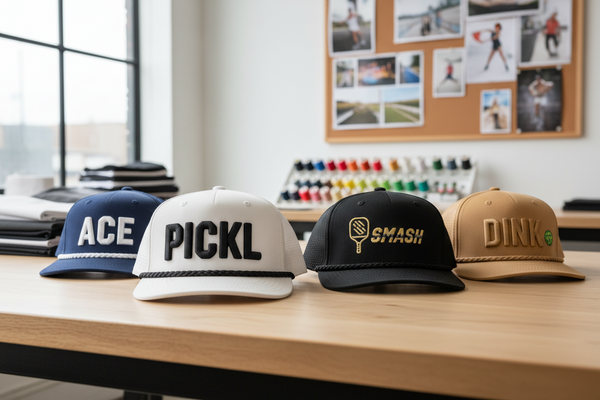
Implementing organizational identification onto heavy textile surfaces demands automated, industrial-grade implementation equipment rather than standard retail methods. The choice of application technology directly commands the durability and professionalism of the fleet uniform.
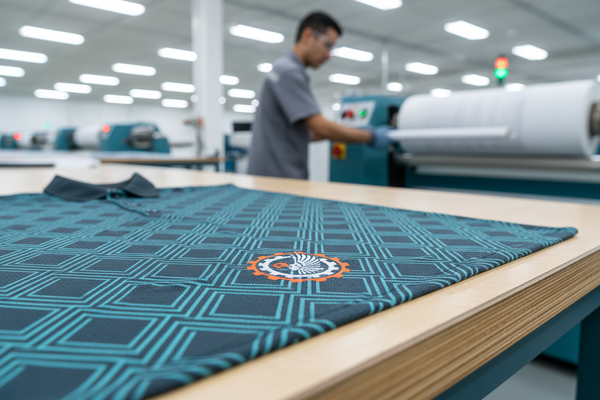
For polished corporate polo configurations, heavy canvas workwear jackets, and structural aprons, automated multi-head embroidery arrays offer unmatched permanence. Computerized stitch tracks must maintain high density metrics to avoid panel puckering, ensuring company insignias and institutional crests preserve complete graphic clarity through extended wearing lifecycles.
Conversely, for large-scale promotional event drops or lightweight activewear sets, high-fidelity direct-to-garment (DTG) inkjet processing and industrial rotary screen-printing lines provide optimal graphic performance. By layering low-temperature curing inks with dedicated anti-migration blockers, the custom print matrix avoids micro-cracking or dye bleeding, anchoring the brand's visual identity firmly onto the underlying cotton substrate.
4. Securing the Border: Transparent DDP Logistics Gates
The final vulnerability in global apparel sourcing involves international shipping logistics. Many international vendors quote simple FOB (Free on Board) prices, leaving the purchasing institution exposed to unexpected port delays, custom documentation penalties, and uncalculated local brokerage clearance overhead fees.
To establish predictable procurement budgeting, institutional contracts should rely exclusively on structured DDP (Delivered Duty Paid) global shipping configurations. Under a DDP logistics layout, the manufacturing partner manages the entire export-import clearance sequence, absorbing all tariff evaluations and transport customs handling. The custom clothing lots arrive flat-packed, fully audited, and cleared directly to your corporate facility or regional campus distribution sorting hub, providing complete end-to-end transparency from the factory floor to your final facility depot.