Why Your Fleet Uniforms Twist After 20 Washes: An Auditor's Take on 210GSM Combed Cotton
Industrial Sourcing Summary
This paper evaluates the mechanical parameters required to execute durable corporate fleet uniforms. By analyzing the behavior of 210GSM combed cotton-poly structures under intense commercial washing, we establish strict rules for yarn torque calibration, pattern tracking, and a guaranteed under 2% shrinkage threshold via AQL 2.5 auditing processes.
The Mechanical Performance of 210GSM Fabric Matrices
Within high-frequency supply chains, selecting team wear based on simple retail descriptions leads to rapid product failure and budgeting waste. Operational crews, transit personnel, and delivery staff subject clothing to complex mechanical stresses that consumer-grade garments cannot withstand. To build high-density apparel programs, procurement teams must analyze fabric at the structural level, evaluating mass per unit area and fiber configuration constants.
A fabric density of 210GSM (Grams per Square Meter) represents a calculated engineering choice. At this thickness, individual yarn strands contain a sufficient number of fibers per cross-section to resist structural friction, abrasive wear, and puncture stress. Thin retail options ranging from 140GSM to 160GSM rely on single, loose yarn constructions that quickly fray under the daily wear of seatbelts, logistics packages, and field tools. A 210GSM configuration ensures that the garment maintains an opaque, professional look over a prolonged service life.
The specific composition of the yarn represents another calculated design variable. While pure cotton offers high comfort, it lacks the polymer stability needed for industrial laundering. Integrating a synthetic polyester matrix provides excellent fiber cross-linking. The high molecular orientation of polyester supports the cotton fibers, preventing the structural sagging, wrinkling, and edge curling common in lower-grade uniform runs.
Yarn Torque Calibration and the Elimination of Seam Spirality
One of the most persistent defects encountered in mass-produced knitwear is side-seam spirality, where the structural seams of the garment twist across the worker's torso after a series of wash cycles. This deformation is directly caused by untamed residual torque locked inside single ring-spun yarns. As the knitting machine spins the fabric tube, the yarns store mechanical energy. When exposed to hot commercial dryers, this energy releases, causing the entire knit loop loop structure to tilt diagonally.
To prevent this defect across large production lots, strict factory yarn torque calibration routines are mandatory. The production line must use alternating yarn packages featuring precise Z-twist and S-twist patterns to effectively balance internal rotation stresses. Furthermore, the yarn must undergo high-pressure steam stabilization inside vacuum autoclaves prior to entering the knitting needles. This locks the internal twist structure, ensuring that the final knit wale lines run perfectly straight and vertical.
Technical Sizing Tracking Note
When side seams twist out of balance, any applied decoration, such as corporate logo embroidery or silkscreening, shifts off-center. This ruins your visual brand identity and places uneven mechanical strain on the seams, causing premature tearing along the garment flank. This issue must be actively addressed during pattern layout.
Pattern positioning is the next critical safeguard. When cutting high-volume corporate fleet uniforms, the cutting molds must align precisely parallel with the yarn grain lines. Any slight angle deviation during mass cutting runs magnifies after washing, twisting the fabric tube permanently. Our factory floors enforce strict grain alignment tolerances to ensure that your custom emblems stay straight and clean over months of heavy usage.
Comparative Engineering Metrics for Procurement Auditing
Procurement directors must look past generic wholesale descriptions and evaluate raw performance data. Below is the direct laboratory testing index detailing the physical performance boundaries of standard apparel blanks compared to calibrated 210GSM custom-manufactured specifications.
| Textile Testing Metric | Standard Promotional Blanks | ApparelLots Calibrated Standard |
|---|---|---|
| Fabric Mass Density | 140 - 160 GSM (Thin Single Yarn) | 210 GSM (High-Density Interlock/Pique) |
| Dimensional Shrinkage Index | 6% to 10% Volumetric Contraction | Under 2.0% (Enforced Compactor Loop) |
| Seam Torque Resistance | Uncalibrated (Spirality > 8 degrees) | Balanced Twist (Spirality < 1.5 degrees) |
| Color Fastness (Grayscale) | Grade 2-3 (Significant Bleeding) | Grade 4-5 (Reactive Chemical Fixation) |
| Quality Gate Validation | No Verifiable Audit / Batch Blending | AQL 2.5 Piece-by-Piece Verification |
Securing the Under 2% Volumetric Shrinkage Threshold
Excessive dimensional shrinkage destroys the sizing alignment of custom apparel rollouts, turning large uniforms into unwearable smalls after initial laundry processing. Fabric shrinking is driven by relaxation forces within the fibers. During high-speed industrial weaving and knitting, the yarn is pulled under high tension, stretching the molecules out of their comfortable shape. When exposed to hot water and tumbling action, the fibers quickly pull back to their original lengths.
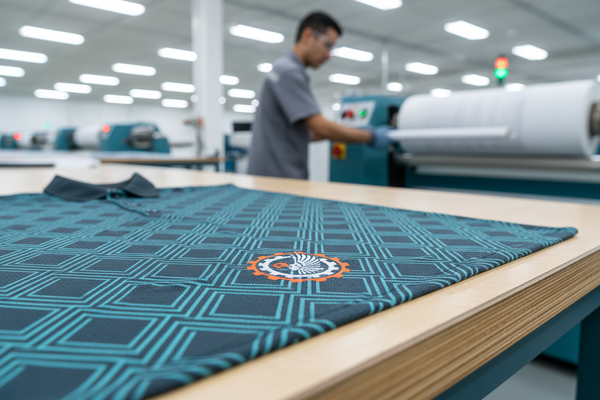
To bypass this risk, our 210GSM production loops feature a mandatory multi-stage mechanical shrinking process. The fabric rolls run through continuous steam chambers and heavy rubber compactor belts that pre-shrink the material under strict control. This process relaxes the tension within the yarn grid before the fabric ever reaches the cutting table, securing final dimensions to a strict under 2% shrinkage threshold.
This level of structural tracking is critical for complex setups like onboarding kits deployment, municipal agency infrastructure procurement, and campus community organization apparel runs. When uniform assets are packed for wide-ranging corporate rollouts, you must have complete peace of mind that a standard US Medium size will maintain its precise dimensions over months of heavy daily maintenance and commercial washing.
The Mathematical Reality of AQL 2.5 Structural Auditing Logs
True quality verification requires strict statistical auditing protocols, rather than rely on surface-level visual checks. Our manufacturing lines run under clear AQL 2.5 sampling plans, converting random quality checks into reliable engineering compliance data. When a bulk batch finishes assembly, non-biased inspectors pull a mathematically dictated sample size based on the total lot volume to check every dimension, thread path, and reinforcement stitch point.
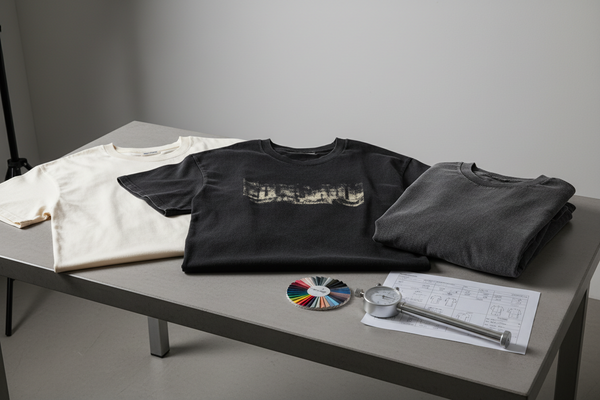
Our inspectors check for minor, major, and critical structural defects under strict pass/fail limits. We verify stitch density parameters using fine magnifying reticles, ensuring all critical stress points—like shoulder joints and armhole seams—maintain a high stitch count. Any single failure that exceeds the designated AQL threshold automatically holds the entire batch, triggering complete repressing and adjustment loops before container loading.
Our teamwear solutions tracking networks log every quality validation step, providing institutional clients with clean, auditable data packets. This level of quality tracking confirms that your corporate uniform batches are free from structural drop-stitches, raw fabric exposures, or poor color blending, protecting your long-term apparel budget from premature breakdown.
"Enforcing an AQL 2.5 protocol removes all guesswork from bulk purchasing, converting clothing production into a verifiable engineering process."
Beyond stitch layout tracking, our audit teams verify seam tensile strength limits. Using mechanical pull testers, sample seams are stretched to confirm they can easily handle the physical strain of active daily duty. This tracking confirms that your custom garments can survive intense daily field work without seam failure or fraying edges.
Streamlining Global Delivery via Fixed DDP Freight Routes
The final element of a successful high-volume apparel contract run centers on international customs clearance and cross-border logistics. Most procurement budgets break due to hidden local port processing fees, surprise tariff shifts, or extended customs delays at destination hubs. Sourcing your bulk lots through a direct factory contract requires a clear logistics setup that protects you from these sudden operational expenses.
ApparelLots manages all bulk delivery runs through direct, closed-loop Delivered Duty Paid (DDP) transport routes. This setup requires our shipping teams to clear all import paperwork, calculate precise HTS classification codes, pay maritime freight fees, and handle local import tariffs before your cargo arrives at port. This approach removes all customs hassles, ensuring your clothing arrives directly at your regional depot on time with zero surprise broker invoices.
By integrating direct-to-factory production with clear DDP shipping routes, institutional buyers can secure highly predictable uniform budgets. Whether you are running complex onboarding rollouts or long-term municipal outfitting contracts, this closed-loop process delivers clean, retail-grade custom apparel directly to your facility doors on schedule.