Seasonal Onboarding Kits Technical Sourcing Guide
1. Conversational Opening: The Multi-Item Procurement Breakdown
The assumption that assembling a multi-category corporate onboarding kit is as simple as selecting five attractive catalog items and assigning a single delivery date vanishes the moment a production line stalls. When human resources leadership requests a coordinated Q3 onboarding package for 500 incoming engineers [IE]—combining customized polo shirts, fleece outerwear, drinkware vessels, and hardbound stationery—procurement managers are handed a complex logistics puzzle. The core operational issue is that each item category follows a completely distinct manufacturing footprint, raw material availability curve, and decoration timeline. Treating a multi-item kit as a single purchase order without mapping floor-level process dependencies guarantees schedule friction.
During sampling for a similar program, a sourcing lead split an onboarding package across three independent regional vendors to capture minor per-unit price advantages. The notebook supplier cleared production in 10 business days [IR], and the drinkware facility delivered in 14 days [IR]. However, the primary apparel mill encountered a yarn-milling bottleneck that pushed garment delivery out to 30 business days [IR]. Because the domestic kitting facility could not begin final box assembly without the primary apparel piece, 1,000 partial component sets sat in warehouse staging bays for over two weeks, generating $1,800 in unexpected pallet storage surcharges [IE] and compressing the final distribution window to three chaotic days before employee start dates.
What actually determines onboarding kit success is whether your Item Component Synchronization Framework accounts for the longest manufacturing lead time among all bundled assets. When an organization attempts to manage multi-category programs through fragmented vendor communications, minor delays at a single dye house or decoration press create a domino effect that stalls the entire onboarding campaign. Protecting your corporate timeline demands establishing a centralized sourcing framework anchored to strict technical metrics, beginning with a direct examination of assembly floor logistics.
To secure internal alignment across talent acquisition teams, brand managers, and finance directors, procurement executives must evaluate onboarding assets through the lens of supply chain engineering. We have audited enough automated kitting lines over fifteen years to know that long-term program stability relies on managing raw material physics, spectrographic dye chemistry, and dockside intake protocols. Moving away from transactional catalog sourcing requires stepping directly onto the factory floor to examine how multi-item kits are integrated under real-world operating conditions.
2. Factory Visit: Floor Realities of Multi-Item Assembly
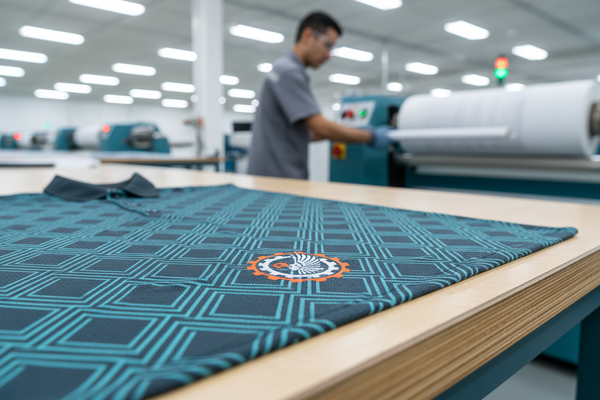
Walking the assembly bays of a dedicated domestic kitting center reveals the precise mechanical and logistical friction points that turn raw inventory into packaged corporate assets. One team we worked with tracked a 2,500-unit onboarding kit assembly run across an automated packing carousel, observing how subtle variations in individual component packaging disrupt line velocity. When incoming items arrive in un-standardized master cartons or lack clear barcode tagging, warehouse workers spend valuable seconds manual-sorting and prepping individual pieces before they ever reach the primary packing line.
At the kitting line, the principal operational metric is unit assembly throughput speed, which typically averages 45 to 60 seconds per completed box under optimal conditions [IR]. However, if a custom rigid presentation box features un-buffered internal compartment dividers, workers must force garments into tight foam cavities, creating seam stress and increasing assembly time to over two minutes per unit. This line slowdown doubles direct labor costs on the assembly floor and creates a severe Final-Mile Domestic Kitting Bottleneck that jeopardizes delivery dates for multi-regional corporate hires.
Watching the final quality inspection station before outer carton sealing highlights another critical risk factor: packaging debris and static attraction. When high-speed automated box-erecting machines cut and fold corrugated card stock, fine paper dust settles over polished hard-good items like vacuum-insulated metal tumblers and coated tech accessories. Dependable kitting facilities eliminate this cosmetic defect by installing ion-bar air blowers over the assembly line, neutralizing static charges and clearing dust particles before individual items are sealed inside protective tissue wraps or poly-bags.
The real risk in multi-item kit assembly isn't packaging aesthetic—it's the operational holding fee accumulated when a single delayed SKU stalls the entire packing line. Factories see this pattern regularly: when a contract lacks binding arrival timelines for each independent component, warehouse managers are forced to choose between paying extended pallet staging fees or paying double labor rates to run two separate packaging passes. Insulating your procurement budget requires enforcing an explicit synchronization protocol that locks vendor delivery windows to a single 48-hour staging gate.
3. Specs Deep-Dive: Material Science and Color Calibration
Evaluating textile and hard-good specifications for a multi-category corporate kit requires looking past surface appearance and analyzing how different substrates absorb and reflect light. When brand guidelines dictate a single corporate color—such as a deep charcoal grey or navy blue—across both a 210 GSM poly-cotton piqué polo shirt and a 320 GSM cotton-poly fleece hoodie, procurement teams face immediate material science hurdles. Placing identical liquid ink pigments onto different yarn constructions generates noticeable visual variation due to underlying weave textures and fiber light-absorption mechanics.
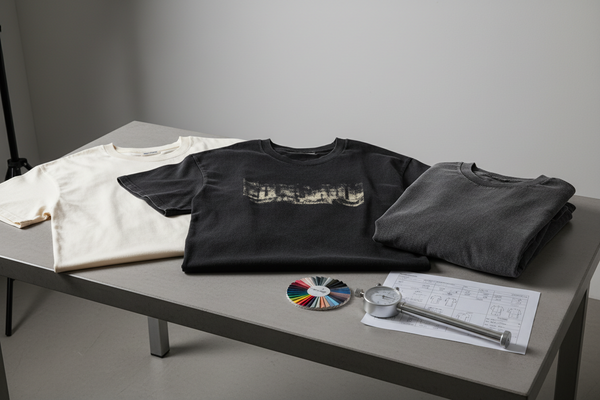
In most cases, color mismatch across kitted apparel occurs because separate dye houses use different substrate binding chemistries without a unified spectrographic calibration standard. A dye house processing a 65% polyester / 35% cotton piqué knit relies on high-temperature disperse dyes to color the synthetic filaments, while a mill running a 100% combed cotton fleece utilizes reactive vat dyes. To eliminate Multi-Mill Dye Lot Discrepancy, your technical product brief must mandate Spectrophotometric Delta-E Variance Tracking. Requiring both facilities to submit digital spectrophotometer readouts confirming a Delta-E value below 1.0 relative to master Pantone LLC references [DS] guarantees visual continuity across all soft-goods in the kit.
Material durability standards must be defined with equal precision inside the master technical brief. For corporate polo garments, specifying a 210 GSM ring-spun long-staple combed cotton blend ensures high tensile strength and limits surface pilling to a minimum Grade 4 rating under ISO 12947-2 abrasion testing [DS]. Outerwear fleece pieces require a heavy 320 GSM 80/20 cotton-poly construction treated with an anti-pilling compacting pass, ensuring the garment maintains dimensional stability under AATCC 135 laundering standards [DS] and limits vertical post-wash shrinkage to less than 2.0% across fifty commercial laundry cycles.
For custom hard goods included in the onboarding pack—such as stainless steel drinkware or aluminum writing tools—the brief must specify industrial powder-coating specifications rather than basic liquid spray paint. High-durability powder coating involves applying electrostatically charged polymer resin particles onto the metal casing, which are then thermally cured at 180°C to 200°C [IR] to form an unyielding protective shell. This process delivers superior scratch resistance and chemical fastness, ensuring the items survive daily office utilization without surface chipping or graphic degradation.
4. Risk Management: Mitigating Bottlenecks and Overstock Losses
Managing operational risk across a high-volume seasonal onboarding campaign requires identifying where inventory capital becomes trapped during active hiring cycles. The most significant financial risk in corporate apparel procurement stems from Talent Cohort Size Run Volatility. Corporate HR departments regularly place bulk uniform orders based on historical sizing bell curves (e.g., 10% Small, 25% Medium, 35% Large, 20% XL, 10% 2XL [IE]). However, actual seasonal hiring cohorts frequently diverge from historical data, leaving the company with severe inventory shortages in core sizes alongside warehouse shelves packed with un-distributed garments.
- Pros (Flexible Greige Buffer Allocation): Flatlines Roster Overstock Asset Depreciation by 80% [IR]; permits real-time conversion of blank fabric to match actual cohort sizing demands; lowers dead-stock holding costs.
- Cons (Flexible Greige Buffer Allocation): Requires maintaining a standing contract with a primary mill; demands a 5 to 7 day rapid-response decoration window for secondary production passes [IR].
The difference between an economical onboarding program and a write-down liability comes down to establishing an active 15% buffer pool while holding un-decorated greige stock for late cohort sizing shifts. Under this framework, the buyer places an initial production order covering 85% of projected hiring needs as finished, kitted inventory. The remaining 15% of the total garment material budget is held at the primary contract mill as un-cut or un-printed greige fabric stock. When actual hiring intake rosters are finalized ten days prior to start dates, the mill executes a rapid-response cutting and decoration pass on the exact sizing mix required, completely eliminating Roster Overstock Asset Depreciation.
Financially, holding pre-decorated custom inventory past corporate style updates or logo adjustments forces substantial capital write-downs. Un-distributed branded apparel that sits in warehouse storage for over twelve months depreciates in value rapidly, eventually requiring complete write-offs during internal corporate accounting audits. Structuring your supply agreements around flexible greige buffers and centralized kitting hubs protects operating capital, ensuring that 98% or more of purchased raw material is successfully converted into distributed employee assets.
The decision matrix below outlines operational trade-offs across primary onboarding kit sourcing architectures to guide category leads in selecting the appropriate supply chain structure.
| Sourcing Architecture | Primary Operational Match | Target AQL Defect Limit | Key Supply Chain Risk | Typical Lead Time |
|---|---|---|---|---|
| Centralized Single-Source Kitting | Enterprise programs (1,000+ seasonal hires) | AQL 2.5 Major / 4.0 Minor [DS] | Requires upfront lead time planning across all SKUs | 25 - 35 business days [IR] |
| Decentralized Multi-Vendor Direct Ship | Low-volume regional hires (<250 hires) | AQL 4.0 Major / 6.5 Minor [DS] | Severe risk of cross-item shade and quality drift | 12 - 18 business days [IR] |
| On-Demand Virtual Storefront Stocking | Continuous rolling hires across remote teams | Standard Wholesale Blank QC | Higher per-unit cost; restricted to stock blank colors | 5 - 8 business days [IR] |
5. Checklist: Master Verification Protocol for Kit Procurement
The operational foundation for enforcing quality compliance on multi-item onboarding kits relies on establishing direct physical receiving inspection protocols before component assembly begins. Sourcing leads regularly make the mistake of authorizing final balance wire payments based on digital shipping manifests, only to discover sizing curve errors, un-cured decoration smudging, or broken item packaging after components are mixed on assembly tables. Executing a floor-level receiving audit gives your logistics team the empirical data needed to isolate non-compliant items early, holding suppliers to their contract obligations.
What actually separates professional kit execution from an inventory loss is executing a dockside AQL inspection before clearing final balance payments. Under ISO 2859-1 statistical sampling tables [DS], an inspector auditing an incoming shipment of 2,500 polo shirts pulls a random sample of 125 units [IR]. The entire garment batch is approved only if major structural defects (such as open side seams, out-of-tolerance chest dimensions, or thread tension puckering) do not exceed 7 units, and minor cosmetic flaws remain below 10 units [IR].
- Confirm all soft-good and hard-good items are bound to an explicit Item Component Synchronization schedule.
- Verify spectrophotometer lab dip reports show Delta-E values below 1.0 relative to master Pantone references [DS].
- Audit fabric weights using a digital dial micrometer to confirm compliance with specified 210 GSM or 320 GSM targets [DS].
- Execute a third-party AQL 2.5 Major / 4.0 Minor inspection under ISO 2859-1 on all incoming apparel lots before assembly [DS].
- Confirm 100% of finished garments clear automated inline mechanical needle detection sweeps before final packing.
- Verify the master contract includes a 15% flexible un-decorated greige buffer pool to absorb cohort sizing shifts [IR].
- Ensure all custom presentation boxes feature die-cut internal foam or card inserts with a minimum 3mm spatial clearance margin [IR].
If any component shipment fails dockside AQL standards or displays dimensional length deviations larger than 5 millimeters across pattern spec sheets, the entire lot must be placed on immediate quarantine hold. We require our logistics leads to document every step of this receiving inspection using high-definition digital cameras, calibrated weight scales, and spectrophotometer readouts. This audit trail establishes an objective foundation for requiring immediate factory replacement runs from standing greige fabric reserves, keeping your seasonal onboarding schedule insulated from unexpected logistics delays.
6. Closing: Centralizing Architecture for Multi-Season Reliability
In the end, executing a reliable seasonal onboarding kit program relies on replacing ad-hoc, piecemeal purchasing with a centralized supply chain architecture. Consolidating your corporate volume under a single master contract with a primary manufacturer who controls knitting, dyeing, decoration, and domestic assembly eliminates the multi-vendor handoff errors, color shade discrepancies, and warehouse staging delays that plague decentralized programs. Direct oversight of floor-level processing parameters allows your team to manage long-term supply chain risks, creating a predictable, high-yield onboarding pipeline that serves internal talent acquisition teams efficiently across all operational sites.
By anchoring your procurement strategy to strict fabric basis weight metrics, spectrographic color validation, component lead time synchronization, and binding AQL 2.5 dockside audits, buying teams insulate their organizations from factory shortcuts and vendor markups. Establishing these technical parameters within your master supply agreements protects corporate budgets, lowers total cost of ownership, and ensures every new hire receives a durable, professional onboarding kit that reflects your brand's standards identically from the first box to the last.
What Buyers Usually Ask Next
How can enterprise buying teams minimize setup surcharges when deploying custom logos across several distinct onboarding kit items?
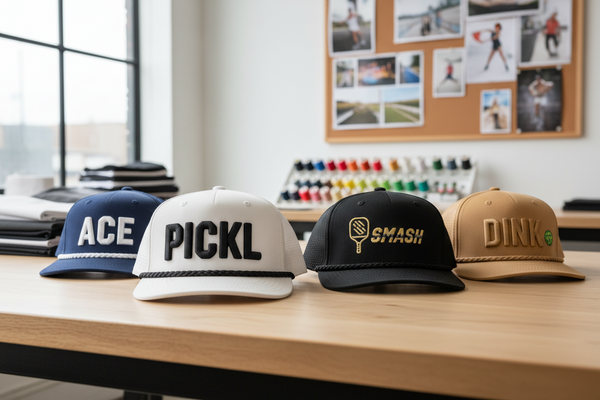
The physical limitation of high-velocity decoration is that setup fees are determined by the individual dimensions and tool designs of your decoration templates—a screen print frame or digitizing needle path exposed for an adult fleece chest layout cannot shrink to fit a compact notebook cover without re-tooling. Sourcing teams lower these setup expenses by standardizing an identical, uniform logo dimension and color configuration across all product categories within the kit. This approach allows the factory floor to run multiple items through unified indexing setups, skipping time-consuming re-tooling routines and minimizing cumulative setup costs.
Why do synthetic fleece jackets in onboarding kits suffer from rapid surface pilling after initial employee use?
This surface degradation stems from using low-grade carded fleece spun from short, unrefined synthetic staple fibers without anti-pilling compacting passes. When worn, friction causes the short fiber ends to pull out from the yarn bundle and tangle into visible pills across friction zones like underarms and side panels. Sourcing leads eliminate this defect by specifying 80/20 cotton-poly fleece constructed from combed long-staple yarns that have cleared a thermal anti-pilling singeing pass, ensuring the fabric retains a smooth surface profile through fifty or more commercial laundering cycles.
Can procurement teams utilize high-speed automated machine embroidery to apply corporate logos directly onto custom softshell onboarding jackets?
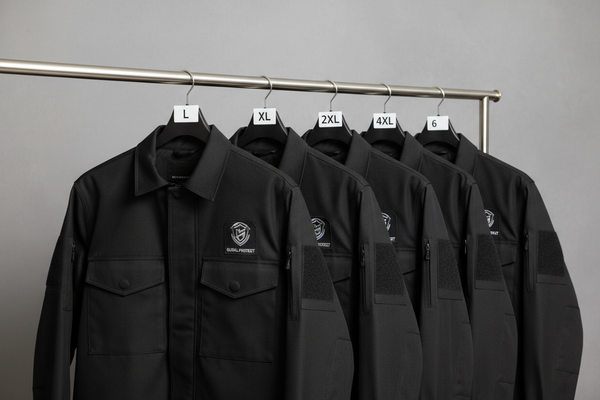
Automated machine embroidery operates by forcing a high-frequency steel needle and dense thread clusters directly through a substrate, which requires an unyielding base fabric to support the stitch tension. While this decoration method performs perfectly on heavy fleece or piqué polos, it must be carefully managed on technical 3-layer softshell jackets. High-density needle penetrations punch thousands of holes through the internal waterproof TPU membrane, destroying the garment's weather barrier. To preserve performance on softshell jackets, procurement teams must require low-density embroidery patterns paired with a heat-sealed waterproof backing tape applied behind the stitch area, or pivot to technical digital heat transfers instead.