Custom Promotional Backpacks Bulk Ordering Guide: MOQs, Costs & Timelines
Custom backpacks serve as one of the most visible and functional promotional products an organization can distribute. Whether supporting a regional school initiative, outfitting participants for a community outreach campaign, or preparing gear for a corporate brand activation, a well-constructed backpack carries a brand message across daily commutes, travel hubs, and office spaces. Yet when procurement teams begin planning an order for 100 to 200 bags, they frequently encounter sourcing questions that differ substantially from massive, multi-thousand-unit industrial runs.
What actually determines the success of a small-to-medium promotional order is how effectively the buyer balances decoration quality, unit pricing, factory production speed, and international shipping schedules. Finding the sweet spot between upfront spend and on-time delivery requires understanding how manufacturers handle stock blanks, how artwork files translate to physical fabric, and how freight methods affect your real-world calendar.
During a recent project for a regional educational program, the organizing committee needed 200 branded daypacks for an upcoming student summit. The team initially worried that their modest volume would force them into retail pricing channels. By selecting an existing blank in standard dark green and applying a single-color front logo with secondary sub-text, they secured a stable unit rate of $1.40 while meeting their distribution deadline with days to spare. Approaching bulk orders with clear structural specifications turns what feels like a complex custom run into a routine, stress-free transaction.
Starting with Manageable Minimum Order Quantities
One of the first hurdles buyers face when exploring custom merchandise is the assumption that custom branding requires ordering thousands of units upfront. In practice, many promotional backpack programs support production minimums starting right at 100 pieces. This lower threshold provides a practical entry point for teams that want to validate a campaign concept or run a targeted event without tying up substantial operating capital.
Can you customize backpacks in small quantities without compromising appearance? You certainly can. When working at the 100-piece mark, manufacturers utilize pre-manufactured stock backpack blanks. These bags are already cut, sewn, and assembled in standard volume colors, waiting in warehouse inventory for custom decoration. This process bypasses the extensive tooling, fabric weaving, and dyeing phases required for fully bespoke bags, making low minimums both operationally viable and cost-effective.
One team we worked with used a 100-piece initial run to test attendee engagement during a pilot corporate seminar. The backpacks were well received, and the positive feedback gave the leadership team total confidence to place a follow-up order for several thousand units for their national conference the following quarter. Treating small bulk orders as low-risk pilot programs is a smart strategy that protects budgets while generating real-world data on product performance.
Customizing Stock Blanks with Color and Logo Placement
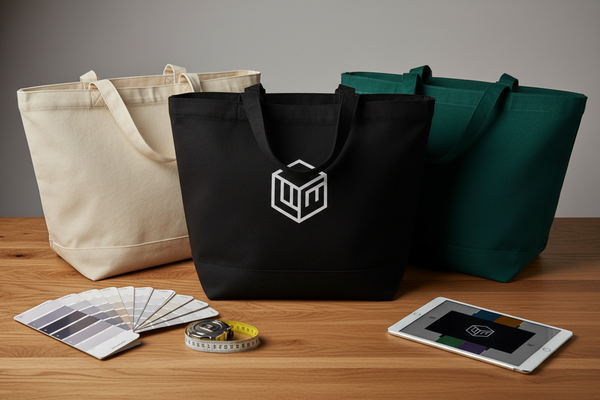
When selecting a standard backpack style, the most straightforward and reliable approach is choosing a solid base color and focusing your customization on the primary front panel. A green backpack paired with a clean white front print, for instance, provides sharp visual contrast that stands out clearly from across a room. The front pocket or upper panel represents prime visual real estate because the emblem remains unobstructed while the backpack is being carried on someone's shoulders.
Buyers often assume that building a unique promotional item requires engineering a custom bag silhouette from scratch. In practice, pairing a classic body color with crisp, high-contrast branding delivers an immediate visual impact that rivals fully custom builds, while saving weeks of pattern drafting and sampling time.
The standard customization blueprint for small-to-medium bulk runs typically includes:
- Base Fabric Color: Selecting a proven catalog colorway such as forest green, navy, charcoal, or classic black.
- Primary Decoration Zone: Positioning the core brand emblem centered on the front exterior pocket or top flap.
- Secondary Messaging: Adding organizational names, event dates, or campaign taglines directly below the main emblem.
- Decoration Process: Utilizing direct spot screen printing for solid graphic treatments or heat transfers for multi-color designs.
I'd recommend keeping the base bag design simple when working with smaller quantities. Standardizing the chassis lets the factory focus entirely on flawless print alignment and clean ink laydown.
Preparing Logo Artwork and Secondary Text Alignment
The clarity of your finished backpack depends directly on the quality of the digital assets submitted before production begins. Before generating a final commercial invoice or cutting screens, the production facility must review the vector artwork file to ensure every line weight, font curve, and negative space detail will reproduce cleanly on woven polyester fabric.
Submitting original vector artwork in standard formats such as AI, EPS, PDF, or SVG allows the pre-flight team to scale dimensions without loss of resolution. If an artwork file contains fine lines thinner than one millimeter or intricate gradients, the print technician can flag potential ink bridging before the production line starts moving.
During sampling for a local sports club, the client submitted a crest with fine sub-text detailing their founding year in a serif typeface. When the art department reviewed the vector paths, they recognized that the tiny serifs would bleed slightly on textured 600D polyester. By subtly increasing the font scale and switching to a clean sans-serif font, the final print emerged crisp, legible, and completely sharp across every single unit.
When incorporating secondary text beneath a central logo, the digital proof must showcase the entire lockup in true proportion. Reviewing the complete composite graphic prevents several common production oversights:
- Typographical errors and misspelled organization taglines.
- Uneven baseline alignment between the graphic symbol and text block.
- Incorrect font substitutions caused by unlinked or non-outlined font files.
- Proportion imbalances where text overwhelms the primary emblem.
Understanding Tiered Bulk Pricing Structures
Unit costs in promotional merchandise manufacturing are heavily influenced by batch volume. Even when customizing pre-existing stock blanks, the factory incurs fixed setup expenses, including screen burning, ink mixing, machine calibration, and test strikes. As the order volume increases, those fixed overhead costs are distributed across more units, lowering the per-piece rate.
A typical quotation structure for small-to-medium bulk backpack runs illustrates how quickly volume efficiencies take effect:
| Order Quantity | Example Unit Price | Total Product Cost | Operational Advantage |
|---|---|---|---|
| 100 pieces | $1.47 | $147.00 | Low total financial outlay; ideal for regional pilots and small events |
| 200 pieces | $1.40 | $280.00 | Lower unit rate; builds an immediate buffer for late attendee additions |
| 500 pieces | $1.28 | $640.00 | Optimized screen utilization; balances volume pricing with manageable storage |
| 1,000 pieces | $1.15 | $1,150.00 | Maximized bulk efficiency; best suited for annual organizational rollouts |
My advice to most buyers is to evaluate the 200-piece tier even if your current headcount is slightly lower. Spending a modest amount more to double your order volume often secures a lower unit cost while providing spare inventory to cover unexpected guest arrivals or future onboarding cohorts.
Deconstructing the Production Timeline vs. Shipping Reality
A frequent point of confusion in promotional sourcing is the difference between factory manufacturing time and total transit duration. For a standard stock backpack customization project, the physical printing and packing on the factory floor is remarkably fast, typically requiring only 3 to 5 business days once artwork proofs are approved and payment is logged.
However, factory completion represents only the first milestone in the procurement cycle. The complete chronological sequence involves several distinct stages:
- Artwork Pre-Flight & Digital Proof Sign-Off: 1 to 2 business days.
- Screen Preparation & Printing Production: 3 to 5 business days.
- Packaging, Palletizing & Export Dispatch: 1 to 2 business days.
- International Freight Transit: 12 to 18 calendar days (standard ocean routes).
- Customs Clearance & Domestic Port Processing: 2 to 4 business days.
- Final-Mile Trucking or Courier Delivery: 2 to 4 business days.
A common outcome when this timeline is overlooked is unnecessary scheduling stress. Factories see this pattern regularly: a buyer notices a 4-day production estimate and assumes the completed shipment will arrive on their doorstep the following Monday. In reality, international logistics almost always takes longer than the manufacturing run itself.
One team we worked with scheduled an order three weeks ahead of their event, assuming standard air transit would cover the gap. When unexpected weather delayed outbound flights, their delivery window tightened dramatically. Building a realistic logistics runway into your initial plan guarantees that your merchandise lands safely without forcing you to pay emergency expedite fees.
Simplifying Logistics with DDP Shipping
For organizations managing international procurement, selecting the right shipping Incoterm makes a profound difference in both administrative workload and budgetary control. For small-to-medium orders, Delivered Duty Paid (DDP) is the most practical arrangement available.
Under a DDP agreement, the seller assumes complete responsibility for transporting the goods from the factory door directly to your specified delivery address. This single logistics package covers international carriage, customs documentation, import duties, terminal security fees, and domestic final-mile freight. For a standard 100-piece backpack order, international shipping might total around $90, depending on the destination region, carton dimensions, and prevailing freight rates.
Buyers often assume that basic shipping quotes cover the entire transit to their facility. In practice, unless the quotation explicitly designates DDP terms, standard port-to-port quotes leave the buyer responsible for local customs brokerage fees, harbor maintenance duties, and inland trucking charges, which can quickly exceed the original freight estimate.
When requesting a formal shipping estimate, always provide your complete street address and postal code. Master carton volume, gross weight, and destination zip codes directly govern final carrier rates, so providing accurate location data upfront ensures your quoted landed cost matches your final invoice.
Calculating Event Deadlines Backward
When promotional products are tied to a fixed event date, the calendar dictates your sourcing strategy. A project delivered two days after a conference is worthless, regardless of how favorable the unit price was. To eliminate delivery risk, experienced sourcing managers always calculate their procurement milestones backward from the required in-hands date.
Consider a practical backward-scheduling roadmap for an order needed on October 15th:
- October 15: Event Date. Target distribution to attendees.
- October 10: Domestic Delivery Buffer. Goods arrive at local facility, allowing 5 days for intake, unpacking, and inspection.
- October 6: Domestic Ground Transit. Shipment leaves regional port warehouse via freight carrier (4 business days).
- October 2: Customs Clearance & Drayage. Container unloads and clears port inspection (3 to 4 days).
- September 17: International Freight Departure. Vessel departs origin port (15 days ocean transit).
- September 12: Factory Production Complete. Quality inspection, carton packing, and export booking (3 to 5 business days).
- September 5: Order Launch & Proof Approval. Vector artwork approved, deposit cleared, production scheduled.
In our experience, establishing an explicit calendar with your manufacturing partner keeps every department synchronized. If your internal review process pushes artwork sign-off past the critical launch date, you know immediately that switching to express air freight is required to protect your in-hands deadline.
Synchronizing Multi-Product Event Packages
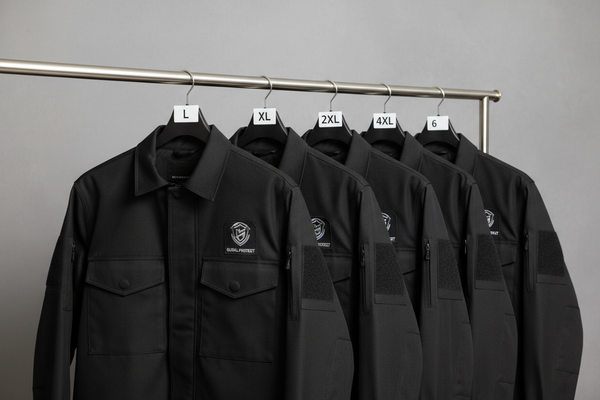
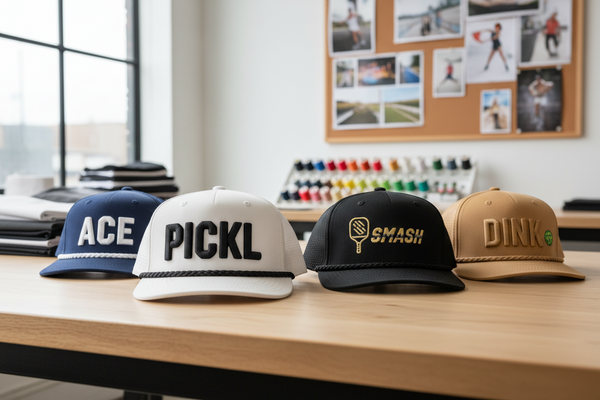
Promotional backpacks are frequently paired with companion merchandise such as branded apparel, headwear, water bottles, and stationery. When assembling multi-item packages, coordinating independent manufacturing streams becomes essential to prevent a Final-Mile Domestic Kitting Bottleneck.
Is it better to produce companion merchandise at separate facilities or consolidate under a unified schedule? Consolidating your procurement through an Item Component Synchronization Framework ensures that varying production timelines are harmonized. For example, embroidered caps might require a 7-day factory cycle, screen-printed backpacks take 4 days, and custom pens require 3 days. Backward-scheduling each product line allows all items to converge at the central fulfillment hub within the same receiving window.
Furthermore, when outfitting teams that include wearable apparel, organizations often face Talent Cohort Size Run Volatility. While backpacks feature universal sizing, apparel requires careful ratio forecasting. Planning a modest 5% buffer on common sizes protects your program from last-minute roster adjustments while minimizing Roster Overstock Asset Depreciation.
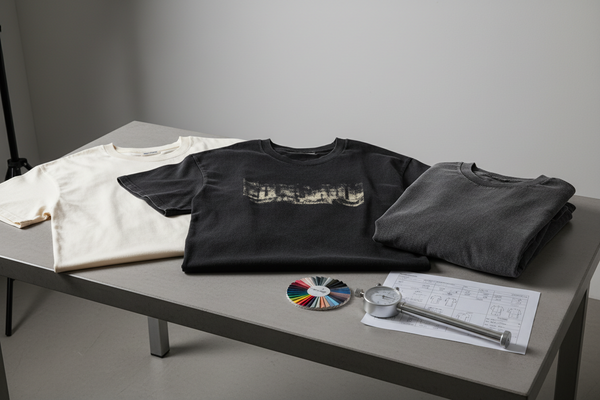
Maintaining visual harmony across different items also requires active color oversight. A dark green polyester backpack shell and a dyed cotton t-shirt absorb dye formulations differently. Applying Spectrophotometric Delta-E Variance Tracking allows production managers to monitor color consistency, preventing noticeable Multi-Mill Dye Lot Discrepancy across the entire merchandise collection.
Inbound Receiving and Quality Verification Checkpoints
When your cartons arrive at the receiving dock, taking twenty minutes to conduct a structured physical intake audit ensures the delivered merchandise matches the approved digital proof before items are distributed to participants.
An effective receiving inspection covers three primary checkpoints:
- Visual Decoration Audit: Pull five bags from different cartons and inspect the printed artwork under clear daylight. Check that ink coverage is solid, color edges are sharp, and secondary sub-text is completely legible without distortion.
- Hardware & Seam Testing: Cycle the main zippers and front compartment sliders several times to verify smooth gliding along the teeth. Check the box-X reinforcement stitching at the top grab handle and shoulder strap anchor points by applying moderate tension.
- Carton Count & Packaging Verification: Confirm that the total carton count matches the bill of lading, and verify that inner polybags and master packaging labels align with the commercial packing list.
Approaching custom promotional backpack sourcing with clear specifications, realistic logistical timelines, and disciplined quality checks ensures your organization receives dependable, attractive gear that represents your brand with pride. Sourcing promotional merchandise in bulk is a straightforward process when you plan ahead, communicate clearly with your production partners, and manage your delivery schedule with precision.