Print vs Embroidery T-Shirts Sourcing Atelier
1. Conversational Opening: Choosing the Right Touch for Your T-Shirt Line
Deciding how to decorate a custom t-shirt line is one of the most satisfying steps in the apparel development journey. Whether you are building a boutique fashion label, refreshing team uniforms, or planning a corporate merchandise release, the decoration method sets the visual tone and tactile feel of your finished garment. Standing at the decision crossroads between liquid inks and woven threads, buyers often wonder which approach will showcase their artwork with the greatest clarity while maintaining effortless wearer comfort.
One team we worked with was preparing a 600-piece release for a tech company's annual conference. They wanted a sleek left-chest icon paired with an expansive event graphic on the back. Initially, they debated embroidering both locations. After reviewing physical swatches, we recommended a crisp 5,000-stitch embroidery mark on the front chest and a lightweight water-based screen print across the back. The resulting combination delivered an upscale corporate look upfront while keeping the back panel soft, breathable, and easy to wear all day.
Is embroidery always richer than print on a standard tee? Not necessarily; while embroidery adds wonderful three-dimensional texture, soft water-based inks can render fine photographic details and sweeping gradients that threads simply cannot replicate on a lightweight cotton knit.
What actually determines whether print or embroidery suits a t-shirt line is how the decoration weight interacts with the underlying fabric structure. Light single-jersey cottons thrive under thin ink films, whereas midweight and heavyweight knits easily support the tension of dense embroidered logos.
Buyers often assume embroidery delivers a superior finish on every garment weight. In practice, lighter fabric panels handle soft water-based prints or fine-gauge embroidery much better without pulling the chest seam. Aligning decoration techniques with material structure ensures your garments hang naturally and feel fantastic from the very first wear.
I'd recommend reviewing your artwork's fine lines before committing to a decoration technique. Vector graphics with tiny text or intricate lines under 1 millimeter print effortlessly on automatic screen presses, whereas embroidery shines when artwork features clean solid shapes that translate into smooth thread fill passes.
2. Factory Visit: Watching Prints and Embroidery on the Line
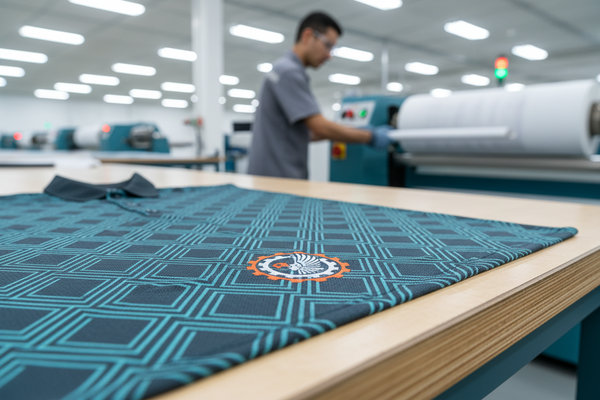
Walking through an active apparel decoration facility reveals the fascinating mechanical artistry behind both printing presses and multi-head embroidery machines. On one side of the floor, high-speed screen printing carousels glide squeegees across high-mesh screens, depositing smooth liquid layers onto cotton tees at speeds exceeding 400 pieces per hour. On the other side, automated Tajima embroidery heads chatter rhythmically at 800 stitches per minute, locking vibrant polyester threads into structured chest panels with pinpoint needle placement.
During sampling for a lifestyle brand, we observed a 12-head embroidery machine running a detailed crest design. The operator adjusted the thread tension slightly to ensure the backing stabilizer laid flat under a 180-GSM cotton jersey. The resulting embroidery emerged perfectly smooth, with sharp satin borders that elevated the entire garment profile.
In most cases, press throughput speed and setup complexity dictate the baseline unit economics for bulk t-shirt orders. Screen printing requires upfront screen exposure and registration alignment, but once the press is humming, per-unit decoration costs drop quickly. Embroidery setup centers around digitizing—converting vector nodes into machine movement files—allowing quick job loading across multi-head setups.
A common outcome when this gets skipped is applying a high stitch count to a lightweight tee without adjusting needle gauge or backing density. Fine-tuning Vector Node Tensile Modulation during digitizing ensures needle penetrations don't stress light jersey fibers, preserving smooth fabric texture around every embroidered letter.
Observing how inks cure on conveyor dryers is equally enlightening. Water-based and plastisol inks require precise thermal exposure to lock ink polymers to textile fibers. Proper curing ensures the print maintains its smooth finish and rich color saturation through endless laundry cycles.
The part that pays off most when visiting a factory floor is watching how operators perform inline quality checks. Seeing technicians measure print registration with alignment grids and test embroidery thread tension guarantees that your production run achieves uniform execution from the first garment to the last box packed.
3. Specs Deep-Dive: Stitch Counts, Peel Strength, and Ink Chemistry
Understanding the technical specifications of print and embroidery helps buyers communicate clearly with factory technicians and select ideal decoration specifications for their apparel lines. Print methods range from traditional screen printing with water-based or plastisol inks to modern Direct-to-Film (DTF) digital transfers. Embroidery techniques encompass direct-to-garment embroidery, 3D puff embroidery, and woven patch applications.
Can you put a 10,000-stitch embroidery design on a lightweight t-shirt? You can if you add a soft stabilizer backing, though keeping stitch counts between 4,000 and 7,000 stitches generally preserves a lighter, more flexible feel on thin jersey fabrics.
Factories see this pattern regularly: a brand submits an intricate multi-color chest graphic for embroidery on a 140-GSM combed cotton tee. The original file created a Stitch Density Panel Weight Disproportion because the heavy thread field pulled on the delicate cotton threads. After switching the large graphic to a soft-hand screen print and moving a 4,500-stitch embroidered logo to the sleeve, the garment achieved ideal structural balance across a 1,200-unit run.
Embroidery Advantages
- Delivers a tactile, elevated three-dimensional texture.
- Offers exceptional long-term thread durability and color fastness.
- Ideal for small left-chest logos, brand crests, and sleeve accents.
Embroidery Considerations
- Requires careful stitch density management on lightweight fabrics.
- Limits fine photographic details and micro-text under 1mm.
- Unit costs scale primarily with stitch count rather than color count.
When selecting digital transfer printing methods like DTF, evaluating adhesive layer quality is paramount. Modern polyurethane adhesives provide strong mechanical bonds, achieving a DTF Shear Peel-Off Degradation resistance score over 4.5 N/cm. This ensures transfer graphics flex effortlessly with knitted fabrics while maintaining smooth surface integrity.
Buyers often assume direct-to-film transfers produce a stiff panel. In practice, modern polyurethane films with proper cross-linking achieve a flexible, soft hand-feel that flexes naturally with cotton knits. Matching the adhesive melt temperature to your garment fabric prevents heat marks while securing a durable bond.
When printing on synthetic blends or performance tees, managing dye chemistry is essential. Utilizing Polyester Sublimation Cross-Linking Chemistry or low-bleed barrier underbases prevents polyester dyes from migrating into light ink passes, preserving vibrant color contrast across every design element.
Substrate texture also influences Dimensional Fabric Texture Adhesion. Smooth combed ring-spun cotton yarns allow screen inks to lay down flat and provide a clean surface for sharp embroidery needle penetrations. Choosing fine-gauge fabrics ensures both liquid inks and embroidered threads anchor smoothly across the entire artwork area.
A common outcome when working with unbleached organic cotton is Organic Substrate Ink Non-Compatibility if standard inks are applied without testing absorption rates. Specifying soft water-based inks tailored for organic fibers ensures rich pigment absorption and a lovely natural texture.
4. Confidence Builders: Matching Decoration to Garment Purpose
Selecting between print and embroidery becomes straightforward when you align the decoration method with how and where the t-shirt will be worn. Retail fashion collections often feature expansive water-based chest prints or fine-line DTF graphics that drape softly for everyday casual wear. Corporate uniform programs and hospitality apparel frequently lean toward direct embroidery on heavier cotton tees and polo hybrids to project a structured, professional image.
My advice to most buyers is to build a clear decoration matrix based on garment placement and artwork scale. Placing large graphics in print and reserving embroidery for subtle branding accents gives your collection a refined, multi-dimensional character.
Decoration Selection Matrix
Screen Print (Plastisol/Water-Based)Large chest art, solid bold graphics140 - 220 GSM Cotton / BlendsSoft to Medium SmoothScales down rapidly with order quantityDirect-to-Film (DTF)Multi-color gradients, fine detailed art140 - 200 GSM Cotton / Poly / BlendsThin, Flexible FilmScales with total print area dimensionsDirect EmbroideryLeft-chest logos, brand crests, text180 - 240 GSM Heavy Cotton / PolosTextured, Raised ThreadScales directly with total stitch count| Decoration Method | Ideal Artwork Type | Best Fabric Weight | Hand-Feel Profile | Cost Scaling Driver |
|---|---|---|---|---|
The difference between a crisp embroidered logo and a flat print comes down to tactile depth and intended garment lifecycle. Embroidered threads catch light beautifully and add a sense of craftsmanship to classic apparel pieces. Screen prints and digital transfers allow designers to play with broad color palettes, intricate shading, and wide canvas coverage across chest and back panels.
During a corporate uniform rollout for a national restaurant chain, the brand manager wanted durable tees for floor staff. We selected 200-GSM ring-spun cotton tees featuring a neat 5,500-stitch embroidered logo on the left chest and a bold single-color screen print across the back. The order of 2,500 units delivered outstanding durability, washed clean effortlessly, and kept staff looking sharp across every location.
Evaluating your project budget across decoration options helps clarify total landed costs. While screen printing setup fees depend on the number of print colors, embroidery setup centers on a single digitizing pass regardless of how many thread colors are used. Calculating total costs at 100, 300, and 1,000 units ensures you pick the decoration path that offers ideal value for your production run.
If I had to choose, I'd always recommend starting a new streetwear or lifestyle tee line with soft water-based screen printing for main body graphics, complemented by a subtle 4,000-stitch embroidered patch or sleeve logo. This dual-approach creates an attractive contrast that highlights the strengths of both decoration techniques.
5. Decoration Selection Checklist
Preparing artwork files and fabric specifications before issuing production purchase orders guarantees a smooth transition from sampling to bulk manufacturing. Having a structured checklist keeps graphic designers, sourcing leads, and factory technicians aligned on every technical detail.
Is a physical pre-production sample necessary when choosing between print and embroidery? Yes, reviewing a physical sample lets you touch the fabric, test garment drape, and verify thread or ink colors under natural light before approving bulk production.
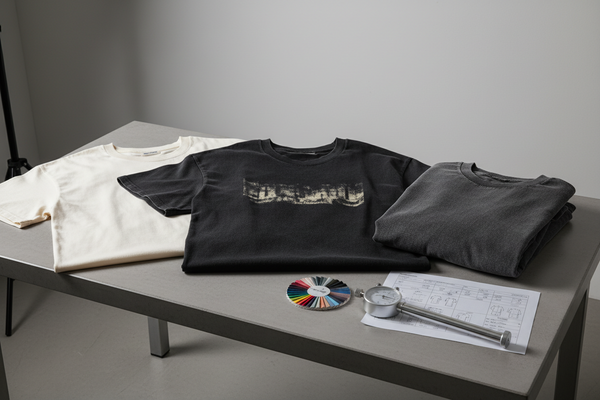
One brand founder we assisted was torn between DTF printing and direct embroidery for a new line of oversized heavyweight tees. We produced two physical pre-production samples of the same design—one with a 6,000-stitch embroidery pass and one with a soft DTF transfer. Seeing the physical garments side by side made their choice simple: they chose embroidery for their heavy 240-GSM tees and print for their lighter 160-GSM summer shirts.
Pre-Production Decoration Checklist
- Confirm artwork file format (.AI or .EPS vector files with text converted to outlines).
- Specify Pantone Matching System (PMS) color codes for print inks or thread shade numbers.
- Select appropriate backing stabilizer weight (cutaway or tearaway) for embroidered areas.
- Determine maximum artwork dimensions for the smallest size in your garment size run.
- Set vector node limits to ensure clean thread paths and smooth screen ink release.
- Inspect pre-production samples for smooth fabric drape, stitch alignment, and color accuracy.
Double-checking vector artwork node density before sending files to digitizers speeds up sample turnaround times. Clean artwork files allow digitizers to map efficient thread paths, reducing unnecessary jumps and ensuring embroidery heads run smoothly across every garment panel.
Testing sample garments under realistic wear conditions gives buyers total peace of mind. Putting sample tees through standard wash and dry cycles confirms that embroidered backings remain soft against the skin and printed graphics retain their smooth, vibrant appeal.
6. Closing: Making the Strategic Decoration Call
Both printing and embroidery offer fantastic opportunities to transform classic t-shirts into memorable, branded fashion pieces. By understanding how fabric weights, ink formulations, and thread structures interact, apparel buyers can select the perfect decoration method for any program objective. Whether you choose the crisp detail of screen printing, the flexible versatility of DTF, or the rich texture of direct embroidery, thoughtful sourcing choices ensure your custom tees deliver outstanding style and long-lasting wearer satisfaction.
In most cases, successful apparel lines combine both decoration methods strategically across their product catalog. Utilizing soft prints for bold, relaxed casual tees and refined embroidery for classic polos and heavy workwear shirts creates a well-rounded collection that appeals to every customer preference.
My advice to most buyers is to partner closely with an experienced apparel manufacturer who understands both screen printing and modern embroidery mechanics. Transparent communication regarding artwork goals, garment fabrics, and budget targets allows factory teams to guide your project smoothly from early sampling through final bulk delivery.
As you plan your next custom t-shirt release, embrace the creative possibilities that modern decoration technologies offer. By matching your artwork vision to the ideal technical process, you will produce decorated t-shirts that look stunning, feel incredibly comfortable, and represent your brand with distinction.