Varsity Student Section Apparel: Bulk T-Shirt Sourcing Playbooks
1. Campus Spirit Directors Maximizing Student Section Saturation
Campus spirit directors, athletic marketing managers, and student government leaders share a high-visibility objective every fall: turning thousands of student section seats into a solid wall of school color. Whether organizing a televised football "gold-out" or a basketball arena theme night, the visual impact of a student section relies on high crowd participation. What actually drives televised stadium impact isn't complex artwork — it's achieving total crowd color saturation through consistent garment dyeing across the entire student section.
One team we worked with managed student engagement for a major conference university preparing for a nationally televised rivalry game. Their athletic department allocated a fixed $16,000 budget to outfit 5,000 students in custom school-red shirts. Their previous coordinator had split a similar budget across multiple fancy garment styles, resulting in only 2,500 shirts and leaving half the student section wearing mismatched personal clothing. By pivoting to a streamlined 150 GSM open-end cotton tee with a single-color front print, the new director covered all 5,000 seats for roughly $3.10 per unit, creating a flawless sea of red on national television.
To execute a high-volume campus giveaway that hits both visual and financial targets, spirit directors must manage four core procurement variables:
- Unit Cost Optimization: Sourcing open-end cotton blanks directly from high-volume mills to keep blank costs near wholesale baselines.
- High-Chroma Dye Consistency: Guaranteeing that every shirt in a 5,000-unit run matches the school's exact Pantone brand color.
- High-Speed Print Execution: Utilizing single-color artwork setups that allow automatic presses to run at peak speed.
- Rapid Stadium Logistics: Receiving shirts pre-sorted in solid-size bundles for fast distribution at stadium gates or on seat backs.
My advice to most spirit leads is to focus every dollar on total headcount coverage rather than added garment bells and whistles. When thousands of students stand together wearing identical, bright school colors, the visual energy elevates the entire stadium atmosphere.
2. Balancing High-Impact Stadium Color Saturation with Strict Cost Baselines
High-volume student section giveaways operate under strict financial limits. Unlike campus bookstore retail merchandise, where high price points absorb extra decoration layers and fine fabric finishes, student section shirts are free promotional drivers funded by athletic budgets or corporate sponsors. Every extra twenty cents spent per unit on unnecessary features reduces the total number of students you can outfit.
In most cases, crowd color impact relies far more on solid dye consistency and bold single-color screen printing than multi-color graphic complexity. A single-color white mascot logo printed big and bold across a bright royal blue shirt stands out clearly from the upper stadium cameras and television broadcast angles.
Buyers often assume that vibrant stadium coverage requires high-priced combed cotton blanks. In practice, open-end carded cotton delivers identical color pop on camera at roughly a third of the blank cost. The crisp structure of carded cotton actually holds bright spot-color inks up on the fabric surface exceptionally well.
Is a 100% cotton carded tee soft enough for a 3-hour game-day event? Absolutely, especially when a single silicone bio-wash finish is applied during mill processing. The fabric provides a clean, comfortable fit over everyday clothes, making it perfect for student game-day wear.
Handling Active Campus Wear Stress is another practical consideration. Students jump, cheer, and celebrate throughout a four-quarter game. Selecting a mid-weight 150 to 160 GSM fabric ensures the garment handles active stadium wear without feeling heavy or restrictive during warm early-season games.
3. Sourcing Open-End Carded Cotton for Maximum Volume Efficiency
Understanding yarn spinning methods is key to unlocking factory-direct savings on bulk apparel. Cotton knits generally fall into two primary categories: combed ringspun cotton and open-end carded cotton. Ringspun cotton uses long fibers twisted into fine, smooth threads, creating a soft hand-feel that commands retail prices. Open-end cotton uses a faster spinning process where raw fibers are bound by surface wrapping, producing a sturdy, crisp fabric at a lower manufacturing cost.
For high-volume student section programs, open-end cotton is the workhorse substrate. The sturdier yarn structure provides excellent mechanical stability, resisting distortion under GSM Weight Density testing while offering a flat surface for automatic screen printing.
Definition Box: Open-End Carded Cotton
Open-End Carded Cotton is a textile produced by feeding raw cotton fibers directly into a high-speed rotor spinner. This process creates a sturdy, structured yarn with excellent dimensional stability and ink absorption, making it the most cost-effective fabric for large-scale promotional giveaways.
The difference between an economical stadium giveaway and a wasted budget comes down to selecting a stable 150 GSM carded cotton that resists warping during high-speed screen printing. Ensuring proper Cellulose Stabilization during fabric finishing controls Warp-Direction Shrinkage, keeping the shirt fitting true to size through washing.
During sampling for a state university's homecoming blackout game, the spirit board considered two black shirt options. The first was a ringspun blend costing $4.10 blank, while the second was a 150 GSM carded open-end cotton tee costing $1.85 blank. By choosing the carded option, the university saved over two dollars per shirt, allowing them to expand the order from 3,000 to 5,500 units and outfit the entire end-zone section.
Factories see this pattern regularly: athletic buyers who switch to open-end cotton for stadium giveaways free up budget to order extra shirts for late-arriving fans.
Sourcing open-end cotton from certified mills guarantees that your bulk order balances unit economy with reliable durability.
4. High-Speed Spot Color Screen Printing for Mass Production
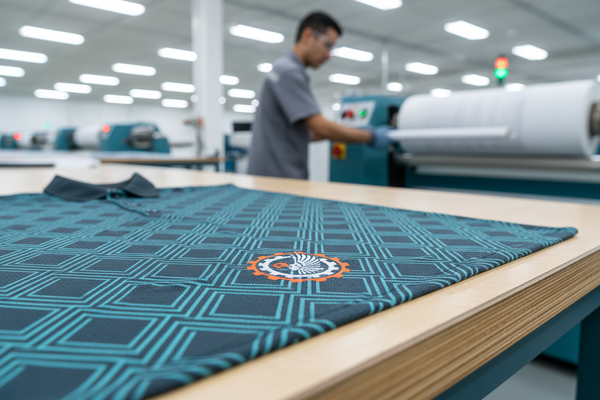
Decoration setup is where large-volume spirit orders succeed or stall. While digital printing and multi-color transfers work great for small custom runs, traditional screen printing remains the undisputed standard for high-volume, low-cost t-shirt decoration.
The part that pays off most in 5,000-unit spirit runs is using high-solids acrylic or plastisol inks with a single-pass print stroke to keep machine speeds above 800 pieces per hour. When automatic presses run at full speed, factory decoration fees drop significantly.
Buyers often assume that adding multiple print locations increases student engagement. In practice, a bold 12-inch front chest print maximizes camera visibility while keeping decoration costs under sixty cents per shirt. Adding sleeve logos or back prints requires additional screen setups and extra flashing time, quickly inflating overall costs.
Should you put a back print on a stadium blackout shirt? Usually not, because seated fans hide the back graphic, making it a redundant decoration cost. Keeping artwork focused on the front chest maximizes visual impact where it matters most.
One team we worked with wanted to include a detailed four-color corporate sponsor logo on the front chest of 4,000 student tees. We suggested simplifying the sponsor logo into a clean, single-color white outline that integrated seamlessly into the main game-day slogan. The simplified art reduced screen setups from five down to one, saving the school roughly $1,200 in decoration costs while speeding up press setup by three hours.
While techniques like embroidery are great for polo shirts and jackets, light t-shirts don't need them. Avoiding heavy stitching on lightweight tees ensures zero risk of Embroidery Puckering Protection issues, keeping the fabric smooth and comfortable.
5. Factory-Direct Pricing Tiers and Roster Size Allocations
Building a cost-effective spirit order requires clear visibility into volume pricing tiers and total landed costs. Blank apparel prices drop as order volumes cross key factory thresholds, typically at 1,000, 5,000, and 10,000 units. Consolidating orders across multiple sports teams or athletic events helps you reach higher volume tiers and secure lower per-unit prices.
What actually determines true landed unit cost on bulk campus apparel is aligning box packing density with ocean or ground freight brackets. Packing shirts in dense, solid-size master cartons of 72 pieces minimizes volumetric freight charges, keeping total transit costs low.
To prevent Roster Size Distribution Error—where an incorrect size curve leaves you with excess Small shirts while running out of Large and XL—analyze historic campus student demographics. College student populations skew heavily toward Medium, Large, and Extra-Large sizes, especially when shirts are worn over hoodies during cold-weather games.
| Order Volume Bracket | Fabric & Blank Style | Estimated Blank Cost ($) | 1-Color Print Fee ($) | Target Landed Unit Cost ($) |
|---|---|---|---|---|
| 1,000 – 2,499 Units | 150 GSM Open-End Cotton | $2.10 – $2.40 | $0.70 – $0.90 | $2.80 – $3.30 |
| 2,500 – 4,999 Units | 150 GSM Open-End Cotton | $1.85 – $2.10 | $0.55 – $0.70 | $2.40 – $2.80 |
| 5,000 – 9,999 Units | 150 GSM Open-End Cotton | $1.60 – $1.85 | $0.40 – $0.55 | $2.00 – $2.40 |
| 10,000+ Units (Direct Mill) | 150 GSM Open-End Cotton | $1.35 – $1.60 | $0.30 – $0.40 | $1.65 – $2.00 |
In our experience, allocating a strict 8% sizing buffer heavily weighted toward Large and Extra-Large eliminates mid-game stock shortages without inflating total expenditure.
6. A Step-by-Step Execution Playbook for Athletic Spirit Directors
Executing a 5,000-piece student section rollout requires clear timeline management from design approval to stadium delivery. Following a structured sourcing schedule ensures shirts arrive on time, pre-sorted, and ready for game day.
The key to flawless stadium gear execution is establishing artwork freeze dates at least 30 days prior to kickoff to lock in direct factory production slots. Finalizing artwork early prevents rush decoration fees and guarantees ocean or ground transit schedules remain on track.
If I had to choose, I'd recommend locking in a single master blank style for the entire athletic season to secure maximum cumulative volume price breaks across multiple game themes.
Follow this step-by-step roadmap to streamline your next bulk student section purchase:
- Establish Headcount Budget Targets: Determine your target student section coverage volume and calculate your maximum allowable landed cost per unit.
- Select Cost-Optimized Blanks: Specify a 150 GSM open-end carded cotton tee to maximize unit volume while ensuring bright dye consistency.
- Simplify Front Chest Artwork: Limit graphics to a bold, single-color front print to maximize automatic press speeds and reduce setup costs.
- Apply a Skewed Size Curve: Order size distributions aligned with college demographics: 10% S, 25% M, 40% L, 20% XL, 5% XXL, plus an 8% buffer in L/XL.
- Require Solid-Size Bundle Packaging: Request shirts packed in solid-size bundles of 12 or 24 pieces to speed up game-day gate distribution.
- Coordinate Stadium Dock Logistics: Schedule delivery directly to the stadium loading dock 48 hours before game day for easy staging.
By leveraging open-end cotton blanks, streamlining decoration, and locking in direct volume pricing, campus spirit leads can deliver high-impact student section apparel that energizes game day while staying comfortably on budget.