Emergency Services Apparel Specs: Fire-Retardant and Non-Conductive Utility Uniforms
1. Industry Perspective: Modern Safety Metrics for Emergency Support Personnel
Developing protective workwear for municipal emergency support crews and public utility technicians requires moving far beyond basic uniform design. Field personnel operate in dynamic environments where weather conditions change quickly, electrical equipment presents potential arc-flash hazards, and heavy traffic creates continuous visibility demands. Municipal purchasing officers look for utility apparel specifications that combine proven thermal safety with day-long wearability, ensuring field staff stay comfortable and focused throughout demanding shifts.
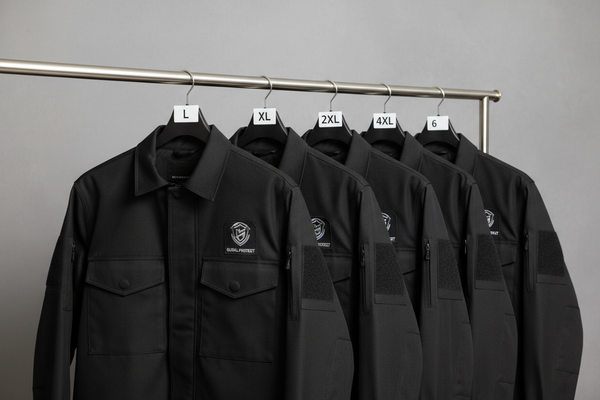
One team we worked with managed the public safety outfit for a regional municipal water and power authority. They were updating uniform guidelines for 800 field technicians who handle both routine pipeline repairs and emergency electrical call-outs. Their main objective was standardizing on a single, versatile utility shirt that satisfied both thermal arc safety and high-visibility road clearance. By specifying an inherent flame-retardant blend with non-conductive button closures, they delivered a uniform that simplified inventory management while meeting every safety requirement.
Does flame resistance mean a garment feels stiff and heavy on shift? Not when working with modern engineered fiber blends; combining aramid fibers with soft cellulosic materials produces a light, flexible fabric that breathes easily during warm summer calls.
Buyers often assume that flame-resistant utility shirts must compromise on breathability to achieve safety compliance. In practice, modern inherent fiber blends move perspiration away from the skin smoothly, allowing technicians to stay cool and comfortable during extended field repairs.
What actually determines whether emergency services apparel meets municipal compliance is how well the non-conductive hardware and seam thread reinforcement work in tandem under heat stress. When a garment encounters elevated temperatures, metal zippers or steel snaps can transfer heat directly to the skin, whereas non-conductive melamine buttons create an isolated barrier that maintains structural closure.
I'd recommend reviewing your department's specific hazard profiles before locking in technical uniform specifications. Taking time to map out whether field crews need Class 2 or Class 3 high-visibility trim alongside thermal protection ensures your agency purchases garments tailored directly to real-world field conditions.
Establishing clear technical standards early in the procurement phase keeps vendor proposals focused on genuine safety metrics. By emphasizing certified fabric origin, non-conductive hardware, and aramid stitching, municipal buyers build a reliable supply chain that protects field personnel across every call-out.
2. Factory Floor Observations: Non-Conductive Closures and Aramid Stitching
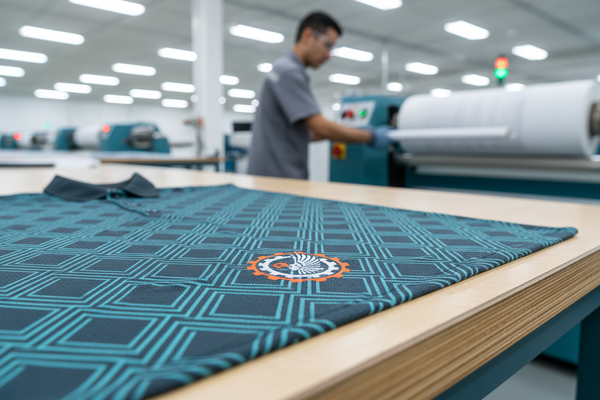
Visiting a specialized safety garment sewing facility reveals the precise mechanical assembly required to build compliant emergency utility wear. On an active production line, standard cotton or polyester sewing threads are completely replaced by high-tenacity aramid thread. Because aramid fibers do not melt or ignite when exposed to extreme heat, seam lines remain fully intact, holding garment panels securely together even under intense thermal exposure.
During sampling for a state emergency response program, we observed a specialized sewing line setting up non-conductive melamine button attaching equipment. The line supervisor adjusted thread tension parameters to accommodate heavy 40-weight aramid thread along the front placket. The resulting button attachment passed rigorous pull-strength tests, ensuring the non-conductive closures stay firmly anchored through years of active daily wear.
In most cases, precision needle timing and aramid thread tension calibration on the factory floor matter far more for seam integrity than raw fabric weight. Utilizing ballpoint needles sized specifically for dense FR knits prevents fiber damage during stitching, creating smooth, flat seams along sleeves and side panels.
Observing how technicians apply non-conductive melamine snaps and buttons highlights the attention to detail required in safety manufacturing. Melamine compound closures are molded under high pressure to eliminate electrical conductivity and withstand temperatures up to 260°C without warping or softening.
My advice to most buyers is to require factory floor audit documentation before finalizing vendor contracts. Verifying that a manufacturing facility uses dedicated needle tracking protocols and dedicated aramid thread lines guarantees that zero standard polyester thread enters your safety uniform production run.
Reinforcing high-stress junctions with extra bar-tacking is another critical factory step. Applying aramid bar-tacks at pocket corners, cuff splits, and radio loop anchors ensures that utility garments handle the physical strain of carrying heavy tools and communication gear.
3. Testing and Sampling: Verifying Thermal and High-Visibility Thresholds
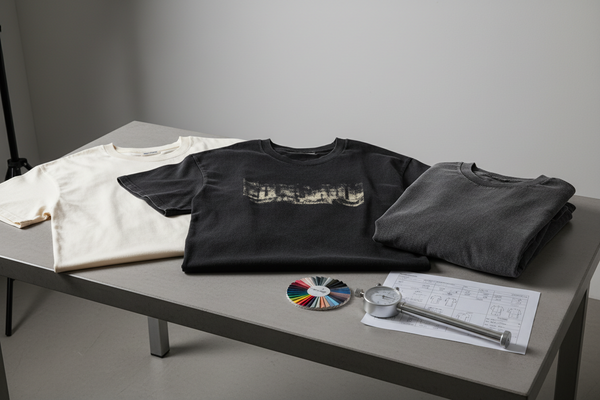
Before issuing multi-year municipal supply contracts, putting sample garments through rigorous laboratory testing confirms that finished uniforms satisfy all safety standards. Standard commercial workwear tests often fail to account for the aggressive washing conditions used in municipal laundry programs, where high water temperatures and strong detergents are routinely applied.
One county emergency management department sent pre-production utility shirt samples through 50 commercial wash cycles to evaluate thermal retention and tape adhesion. The test results confirmed zero loss of flame resistance and verified that the retroreflective trim retained excellent reflectivity, giving the agency complete confidence before releasing the full production order.
Is Class 3 high-visibility certification required for every utility role? Class 3 is essential for personnel working near high-speed traffic or in severe weather, while Class 2 provides sufficient visibility for workers operating in lower-speed municipal utility zones.
Buyers often assume that retroreflective tape automatically guarantees compliance through the life of the shirt. In practice, retroreflective tape must be specifically rated for Industrial Thermal Laundering Tolerance to ensure the micro-prismatic elements do not delaminate or cloud after repeated hot wash cycles.
Evaluating the Retroreflective Luminance Coefficient before and after wash testing ensures that reflective striping returns sufficient light to oncoming vehicles. Certified retroreflective tapes maintain high candlepower values even when wet, protecting field crews during rainstorms and night calls.
The part that pays off most during municipal contract evaluations is conducting lab wash trials to verify that retroreflective luminance holds up through 50 industrial laundry cycles. Verifying colorfastness and dimensional stability on physical sample garments prevents surprise sizing shifts when uniforms enter agency service.
Testing for OEKO-TEX Strict Eco-Passport Validation offers additional assurance that protective fabric treatments are free from harmful skin-irritating chemicals. Ensuring that flame-retardant chemistry meets strict ecological safety standards keeps field personnel safe from both thermal hazards and skin sensitivities.
4. Material and Performance Comparison Matrix for Municipal Programs
Selecting the ideal safety uniform specification requires matching hazard environments against procurement budget guidelines. Different emergency support roles—from electrical utility technicians to traffic control officers—require tailored combinations of flame resistance, conductivity protection, and visibility ratings.
Factories see this pattern regularly when municipal authorities upgrade field uniforms. A regional public works department evaluated three fabric options for their emergency repair crews, choosing an inherent 65/35 FR blend that offered high thermal protection alongside comfortable daily wear. The balanced selection reduced wear-and-tear complaints while keeping long-term uniform replacement costs predictable.
The difference between standard workwear and certified emergency support apparel comes down to whether every trim component—from pocket threads to closure buttons—carries non-conductive and thermal rating documentation. Utilizing complete, certified component systems guarantees that the whole garment protects the wearer as a unified system.
Review the comparative performance matrix below to align technical specifications with your agency's operational requirements:
Emergency Services Uniform Specification Matrix
Inherent FR Aramid Blend (200 GSM)Permanent thermal arc protectionNon-conductive melamine buttons / Aramid threadANSI/ISEA Class 3 OptionElectrical utility crews, emergency power responseTreated FR Cotton Twill (240 GSM)Solid thermal barrier, high comfortCovered non-conductive snaps / Aramid threadANSI/ISEA Class 2 OptionGas utility repair, general municipal maintenanceHigh-Vis FR Performance Mesh (170 GSM)Lightweight breathability + high visNon-conductive melamine buttons / Aramid threadANSI/ISEA Class 3 CertifiedTraffic direction, daytime emergency support| Uniform Class & Blend | Primary Safety Feature | Hardware & Thread Spec | High-Vis Certification | Ideal Field Application |
|---|---|---|---|---|
Pairing the right fabric blend with non-conductive button closures ensures that plackets stay smooth and flat during active movement. Melamine buttons resist impact and thermal distortion, providing a clean appearance that holds up through hundreds of shift cycles.
Evaluating total Field Crew Safety Uniform Lifecycle metrics helps purchasing directors justify investing in higher-grade inherent FR blends. While treated cotton options carry lower initial price tags, inherent FR garments often last twice as long in active service, delivering lower overall cost per wear.
Inherent FR Uniform Advantages
- Provides permanent flame resistance that cannot wash out over time.
- Non-conductive melamine buttons eliminate arc-flash heat bridging.
- Aramid thread stitching prevents seam failure under heat exposure.
- Maintains clean dimensional drape through industrial laundering.
Inherent FR Uniform Considerations
- Requires higher initial unit procurement investment than treated cotton.
- Needs specific temperature control during commercial laundry cycles.
- Demands strict pre-production sample testing for certified compliance.
5. Frequently Asked Questions: Navigating Municipal Agency Procurement
Managing municipal agency uniform contracts requires addressing complex procurement requirements, delivery timelines, and compliance auditing clauses. Having clear technical answers simplifies vendor evaluations and keeps public safety programs running smoothly.
During a contract review for a large metropolitan public safety bureau, the purchasing board evaluated vendor proposals covering 1,500 emergency support uniforms. By incorporating clear Contract Compliance Audit Clauses into the RFP, the bureau ensured that the winning manufacturer submitted independent lab test certificates for every batch of FR fabric and retroreflective trim prior to shipment release.
Addressing common technical questions upfront helps agency buyers write precise RFP specifications that attract qualified apparel manufacturers.
My advice to most buyers is to maintain a 10% safety buffer stock of core sizes (Medium through 2XL) at your central warehouse. Having pre-inspected reserve garments on hand guarantees that new personnel receive compliant safety uniforms on their very first day of service.
Below are clear, operational answers to common questions encountered during emergency services apparel procurement:
How do non-conductive melamine buttons enhance safety compared to standard plastic or metal fasteners?
Non-conductive melamine buttons do not melt, drip, or transfer heat when exposed to electrical arc flashes or thermal bursts. Unlike metal closures that can bridge electrical current or heat up rapidly, melamine buttons maintain electrical isolation and structural shape, keeping the front placket securely closed and protecting the wearer.
Why is aramid thread essential for emergency utility uniform seams?
Standard polyester or nylon sewing threads melt at relatively low temperatures, causing garment seams to open when exposed to high heat. Aramid sewing threads resist heat up to 370°C without melting or burning, ensuring that critical structural seams hold the protective fabric panels together during emergency thermal calls.
How often should municipal agencies test high-visibility retroreflective trim on active uniforms?
High-visibility retroreflective trim should be visually inspected after every 25 commercial wash cycles, with formal luminance testing conducted annually. Specifying retroreflective tape engineered for industrial laundering ensures that reflective performance exceeds ANSI/ISEA minimums across the garment's full service life.
What documentation should buyers require to verify fire-retardant compliance?
Buyers should require vendors to submit independent accredited laboratory test reports verifying compliance with NFPA 2112 or ASTM F1506 standards for thermal protection. Additionally, request batch-specific certificates of concurrence for aramid thread specs and non-conductive button composition with each delivery shipment.
6. Ending Insight: Building a Scalable Safety Uniform Program
Establishing a successful municipal safety uniform initiative requires viewing apparel procurement as an ongoing risk management process rather than a routine purchase order. When purchasing directors combine inherent FR fabrics, non-conductive hardware, and certified high-visibility trims into a unified specification, they create a protective barrier that safeguards workers across every municipal department.
One state transportation authority we assisted established a rolling 3-year supply contract covering 2,200 emergency road crew uniforms. By locking in master material specifications—including 200 GSM inherent FR fabric, non-conductive melamine closures, and aramid stitching—they streamlined reorders and eliminated shade and fit variations across twelve regional maintenance districts.
If I had to choose, I'd always prioritize an inherent FR fabric blend with non-conductive melamine buttons for emergency utility support teams. The permanent protection and reliable thermal isolation deliver absolute peace of mind for agency safety officers and field personnel alike.
Emergency Services Apparel Procurement Checklist
- Define required flame-resistance standards (NFPA 2112 / ASTM F1506) based on field hazard audits.
- Specify 100% non-conductive melamine buttons along plackets, cuffs, and pocket closures.
- Mandate continuous aramid thread stitching across all structural seams and stress points.
- Select ANSI/ISEA-certified retroreflective trim rated for industrial thermal laundering.
- Require independent lab test certificates for fabric, thread, and hardware with each production batch.
- Establish contract compliance audit clauses to verify quality benchmarks before final invoice release.
Investing time in rigorous technical specifications, lab testing, and factory quality audits delivers multi-year dividends in worker safety, reduced injury risk, and long-term contract value. With clear planning and reliable manufacturing partners, sourcing emergency services utility uniforms becomes a smooth, predictable, and highly protective program.