Technical Asset Protection: Sourcing Semi-Rigid Shell Electronics Custom Bags
1. Transforming Workplace Tech Gear into Protected Mobile Toolkits
When enterprise organizations equip hybrid employees with high-end laptops, noise-canceling headphones, fast chargers, and specialized connection hubs, how are those sensitive tools transported between the home office, client sites, and corporate headquarters? What actually determines whether mobile hardware survives daily transit intact isn't the thickness of a worker's backpack — it's the structured perimeter defense provided by custom-molded storage pouches designed specifically for digital peripherals. Moving corporate teams from soft, unstructured nylon sleeves to engineered semi-rigid shell cases turns loose, tangled cords and vulnerable devices into a cohesive, secure professional toolkit.
One team we worked with managed hardware logistics for a software consultancy deploying 1,200 remote developers across several metropolitan hubs. Their initial welcome bundle provided standard soft neoprene zipper pouches for company-issued over-ear headsets and multi-port charging hubs. Over the first six months of travel, the firm handled numerous peripheral damage claims caused by compressed charging pins and crushed headphone headbands inside crowded commuter bags. By upgrading their standardized gear package to a custom 5.5mm thermoformed EVA semi-rigid shell lined with molded dividers, the firm saw hardware damage drop to near zero across the entire deployment. The structured case cost roughly four dollars more per kit than the generic sleeve, but it eliminated equipment downtime and gave incoming staff an immediate sense of operational polish on their first day.
Is a hardshell flight case necessary for daily office commuting? Traditional rigid plastic cases provide exceptional impact resistance, but their heavy weight and rigid dimensions make them cumbersome for routine office transit. Semi-rigid EVA storage pouches strike the sweet spot: they provide firm exterior compression resistance that absorbs sudden impacts, while maintaining a lightweight, tactile profile that slides effortlessly into a backpack or brief.
To design a custom electronics carrying program that balances physical protection with everyday convenience, procurement teams should evaluate four core construction priorities:
- Thermoformed Shell Resilience: Specifying high-density compression-molded EVA with sufficient wall thickness to maintain structural shape under heavy briefcase loads.
- Textile Face Lamination: Selecting exterior fabrics that satisfy a high Denier Filament Weight Specification to resist surface scuffs, dirt, and light rain during daily commuting.
- Tailored Internal Geometry: Engineering molded contours, stretchable mesh pockets, and elastic retention loops that hold specific corporate tech components firmly in place.
- Reinforced Perimeter Assembly: Mandating durable reverse-coil zipper tracks, smooth pull hardware, and comprehensive Internal Seam Edge Binding for years of smooth daily access.
In our experience, providing incoming professionals with a custom-fitted electronics case creates an unmistakable sense of organization and care. When tools have a dedicated, protective home, employees keep their work accessories complete, organized, and ready for productive action wherever duty calls.
2. Molded EVA Architecture, Denier Ratings & Interior Geometry
Understanding the composite engineering behind semi-rigid electronics cases allows buyers to write precise technical specifications that protect company assets. The core protective material in modern protective pouches is ethylene-vinyl acetate (EVA), a closed-cell copolymer foam known for excellent shock absorption, lightweight buoyancy, and flexible resilience. Through thermal compression molding, flat sheets of EVA are heated and pressed inside precision aluminum tools to create distinct, rigid three-dimensional half-shells that retain their molded shape indefinitely.
The exterior surface of the EVA shell is laminated under intense heat and pressure to a durable woven face fabric. The difference between an ordinary promotional bag and an executive technical case comes down to face fabric density. Sourcing managers frequently specify 600D Oxford polyester for standard office kits, or upgrade to 1680D ballistic nylon for executive travel gear. This exterior layer shields the inner foam core from abrasive surface wear while providing a sophisticated, professional weave texture that complements corporate attire.
Semi-Rigid Thermoformed EVA Shell
A Semi-Rigid Thermoformed EVA Shell is a composite enclosure manufactured by laminating high-density closed-cell ethylene-vinyl acetate foam to woven synthetic fabrics under heat and compression molds. The resulting structure provides permanent three-dimensional shape retention, structural crush resistance, and exceptional impact dampening for sensitive electronic components.
Inside the case, the lining material dictates both aesthetic presentation and scratch prevention. Soft-touch velvet, brushed tricot, or smooth microfleece linings are bonded directly to the interior shell using specialized Polypropylene Non-Woven Adhesion layers. This creates a non-abrasive interior sanctuary that protects delicate gloss surfaces on wireless earbuds, power meters, and touchscreens from micro-scratches during transit.
Buyers often assume that all molded cases provide identical shock dampening regardless of interior layout. In practice, what actually determines device safety during a drop is how firmly the interior compartments isolate heavy components from delicate ones. If a heavy 20,000 mAh metal power bank sits loose next to lightweight plastic headphones, sudden deceleration can cause internal collisions. Specifying tailored dividers, deep molded drop-in pockets, and elastic retention straps ensures each component remains anchored in its own shock-isolated zone.
Factories see this pattern regularly: production runs that utilize high-grade water-resistant reverse-coil zippers paired with continuous internal seam taping achieve high marks for daily reliability, easily handling the continuous open-and-close cycles of active corporate workdays.
3. Mold Tooling, Material Grade Scaling & Volume Economics
Structuring the budget for a custom-molded case program requires understanding the interplay between upfront tooling expenses and recurring per-unit manufacturing costs. Because semi-rigid cases require custom metal tooling to form the three-dimensional shell geometry, initial procurement budgets must account for non-recurring engineering (NRE) fees alongside unit volume price breaks.
During sampling for a multi-campus corporate equipment refresh, the sourcing team evaluated whether to build a completely bespoke exterior mold or utilize an established open-mold shell. The engineering mold for a custom-sized two-piece clamshell case required an initial tooling charge of $1,200. By choosing to invest in the custom mold, the enterprise created a proprietary internal layout that seated their specific company laptop charger and video conferencing headset with millimeter precision. Amortized across an initial batch of 2,000 units, the custom mold added only sixty cents per piece to the baseline order, giving the organization a distinctive, tailored asset protection system that standard catalog cases could not match.
How does order volume influence the economics of custom electronics packaging? Custom thermal forming lines operate with high automation efficiency once molds are heated and calibrated. A production run of 500 units might carry a unit manufacturing cost of $8.50 per piece, whereas scaling the contract to 2,500 units drops the unit price closer to $5.20, delivering substantial volume savings that help offset initial tooling investments.
| Manufacturing Cost Component | Baseline Sourcing Spec | Upgraded Technical Spec | Estimated Unit Cost Impact ($) |
|---|---|---|---|
| Exterior Face Fabric | 300D Standard Polyester | 1680D Ballistic Nylon Weave | +$0.85 – $1.40 / Unit |
| EVA Core Thickness | 4.0mm Standard Density Foam | 6.0mm High-Density Thermoformed Core | +$0.60 – $0.95 / Unit |
| Interior Divider Geometry | Flat Elastic Mesh Pocket | Custom Die-Cut Molded EVA Insert Tray | +$1.10 – $1.75 / Unit |
| Perimeter Closure Hardware | Standard #5 Nylon Coil Zipper | #8 Matte Waterproof Reverse-Coil + Metal Pulls | +$0.45 – $0.80 / Unit |
| Tooling & Mold NRE Fee | Standard Open Factory Mold ($0) | Custom Dual-Cavity Aluminum Mold | $800 – $1,800 Flat Fee |
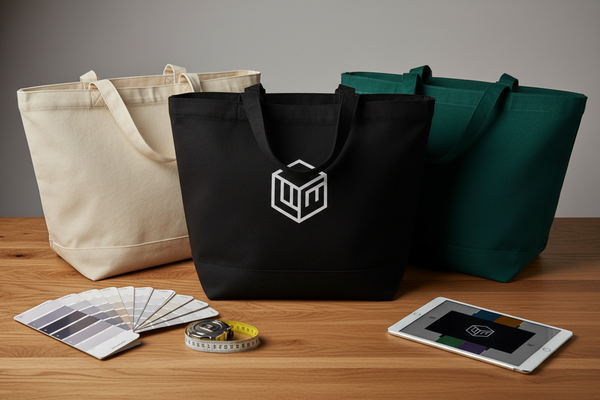
My advice to most buyers is to pair your custom electronics bag order with a matching canvas tote or executive backpack. Standardizing exterior colorways across both the protective pouch and the main commuter carrier ensures brand cohesion across all employee touchpoints.
4. Peripheral Longevity, Brand Presentation & Device Security
Evaluating the return on investment for technical bags requires looking beyond the initial purchase order price. When enterprises distribute expensive technology without protective cases, they absorb hidden operational costs: replacing lost USB adapters, repairing bent charging cables, and ordering replacement headsets for remote employees midway through their contracts. A well-engineered protective case functions as preventative equipment maintenance, keeping company assets in peak working condition.
The part that pays off most over a multi-year deployment is the reduction in employee downtime. When a remote sales consultant travels to an executive client presentation, reaching into a bag to find a cracked dongle or tangled adapter creates immediate stress and delays meetings. Housing all necessary cables, power adapters, and presentation clickers in dedicated, labeled elastic slots guarantees that staff arrive prepared and ready to present seamlessly.
Consider the broader organizational benefits delivered by standardized technical cases:
- Asset Lifecycle Extension: Protecting fragile connectors, cables, and earcups from compression damage extends the useful working lifecycle of expensive electronics.
- Elevated Brand Authority: Distributing sleek, color-coordinated cases featuring subtle corporate branding reinforces professional pride among team members during public client meetings.
- Rapid Equipment Auditing: Standardized interior compartments allow IT departments to verify that all accessories are present during employee offboarding or hardware returns in seconds.
- Reduced Visual Clutter: Eliminating messy cord bundles from desks and conference tables maintains clean, focused work environments across company offices.
What actually makes a corporate gear program look polished isn't loud, oversized graphics — it's the understated elegance of the execution. Utilizing blind debossing directly into the molded EVA lid or adding a sleek matte-black metal logo badge provides refined, durable branding that executives and clients appreciate seeing in modern corporate spaces.
One team we worked with rolled out 800 custom electronics cases for an international consulting conference. The feedback from participants highlighted that having an organized, crush-resistant case made international airport security checkpoints significantly smoother, as all tech gear remained consolidated and easily accessible in one secure container.
5. Selecting Shell Rigidity, Compartment Layouts & Hardware
Selecting the right case specifications requires aligning shell stiffness, interior compartments, and exterior hardware with the daily operating environments of your staff.
If daily desk organization and light commuter travel are your primary focus, a compact 4.5mm EVA pouch with flexible mesh dividers is the simpler choice; however, when outfitting traveling field service engineers or global executives whose gear faces rigorous baggage handling, stepping up to a 6.0mm ballistic nylon shell with reinforced carry handles and drop-tested internal foam is essential.
Advantages of Semi-Rigid Molded Bags
- Maintains permanent protective shape under heavy luggage compression.
- Absorbs kinetic impact from accidental desktop or transit drops.
- Keeps small data cables and adapters organized in dedicated slots.
- Presents an executive, retail-grade aesthetic for corporate gifting.
Trade-Offs of Unstructured Soft Pouches
- Offers minimal structural impact resistance against heavy pressure.
- Internal items can collide and tangle together during transit.
- Fabric can stretch and lose shape over extended use.
- Projects a casual, promotional feel rather than an executive presence.
When selecting external carry hardware, ensure handle attachment points are engineered for real-world stress. Specifying a Box-Stitched Structural Gusset on top grab handles or heavy-duty carabiner loops ensures the pouch withstands a high Tensile Load-Bearing Capacity, easily handling Heavy Cargo Hardware Stress when clipped to the exterior of work packs or tool bags.
If I had to choose, I'd always recommend incorporating a dedicated zippered mesh mezzanine panel between the two clamshell halves. This simple divider adds zero bulk while doubling available storage, allowing flat items like charging cables and memory cards to stay separated from bulky power adapters.
Use this six-point procurement checklist when finalizing custom electronics case orders:
- Confirm Shell Compression Density: Specify 5.0mm to 6.0mm thermoformed EVA with verified wall firmness to withstand bag compression.
- Select High-Denier Exterior Fabrics: Choose 600D polyester or 1680D ballistic nylon to resist abrasion and moisture penetration.
- Audit Interior Component Clearances: Test physical prototypes with full corporate device sets to ensure cables and plugs seat firmly without strain.
- Verify Internal Seam Construction: Mandate complete internal seam edge binding to prevent thread fraying and support zipper track durability.
- Specify Heavy-Duty Zippers & Hardware: Require #5 or #8 reverse-coil zippers with custom cast metal pulls for smooth opening action.
- Establish Clear Production Milestones: Schedule 3D mold sign-offs, pre-production sample approvals, and freight transit windows at least 45 days prior to company rollout events.
6. Building a Reliable Corporate Electronics Storage Program
Deploying a successful custom electronics bag program bridges the gap between hardware asset protection and corporate brand identity. By choosing high-density thermoformed EVA shells, durable high-denier face fabrics, tailored internal divider geometry, and reinforced perimeter hardware, procurement teams create practical tools that staff rely on every single workday.
The part that pays off most when managing enterprise merchandise is establishing long-term supplier partnerships with tooling ownership clauses. When your company owns the custom aluminum mold tooling, reordering seasonal refresh batches or onboarding expansions becomes a fast, streamlined process with zero additional tooling lead times.
During sampling for a major technical enterprise rollout of 3,000 cases, the procurement lead verified that physical sample fit tests eliminated cord pinching completely before bulk assembly commenced, ensuring a flawless launch for their annual company summit.
By treating electronics storage bags as essential operational tools rather than simple giveaways, corporate organizations safeguard their technical investments, reduce peripheral replacement costs, and equip their workforce with the durable, organized accessories needed to excel in modern mobile working environments.