Work Uniform Polo Shirts: Fabric & Sourcing Guide
1. Sourcing Work Uniform Polo Shirts: Industry Insights and Strategic Choices
Selecting the right apparel for a team comes down to balancing professional aesthetics with long-term functional performance. Work uniform polo shirts serve as the frontline visual representation of your business, making fabric selection and garment construction pivotal decisions. When outfits maintain their crisp lines, collar shape, and rich color over hundreds of shifts, employees feel comfortable and confident while brand presentation remains effortlessly sharp.
One corporate outfitters team we worked with scaled a 2,000-unit program across regional branches. They selected a standard blend, keeping laundry logistics simple while achieving solid dimensional stability over several months. By focusing on material construction early in the process, they eliminated frequent replacement cycles and streamlined reorders across every branch location.
What actually determines uniform longevity in daily service isn't the initial surface softness — it's the underlying fabric construction and yarn integrity. While soft, lightweight knits feel great straight out of the tissue wrap, heavy commercial use requires structured yarn systems that resist mechanical friction and repeated stretching.
My advice to most buyers is to prioritize dimensional stability over immediate hand-feel when ordering for active staff. Utilizing materials engineered around a Poly-Cotton 65/35 Commercial Lifecycle guarantees that garments maintain their precise measurements, collar shape, and seam alignment even when subjected to industrial washing facilities.
When planning a multi-location uniform rollout, evaluating yarn composition upfront saves considerable effort down the line. A balanced blend brings together the natural breathability of long-staple cotton with the tensile strength and color retention of engineered polyester. This dual structure creates a garment capable of handling physical daily tasks while preserving a polished appearance.
Establishing clear technical requirements before issuing purchase orders ensures suppliers understand exact expectations. Specifying yarn counts, dye fastness levels, and seam reinforcement points transforms procurement from a guesswork exercise into a predictable quality system.
2. Inside the Factory: Stitching Precision and Structural Integrity
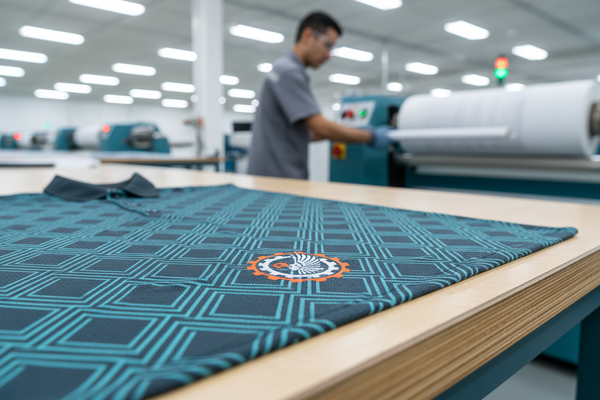
Step onto any garment production floor during a high-volume uniform run, and you will see how minor technical adjustments dramatically shape final quality. Precision sewing equipment must be calibrated to match the specific gauge and stretch properties of the knit fabric being processed. Correct needle selection, thread tensioning, and stitch density prevent seam puckering and ensure maximum flexibility during active wear.
During sampling for a nationwide logistics client, factory technicians fine-tuned needle density to prevent fabric puckering around chest logos. Shifting tension parameters saved roughly fifty production hours across the entire run while improving the visual sharpness of every embroidered emblem.
Buyers often assume heavier weight fabric automatically prevents logo distortion. In practice, proper structural stabilization behind the embroidery chest area determines whether the garment holds its crisp shape. Placing a High-Elasticity Embroidery Backing Shield behind complex brand marks distributes needle penetrations evenly across the surrounding knit, preserving smooth panel lay.
In most cases, precise needle calibration and stabilizer selection matter far more than total fabric weight when applying brand logos. When stitching dense chest designs onto textured knits, maintaining balance between top thread tension and backing density prevents puckering around logo edges.
Proactive factory adjustments—such as pairing stabilizer weight directly to knit density—eliminate surface distortion long before full production begins.
In our experience, testing backing materials on swatch cuts before running full production runs saves significant adjustments downstream. Taking two days to review embroidered swatches allows factory floor managers to dial in stitch density and thread composition with complete confidence.
Collar construction requires equal attention during manufacturing. Utilizing collar stays or knitted rib structures with embedded elastomeric yarns prevents collar curling—often referred to as "bacon collar"—after repeated wash cycles. A well-constructed collar maintains its tailored curve against the neck through years of daily service.
Placket design also reflects overall build quality. Reinforced bottom box-stitching on two-button or three-button plackets prevents stress tearing at the split base. Clean fused interlinings inside the placket keep the button area smooth and upright, enhancing overall professional appearance.
3. Sampling and Wash Testing Protocols for Uniform Longevity
Before releasing bulk production orders, executing comprehensive laboratory and practical wash testing confirms fabric performance under real-world conditions. Standard retail testing methods often fall short when evaluating commercial workwear, which faces aggressive wash temperatures and commercial tumble dryers.
One field services company sent swatches through 50 commercial wash cycles to verify seam strength and color holding. The results gave them complete confidence before committing to a multi-state rollout involving thousands of staff, confirming that their chosen specifications could handle demanding utility environments.
Is a 50-cycle wash test really necessary before bulk approval? Absolutely, because real commercial laundering exposes stress points long before daily wear does. Verifying dimensional stability and color fastness on physical swatches provides tangible proof that your garments will maintain their initial quality over time.
The difference between lasting workwear and short-lived garments comes down to how well the dye bonds to synthetic fibers under heat. Utilizing a modern Disperse Dye Binding Process locks pigment deep within polyester fibers, resisting shade shift and wash fade through extensive laundry cycles.
Evaluating multi-tone color schemes requires close attention to dye stability. When garments feature contrasting collar tipping, internal placket tape, or side panel inserts, testing for Dual-Contrast Trim Color Bleeding ensures dark pigments will not transfer onto lighter main body panels during warm washing.
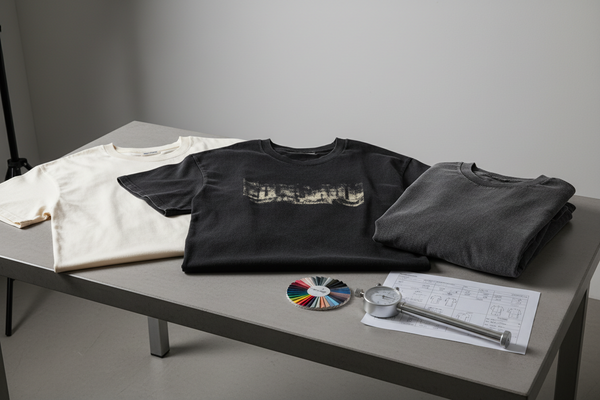
Evaluating dimensional change involves measuring sample swatches across length and width dimensions before and after repeated wash testing. Standard commercial performance guidelines target less than 3% total shrinkage, ensuring that initial fitting sizing charts remain accurate throughout the garment's lifecycle.
Color fastness testing evaluates both wet rubbing and light exposure resistance. Work environments with outdoor exposure require high light fastness ratings to prevent UV fading across shoulders and chest areas. Setting minimum color fastness targets during early sourcing discussions guarantees consistent batch-to-batch visual fidelity.
4. Material and Decoration Comparison Matrix for Commercial Programs
Choosing the right fabric construction and decoration technique requires matching environment demands against procurement budget guidelines. Different workforce roles—from climate-controlled retail spaces to outdoor industrial job sites—benefit from specific material properties.
Factories see this pattern regularly when facilities choose technical knits for outdoor crews. A service team switched to breathable activewear knits, reducing heat complaints among roughly one hundred technicians during peak summer months while maintaining a uniform brand image.
Buyers often assume 100% natural fibers provide optimal cooling for physical work. In practice, engineered micro-channels in synthetic fibers move moisture away from skin far faster than raw cotton can absorb it. Utilizing knits designed for Micro-Capillary Moisture Wicking Performance keeps outdoor workers comfortable by evaporating perspiration rapidly during active duty.
Choosing the right shirt blend depends on balancing breathability against laundry resistance for your specific workplace environment. Structured piqué double-knits deliver exceptional geometric stability and classic styling, making them ideal for mixed indoor and outdoor responsibilities.
Review the comparative specifications below to match technical options with your team's operational needs:
| Fabric Structure | Primary Material Composition | Key Performance Characteristic | Ideal Operational Setting | Maintenance Profile |
|---|---|---|---|---|
| Classic Piqué Knit | 65% Polyester / 35% Cotton | Piqué Double-Knit Geometric Stability | Field service, facilities, delivery logistics | Commercial wash, quick drying, low iron |
| Performance Mesh | 100% Micro-Polyester | Micro-Capillary Moisture Wicking Performance | High-heat outdoor labor, active maintenance | Machine wash cool, rapid air dry |
| Fine Jersey Knit | 60% Cotton / 40% Polyester | Soft hand-feel with light flexibility | Indoor retail, corporate support staff | Standard wash, low heat tumble dry |
| Heavy-Duty Piqué | 50% Cotton / 50% Polyester | Maximum abrasion resistance and seam strength | Industrial manufacturing, warehouse operations | Industrial laundry compliant |
Decoration selection should harmonize with fabric structure. While high-density embroidery looks exceptionally sharp on piqué knits, lightweight performance mesh knits often pair best with low-profile heat transfer graphics or lightweight screen printing to maintain uninhibited fabric stretch and breathability.
5. Frequently Asked Questions: Navigating Uniform Polo Procurement
A regional delivery service tested two collar styles across 300 drivers to find a balance between professional appearance and neck mobility. The collared design with reinforced collar stands kept its crisp outline through endless shifts, proving that subtle construction choices impact daily employee comfort and brand image.
Addressing core procurement questions early helps purchasing teams establish accurate timelines, realistic minimum order expectations, and repeatable quality control benchmarks.
The part that pays off most in staff apparel sourcing is standardizing core specs early so reorders match perfectly. Keeping precise technical specification sheets on file with your manufacturing partners eliminates discrepancies when ordering seasonal top-ups or onboarding new staff cohorts.
Below are clear, operational answers to common questions encountered during work uniform polo shirt procurement:
How do fabric blend choices affect ongoing uniform replacement schedules?
Selecting a high-durability poly-cotton blend significantly extends replacement cycles compared to 100% natural cotton. Poly-cotton garments resist fading, dimensional shrinkage, and seam distortion, allowing companies to stretch reorder cycles from six months out to twelve or eighteen months without sacrificing workforce appearance.
What is the typical production lead time for custom embroidered uniform polo shirts?
Standard lead times for bulk uniform polo orders range between three to five weeks following sample approval. This timeframe accounts for fabric knitting, color dyeing, logo embroidery application, multi-point quality inspections, and final commercial packaging before dispatch.
How can buyers prevent shade variations between initial orders and future reorders?
Shade consistency is maintained by locking in master dye formulation codes and specifying tight color tolerance standards with your supplier. Establishing approved physical shade bands for main body fabrics and trim components ensures future dye lots match original baselines perfectly.
Which placket and collar styles offer the highest durability for active workers?
Ribbed collars with fused inner interlinings and reinforced box-stitched plackets offer superior resistance to daily wear. Look for taped neck seams along the internal collar line, which protect the neck from seam friction while reinforcing structural integrity across the shoulders.
6. Ending Insight: Building a Scalable Uniform Pipeline
Building a successful uniform program requires shifting focus from single transactional purchases toward long-term pipeline management. Establishing predictable replenishment schedules, standardized material specifications, and verified quality standards ensures your workforce remains sharply outfitted as your organization scales.
One hospitality group we assisted mapped out their reorder pipeline over 12 months, setting up safety stock at the mill to guarantee three-day turnaround times on new hire kits. This proactive setup allowed regional managers to onboard new staff seamlessly without carrying heavy local inventory.
I'd recommend establishing standard color codes and fabric specs upfront to streamline all future replenishment orders. Keeping precise design files and approved fabric swatches archived with your supplier simplifies reordering and guarantees total visual continuity across every operational division.
The real key to a successful long-term uniform initiative is treating fabric specifications as fixed operational infrastructure. When material blends, dye standards, and stitching protocols are treated with the same precision as technical equipment, your uniform program delivers consistent brand value year after year.
Investing time in upfront fabric selection, embroidery stabilization, and wash testing pays substantial dividends across the full lifecycle of your uniform program. With structured planning and reliable manufacturing partners, sourcing work uniform polo shirts becomes a smooth, predictable, and highly rewarding process.