Ordering 100–200 Custom Backpacks: What is the typical minimum order quantity for custom promotional backpacks?
When an organization, school department, community campaign, or growing business needs branded bags, the initial question almost always centers on a straightforward number: what does it cost to produce 100 or 200 custom backpacks? Yet anyone who has managed merchandise programs knows that the unit rate on a quote sheet tells only a fraction of the story. A successful small-batch run requires balancing product chassis selection, logo legibility, production setup mechanics, international transit times, and firm delivery deadlines.
What actually determines the success of a 100 to 200-piece order is how effectively you navigate the trade-off between customization depth and operational speed. Sourcing small volumes does not mean settling for poor quality, but it does require choosing a manufacturing path designed specifically for smaller batch sizes. When you align your artwork, color expectations, and shipping choices with the realities of the factory floor, managing a modest bulk run becomes smooth, fast, and remarkably cost-effective.
One team we worked with recently organized a regional leadership initiative and needed 100 custom green daypacks delivered on a firm schedule. They initially feared that an order of that size would require either custom pattern drafting or excessive setup fees. By choosing an existing catalog chassis in classic green and pairing it with crisp white front-panel branding and clean sub-text, they locked in a unit price of $1.47, completed production in 4 days, and received their shipment with plenty of room before their event kickoff. That kind of predictable result happens when the project parameters match the right production workflow.
The Small-Batch Workflow: Stock Catalog Blanks vs. Bespoke Cut-and-Sew
The first major fork in the road when planning a 100 to 200-piece order is deciding between customizing an existing stock backpack style and commissioning a completely bespoke cut-and-sew build. Sourcing teams sometimes assume that full customization is the default way to get custom branding, but for smaller volumes, the two approaches serve completely different purposes.
A bespoke cut-and-sew project means engineering the bag from the yarn up. The factory cuts custom paper patterns, dyes specific fabric yardage, tools custom zipper pull molds, and builds dedicated assembly stations for unique internal compartments. While this offers limitless design freedom, it typically demands minimum order quantities of 1,000 to 3,000 units and requires 45 to 60 days of development and manufacturing time. For an order of 150 backpacks, setting up a dedicated assembly line creates disproportionate tooling expenses.
In contrast, working with an existing backpack style leverages pre-manufactured stock inventory. The bags are already cut, sewn, and quality-inspected in popular colorways, sitting ready in domestic or overseas warehouses. Customization focuses on precision surface decoration—such as direct spot screen printing, high-density heat transfers, or custom woven patches applied to the finished exterior. This approach eliminates mold fees, keeps minimums accessible at 100 pieces, and compresses production turnaround down to a matter of days.
Is choosing a stock chassis limiting for your brand? Not in practice. When you pair a classic body shade with clean, well-proportioned artwork, the resulting product looks polished and deliberate. For pilot campaigns, seasonal school initiatives, and regional corporate gifts, utilizing stock blanks is the most practical and reliable way to maximize budget efficiency.
Understanding the Unit Economics of Small Bulk Tiers
A central reality of promotional merchandise sourcing is that unit manufacturing costs shift noticeably as quantities scale, even within modest volume ranges. In small-batch production, a significant portion of the total project expense consists of fixed setup labor rather than raw material consumption.
Every time a factory prepares a printing run, technicians must complete artwork pre-flight checks, output film separations, burn emulsion screens, blend ink formulations, set machine registration, and run physical test strikes. These setup steps take roughly the same amount of labor whether the machine runs 50 bags or 500 bags. When you order 100 units, that fixed setup cost is divided across 100 pieces; when you order 200 units, the setup burden per bag is cut in half.
An example quotation structure illustrates how volume directly influences per-piece rates:
| Order Quantity | Example Unit Price | Total Product Cost | Operational Advantage |
|---|---|---|---|
| 100 pieces | $1.47 | $147.00 | Low capital commitment; ideal for validating pilot events and small cohorts |
| 200 pieces | $1.40 | $280.00 | Lower unit rate; builds an immediate buffer for late attendee additions |
My advice to most buyers is to evaluate the 200-piece tier even if your current headcount sits at 130 or 150 people. Spending a modest amount more to secure 200 units lowers your average unit price while providing spare inventory to cover unexpected arrivals, speaker gifts, or upcoming onboarding classes. Leaving a small inventory reserve prevents the need to run an expensive rush re-order later.
Graphic Precision: Logo Placement and Sub-Text Alignment
A logo design that looks crisp on a backlit computer monitor can behave very differently when translated into ink on a textured woven polyester backpack. Understanding how decoration processes interact with bag surfaces is essential to achieving a clean visual outcome.
Before confirming an order, the factory art department evaluates the submitted artwork across five vital parameters:
- Physical Dimensions: Ensuring the graphic fits naturally within the printable boundaries of the front pocket or upper panel without overlapping seams.
- Stroke Weight & Fine Details: Verifying that line thicknesses exceed 1 point (approximately 0.35 mm) so that ink does not bridge or close up during printing.
- Color Separation Count: Checking whether the graphic requires one spot color or multiple print passes, which impacts screen setup.
- Sub-Text Readability: Ensuring that secondary typography—such as organization names, chapter locations, or event dates—maintains sufficient scale and tracking to remain legible.
- Digital Vector Format: Confirming the file is supplied as an editable vector asset in AI, EPS, PDF, or SVG format with all fonts converted to outlines.
During sampling for a similar regional program, a client submitted an emblem with fine script text placed directly under their primary shield mark. On the screen, the layout looked balanced, but the tiny script serifs were too delicate for woven fabric. By adjusting the sub-text to a clean, bold sans-serif font and increasing the letter spacing slightly, the printed graphic emerged sharp and easy to read from several feet away.
Always review a 1:1 scale digital proof before giving production sign-off. The proof should show the exact placement coordinates, ink color specifications, and proportional relationship between the main emblem and secondary text. Taking ten minutes to inspect this proof prevents typographical errors, misplaced text, and unexpected scaling adjustments on the final product.
Color Management: Aligning Stock Fabrics with Brand Standards
When a project brief specifies a "green backpack," that single word can encompass dozens of physical tones—ranging from bright Kelly green to muted olive and deep forest green. When sourcing small batches using catalog stock, managing color expectations early is critical.
Stock catalog backpacks are manufactured in established, high-demand standard shades. While factories maintain consistent dye standards for these catalog colors, they may not align perfectly with a proprietary corporate Pantone code. If an organization has strict brand guidelines, the supplier can cross-reference available fabric swatches against the target Pantone reference to identify the closest matching stock shade.
Buyers often assume that ordering custom backpacks means the fabric will automatically be dyed to their exact Pantone code. In practice, custom dye lots require thousands of yards of fabric milling, which is not feasible for a 100-piece run. For small batches, selecting the closest stock body color and applying exact Pantone-matched ink for the front-panel logo delivers strong brand harmony without triggering large fabric minimums.
In our experience, applying Spectrophotometric Delta-E Variance Tracking to the printing ink guarantees that the emblem itself matches brand standards precisely, creating an eye-catching focal point that unifies the entire product presentation.
Physical Pre-Production Samples vs. Digital Proofs
Deciding whether to request a physical pre-production sample or proceed directly from a digital proof comes down to a balance between quality verification and project deadlines.
A physical pre-production sample provides absolute certainty. Holding the finished backpack in your hands allows you to inspect fabric weight, check seam stitching, test zipper action, and examine print opacity under real-world lighting. If your 100-piece order represents the pilot phase of a major upcoming multi-thousand-unit rollout, investing in a physical sample is a prudent decision that validates the chassis before larger commitments are made.
However, producing and shipping a physical prototype across international borders typically adds 7 to 10 business days to the schedule, along with sample development and courier fees. If your event date is only three or four weeks away, opting for a detailed 2D digital proof allows the factory to move straight into bulk printing, preserving your delivery window.
I'd suggest using a digital proof whenever you are utilizing standard catalog blanks with standard spot-color printing, provided you are working with an experienced supplier. If you are introducing complex multi-color artwork or require exact tactile approval for executive stakeholders, plan an extra two weeks into your schedule to accommodate a physical sample round.
Deconstructing the Sourcing Timeline: Production Speed vs. Logistics Reality
One of the most widespread misunderstandings in promotional product sourcing is conflating factory production duration with total door-to-door delivery time. Hearing that "production takes 3 to 5 business days" often leads buyers to assume their order will arrive on their doorstep the following week. In international supply chains, logistics almost always takes longer than the manufacturing phase itself.
The manufacturing process for decorating 100 to 200 stock backpacks is swift: once artwork is approved and payment is processed, burning screens, printing the panels, heat-curing the ink, and repacking the bags in master cartons takes roughly 3 to 5 business days. However, the complete procurement sequence involves several distinct stages:
- Artwork Confirmation & Digital Proof Approval: 1 to 2 business days.
- Factory Printing & Quality Inspection: 3 to 5 business days.
- Export Packing & Port Drayage: 1 to 2 business days.
- International Carriage: 12 to 18 calendar days (standard sea freight) or 4 to 6 business days (express air).
- Import Customs Clearance & Port Handling: 2 to 4 business days.
- Domestic Final-Mile Freight: 2 to 4 business days to your facility door.
A common outcome when this timeline is overlooked is unnecessary shipping anxiety. A project scheduled with only a two-week window will miss its date if shipped via ocean freight. Sourcing managers should always calculate their schedule backward from the event date, ensuring that transit mode, customs clearance, and local receiving buffers are fully accounted for before production begins.
Landed Cost Transparency Through DDP Shipping
Shipping small-batch promotional goods internationally requires selecting the appropriate Incoterm to avoid unexpected terminal and administrative fees. For orders between 100 and 200 units, Delivered Duty Paid (DDP) is the most transparent and hassle-free arrangement available.
Under DDP terms, the quoted freight price covers the entire journey from the factory floor directly to your receiving dock. This single charge bundles international ocean or air transit, export filings, destination customs brokerage, harbor maintenance fees, import tariffs, and local courier delivery. For an example U.S. shipment of 100 backpacks, a baseline sea freight estimate might sit around $90, depending on the destination zip code, carton dimensions, and gross weight.
Buyers often assume that a low "FOB" or "EXW" shipping quote represents their total logistics cost. In practice, receiving goods under FOB terms requires the buyer to hire an independent customs broker and pay separate terminal handling and inland trucking invoices, which can easily double the logistics expense for small shipments. Requesting DDP pricing upfront ensures that your landed budget is complete and predictable.
Always provide your complete street address and zip code when requesting a formal quotation. Master carton volume and final-mile destination zones directly govern carrier pricing, so supplying accurate delivery details ensures your final invoice matches your initial quote.
Coordinating Multi-Item Bundles and Mitigating Fulfillment Bottlenecks
Promotional backpacks are rarely distributed in total isolation. Many programs combine bags with branded headwear, corporate apparel, notebooks, and drinkware to create complete welcome kits or event packages. Coordinating these multi-category bundles requires a structured Item Component Synchronization Framework to prevent warehouse delays.
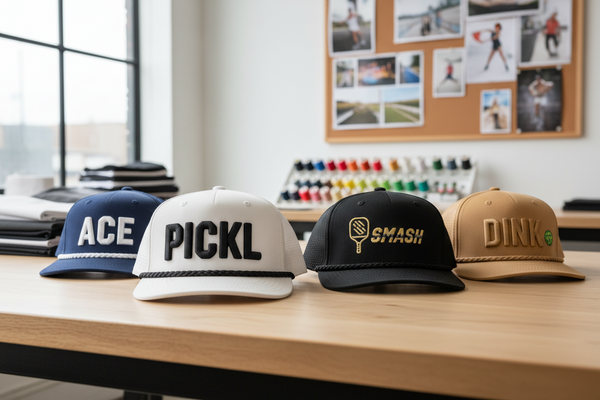
Consider a scenario where an organization pairs 150 backpacks with 150 embroidered caps and branded t-shirts. The backpacks might require 4 days for printing, the caps take 7 days for embroidery, and the shirts require 5 days. If each item is shipped independently without alignment, local staff can face a Final-Mile Domestic Kitting Bottleneck, with pallets of bags sitting idle in storage while waiting for secondary accessories to arrive.
Furthermore, when programs include wearable apparel alongside universal-fit backpacks, sourcing teams must manage Talent Cohort Size Run Volatility. While backpacks eliminate sizing concerns entirely, companion garments require ratio planning. Ordering a modest 5% buffer on common sizes protects your program from roster shifts while preventing Roster Overstock Asset Depreciation.
Maintaining color harmony across diverse merchandise items is equally important. A dyed cotton garment and a synthetic polyester backpack shell absorb dye formulations differently. By monitoring visual tolerances and anticipating potential Multi-Mill Dye Lot Discrepancy, you ensure that every item in the kit presents a cohesive, professional brand identity.
Inbound Receiving and Quality Verification Checkpoints
When the delivery carrier unloads your master cartons, executing a quick, structured intake inspection ensures that the delivered goods match the approved proof before distribution begins.
A practical receiving inspection focuses on three key areas:
- Print Execution & Edge Sharpness: Open three cartons from different parts of the shipment and inspect the front logo under clean daylight. Verify that ink coverage is solid, color edges are crisp, and sub-text lettering is completely legible.
- Seam Reinforcement & Hardware Glide: Cycle the main compartment and front pocket zippers several times to confirm smooth track engagement. Apply moderate tension to the top carry handle and shoulder strap anchor points to confirm secure box-X reinforcement stitching.
- Carton Quantities & Pack Condition: Count the total master cartons against the delivery receipt and check that individual polybag counts align with the commercial packing slip.
Ordering 100 to 200 custom promotional backpacks is a reliable, straightforward process when approached with clear technical expectations. By selecting proven stock blanks, locking in clean vector artwork, understanding batch pricing structures, and choosing transparent DDP freight, you can deliver high-quality, memorable gear that represents your organization with confidence.