Government Apparel Compliance: B2B Sourcing & Standards Guide
1. Streamlining Municipal and Government Apparel Sourcing
How do you transition from managing complex public agency garment specs to running a smooth, compliant uniform program that keeps field teams safe and comfortable every single day? What actually determines whether a government apparel contract succeeds comes down to setting clear, objective technical benchmarks long before tenders are published. In municipal utilities, public works, and transit operations, sourcing apparel requires aligning national safety standards with real-world physical comfort, ensuring crews feel supported throughout six-to-twelve-hour outdoor shifts.
Navigating public sector apparel procurement involves balancing strict municipal compliance rules, multi-year budget horizons, and diverse crew responsibilities. Working with commercial manufacturers demands moving past generic catalog descriptions toward precise technical specifications. Establishing clear benchmarks for fabric weight, reflective brightness, and wash stability upfront creates an open, transparent environment where prospective vendors can submit accurate quotes and deliver consistent output.
Is an ANSI Class 2 rating sufficient for urban utility crews? In practice, yes, for roadways where traffic speeds stay under 45 mph, whereas high-speed highway maintenance teams require Class 3 coverage with full sleeve reflectivity. Matching garment specifications directly to field environment risk levels ensures that your agency purchases the exact level of protection needed without overcomplicating daily wear.
I'd recommend establishing a standardized technical reference matrix before opening your next agency bidding cycle. Defining exact expectations for retroreflective brightness, fabric breathability, and trim attachment eliminates confusion during sample evaluations and speeds up contract finalization. Let's look closely at how experienced sourcing teams review these compliance factors directly on the factory floor.
2. Inside the Certified Mill: Verifying Field Crew Workwear
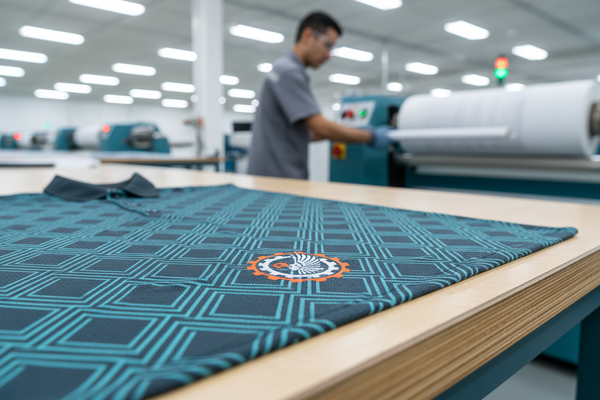
Walking through an active manufacturing facility gives sourcing teams immediate insight into how a supplier controls process quality. During sampling for a similar program across three municipal transit authorities, observing how raw fluorescent fabrics were tested under specialized light meters showed how much precision goes into high-visibility workwear. A clean, well-organized floor with clear batch tracking tags indicates a supplier that takes real pride in building compliant garments.
Conducting an on-site review allows procurement leads to verify how reflective trims are bonded to background fabrics firsthand. One team we worked with evaluated an offshore facility producing 15,000 safety vests for a regional transportation district. By verifying that heat-press temperatures were calibrated every two hours, the factory ensured that reflective tape adhesion exceeded standard shear strength targets, keeping striping firmly attached through months of active field use.
In our experience, watching a mill perform a batch test for ANSI/ISEA High-Visibility Certification is where true quality transparency shines. At this stage, technicians measure fluorescent background fabric color coordinates under calibrated spectroreflectometers before and after artificial light exposure tests. This rigorous testing routine ensures that fluorescent yellow and orange dyes maintain their bright daytime clarity through seasonal sun exposure.
Factories see this pattern regularly: suppliers that maintain dedicated in-house testing labs and track daily calibration logs consistently produce reliable, compliant uniforms. When you review a facility, take a moment to examine their raw material storage area. Storing reflective tape rolls in climate-controlled rooms preserves the adhesive layer, ensuring seamless bonding during final garment assembly.
The difference between standard work apparel and true municipal safety gear lies in systematic quality verification at every step of production. When suppliers enforce strict batch checks, public agencies receive garments that perform dependably across their entire Field Crew Safety Uniform Lifecycle. Let's explore the material engineering that underpins these high-visibility standards.
3. Technical Standards: Visibility, Laundering, and Environmental Validation
Translating agency safety guidelines into durable physical uniforms requires grounding requirements in standard textile physics. Buyers often assume that fluorescent fabric weight alone determines garment longevity. In practice, what actually determines how well a safety garment holds up through repeated field shifts is the combination of synthetic fiber density, dye fixation, and retroreflective glass bead coating quality. Setting clear laboratory benchmarks removes all guesswork from sample evaluations.
Take retroreflective trim performance as a classic example. The Retroreflective Luminance Coefficient measures how efficiently silver glass beads or micro-prismatic tape reflect vehicle headlights back to drivers in low-light conditions. Specifying high-grade micro-prismatic tape with an initial luminance reading of 500 cd/lx/m² ensures that night crews stay visible from over 1,000 feet away, giving approaching drivers ample time to react safely.
Buyers often assume that high-visibility garments cannot meet strict environmental chemical standards. In practice, requiring OEKO-TEX Strict Eco-Passport Validation confirms that fluorescent dyes, water-repellent coatings, and reflective adhesives contain zero harmful chemical residues, ensuring base layers are completely safe for sensitive skin during hot outdoor work.
Do high-visibility shirts lose their bright color after commercial laundering? In practice, specifying high-grade polyester yarns treated for Industrial Thermal Laundering Tolerance ensures that fluorescent background fabrics retain their bright color coordinates through 50 industrial wash cycles at elevated temperatures.
My advice to most buyers is to request certified wash test reports from independent third-party laboratories alongside physical sample submissions. Having verified lab data on file gives your procurement committee complete confidence that incoming garments meet both safety and environmental standards. Let's look at how stitch strength and trim placement support these technical fabric choices.
The part that pays off most in workwear engineering is reinforcing high-stress seam intersections with dense bar-tack stitching. Applying 42-stitch bar-tacks across pocket corners, radio mic tabs, and zipper bases prevents seam separation when field workers carry heavy handheld radios or tools during daily operations.
4. Building Long-Term Procurement Confidence with Compliance Audits
A well-structured procurement framework does more than secure competitive pricing; it builds complete confidence across your agency's entire supply chain. Integrating clear verification steps into your purchasing routine allows you to handle seasonal distribution rollouts smoothly while maintaining complete compliance with local, state, and federal mandates.
For example, implementing Contract Compliance Audit Clauses in purchase agreements establishes clear protocols for testing inbound shipments. A standard contract clause allows municipal buyers to select three random garments per 500-unit shipment for independent laboratory testing, verifying fabric weight, reflective brightness, and seam strength before releasing final balance payments.
During a seasonal uniform update for a city public works department requiring 2,500 all-weather parkas, an unexpected supply delay threatened to push delivery past the winter start date. Because the agency had established clear milestone tracking with their supplier, the manufacturer diverted production to an approved secondary facility, delivering the complete order roughly three days ahead of the original deadline without any compromise on ANSI certification standards.
One thing that consistently pays off is maintaining an open, collaborative dialogue with your supplier's technical account manager. When vendors understand your agency's specific field environments—whether high-speed highway paving or wet utility repair—they can recommend tailored fabric finishes and trim configurations that maximize crew comfort and safety.
In our experience, establishing clear multi-year contract terms allows suppliers to reserve dedicated raw material inventory for your agency. This supply chain stability guarantees that mid-season reorders for new hires match original uniform colors and specs perfectly. Let's look at a practical decision guide for matching garment options to agency roles.
5. Municipal Apparel Compliance Checklist and Selection Matrix
Utilizing a structured decision matrix makes selecting the right uniform configuration simple and efficient for procurement leads, safety directors, and agency managers. The table below outlines key technical parameters across four standard municipal workwear configurations:
| Uniform Style | ANSI/ISEA Safety Class | Primary Material Spec | Key Performance Feature | Ideal Agency Application |
|---|---|---|---|---|
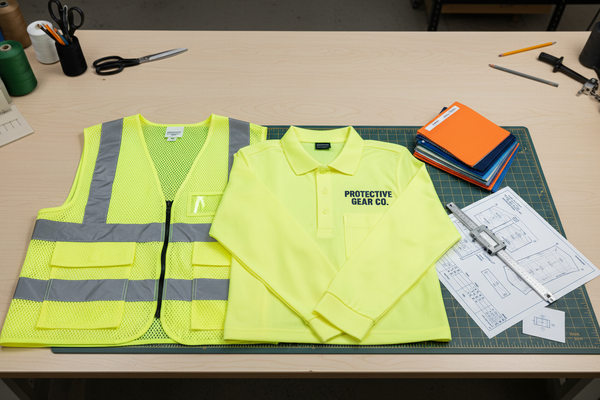
| Class 2 High-Vis Mesh Vest | Class 2 Type R | 120 GSM Breathable Polyester Mesh | Lightweight, 360-degree reflective coverage | Daytime traffic control, parking & transit staff |
| Class 3 All-Weather Safety Parka | Class 3 Type R | 300D Waterproof Oxford Nylon | Thermal fleece lining & storm flap closure | Winter highway maintenance & emergency crews |
| Class 2 Moisture-Wicking Polo | Class 2 Type R | 160 GSM Birdseye Knit Polyester | Soft hand-feel & rapid sweat evaporation | Summer public works & field inspectors |
| Flame-Resistant High-Vis Coverall | Class 3 FR Dual-Certified | 220 GSM Treated FR Cotton Blend | Arc-flash protection & heat resistance | Gas utilities & electrical line maintenance |
Should public works departments specify flame-resistant high-visibility gear for all field staff? In practice, reserving FR-rated garments for electrical utility and gas line crews keeps budget allocations focused where specialized arc-flash protection is mandatory, while standard Class 2 or Class 3 polyester gear serves general road and parks maintenance teams wonderfully.
A common outcome when this evaluation step gets skipped is purchasing heavy, non-breathable safety coats for warm-weather crews, leading workers to unzip garments during physical labor. Choosing lightweight birdseye knits and breathable mesh panels for summer wear keeps safety gear comfortable and fully fastened throughout active shifts.
If I had to choose one strategic upgrade for a municipal workwear program, it would be switching from basic sewn reflective tape to flexible heat-applied segmented reflective striping. Segmented tape stretches naturally with the background fabric, providing superior breathability and freedom of movement during heavy lifting or reaching.
By organizing your uniform specifications around clear operational risk tiers, you ensure every agency department receives gear tailored directly to their working conditions. Let's synthesize these principles into a roadmap for long-term procurement success.
6. Elevating Field Safety Through Standardized Procurement
Mastering government apparel compliance transforms public sector workwear sourcing from a complex administrative exercise into a powerful tool for employee safety and civic pride. When you approach procurement with clear technical standards, rigorous certified lab testing, and collaborative vendor audits, you build a resilient uniform program that serves your community dependably year after year.
During a multi-year agency contract review involving 4,000 public works employees, introducing standardized ANSI Class 2 polos and Class 3 winter jackets streamlined inventory management across five municipal divisions. The unified sourcing framework allowed the city to secure favorable volume pricing while ensuring every field worker received identical, high-quality safety gear on their first day on the job.
As your agency's operational needs grow, maintaining clear records of third-party test certificates, OEKO-TEX eco-passport validations, and wash testing reports ensures total compliance transparency for internal audits and public safety reviews. Celebrating smooth delivery rollouts with your supplier team fosters a spirit of long-term partnership that keeps your uniform program running like clockwork.
By prioritizing ANSI/ISEA High-Visibility Certification, demanding Industrial Thermal Laundering Tolerance, and embedding transparent Contract Compliance Audit Clauses into purchase agreements, you set a standard of excellence that protects your field teams every single day. Well-designed safety workwear protects your dedicated workforce, elevates civic professionalism, and delivers lasting value to the communities you serve.