Premium Corporate Gifting: Custom Bags as Long-Term Brand Equity Anchors
The bag is the first thing the new hire touches. It's the physical manifestation of the brand's welcome. And in most corporate onboarding programs, it's also the cheapest, most disposable component.
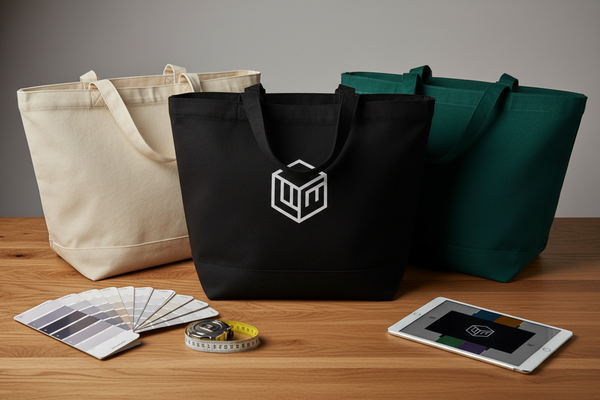
A 12oz promotional tote costs $2.50 in bulk. It gets used for gym clothes, grocery runs, or nothing at all—and it's usually replaced within six months. A 16oz canvas tote costs $8.00. It gets used for three years—laptops, notebooks, daily essentials. Over that timeframe, the premium bag delivers 3x the brand impressions at 2x the cost. The math is straightforward: $8 / 1,000 impressions is cheaper than $2.50 / 200 impressions.
This guide walks through the procurement logic behind premium corporate gifting bags—16oz canvas totes and minimalist travel packs—compared to disposable promotional items. It covers fabric weight, construction standards, decoration methods, and the logistical synchronization required to deliver a cohesive onboarding kit. It's written for HR managers, corporate culture teams, and employee experience coordinators who need gifts that build brand equity, not landfill.
1. Sourcing Realities: What HR Managers and Onboarding Coordinators Overlook Regarding Bag Quality and Lifespan
The quote comes back: 16oz canvas tote, $8.00 per unit. Another quote: standard promotional tote, $2.50 per unit. The budget is tight. The promo tote wins the PO. Three months later, the new hires are using the promo tote for gym clothes. Six months later, it's in the trash. The brand impression that was supposed to last years lasted months.
This is the most expensive false economy in corporate gifting. The unit price difference is real—$5.50 per bag is real money when you're ordering 500 units. But the lifespan difference is also real. A 16oz canvas bag typically survives 3–5 years of daily use. A 12oz promo tote survives 6–12 months. The premium bag delivers 3–5x the lifespan at 2–3x the cost.
The cost-per-impression math is straightforward. A bag used 3x per week for 3 years delivers approximately 450 uses. A bag used 2x per week for 6 months delivers approximately 50 uses. The premium bag's cost-per-use is $0.02–0.03. The budget bag's cost-per-use is $0.05–0.06. The premium bag is cheaper per use. But nobody calculates that way because they're optimizing for unit price, not lifespan value.
The honest answer depends on things suppliers don't always tell you upfront: the fabric weight, the seam construction, and the finishing. A 16oz canvas bag with triple-stitched handles and a reinforced base will outlast a 12oz bag with single-stitched handles by a factor of 3–4x. The difference isn't just marketing—it's engineering. And procurement teams who skip that engineering discussion are missing the real value equation.
2. Textile Physics: The Structural Science Behind 16oz Canvas and Travel Pack Durability
Let's talk about what actually happens inside a canvas tote or travel pack under daily use. The fabric weight, yarn construction, and finishing treatments determine how long the bag lasts—and how much brand equity it builds over time.
Fabric weight is the first variable. Canvas weight is measured in ounces per square yard—the weight of a single square yard of fabric. A 16oz canvas is significantly heavier than an 8oz canvas. The heavier fabric has more yarn mass per square inch, which translates to greater abrasion resistance, better structural integrity, and a more substantial hand feel. A bag made from 16oz canvas can carry 20–30 pounds without distorting. A bag made from 8oz canvas starts to stretch and sag at 10–15 pounds.
Yarn construction is the second variable. 100% cotton canvas uses ring-spun or open-end yarns. Ring-spun yarns have longer fibers aligned in the same direction, producing a stronger, smoother fabric that resists pilling and abrasion. Open-end yarns have shorter fibers and lower tensile strength, producing a rougher fabric that wears faster. A 16oz canvas with ring-spun yarns will outlast a 16oz canvas with open-end yarns by 30–50%.
Finishing treatments are the third variable. Waxed or water-repellent finishes protect the bag from moisture and stains, extending the useful lifespan. Heat-treated or resin-coated finishes add stiffness and structure. Unfinished canvas absorbs water and stains, shortening the lifespan by 20–30%. The difference between a finished and unfinished bag is the difference between a bag that still looks professional after 2 years and one that looks ragged after 6 months.
For minimalist travel packs, the fabric weight is lower—typically 50–70 denier polyester or nylon—but the construction is different. The higher tensile strength of synthetic fibers compensates for the lower weight. A travel pack with taped seams, YKK zippers, and a foam back panel will deliver 2–4 years of daily use. A travel pack without these features will fail within 12 months.
3. Workshop Execution: Calibrating Decoration Methods for Premium Corporate Bags
Decoration method affects both the bag's appearance and its durability. The wrong decoration method can fail before the bag does—defeating the purpose of the premium bag investment.
Embroidery is the premium decoration method for canvas bags. The thread penetrates the fabric and creates a raised, dimensional logo that signals quality. Embroidery on canvas requires professional digitizing—converting artwork into machine-readable stitch patterns—which adds $45–95 per design. The stitch count affects the look and durability. A 15,000-stitch logo on a canvas bag is durable and visually striking. A 15,000-stitch logo on a lightweight bag will pucker. The digitizing must be calibrated to the fabric weight. On canvas, the rule is simple: use higher-density stitching and cut-away backing to prevent distortion.
Heat transfer is the most common decoration method for promotional bags—fast turnaround, low setup cost, no digitizing. But heat transfer on canvas has a durability limit. The vinyl or film sits on the surface rather than penetrating the fabric. Under heavy use—scraping against desks, rubbing against clothing—the transfer cracks and peels. A heat transfer that looks clean at delivery may fail within 12 months of daily use. The trade-off: faster production, lower cost, shorter lifespan.
Screen printing on canvas delivers better durability than heat transfer—the ink penetrates the fabric surface, creating a bond that lasts the life of the bag. But screen printing on canvas requires higher ink film thickness to compensate for the textured surface. The mesh count should be lower—110 to 156 threads per inch—to deposit sufficient ink. The cure temperature needs calibration to the fabric weight. A screen-printed bag that's properly cured will outlast a heat-transferred bag by 2–3x.
Sublimation is the most permanent decoration method for synthetic travel packs. The dye converts to a gas under heat and bonds permanently with the polyester fibers, creating a print that's part of the fabric. Sublimation can't be scratched, peeled, or faded. But sublimation requires 100% polyester or high-polyester content. On cotton canvas, sublimation fails—the dye passes through the fabric and produces a faded, commercially unacceptable result.
One universal rule for bag decoration: test on production fabric, not on the supplier's test swatch. The test swatch is usually a different lot, sometimes a different weight entirely. Run adhesion, wash, and stretch tests on samples cut from the actual production roll. If the supplier won't provide a production roll sample for testing, that's a red flag.
4. Risk Factors: Preventing Severe Operational Flaws in Bulk Runs
Bulk production amplifies every small variance. A 1% difference in fabric weight changes the hand feel. A 2% variation in dye lot changes the color match. Here are the operational failures I see most often in corporate bag programs—and how to prevent them.
Talent cohort size run volatility is the most common failure in onboarding kit programs. The company hires 50 people in small sizes and 70 in large sizes. The inventory is 100 in each. The small sizes sit unused. The large sizes are backordered. The new hires get whatever's left—and the brand experience suffers. The root cause is forecasting based on assumptions instead of data. The fix: incorporate a programmatic 20% size run overflow buffer stock allocation across the most common sizes—typically M and L—and use the buffer to capture shifting talent profiles. Order 120 of M and L, 80 of S and XL. Adjust the ratio based on actual hiring data.
Multi-mill dye lot discrepancy is the most visible failure in multi-item kits. The tote bag comes from Mill A. The travel pack comes from Mill B. The hoodie comes from Mill C. The colors matched in the digital proofs. The products arrive and sit next to each other. They don't match. The brand consistency that was supposed to be reinforced by the kit is undermined by the color mismatch. The root cause is decentralized ordering and unchecked dye lot variance. The fix: centralize disparate product categories under a unified contract mechanism with a single physical color standard reference. Require spectrophotometric delta-E variance tracking with a tolerance of <1.5 delta-E. If a component deviates beyond 1.5 delta-E, reject it before kitting.
Final-mile domestic kitting bottleneck is the most common logistical failure. The factory ships the bags on time. The hoodies arrive on time. The internal logistics team at headquarters is responsible for kitting—matching bags to hoodies, adding the welcome note, packing for individual shipping. The logistics team wasn't consulted on the schedule. The kit assembly takes 10 days. The new hires are waiting. The root cause is omitting the final-mile kitting overhead from the global deployment schedule. The fix: build the final-mile kitting overhead into the program timeline from the start. Add 7–10 days for consolidation and distribution across multiple office locations. Lock down delivery windows 14 business days clear of onboarding target events.
Roster overstock asset depreciation is the hidden cost. A 500-unit program with 20% overstock represents 100 units of dead inventory. At $25 per unit landed cost, that's $2,500 in tied-up capital. The root cause is ordering fixed quantities without a buffer strategy. The fix: order 10–15% overstock and treat it as a strategic reserve. If it's not used within 6 months, donate it to a relevant cause. The loss is smaller than the depreciation of sitting inventory.
5. Procurement Ledger: Cost Amortization Specs for Bulk Corporate Bag Programs
Let's talk about the actual cost structure. The per-unit price of a custom bag breaks down into materials, labor, decoration, and overhead—but the proportions shift dramatically with fabric weight and order volume.
16oz canvas tote materials run $4–8 per bag, depending on fabric quality and finishing. 100% cotton canvas with ring-spun yarns is at the higher end of this range. Open-end or blended canvas is at the lower end. Finishing—waxed, water-repellent, or heat-treated—adds $0.50–1.50 per bag. Labor runs $2–4 per bag for cutting, sewing, and finishing. Total landed cost for a 16oz canvas tote with 2-color screen print at 200 units: roughly $10–16 per unit. At 500 units: $8–14.
Minimalist travel pack materials run $3–6 per unit, depending on fabric and hardware. 70-denier ripstop nylon with YKK zippers sits at the higher end of this range. Standard polyester without branded hardware sits at the lower end. Labor runs $2–4 per pack for cutting, sewing, and assembly. Total landed cost for a travel pack with 1-color heat transfer at 200 units: roughly $8–12 per unit. At 500 units: $7–10.
Standard promo tote materials run $1–3 per unit. 8–12oz canvas with open-end yarns sits at the lower end of this range. Unfinished fabric. No reinforcement. Total landed cost for a promo tote with 1-color heat transfer at 500 units: roughly $3–5 per unit. The unit price is 2–3x lower. The lifespan is 3–5x shorter. The cost-per-use is 1.5–2x higher.
The cost decision isn't just about unit price—it's about cost-per-impression. A $15 bag used 3x per week for 3 years delivers approximately 450 uses. Cost-per-use: $0.03–0.04. A $4 bag used 2x per week for 6 months delivers approximately 50 uses. Cost-per-use: $0.08. The premium bag is 2x cheaper per use. The procurement math is clear—but it requires looking at the right metric.
One cost trap for corporate gifting: rush fees. If you need bags in under 4 weeks, expect to pay a 20–30% premium for expedited production. That premium is avoidable if you plan 8–10 weeks ahead—and if you build the 14-day buffer into the timeline.
6. Engineering Benchmark Profiles: AATCC/ASTM Lab Threshold Metrics
| Test Method | Parameter | Canvas Acceptance Threshold | Failure Mode |
|---|---|---|---|
| ASTM D3776 | Fabric Weight (oz/sq yd) | Tolerance: ±5% of spec (16oz ±0.8oz) | Inconsistent weight; wrong hand feel |
| ASTM D5034 | Breaking Strength (Grab Test) | ≥ 60 lbf (warp) / ≥ 55 lbf (weft) | Seam failure; fabric tearing under stress |
| ASTM D1683 | Seam Strength | ≥ 45 lbf for handle attachment | Handle separation; structural failure |
| AATCC 135 | Dimensional Stability | ≤ 3% after 3 washes | Distortion; shrinkage |
| AATCC 61 | Colorfastness to Laundering | ≥ 4.0 (Gray Scale) after 20 cycles | Logo fading; color bleeding |
| Spectrophotometer | Delta-E Variance from Standard | ≤ 1.5 delta-E | Visible color mismatch across kit components |
These thresholds represent the minimum standards for quality corporate bag programs. If your supplier can't commit to these numbers in writing, or won't provide independent lab results, you're buying on faith. And faith doesn't survive the first month of daily use.
7. Fatal Sourcing Gaps: Destructive Blindspots in Quality Control
Most corporate bag quality control plans focus on what you can see: print alignment, seam straightness, loose threads. But the failures that kill gift programs are invisible at the inspection table. They show up in the field, in the user's hands, or in the returns pile six months later.
The fabric substitution. The buyer specifies 16oz cotton canvas. The mill substitutes a 12oz blend—cheaper, more available—to protect their margin. The fabric passes the weight inspection if the tolerance is generous. But the hand feel is different—lighter, flimsier. The brand perception that was supposed to be premium is now pedestrian. The fix: require ASTM D3776 fabric weight testing on every production lot. If the weight deviates more than 5% from spec, reject the lot.
The seam shortcut. The buyer specifies double-stitched handles. The factory single-stitches them to save time. The bag passes the visual inspection. After two months of daily use, the handles separate. The fix: require ASTM D1683 seam strength testing on every production lot. If the seam strength is below 45 lbf, reject the lot.
The color drift. The physical color standard was approved at the factory. But production runs drift. The first 100 bags match. The next 100 are slightly lighter. The last 100 are visibly different. The fix: require spectrophotometric delta-E tracking on every production lot. Accept only components within 1.5 delta-E of the standard. Reject deviations before kitting.
The kitting omission. The bags arrive on time. The hoodies arrive on time. The internal logistics team is overwhelmed—they weren't budgeted for kitting labor. The kits are assembled late, shipped late, and arrive after the new hires have already started. The fix: build the final-mile kitting overhead into the program budget and timeline. Add 7–10 days for consolidation and distribution. Lock down delivery windows 14 business days clear of onboarding target events.
8. Supply Chain FAQ Summary: Verified Action Ledger FAQ
Q: What's the minimum order quantity for a custom bag program with branding?
Most full-service bag manufacturers set MOQ at 200–300 units per design for custom fabric production. If you're using stock fabric (blanks that the factory already produces), MOQ can drop to 100 units. Embroidery programs on bags typically start at 50–100 units. Heat transfer programs typically start at 50+ units for optimal economics.
Q: How do I verify that the factory is actually using the specified fabric weight?
Two methods. First, request fabric certification from the mill—this should specify weight and tolerance. Second, run your own ASTM D3776 fabric weight test on a production sample. Cut a known area of fabric, weigh it, and calculate the weight per square yard. If the result deviates more than 5% from the spec, reject the lot.
Q: What's the typical timeline from design approval to delivery for a bag program?
Assuming a 200-unit run with custom-dyed 16oz canvas and 2-color screen print: 7–10 days for sample development, 3–5 days for sample approval, 15–20 days for production, 5–7 days for QC and packaging, and 7–10 days for final-mile kitting and distribution. Total: 37–52 days. Plan for the longer timeline and build in a 14-day buffer.
Q: How do I ensure color consistency across a multi-item onboarding kit?
Require a physical color standard—a Pantone chip or a fabric swatch—that all vendors must match. Use spectrophotometric delta-E tracking on every production lot. Accept only components within 1.5 delta-E of the standard. If a component deviates, reject it before kitting. Centralize all orders under a unified contract.
Q: What's the real cost difference between a premium canvas tote and a standard promo tote?
Premium 16oz canvas tote: landed cost roughly $10–16 per unit with 2-color screen print. Standard 8–12oz promo tote: landed cost roughly $3–5 per unit with 1-color heat transfer. The premium tote lasts 3–5x longer—3–5 years vs 6–12 months. The cost-per-use is 2x lower for the premium option. For a corporate onboarding program where the bag is a brand ambassador, the premium option is cheaper per impression.
Q: How do I handle quality disputes with an overseas supplier?
Three rules. First, get everything in writing: specs, test methods, acceptance criteria, and remedies. Second, use a third-party inspection service (e.g., Bureau Veritas, SGS) for pre-shipment inspection—this gives you independent leverage. Third, structure your payment terms to hold 20–30% until after shipment arrival, inspection, and laboratory testing. If the supplier knows you can withhold payment, they'll prioritize your quality. If you pay 100% upfront, you're buying their problems.
This guide was developed by the sourcing team at apparellots.com, based on factory-floor experience and procurement data from hundreds of corporate gifting programs. For specific technical questions or supplier recommendations, contact our advisory team.