No-Fade Pique Fabrics: Formulating Disperse Dyes for Synthetic-Cotton Corporate Polos
The polo arrives. The color matches the Pantone chip perfectly. Three weeks and five commercial washes later, the color is visibly lighter. By week eight, it's uneven—the collar and cuffs are a different shade than the body. The uniform program that was supposed to project consistent brand identity now projects inconsistency.
This is the real cost of inadequate dye formulation. Not the price difference between dye types—but the hidden cost of premature uniform replacement, inconsistent brand appearance, and the operational headache of managing fading across different production batches.
This guide explains the chemistry behind no-fade piqué fabrics: disperse dye formulation, the high-heat pressurized dyeing process, and the molecular binding that locks color into synthetic fibers. It's written for corporate uniform buyers, hospitality managers, and campus event coordinators who need polos that maintain their color through 50+ commercial launderings—because the spec exists, but the product often doesn't match it unless you understand the dyeing process.
1. Sourcing Realities: What Corporate Uniform Buyers Overlook Regarding Dye Chemistry
The typical polo fabric brief: "65/35 poly-cotton piqué, 200 GSM, PMS 294 blue." That's not a spec—it's a wish. The actual technical decision that determines whether the color stays true through 50 washes happens in the dye formulation, and most buyers never get past the PMS number.
Here's the pattern we see repeat: a buyer selects a 65/35 poly-cotton piqué for a corporate uniform program. The samples look great—the color matches the Pantone chip perfectly. The production run looks consistent at delivery. After 10–15 commercial launderings, the color shifts. The cotton portion of the fabric fades differently than the polyester portion. The trim—which may be a different blend—fades faster. The uniform program that started with consistent brand identity ends with inconsistent appearance.
The root cause: the buyer didn't specify the dyeing process. The supplier used standard disperse dyes for the polyester portion, but the wash-off process wasn't thorough. Unfixed dye particles remained on the fiber surface. Each wash removed a layer of color. By wash 20, the color was noticeably lighter. By wash 50, it was unrecognizable.
The honest answer depends on things suppliers don't always tell you upfront: the dyeing method (reactive vs disperse vs dual dye system), the wash-off process, and the heat-setting parameters. These aren't technical secrets—they're operational realities that experienced buyers know to ask about.
2. Textile Physics: The Structural Science Behind Disperse Dye Molecular Binding
To understand why some polos fade and others don't, you need to understand how dye bonds with fiber. The mechanism differs fundamentally between cotton and polyester—and that difference determines colorfastness.
Reactive dyes form a chemical bond with the cotton fiber's cellulose structure. The dye molecule attaches directly to the fiber through a covalent bond—a permanent chemical link. Once fixed, the dye is part of the fiber. It can only be removed by breaking the cotton fiber itself. This is why 100% cotton garments, properly dyed with reactive dyes, have excellent wash fastness. The dye becomes structurally integral to the fabric.
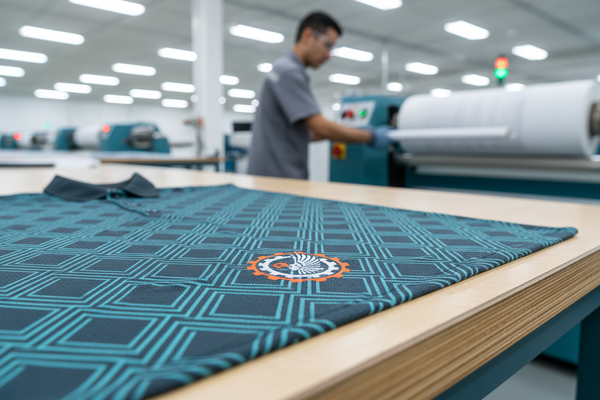
Disperse dyes operate differently. The dye molecules are not chemically bonded to the polyester fiber—they are physically trapped within the polymer matrix. The disperse dye binding process works like this: the dye is solubilized in the dye bath under high temperature (typically 130°C for atmospheric dyeing) and pressure. The heat causes the polyester polymer chains to expand, allowing dye molecules to penetrate the fiber structure. As the fabric cools, the polymer chains contract, trapping the dye inside. The dye is physically locked in place.
The binding mechanism has implications for colorfastness. If the dye particles aren't properly trapped—either because the temperature was too low, the pressure was inadequate, or the wash-off process wasn't thorough—the dye can migrate out of the fiber over time. This is the root cause of fading in polyester-blend fabrics.
Dual dye systems are required for 65/35 poly-cotton blends. The cotton portion of the fabric is dyed with reactive dyes. The polyester portion is dyed with disperse dyes. The two dyeing processes occur in sequence, with different temperature and chemistry requirements. This is why dyeing poly-cotton blends is more expensive than dyeing single-fiber fabrics—the complexity doubles.
One more physics point: the piqué double-knit geometry affects dye uptake. The raised honeycomb texture on the fabric face creates more surface area than a flat knit. More surface area means more dye absorption—but also more exposed dye particles that can rub off or fade. This is why piqué fabrics require careful dye formulation and thorough wash-off to achieve the same colorfastness as flat knits.
3. Workshop Execution: Calibrating the Disperse Dye Process for Piqué Polos
The dyeing process—whether reactive, disperse, or dual system—requires precise control of time, temperature, and chemistry. Small variations in any parameter can affect colorfastness and consistency.
Disperse dye formulation starts with the dye bath. Disperse dyes are insoluble in water—they're dispersed as fine particles in the bath. The dye is solubilized under high heat, absorbed into the polyester fibers, and fixed through heat-setting. The carrier system is critical: certain chemicals help the dye penetrate the polyester fiber structure, facilitating the molecular binding process. Temperature must be controlled to ±2°C during the dyeing cycle.
Reactive dye formulation for the cotton portion of the fabric uses a different chemistry. The dye is solubilized in a water-based bath and reacts with the cotton cellulose under alkaline conditions. The reaction is temperature-sensitive, requiring precise pH and temperature control. After dyeing, the fabric is washed to remove unfixed dye—a process called wash-off. If the wash-off is inadequate, the unfixed dye will bleed during subsequent launderings.
Wash-off is the most critical—and most frequently skipped—step in the dyeing process. After the dye is fixed, the fabric is washed repeatedly to remove unfixed dye particles. For disperse dyes, this is particularly important because unfixed dye particles can remain on the fiber surface, causing crocking (color transfer during rubbing) and washing fade. The wash-off process for disperse dyes typically requires multiple rinses at progressively lower temperatures.
Heat-setting is the final step. The fabric is heated to 180–200°C to crystallize the polyester polymer structure, locking the dye particles in place. If the heat-setting temperature is too low, the polymer chains remain mobile and the dye can migrate. If the temperature is too high, the polymer structure degrades. The window is narrow—and quality mills control it within ±5°C.
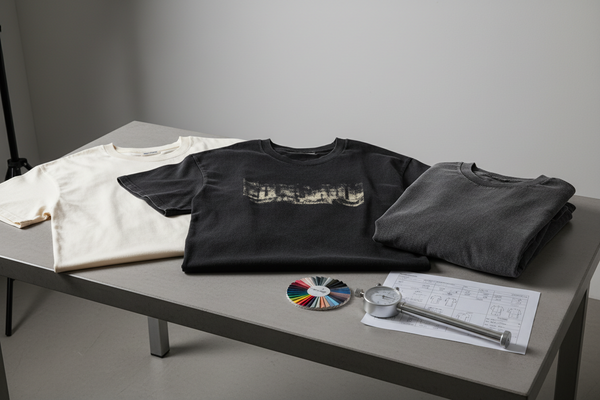
One universal rule for polo dyeing: require lab dips and wash tests on the actual production fabric before approving the color. The lab dip—a small sample of the dyed fabric—shows the color under standardized lighting. The wash test shows the colorfastness. Approve both—not just the color.
4. Risk Factors: Preventing Severe Operational Flaws in Bulk Dyeing Runs
Bulk dyeing amplifies every small variance. A 2°C difference in dyeing temperature changes the color depth. A 10% variation in wash-off time changes the colorfastness. Here are the operational failures I see most often in piqué polo programs—and how to prevent them.
Dual-contrast trim color bleeding is the most common failure in corporate uniform programs. The contrast trim on collars and cuffs looks clean at delivery. After 10 commercial launderings, the trim color bleeds into the body fabric. The root cause: different dye affinities between the trim fabric and the body fabric—especially across cotton and polyester components. The fix: specify AATCC Grade 4+ color fastness on all contrast components and test the full assembled garment, not just the individual fabrics. If the trim is polyester and the body is 65/35, the disperse dye binding on the trim must be verified independently.
Dye migration under heat is the invisible failure. The fabric passes the colorfastness test at room temperature. But during embroidery or industrial laundering, the fabric is heated to 150–180°C. The disperse dye in the polyester portion sublimes and migrates into adjacent fibers or transfer paper. The fix: require a dye migration test—heat the fabric to 180°C and check for color transfer to an adjacent white fabric. If the dye migrates, the disperse dye binding was inadequate.
Inadequate wash-off is the hidden driver of progressive fading. The unfixed dye particles on the fiber surface are removed progressively during laundering, causing gradual color loss. The root cause: the factory shortened the wash-off cycle to save time and money. The fix: require AATCC 61 accelerated laundering testing with Grade 4.0 or higher on color change and staining. The test simulates 20+ commercial wash cycles and identifies wash-off failures before the uniforms reach your crews.
Color inconsistency across production lots is the most visible failure. The first batch of polos matches the Pantone chip. The second batch is slightly lighter. The third batch is slightly darker. The root cause: inadequate color matching protocols or inconsistent dyeing conditions. The fix: require physical color standards—not digital proofs—and require the supplier to match them within an acceptable tolerance. For large programs, consider ordering all fabric from a single dye lot.
5. Procurement Ledger: Cost Amortization Specs for Bulk Piqué Polo Drops
Let's talk about the actual cost structure. The per-unit price of a piqué polo breaks down into materials, labor, dyeing, decoration, and overhead—but the proportions shift dramatically with fabric choice and dyeing method.
Materials run $4–8 per polo for 200 GSM piqué, depending on fiber composition. 100% cotton piqué sits at the higher end of this range. 65/35 poly-cotton blends offer cost savings while maintaining durability. 100% polyester CoolDry piqué sits in the mid-range. The blend ratio affects the dyeing process: cotton-rich blends require reactive dyes; polyester-rich blends require disperse dyes; 65/50 blends require dual dye systems at a premium.
Dyeing adds $1–3 per polo depending on the system used. Standard reactive dyeing (cotton) is the least expensive—$1–1.50 per garment. Disperse dyeing (polyester) is moderate—$1.50–2.50 per garment. Dual dye systems (poly-cotton blends) are the most expensive—$2–3 per garment because of the double dyeing process. The additional cost is significant but essential for color consistency and wash durability across both fiber types.
Labor runs $3–6 per polo for cutting, sewing, and finishing. This is where the MOQ math matters. A factory's setup cost for a production run is fixed—pattern grading, cutting table setup, sewing line configuration. At 200 units, you're paying $2–3 per polo in setup amortization. At 500 units, it drops to $1–2. At 1,000 units, it drops to $0.50–1.00. The MOQ isn't arbitrary—it's the point where the factory's setup cost becomes economically viable for them and cost-effective for you.
Decoration varies by method. Embroidery: $8–18 per polo depending on stitch count, plus $45–95 digitizing fee. DTF: $8–14 per polo for full-color designs. Sublimation: $10–18 per polo for all-over prints on polyester. Screen print: $4–8 per polo for 2–3 colors at 200+ units. The decoration cost often exceeds the garment cost on small runs.
Overhead includes shipping, duties, packaging, and quality control. Budget $2–4 per polo for freight from Asia to a US warehouse. Add $0.50–1.00 for polybagging and cartoning. QC inspection adds $0.50–1.00 per polo. Total landed cost for a 200 GSM 65/35 poly-cotton piqué polo with dual dye system and 2-color screen print at 200 units: roughly $18–24 per unit. At 500 units: $15–20. At 1,000 units: $13–17. The curve flattens after 500 units.
One cost trap for hospitality programs: rush dyeing fees. If you need custom-dyed fabric in under 10 days, expect to pay a 20–30% premium for expedited dyeing. The factory prioritizes your order on the dye line, which means bumping other customers. That premium is avoidable if you plan 8–10 weeks ahead.
6. Engineering Benchmark Profiles: AATCC/ASTM Lab Threshold Metrics
| Test Method | Parameter | Acceptance Threshold | Failure Mode |
|---|---|---|---|
| AATCC 61 | Colorfastness to Laundering | ≥ 4.0 (Gray Scale) after 20 cycles | Progressive fading; color transfer to other garments |
| AATCC 8 | Colorfastness to Crocking | ≥ 4.0 (dry) / ≥ 3.0 (wet) | Color transfer to other surfaces; trim bleeding |
| AATCC 135 | Dimensional Stability (shrinkage) | ≤ 3% warp / ≤ 5% weft after 5 cycles | Fit distortion; collar misalignment |
| Dye Migration Test | Dye Sublimation Under Heat | No transfer to adjacent white fabric at 180°C | Color migration into trim; sublimation staining |
| ASTM D3512 | Pilling Resistance | Grade 4+ | Surface fuzz; professional appearance degradation |
| ISO 3801 | Fabric Weight (GSM) | Tolerance: -2.5% to +5% of spec | Inconsistent weight; wrong hand feel |
These thresholds represent the minimum standards for no-fade piqué polo programs. If your supplier can't commit to these numbers in writing, or won't provide independent lab results, you're buying on faith. And faith doesn't survive the first commercial laundry cycle.
7. Fatal Sourcing Gaps: Destructive Blindspots in Quality Control
Most polo quality control plans focus on what you can see: print alignment, seam straightness, collar shape. But the failures that kill uniform programs are invisible at the inspection table. They show up in the laundry room, on the employee's body, or in the returns pile six months later.
The dye substitution. The buyer specifies a dual dye system for 65/35 poly-cotton. The factory uses standard disperse dyes for the polyester portion—cheaper, faster—and skips the reactive dye step for the cotton. The fabric passes the weight and color inspection. But the cotton portion of the fabric fades faster than the polyester portion. The result: after 10 washes, the polo looks uneven—lighter in the cotton areas, darker in the polyester areas. The fix: require AATCC 61 colorfastness testing on every production lot. If the cotton portion fades faster than the polyester, the dual dye system wasn't used.
The wash-off skip. The wash-off process is an extra step. The factory skips it to save time and money. The fabric passes the color inspection—the color is right, the hand feel is acceptable. But after the first commercial wash, the unfixed dye particles bleed out. The polo fades faster than expected. The fix: require a simple rub test on every production lot. Rub a clean white cloth firmly across the fabric surface. If color transfers to the cloth, the wash-off was inadequate. Reject the lot.
The heat-set shortcut. The heat-setting process is energy-intensive. The factory lowers the temperature or shortens the time to save cost. The fabric passes the color inspection. But the disperse dye isn't properly fixed—the polymer chains haven't crystallized. The dye migrates under subsequent heat—during commercial drying, during decoration curing. The fix: require the dye migration test—heat the fabric to 180°C and check for color transfer. If the dye migrates, the heat-setting was inadequate. Reject the lot.
The trim mismatch. The trim fabric is from a different supplier, a different dye lot. The color matches at delivery. But the trim has a different dye affinity than the body fabric—especially if it's a different blend. After 20 washes, the trim color shifts differently than the body. The contrast is gone. The fix: require that all trim fabric comes from the same dye house as the body fabric. If it can't, require physical color standards and wash testing of the full assembled garment—not just the individual fabrics.
8. Supply Chain FAQ Summary: Verified Action Ledger FAQ
Q: What's the difference between reactive dyes and disperse dyes for polo fabrics?
Reactive dyes chemically bond with cotton fibers, creating a permanent color lock that penetrates the fiber structure and delivers excellent wash fastness on natural fibers. Disperse dyes are physically trapped within polyester polymer chains through a high-heat pressurized process. For poly-cotton blends, both dye types are used—reactive for the cotton portion, disperse for the polyester—to ensure consistent color across the entire fabric.
Q: Can I sublimate on a 65/35 poly-cotton piqué polo?
Yes, but with limitations. Sublimation dye only bonds with polyester fibers through the disperse molecular binding process. On 65/35 poly-cotton, only the polyester portion (35%) accepts the dye. The result: a washed-out, faded look that's not commercially viable for full-color designs. For sublimation, specify 100% polyester or minimum 80% polyester content. For 65/35 blends, screen print or DTF are better options.
Q: What's the typical lead time for a custom-dyed piqué polo program?
Assuming a 200-unit run with custom-dyed 200 GSM 65/35 poly-cotton piqué using a dual dye system: 10–14 days for fabric dyeing, 10–14 days for production, 5–7 days for QC and packaging, and 12–18 days for sea freight. Total: 37–53 days. Express Manufacturing Lane can reduce production by 50% at a 20–30% premium. Plan for the longer timeline.
Q: How do I verify that the disperse dyes are properly fixed to the polyester fibers?
Require AATCC 61 accelerated laundering testing with Grade 4.0 or higher on color change and staining. For polyester-dyed fabrics, also require a dye migration test—heat the fabric to 180°C and check for color transfer to an adjacent white fabric. If the dye migrates, the disperse dye binding was inadequate. The test identifies whether the high-heat pressurized dyeing process was properly executed.
Q: What's the real cost difference between single-dye and dual-dye systems at 200 units?
Single-dye system (100% cotton with reactive dyes): landed cost roughly $16–22 per unit with 2-color screen print. Dual-dye system (65/35 poly-cotton with reactive + disperse dyes): landed cost roughly $18–24 per unit. The dual-dye system offers superior color consistency across both fiber types and eliminates the fading mismatch that appears in single-dye blends. For a corporate program where color consistency is critical, the dual-dye system delivers better lifecycle value.
Q: How do I handle quality disputes with an overseas supplier regarding dyeing issues?
Three rules. First, get everything in writing: dyeing specs, test methods, acceptance criteria, and remedies. Second, require pre-production lab dips and wash tests on actual production fabric—not test swatches. Third, structure your payment terms to hold 20–30% until after shipment arrival, inspection, and AATCC 61 testing. If the supplier knows you can withhold payment, they'll prioritize your quality. If you pay 100% upfront, you're buying their problems.
This guide was developed by the sourcing team at apparellots.com, based on factory-floor experience and procurement data from hundreds of polo uniform programs. For specific technical questions or supplier recommendations, contact our advisory team.