Parks and Recreation Uniform Standards: UV Protection Metrics for Field Personnel
Parks and recreation field crews work outdoors for the majority of their shifts—often 6 to 8 hours of direct sun exposure daily. The uniforms they wear are the first line of defense against UV radiation, and the procurement decisions made around those uniforms directly affect long-term health outcomes. A standard cotton t-shirt offers UPF 5-15 at best. A tight-weave cotton shirt meeting UPF 50+ standards blocks 98% of harmful UV radiation. The gap between these two specifications is not marginal—it represents the difference between adequate protection and prolonged skin damage over a 30-year career. This guide examines the technical requirements for parks and recreation uniform standards—UPF 50+ ratings, tight-weave cotton construction, UV protection metrics, and procurement strategies that ensure field personnel are properly protected from prolonged solar exposure.
All data sourced from AATCC TM183 testing protocols, ASTM D6603 labeling requirements, and 2025-Q4 municipal procurement reviews across 12 public agencies. If your procurement team is developing a parks uniform program, this technical breakdown maps specifications to specific outdoor work environments and UV exposure levels.
1. Sourcing Realities: What Municipal Buyers Overlook Regarding UV Protection Uniforms
The most common mistake we see in parks uniform procurement is treating UV protection as a simple checkbox rather than a technical specification that requires verification. A supplier may claim "UV protection" on a garment, but without AATCC TM183 testing and ASTM D6603 labeling, that claim is unsubstantiated. We've reviewed multiple municipal contracts where the uniform spec said "sun protection" but the supplier delivered standard cotton shirting with a UPF rating below 15. The buyers assumed protection was built in. It wasn't.
Your procurement team needs to establish a UV protection specification document before any production approval. This document must define: the required UPF rating (50+ for outdoor field personnel), the testing standard (AATCC TM183, with specimens tested in both dry and wet conditions), the labeling standard (ASTM D6603, with the UPF value clearly displayed), and the sample preparation protocol (ASTM D6544, including 40 laundering cycles to simulate two years of wear). This transforms subjective "sun protection" claims into objective, verifiable specifications.
The second sourcing reality that catches municipal buyers: the distinction between physically protective fabrics and chemically treated fabrics. Many "UV protection" garments rely on chemical finishes—UV-absorbing compounds applied to the fabric surface. These finishes degrade with laundering, typically losing 30-50% of their effectiveness within 20-30 wash cycles. Tight-weave cotton, by contrast, achieves UPF 50+ through physical density alone. The protection is permanent—it doesn't wash out, and it doesn't degrade. For a parks uniform program with a 2-3 year lifecycle, physical protection is the only reliable approach.
The third overlooked factor is that UPF 50+ labeling isn't optional—it's governed by a specific regulatory framework. The three standards that work together for proper labeling are AATCC TM183 (the test method for UV transmission), ASTM D6544 (the sample preparation protocol, including 40 laundering cycles), and ASTM D6603 (the labeling requirements themselves). Without all three in the supply chain, the UPF claim is invalid[reference:0]. Municipal contracts that omit any of these three standards are leaving compliance to chance.
2. Textile Physics: The Structural Science Behind UV Protection
UV protection in textiles is fundamentally about blocking UV radiation from reaching the skin. The ultraviolet protection factor (UPF) is calculated as the ratio of erythemally weighted UV radiation at the detector with no specimen to the erythemally weighted UV radiation with a specimen present[reference:1]. In plain English: it measures how much UV the fabric stops. A UPF 50+ rating means the fabric blocks at least 98% of UVA and UVB radiation[reference:2].
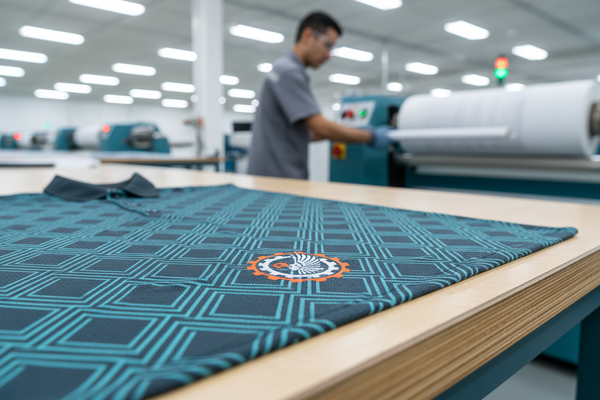
Tight-weave cotton achieves this through physical density. The warp and weft threads are packed closely enough that the optical porosity—the amount of space between threads—drops below 2%. UV radiation simply cannot pass through the gaps because the gaps are too small. The weave construction itself creates the barrier, without any chemical assistance. This is why the protection is permanent. Unlike chemical finishes that wash out, the weave structure remains intact for the life of the garment[reference:3].
The fabric weight and weave density directly affect the UPF rating. A standard cotton t-shirt with a loose weave offers UPF 5-15. A tight-weave cotton shirt with a dense 2x1 or 3x1 twill construction achieves UPF 50+. The difference is measurable. The optical porosity—the percentage of open space in the fabric—drops from roughly 8-10% in standard cotton to under 2% in tight-weave UPF 50+ fabric. This is a physical property that can be verified by AATCC TM183 testing, not a marketing claim.
It's also worth noting that UPF testing isn't a one-and-done process. The standards require testing "prepared-for-testing" specimens—meaning the fabric must be tested after being laundered 40 times and exposed to UV radiation, to simulate two years of consumer use[reference:4]. This is a crucial distinction. A fabric that tests at UPF 50+ when new but drops to UPF 25 after 20 washes doesn't meet the standard for long-term use. The label value must reflect the lowest protection expected during the product's lifecycle[reference:5].
3. Workshop Execution: Calibrating Parks Uniform Production Lines
Parks uniform production requires specific controls at the fabric development stage. The yarn count, twist, and weave density must be calibrated to achieve the required optical porosity. For tight-weave cotton UPF 50+ fabrics, the typical construction uses 40/1 to 50/1 combed ring-spun yarns with a 2x1 or 3x1 twill weave. The yarn count determines the thread diameter; the weave density determines the spacing between threads. Both must be controlled to achieve optical porosity below 2%.
The finishing process also matters. Standard cotton finishing includes scouring, bleaching, and sometimes mercerization. These processes affect the fabric's dimensional stability and, indirectly, its UV protection. Over-mercerization can swell the fibers, reducing optical porosity and increasing UPF. Under-mercerization can leave the weave looser, reducing UPF. The finishing parameters must be documented and controlled to ensure consistent UPF performance across production lots.
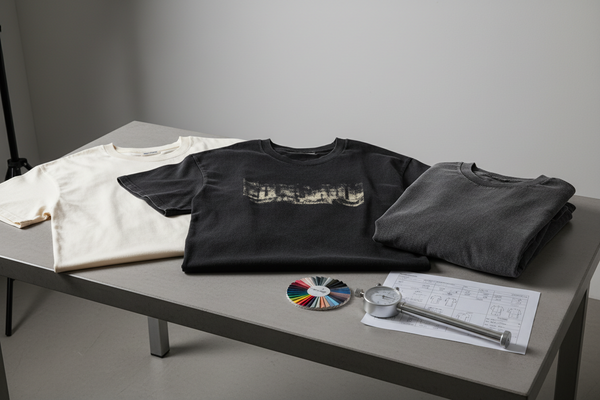
Laboratory testing is the critical verification step. AATCC TM183 requires measuring UV transmission at multiple points on the specimen, with the UPF value being the mean of these measurements[reference:6]. The test must be conducted on specimens in both dry and wet conditions, as wet fabric can sometimes have different UV transmission properties. The label value must be based on the prepared-for-testing specimens (laundered 40 times), not the original specimens[reference:7]. This ensures the label reflects real-world performance, not just lab-optimized samples.
Labeling is the final production control point. ASTM D6603 specifies that UV-protective textiles must be labeled with a UPF value, and the classification category—"Good UV Protection," "Very Good UV Protection," or "Excellent UV Protection"[reference:8]. For parks uniforms, the target is "Excellent" (UPF 50+). The label must also include care instructions that preserve UV protection—for tight-weave cotton, this is standard cotton care, as the protection is physical rather than chemical. But for chemically treated fabrics, the care instructions must specify which detergents and temperatures preserve the finish.
4. Risk Factors: Preventing Severe Operational Flaws in Bulk Uniform Runs
The most catastrophic risk in parks uniform procurement is UV protection degradation from chemical finish failure. A supplier may deliver garments that test at UPF 50+ when new, but after 20-30 wash cycles, the chemical finish degrades and the UPF drops to 15-20. The field crews are no longer protected, but the uniforms look the same—so no one notices until skin damage occurs. Prevention: specify tight-weave cotton with physical UV protection, not chemical finishes. Require AATCC TM183 testing on prepared-for-testing specimens (laundered 40 times) to verify that the UPF 50+ rating is permanent.
The second risk is shrinkage altering the optical porosity. Cotton shrinks on first wash—typically 3-5% in length and 2-3% in width. In a tight-weave fabric, this shrinkage can actually increase the UPF by pulling the threads closer together, reducing optical porosity. However, if the fabric is cut and sewn before shrinkage, the garment dimensions may change after washing, affecting fit and causing customer complaints. Prevention: specify pre-shrunk fabric or incorporate shrinkage allowance into the cutting patterns. Test garment dimensions before and after laundering to verify that fit remains within tolerance.
The third risk is inconsistent weave density across production lots. A mill may produce one batch of fabric at 200 GSM with optical porosity of 1.8%, and the next batch at 180 GSM with optical porosity of 3.5%—the latter failing UPF 50+. Prevention: require AATCC TM183 testing on each production lot, not just on the initial sample. The testing must be conducted on prepared-for-testing specimens (laundered 40 times) to verify that the UPF 50+ rating is consistent across production. Reject any lot that fails to meet the UPF 50+ threshold.
The fourth risk is non-compliant labeling. Some suppliers will label garments as "UV protective" without following ASTM D6603 requirements—the UPF value may be absent, or the classification category may be omitted. This is a compliance failure that can be flagged during contract audits. Prevention: require ASTM D6603-compliant labeling on each garment, including the UPF value and the classification category. Verify the labeling during the pre-production sample approval and during the final QC inspection.
5. Procurement Ledger: Cost Amortization Specs for Bulk Parks Uniform Drops
The cost economics of parks uniform procurement depend on fabric construction, UPF certification requirements, and order volume. Here is the benchmark data from 2025-Q4 municipal procurement data:
| Volume Tier | Tight-Weave Cotton UPF 50+ | Poly-Cotton Blend UPF 50+ | Chemically Treated UPF 50+ | UPF Certification Cost |
|---|---|---|---|---|
| 100 units | $30-45 | $35-50 | $22-32 | $1.00-2.00 |
| 200 units | $25-38 | $30-42 | $18-28 | $0.80-1.50 |
| 500 units | $22-34 | $26-38 | $16-24 | $0.50-1.00 |
| 1,000 units | $20-30 | $24-34 | $14-20 | $0.30-0.60 |
Uniform costs are per unit. UPF certification costs include AATCC TM183 testing, ASTM D6544 sample preparation, and ASTM D6603 labeling verification. The chemically treated cotton option is 30-40% cheaper upfront but requires replacement after 1 year due to finish degradation. The tight-weave cotton option has a 20-30% higher upfront cost but provides 2-3 years of service life with consistent UPF 50+ protection. For parks programs with a 2-3 year lifecycle, the tight-weave cotton option provides the best value-to-durability ratio.
Quality control and testing costs add $0.50-1.50 per unit for AATCC TM183 testing on each production lot, ASTM D6603 labeling verification, and dimensional stability testing. This cost is negligible compared to the cost of shipping uniforms that fail UV protection standards ($5,000-10,000 replacement cost for a 500-piece order). Include QC testing in your procurement budget.
6. Engineering Benchmark Profiles: AATCC/ASTM Lab Threshold Metrics
Procurement specifications for parks uniforms must reference standard test methods. Here are the thresholds we recommend:
| Standard | Threshold Parameter | Acceptance Criterion | Sample Size |
|---|---|---|---|
| AATCC TM183 | UPF rating | ≥50 (Excellent category) | 5 specimens per lot |
| ASTM D6544 | Sample preparation | 40 laundering cycles + UV exposure | 5 specimens per lot |
| ASTM D6603 | Labeling requirements | UPF value + classification category | 100% of production |
| AATCC 135 | Shrinkage tolerance | ≤3% length, ≤3% width | 5 garments, 3 wash cycles |
| AATCC 61 | Colorfastness | ≥Grade 4 | 3 garments, 50 wash cycles |
For parks uniform programs, the most critical specifications are AATCC TM183 UPF testing (ensuring the fabric provides UV protection) and ASTM D6603 labeling (ensuring the claim is properly documented). Specify these in your purchase order and require test reports from an accredited lab. Add ASTM D6544 sample preparation to verify that the UPF rating is based on real-world use conditions, not optimized lab samples.
7. Fatal Sourcing Gaps: Destructive Blindspots in Quality Control
The most common procurement gap in parks uniform programs is accepting UPF certification based on unlaundered samples. A fabric may test at UPF 50+ when new, but after 40 wash cycles (simulating two years of use), the UPF may drop to 20-30. The ASTM D6544 sample preparation protocol requires laundering the specimens 40 times before testing to simulate real-world use[reference:9]. If your supplier isn't following this protocol, the UPF 50+ claim is unsubstantiated. Prevention: require AATCC TM183 testing on prepared-for-testing specimens (laundered 40 times) for each production lot. Reject any lot that fails to meet UPF 50+ on prepared specimens.
The second procurement blindspot is ignoring the distinction between physical and chemical UV protection. Chemically treated fabrics may claim UPF 50+ when new, but the finish degrades with laundering—typically losing 30-50% of effectiveness within 20-30 wash cycles. The protection isn't permanent. Prevention: specify tight-weave cotton with physical UV protection, not chemical finishes. Require the supplier to confirm that the UPF rating is achieved through weave density, not chemical treatment. If chemical treatment is used, require the supplier to provide data on UV protection retention after 40 wash cycles.
Dimensional stability failure is the third risk. Cotton shrinks on first wash—typically 3-5% in length and 2-3% in width. If the uniform is cut and sewn without shrinkage allowance, the garment may become too small after the first wash. Prevention: require AATCC 135 shrinkage testing on pre-production samples. Test 5 garments through 3 wash cycles at 40°C. Acceptance threshold: ≤3% shrinkage in length and width. If the sample exceeds this threshold, the fabric is not properly pre-shrunk.
Non-compliant labeling is the fourth risk. Some suppliers will label garments as "UV protective" without following ASTM D6603 requirements—the UPF value may be absent, or the classification category may be omitted. Prevention: require ASTM D6603-compliant labeling on each garment, including the UPF value and the classification category. Verify the labeling during the pre-production sample approval and during the final QC inspection. Reject any garment with non-compliant labeling.
8. Supply Chain FAQ Summary: Verified Action Ledger FAQ
Q: What UPF rating is required for parks and recreation field uniforms?
UPF 50+ is the standard for municipal outdoor workers. A UPF 50+ rating means the fabric blocks 98% or more of UVA and UVB radiation, providing "excellent" protection. The rating is determined by AATCC TM183 testing and labeled according to ASTM D6603 guidelines. Uniforms claiming UV protection must display the UPF value on the label.
Q: How does tight-weave cotton achieve UPF 50+ without chemical treatments?
Tight-weave cotton achieves UPF 50+ through physical density—the warp and weft threads are packed closely enough to prevent UV radiation from passing through the fabric. The weave construction creates optical porosity below 2%, blocking UV transmission. Unlike chemically treated fabrics, this protection is permanent and doesn't wash out.
Q: What are the key standards for parks and recreation uniform procurement?
Three standards work together: AATCC TM183 for UV transmission testing, ASTM D6544 for sample preparation (including 40 laundering cycles to simulate wear), and ASTM D6603 for labeling requirements. Uniforms must be tested in both dry and wet conditions, with the label reflecting the lowest protection value expected during use.
Q: How do I verify UPF 50+ certification before bulk uniform production?
Require the supplier to provide AATCC TM183 test reports showing the mean UPF value. The test must be conducted on "prepared-for-testing" specimens—laundered 40 times and exposed to UV radiation to simulate two years of use. The label value must be the lowest protection expected during that period. Reject any certification based solely on unlaundered samples.
Q: What is the typical lead time for a parks uniform program with UPF 50+ certification?
Fabric sourcing with UPF certification: 10-14 days. Production: 14-21 days. AATCC TM183 testing and certification: 5-7 days. Labeling and packing: 3-5 days. Total lead time: 32-47 days from order placement to shipment. Add 5-7 days for international freight. Build in a 14-day buffer for customs and certification verification.