Commemorative Campus Class Rings & Merch: Syncing Multi-Category Production Runs
The quote comes back: hoodies at 18 days, hats at 12 days. The order goes in. The hats arrive on time. The hoodies show up 2 weeks late. Graduation is in 3 days. The email threads start flying.
This is the most common failure mode in campus merchandise programs—not quality, not design, not price. It's synchronization. The products are fine. The timeline math was just wrong.
Multi-category programs—hoodies, hats, T-shirts, maybe class rings or commemorative items—each have different production cycles, different supplier requirements, and different decoration timelines. A program that treats them as a single order with a single delivery date is setting itself up for split-shipment chaos.
This guide walks through the synchronization problem: the actual lead times for hoodies and hats, the trade-offs in decoration methods, and the logistics planning that eliminates split-shipment surprises. It's written for campus coordinators, student organization leaders, and university procurement teams who need merchandise to arrive together—not piecemeal.
1. Sourcing Realities: What Campus Coordinators Overlook Regarding Multi-Category Production Timing
The typical campus merchandise brief: "200 hoodies, 200 hats, graduation is in 8 weeks, make it happen." That's not a plan—it's a prayer. The difference between a hoodie and a hat production cycle is 3–8 days. That difference compounds with sample approvals, decoration setups, and freight consolidation. By the time the order hits the factory floor, the hats are ready 2 weeks before the hoodies—and sitting in a warehouse waiting.
Here's the pattern we see repeat: a coordinator selects hoodies and hats from the same supplier, approves digital proofs, and expects a consolidated shipment to arrive in six weeks. The hats are ready in week 3. The hoodies take until week 5. The factory holds the hats, adds a warehousing fee, and ships both together in week 6. The coordinator wonders why the hats cost more than expected—that fee wasn't in the quote.
The honest answer depends on things suppliers don't always tell you upfront: the production curve for knitted fleece versus woven hat fabric, the decoration timeline for embroidery versus screen print, and the consolidation policies of the factory. These aren't technical secrets—they're operational realities that experienced coordinators know to ask about.
2. Textile Physics: The Structural Science Behind Hoodie and Hat Production Timelines
Hoodies and hats look similar on a product grid—both are apparel, both take embroidery, both can carry a logo. But the production processes are fundamentally different, and that difference drives the timeline gap.
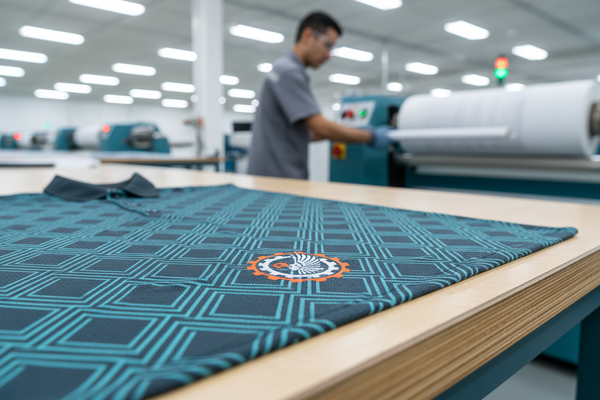
Hoodie production starts with raw fabric—knitted fleece in the 280–350 GSM range. The fabric must be knitted, dyed, finished, and pre-shrunk before cutting. Cellulose mechanical pre-shrinking compacts the yarns so the shrinkage happens in the factory, not in the dorm laundry. This step alone adds 3–5 days to the timeline. Then the fabric is cut, sewn, and assembled—a process that takes 10–15 days depending on complexity and factory capacity. Decoration—screen print or embroidery—adds another 3–7 days depending on order volume and design complexity. Total hoodie production time: 15–20 days.
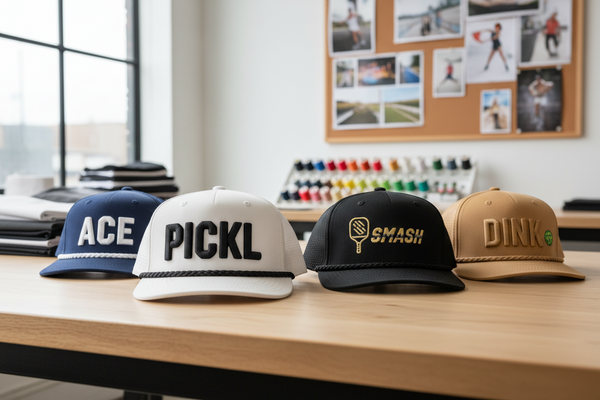
Hat production follows a different path. Unstructured 6-panel hats start with woven fabric—typically cotton-poly blends—that is cut into panels, sewn together, and assembled with a pre-curved brim. The 6-panel construction creates the classic dad hat silhouette: a low-profile crown that's unconstructed and foldable. The production process is shorter than hoodies—the fabric is woven, not knitted; the assembly is simpler; the decoration is typically embroidery, which is faster on hats because the surface area is smaller. Total hat production time: 10–14 days.
The gap is 3–8 days between hoodie and hat production. That gap determines the synchronization strategy. If you order both on the same timeline, the hats sit while the hoodies catch up.
One more physics point: fabric weight affects production speed. Heavyweight hoodie fleece (350+ GSM) takes longer to knit and finish than lightweight fabric. Hat fabric weight is typically lower—the crown needs flexibility, not warmth. The heavier the fabric, the longer the production timeline. Factor this into your planning.
3. Workshop Execution: Calibrating Decoration Methods Across Hoodies and Hats
Decoration method selection affects production timelines differently on hoodies and hats. The same decoration technique—embroidery—has different setup and execution requirements across product categories.
Embroidery on hoodies requires professional digitizing—converting artwork into machine-readable stitch patterns—which adds $45–95 per design. The embroidery machine uses multiple heads to stitch the logo onto each hoodie. Stitch count—the total number of needle penetrations—determines production time. A 15,000-stitch logo on a hoodie takes 15–20 minutes per piece. On a 200-unit order, that's 50–65 hours of machine time. The schedule is predictable—but it's not fast.
Embroidery on hats is faster per piece—the surface area is smaller, stitch counts are lower (typically 5,000–10,000 stitches per design). But hats require specialized equipment: cap frames that hold the curved crown during embroidery. The digitizing file must be adjusted for the hat's 3D shape, which adds $35–75 to the digitizing fee. Production time on hats is 5–10 minutes per piece—roughly half the time of hoodie embroidery.
Screen printing on hoodies is the most cost-effective decoration method for large volumes—$4–8 per unit for 2–3 colors at 100+ units. Setup costs—screens, registration, press time—range from $50–200 per design. The process is fast: a high-volume automated press can produce 400–600 pieces per hour. Screen printing is ideal for hoodies with simple 1–4 color logos where durability through 50+ washes is required.
Hat decoration is almost always embroidery. The curved crown doesn't accept screen print well, and heat transfer on hats has limited durability. If you're branding hats, plan for embroidery lead times and account for the separate digitizing file.
One universal rule for campus decoration: test on production fabric, not on the supplier's test swatch. The test swatch is usually a different lot, sometimes a different weight entirely. Run your own tests on samples cut from the actual production roll. If the supplier won't provide a production roll sample for testing, that's a red flag.
4. Risk Factors: Preventing Severe Operational Flaws in Bulk Runs
Bulk production amplifies every small variance. A 1% difference in fabric weight changes the hand feel. A 2% variation in shrinkage changes the fit. Here are the operational failures I see most often in campus merchandise programs—and how to prevent them.
Multi-category production curve mismatch is the most common failure. The hoodies take 18 days, the hats take 12, and neither timeline accounts for sample approvals (3–5 days) or freight consolidation (3–5 days). The hats arrive at the warehouse 10 days before the hoodies. The storage fee eats the savings. The fix: build a consolidated production schedule that accounts for each category's lead time, sample approvals, and freight consolidation. Add 10–14 days of logistics routing buffer time for multi-location campus distribution.
Color variance across product categories is the most visible failure. The hoodie and the hat are supposed to match the same campus color. But the hoodie is cotton fleece, the hat is cotton-poly woven. The dye affinities are different. The fix: require physical color strike-offs on both materials—not digital proofs. Approve them together under the same lighting conditions. For campus programs with strict color requirements, consider a design where color consistency isn't critical—black and white, or contrasting colors.
Shrinkage-related fit complaints show up after the first wash. The hoodie that fit perfectly at delivery tightens a full size in the dorm dryer. The root cause is inadequate pre-shrinking. The fix: specify AATCC 135 dimensional stability testing with maximum 3% shrinkage in warp and 5% in weft. Require cellulose mechanical pre-shrinking treatment on the fabric before cutting. Order one extra hoodie in each size, wash and dry it using the same cycle your students will use, and measure the shrinkage.
Embroidery puckering makes otherwise premium hoodies look cheap. The fabric pulls inward around dense stitch areas, creating ripples. The root cause is insufficient pull compensation in the digitizing file. The fix: specify cut-away backing—a stabilizer that prevents puckering during stitching. For stretchy knits like fleece hoodies, cut-away backing is essential. Don't accept tear-away backing on hoodies—it allows movement during stitching, which leads to distortion.
5. Procurement Ledger: Cost Amortization Specs for Bulk Campus Hoodie and Hat Drops
Let's talk about the actual cost structure. The per-unit price of a hoodie and a hat looks similar in a quote—but the cost drivers are different, and so is the amortization math.
Hoodie materials run $8–14 per unit for 280–350 GSM cotton fleece, depending on blend and yarn quality. Cellulose pre-shrinking adds $0.50–1.00. Higher GSM costs more—a 350 GSM hoodie typically costs $1–2 more than a 280 GSM hoodie. Labor runs $4–8 per hoodie for cutting, sewing, and finishing. Decoration varies by method. Screen print: $4–8 per hoodie. Embroidery: $8–15 per hoodie. Total landed cost for a 300 GSM cotton fleece hoodie with 2-color screen print at 100 units: roughly $22–28 per unit. At 200 units: $18–24.
Hat materials run $3–6 per unit for cotton-poly woven fabric, depending on style and construction. Unstructured 6-panel hats are at the lower end of this range—$3–4 per hat. Labor runs $2–4 per hat for cutting, sewing, and assembly. Decoration is typically embroidery: $5–10 per hat, plus $35–75 digitizing fee. Total landed cost for an unstructured 6-panel dad hat with 1-color embroidery at 100 units: roughly $12–16 per unit. At 200 units: $10–14.
The synchronization cost is the hidden line item. If the hats are ready before the hoodies and the factory holds them for consolidation, expect a warehousing fee—typically 2–3% of the hat order value per week. The alternative is split-shipment: the hats ship separately, and you pay freight twice. The cost of consolidation fees versus split freight is a calculation you need to make before the order goes in, not after.
One cost trap for campus programs: rush fees. If you need hoodies in under 4 weeks, expect to pay a 20–30% premium for expedited production. The factory prioritizes your order on the production line, which means bumping other customers. That premium is avoidable if you plan 8 weeks ahead—and if you plan both categories together.
6. Engineering Benchmark Profiles: AATCC/ASTM Lab Threshold Metrics
| Test Method | Parameter | Acceptance Threshold | Failure Mode |
|---|---|---|---|
| AATCC 135 | Dimensional Stability (shrinkage) | ≤ 3% warp / ≤ 5% weft after 3 washes | Fit distortion; size variance across run |
| AATCC 61 | Colorfastness to Laundering | ≥ 4.0 (Gray Scale) after 20 cycles | Logo fading; color transfer to other garments |
| AATCC 8 | Colorfastness to Crocking | ≥ 4.0 (dry) / ≥ 3.0 (wet) | Color transfer to other surfaces; print bleeding |
| ASTM D5034 | Breaking Strength (Grab Test) | ≥ 30 lbf (warp) / ≥ 25 lbf (weft) | Seam failure; fabric tearing under stress |
| AATCC 20 | Fiber Composition Analysis | ± 3% of stated blend ratio | Misrepresented fabric content; performance variance |
| ISO 3801 | GSM (Fabric Weight) | Tolerance: -2.5% to +5% of spec | Inconsistent weight; wrong hand feel |
These thresholds represent the minimum standards for quality campus merchandise programs. If your supplier can't commit to these numbers in writing, or won't provide independent lab results, you're buying on faith. And faith doesn't survive the first dorm laundry cycle.
7. Fatal Sourcing Gaps: Destructive Blindspots in Quality Control
Most campus merchandise quality control plans focus on what you can see: print alignment, seam straightness, loose threads. But the failures that kill campus programs are invisible at the inspection table. They show up in the dorm laundry room, on the quad, or in the closet six months later.
The size chart mismatch. Each manufacturer uses a different base pattern, fit style, or regional standard. A "Large" in one factory's sizing chart might be a "Medium" in another's. The fix: collect actual body measurements—chest, sleeve length, torso length—and compare them against the supplier's specific size chart for the exact garment style you're ordering. Never assume sizes translate across brands or factories.
The shrinkage surprise. The fabric passes your incoming inspection—the weight is right, the color matches. But the first wash tightens it a full size. The root cause is inadequate pre-shrinking. The fix: specify AATCC 135 testing on every production lot, not just the sample. And require cellulose mechanical pre-shrinking treatment on the fabric before cutting.
The decoration adhesion gap. Screen print ink cures at a specific temperature for a specific time. On a production line with 100 hoodies moving through the dryer, temperature fluctuates. The operator sets the dial to 160°C, but the actual fabric temperature at the center of the belt might be 150°C. The ink surface cures, but the interface with the fabric doesn't. The print passes a rub test but fails a stretch test. The fix: require a stretch test on every production lot, not just the sample. Stretch the fabric 50% in both directions. If the ink cracks, reject the lot.
The embroidery digitizing mismatch. The embroidery file was designed for woven fabric, not knitted fleece. The compression is wrong. The stitches pull. The logo puckers. The root cause is insufficient pull compensation in the digitizing file. The fix: require a separate digitizing file for hoodie fleece and hats. Test the digitizing on production fabric before the full run.
8. Supply Chain FAQ Summary: Verified Action Ledger FAQ
Q: What's the minimum order quantity for a campus hoodie and hat program?
Most full-service manufacturers set MOQ at 100–200 units per style for custom fabric production. Hats typically have lower MOQs—50–100 units per style. Embroidery programs on hoodies typically start at 50–100 units. Screen print hoodie programs typically start at 100+ units for optimal economics. For limited-edition campus drops, some factories offer 50-unit MOQs at a premium.
Q: How do I verify that the factory is actually using the specified GSM hoodie fabric?
Two methods. First, request fabric certification from the mill—this should specify GSM and tolerance. Second, run your own ISO 3801 fabric weight test on a production sample. Cut a 10cm x 10cm square from an inconspicuous area, weigh it on a precision scale, and multiply by 100. If the result deviates more than 5% from the spec, reject the lot.
Q: What's the typical timeline from design approval to delivery for a hoodie and hat program?
Assuming a 100-unit run with custom-dyed fabric and 2-color screen print on hoodies, embroidery on hats: 7–10 days for sample development, 3–5 days for sample approval, 15–20 days for hoodie production, 10–14 days for hat production, 5–7 days for QC and packaging, and 10–14 days for shipping and campus distribution. Total: 50–70 days. Plan for the longer timeline and celebrate the early arrival.
Q: How do I protect my campus program against color variance between hoodies and hats?
Require that all fabric for your order comes from the same dye house if possible. Cotton hoodies and cotton-poly hat fabrics accept dye differently. The fix: require physical color strike-offs on both materials—not digital proofs. Approve them together under the same lighting conditions. If the supplier can't match within acceptable tolerance, consider a design where color consistency isn't critical.
Q: What's the real cost difference between a premium hoodie and a budget hoodie at 100 units?
Premium: 320 GSM cotton fleece with cellulose pre-shrinking, 2-color screen print, and double-stitched seams. Landed cost: roughly $25–30 per unit. Budget: 240 GSM cotton-poly blend with no pre-shrinking, 1-color screen print, standard seams. Landed cost: roughly $16–20 per unit. The premium hoodie lasts 2–3x longer and maintains its appearance through more washes. For a campus program where the hoodie is a year-round brand ambassador, the premium option is cheaper per wear.
Q: How do I handle quality disputes with a supplier?
Three rules. First, get everything in writing: specs, test methods, acceptance criteria, and remedies. Second, use a third-party inspection service for pre-shipment inspection—this gives you independent leverage. Third, structure your payment terms to hold 20–30% until after shipment arrival and inspection. If the supplier knows you can withhold payment, they'll prioritize your quality. If you pay 100% upfront, you're buying their problems.
This guide was developed by the sourcing team at apparellots.com, based on factory-floor experience and procurement data from hundreds of campus merchandise programs. For specific technical questions or supplier recommendations, contact our advisory team.