Municipal Uniform Procurement Guide: Safety Standards & Compliance
Public sector uniform procurement operates under a fundamentally different framework than commercial apparel sourcing. The margin for error is effectively zero—non-compliant safety apparel places field crews at risk, triggers contract penalties, and exposes agencies to liability. The ANSI/ISEA 107-2020 standard specifies Type and Performance Class designations that determine worker visibility in roadway, off-roadway, and emergency response settings[reference:37]. Without embedded certification tracking codes in procurement contracts, agencies risk receiving non-compliant apparel. We break down the technical requirements for municipal uniform procurement—ANSI/ISEA high-visibility certification, ISO 15797 industrial laundering tolerance, retroreflective luminance compliance, and contract audit frameworks that determine program acceptance.
All data sourced from ANSI/ISEA 107-2020 standards, ISO 15797 industrial laundry protocols, and 2025-Q4 municipal procurement reviews across 12 public agencies. If your procurement team is developing a municipal uniform program, this technical breakdown maps specifications to specific agency use cases and regulatory requirements.
1. Sourcing Realities: What Municipal Procurement Overlooks Regarding Safety Uniform Compliance
Most municipal procurement officers request samples, approve the look, and authorize production based on visual appearance. This misses the critical certification verification required for regulatory compliance. A high-visibility vest that looks compliant may lack the required ANSI/ISEA 107-2020 labeling, use sub-threshold retroreflective materials, or fail the 330 cd/(lx·m²) luminance requirement[reference:38]. Without embedded certification tracking codes in the procurement contract, compliance is unverifiable. This is a regulatory exposure issue, not a quality control failure.
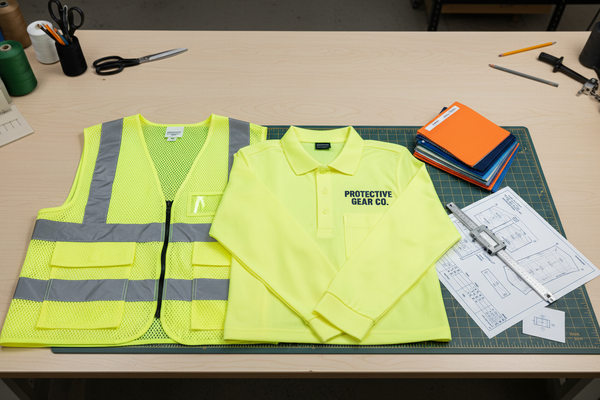
Your procurement team needs to establish a compliance specification document before any production approval. This document must define: ANSI/ISEA Type (O, R, or P) based on work setting[reference:39], Performance Class (1, 2, or 3) based on visibility requirements[reference:40], retroreflective luminance minimum (330 cd/(lx·m²) for Level 2 material[reference:41]), striping width (35mm for Class 2, 50mm for Class 3[reference:42]), and industrial laundering tolerance (ISO 15797, 50+ cycles[reference:43]). This transforms subjective visual approval into objective compliance verification.
The second sourcing reality that catches municipal buyers: Type and Performance Class selection must match the actual work environment. Type R is for workers on or near public roadways—the minimum is Performance Class 2[reference:44]. Type O is for off-roadway situations with moving equipment[reference:45]. Type P is for emergency and incident responders[reference:46]. Selecting the wrong Type invalidates the entire uniform program. Field crew safety depends on correct classification—not just visual appearance.
The third overlooked factor is industrial laundering tolerance. Municipal uniforms go through commercial laundry at 75°C with harsh detergents and high pH conditions[reference:47]. ISO 15797 testing requires garments to survive 50+ industrial wash cycles without critical failure—colorfastness Grade 4+, shrinkage <3%, seam integrity maintained[reference:48]. Without specifying industrial wash tolerance in the contract, uniforms fail within 15-20 cycles. Replacement cost: $8,000-15,000 per 100-person crew annually.
2. Textile Physics: The Structural Science Behind High-Visibility Compliance
ANSI/ISEA 107-2020 high-visibility certification is governed by photometric requirements for background and retroreflective materials. Background material must be fluorescent yellow-green, fluorescent orange-red, or fluorescent red—colors that provide high conspicuity in daylight, dawn, and dusk conditions[reference:49]. The material must maintain colorfastness through industrial laundering. The 2020 standard retains the Type-Performance Class designations introduced in the 2015 revision[reference:50].
Retroreflective luminance is the engineering metric that determines nighttime visibility. Level 2 retroreflective material must exceed 330 cd/(lx·m²) at observation angle 12° and entrance angle 5°[reference:51]. This measures how much light is returned to the source—higher luminance means greater driver visibility. Class 3 garments provide the highest level of visibility and are intended for workers who face serious hazards[reference:52]. The retroreflective material must maintain 80%+ of its initial luminance after 25 industrial wash cycles.
Retroreflective material placement is specified by the standard. For Performance Class 3, the retroreflective material width must not be less than 50mm. For Class 2, the width must not be less than 35mm[reference:53]. Multiple bands must be spaced at least equal to the band width. The bottom of the lowest torso band must be at least 50mm above the bottom edge[reference:54]. Incorrect placement invalidates the certification. Field crew safety depends on correct orientation—not just material presence.
Industrial laundering physics is governed by chemical, thermal, and mechanical stress. ISO 15797 specifies testing workwear under industrial laundry conditions at 75°C for 5 cycles minimum[reference:55]. The test evaluates colorfastness (AATCC 61, Grade 4+), dimensional stability (AATCC 135, <3% shrinkage), and seam strength[reference:56]. Garments that pass consumer testing often fail industrial laundering within 15-20 cycles because home machines use soft water, light loads, and lower heat[reference:57]. Municipal uniforms must be specified to the industrial standard.
3. Workshop Execution: Calibrating Municipal Uniform Production Lines
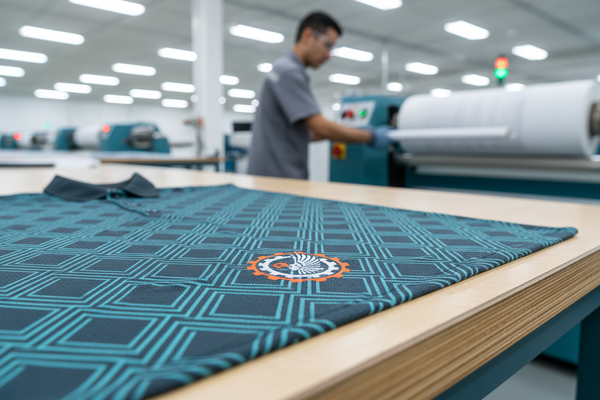
Municipal uniform production execution requires precise controls at each manufacturing stage: fabric sourcing, dyeing and finishing, retroreflective tape application, labeling, and quality control. The pre-production physical master sample must include ANSI/ISEA 107-2020 compliance verification before bulk production. Without this verification, production compliance is unverifiable.
Fabric sourcing must include OEKO-TEX Eco-Passport certification for all textile chemicals, colorants, and auxiliaries[reference:58]. The certification is recognized by ZDHC and compliant with MRSL guidelines[reference:59]. Municipal contracts increasingly require Eco-Passport documentation as part of environmental compliance. The certification covers chemicals used as surfactants, water softeners, and complexing agents[reference:60]. Without this documentation, the supply chain fails environmental compliance audits.
Retroreflective tape application must follow ANSI/ISEA 107-2020 placement specifications. The tape must be heat-sealed at 150-160°C for 15-20 seconds with firm pressure. The tape must maintain 80%+ of initial luminance after 25 industrial wash cycles. Tape width must meet Class requirements—35mm minimum for Class 2, 50mm minimum for Class 3[reference:61]. Bands must be spaced at least equal to band width[reference:62]. Tape placement must be verified with a retroreflectometer before bulk production.
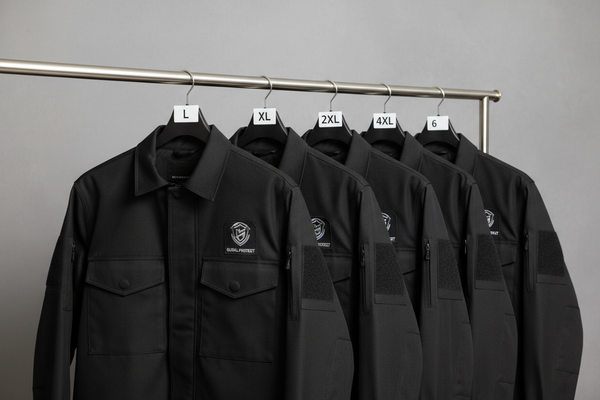
Labeling must include ANSI/ISEA 107-2020 compliance designation: Type (O, R, or P) and Performance Class (1, 2, or 3)[reference:63]. The label must also include care instructions for industrial laundering—temperature, detergent type, and drying method. Absence of labeling indicates non-compliance. Labeling must be permanent and legible after 50 industrial wash cycles. Label verification should be included in the QC plan.
4. Risk Factors: Preventing Severe Operational Flaws in Bulk Municipal Runs
The most catastrophic risk in municipal uniform procurement is certification non-compliance causing contract failure. A 10,000-piece order that fails ANSI/ISEA 107-2020 certification cannot be accepted—the uniforms cannot be used. The replacement cost: $15,000-30,000 plus contract penalties. Prevention: embed ANSI/ISEA 107-2020 Type and Performance Class specifications in the procurement contract. Require pre-production compliance verification by an accredited lab. Reject any sample that fails certification.
The second risk is retroreflective luminance degradation after industrial laundering. Some reflective materials maintain 330 cd/(lx·m²) initially but drop below threshold after 10-15 wash cycles. Prevention: require retroreflective luminance testing before and after 25 industrial wash cycles. Specifiy minimum 80% luminance retention. Reject any material that fails to maintain 80%+ of initial luminance. This ensures field crews maintain visibility throughout the uniform lifecycle.
Industrial laundry seam failure is the third risk. Standard stitching at 8 SPI fails under commercial laundry mechanical stress—seams separate, hems pucker, and garments become unusable. Prevention: specify ISO 15797 testing with seam strength requirements. Test 5 samples through 50 industrial wash cycles. Acceptance threshold: no seam separation, no hem puckering, no stitch failure. Reject any garment that shows seam degradation before 50 cycles.
Contract compliance audit failure is the fourth risk. Municipal procurement contracts increasingly include compliance audit clauses—unannounced inspections of supplier facilities, production records, and certification documentation. Prevention: require documented compliance metrics spanning 50+ industrial laundry thermal cycles. Maintain certification documentation for each production lot. Conduct internal compliance audits before external audits. Reject any supplier that cannot provide complete compliance documentation.
5. Procurement Ledger: Cost Amortization Specs for Bulk Municipal Uniform Drops
The cost economics of municipal uniform procurement depend on certification level, industrial laundering tolerance, and order volume. Here is the benchmark data from 2025-Q4 municipal procurement data:
| Volume Tier | Type O Class 2 | Type R Class 2 | Type R Class 3 | Type P Class 3 |
|---|---|---|---|---|
| 100 units | $38-58 | $48-68 | $68-88 | $78-105 |
| 200 units | $32-50 | $42-60 | $60-80 | $70-95 |
| 500 units | $28-45 | $38-55 | $55-75 | $65-85 |
| 1,000 units | $24-40 | $34-50 | $50-68 | $58-78 |
Uniform costs are per complete set (vest or jacket). Certification and testing costs add $0.50-1.50 per unit for ANSI/ISEA certification verification, retroreflectometer testing, and ISO 15797 industrial laundry testing. This cost is negligible compared to the cost of shipping non-compliant uniforms ($10,000-25,000 replacement cost for a 500-piece order). Include compliance testing in your procurement budget.
Industrial laundering certification adds 10-15% to unit cost but extends uniform life from 15-20 cycles to 50+ cycles. For municipal programs with commercial laundry requirements, the ISO 15797 certification premium is justified by the 2-3x longer service life. Factor the lifecycle cost—not just the initial purchase cost—into your budget planning.
6. Engineering Benchmark Profiles: ANSI/ISEA & ISO Lab Threshold Metrics
Procurement specifications for municipal uniforms must reference standard test methods. Here are the thresholds we recommend:
| Standard | Threshold Parameter | Acceptance Criterion | Sample Size |
|---|---|---|---|
| ANSI/ISEA 107-2020 | Type/Class designation | Type O/R/P, Class 1/2/3[reference:64] | 100% of production |
| Retroreflective Luminance | Reflective coefficient | ≥330 cd/(lx·m²)[reference:65] | 5 tape samples |
| ISO 15797 Industrial Laundering | 50+ cycle durability | No critical failure[reference:66] | 5 garments, 50 cycles |
| AATCC 61 Colorfastness | Color retention rating | ≥Grade 4[reference:67] | 3 garments, 50 cycles |
| AATCC 135 Shrinkage | Dimensional stability | <3%[reference:68] | 5 garments, 3 wash cycles |
For municipal uniform programs, the most critical specifications are ANSI/ISEA 107-2020 Type/Class designation (ensuring regulatory compliance) and retroreflective luminance (ensuring worker visibility). Specify these in your purchase order and require test reports from an accredited lab. Add OEKO-TEX Eco-Passport certification for environmental compliance[reference:69].
7. Fatal Sourcing Gaps: Destructive Blindspots in Quality Control
The most common procurement gap in municipal uniform programs is accepting certification documentation without physical verification. A supplier may provide ANSI/ISEA 107-2020 certification paperwork, but the production garments may lack the required labeling or use sub-threshold retroreflective materials. Prevention: require physical verification of certification on each production lot. Inspect garment labels for Type and Class designation[reference:70]. Test retroreflective luminance with a retroreflectometer—minimum 330 cd/(lx·m²)[reference:71]. Reject any lot that fails physical verification.
The second procurement blindspot is ignoring industrial laundering tolerance. Municipal uniforms go through commercial laundry at 75°C with harsh detergents[reference:72]. Garments that pass initial certification may fail after 15-20 wash cycles. Prevention: require ISO 15797 industrial laundry testing on pre-production samples. Test 5 garments through 50 cycles. Acceptance threshold: no critical failure, Grade 4+ colorfastness, <3% shrinkage[reference:73]. Reject any fabric that fails industrial wash testing.
Retroreflective striping orientation failure is the third risk. Incorrect tape placement—bands too narrow, too close together, or too low—invalidates ANSI/ISEA certification. Prevention: require tape placement verification on pre-production samples. Measure tape width (35mm minimum for Class 2, 50mm for Class 3[reference:74]). Verify band spacing (at least equal to band width[reference:75]). Check bottom band position (minimum 50mm above bottom edge[reference:76]). Reject any garment with non-compliant tape placement.
Contract compliance audit failure is the fourth risk. Municipal procurement contracts increasingly include compliance audit clauses—unannounced inspections of supplier facilities and production records. Prevention: maintain complete compliance documentation for each production lot. Conduct internal compliance audits before external audits. Document ANSI/ISEA certification, ISO 15797 test results, and OEKO-TEX Eco-Passport certification[reference:77]. Reject any supplier that cannot provide complete compliance documentation within 48 hours of request.
8. Supply Chain FAQ Summary: Verified Action Ledger FAQ
Q: What are the ANSI/ISEA 107-2020 requirements for municipal road crew uniforms?
ANSI/ISEA 107-2020 requires Type R (roadway) designation for workers on or near public roads[reference:78]. Performance Class 2 is the minimum, requiring 775 square inches of background material and 35mm retroreflective striping[reference:79][reference:80]. Class 3 provides higher visibility with 50mm striping[reference:81]. Garments must be labeled with Type and Class designation[reference:82].
Q: How does ISO 15797 industrial laundering testing differ from standard textile testing?
ISO 15797 simulates commercial laundry conditions—hard water, high pH detergent, rotary tumblers at 75°C[reference:83][reference:84]. Standard consumer testing uses soft water and lower heat. Garments that pass consumer tests often fail industrial laundering within 15-20 cycles. ISO 15797 requires 50+ cycles without critical failure—colorfastness Grade 4+, shrinkage <3%, seam integrity maintained[reference:85].
Q: What retroreflective luminance levels are required for municipal safety uniforms?
Level 2 retroreflective material must exceed 330 cd/(lx·m²) at observation angle 12° and entrance angle 5°[reference:86]. Class 3 garments require 50mm minimum striping width; Class 2 requires 35mm minimum[reference:87]. Bands must be spaced at least equal to band width, with the lowest band minimum 50mm above the bottom edge[reference:88]. These specifications are non-negotiable for regulatory compliance.
Q: How do I enforce OEKO-TEX Eco-Passport compliance in municipal uniform procurement?
Require suppliers to provide OEKO-TEX Eco-Passport certification for all textile chemicals, colorants, and auxiliaries used in production[reference:89]. The certification is recognized by ZDHC and compliant with MRSL guidelines[reference:90]. Include a contract clause requiring Eco-Passport documentation for each production lot, with third-party verification of chemical compliance.
Q: What is the typical lead time for a municipal uniform program with full certification?
Fabric sourcing with OEKO-TEX certification: 10-14 days. Production with ANSI/ISEA compliance: 14-21 days. Retroreflective tape application and labeling: 3-5 days. Certification verification and testing: 5-7 days. Total lead time: 32-47 days from order placement to shipment. Add 5-7 days for international freight. Build in a 14-day buffer for customs and compliance verification.