Employee Onboarding Kit Guide: Sourcing, Costs & Specs
1. The Kit as a Brand Touchpoint
During a site visit to a logistics firm in Atlanta, we opened their new hire kit on the spot. Inside were a cheap, 160 GSM t-shirt that was nearly transparent, a misprinted mug, and a plastic pen that felt like it cost twelve cents. The HR director shrugged and said, "It's just swag." The new hires were starting at a company that handled multi-million dollar freight contracts, and the first physical representation of the brand was a five-dollar bag of disposable merchandise. The cost of that kit was negligible, but the signal it sent was loud and clear: the company did not value its people enough to invest in their first impression.
On the other side of that spectrum, we worked with a regional bank that allocated $55 per head for their kit. They included a 210 GSM ring-spun cotton t-shirt, a stainless-steel water bottle, and a leather-bound notebook, all packed in a custom-printed box. The result wasn't just a happy new hire; the internal NPS score for the onboarding experience shot up by 18 points, and they saw a tangible reduction in 90-day turnover. The real issue here is that the difference between a throwaway kit and a retention tool is often a matter of a few dollars in raw materials, but a world of difference in perceived value.
One team we worked with was a fast-growing tech firm that had a dedicated "swag person." They were meticulous about their kit, but they made one critical mistake: they ordered 500 kits based on a projected growth model that didn't pan out. Two years later, we saw the remnants of that order—hundreds of sealed kits—being sold off to a discount liquidator at 70% off. The line item on the P&L wasn't just the cost of goods sold; it was a line for "Roster Overstock Asset Depreciation" that wrote off nearly $15,000 in dead stock.
2. Technical Specs: Defining the Physical Asset
A common outcome when this gets skipped is the "sample vs. production" trap. You approve a sample from the mill, it feels great, the weight is perfect. You place the order for 2,000 pieces. When the production units arrive, the fabric feels lighter, the drape is different. This happens because the sample was cut from the beginning of the dye lot, where the finish is often slightly heavier. The production run was from the end of the lot, where the finishing agents have been depleted, and the GSM has dropped by 5–10 points. To avoid this, you must specify the fabric weight in GSM (grams per square meter) and require a test report from the production dye lot itself, not a pre-shipment sample.
For a standard employee t-shirt, 180 GSM is the entry point for a garment that feels like a "garment," not a "giveaway." Below that, in the 140–160 GSM range, the fabric is thin enough to be semi-transparent and will likely shrink or distort in a home wash. For fleece, you need a minimum of 280 GSM to provide a substantial, plush hand-feel. Anything less, and the fabric will be flat and pilled after the first wash. The difference between a 180 GSM and a 160 GSM shirt on a cost sheet might be $0.50, but the difference in employee perception is exponential. In most cases, the added cost is a false economy if you factor in the retention and engagement data.
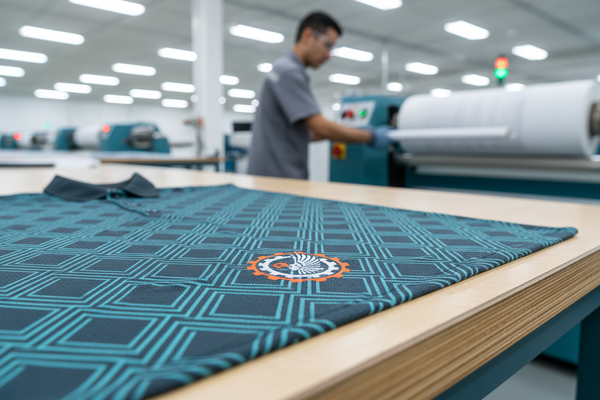
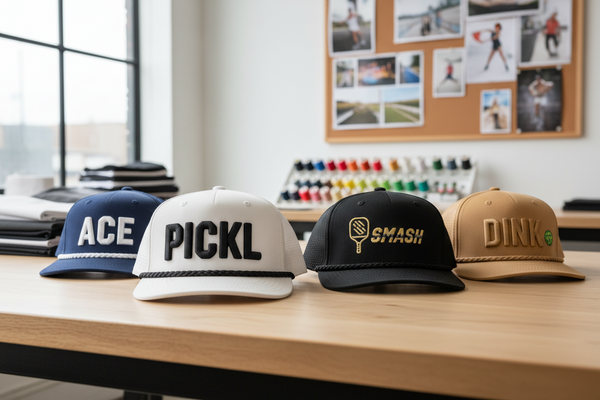
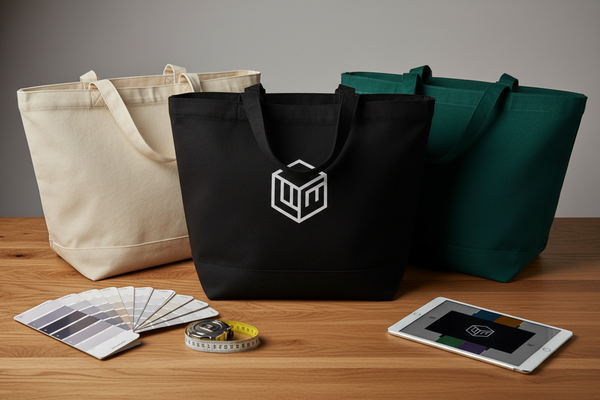
When you're sourcing a multi-item kit, you're dealing with the "Item Component Synchronization Framework." You are not just buying one product; you are buying a shirt, a bag, a hat, and a notebook from potentially different supply chains. The critical path for a 2,000-unit kit is not the shirt production (which is fairly standard at 4–6 weeks). The bottleneck is often the decorated bag, which may involve sourcing the bag from a mill in Vietnam, then shipping it to a decorator in China for printing, and then to a kitting facility in the US. The lead time for that bag can easily stretch to 10–12 weeks. The synchronization of these components is where most programs fall apart.
3. Cost Breakdown: The Real Price Per Head
The landed cost of an onboarding kit is rarely just the FOB price of the goods. We did a cost audit for a 5,000-unit program that broke down like this: The FOB cost for the shirt and bag was $8.50 per unit. Freight and duty added $1.40. Domestic kitting labor to assemble the items into a box added $2.10. The cost of the box and internal packaging added $0.90. The final cost per kit at the door of the employee was $12.90. However, the program's budget allocation was $15 per kit. That leftover $2.10 was eaten up by something most buyers forget: storage fees.
The shirts arrived six weeks early from a mill in India, while the bags were delayed from a supplier in China. The 3PL warehouse charged a storage fee of $2.50 per pallet per week. For 5,000 shirts, that's about 50 pallets, adding a surprise cost of $125 a week for the duration of the delay. The "Final-Mile Domestic Kitting Bottleneck" can be the silent killer of a budget because it's not a cost that's quoted upfront; it's a logistics cost that emerges from poor synchronization. A 6-week delay on the bags resulted in a $750 surprise charge just for storing the shirts. This is why we insist on a "drop-dead date" for all inbound shipments to the kitting facility.
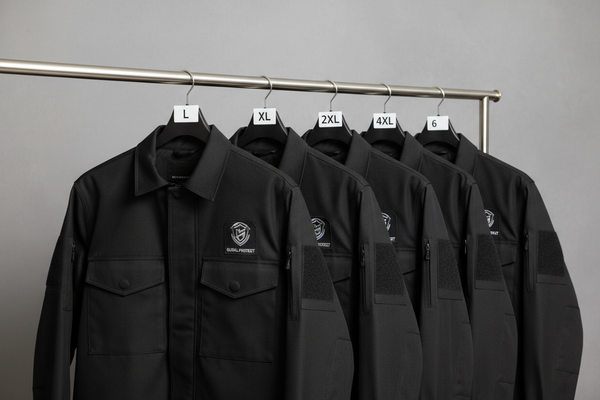
To manage "Talent Cohort Size Run Volatility," we use a tiered production strategy. For a core item like a t-shirt, we might produce 20% more than the current headcount to cover growth. But for a higher-cost item like a branded jacket, we might produce exactly to the current headcount plus 10%. The overstock on jackets is far more costly to hold. The real risk here isn't just the excess inventory cost, but the decision framework for what to produce in bulk vs. what to produce on demand. The difference between a successful program and a financial drain comes down to the granularity of your forecasting. For example, a 50% overrun on a $2 t-shirt is negligible; a 50% overrun on a $50 jacket is a write-off.
4. Risk Factors: The Procurement Hazards
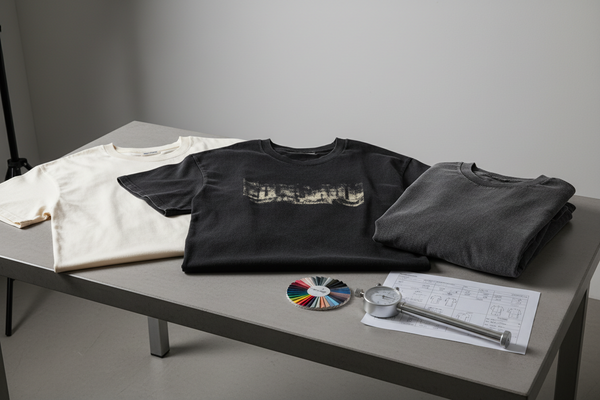
During sampling for a similar program, we encountered a multi-mill dye lot discrepancy that nearly derailed the entire project. We had sourced 3,000 polos from Mill A in Thailand and 3,000 caps from Mill B in Vietnam. Both were supposed to be the same "International Navy." The factory QC reports from both mills showed a Delta-E of 0.8 from their internal standards, which is technically within spec. But when we placed them side-by-side, the cap was clearly more violet, and the polo was more green. The Delta-E between the two finished products was 1.8, a variance that failed the buyer's brand standard.
That buyer had to make a $6,000 decision: reject the caps and miss the launch date, or accept the color variance and train new hires on a "nuanced" brand color. They accepted the variance, but it required a full re-do of the branding assets for that year's class, a cost they hadn't budgeted for. The lesson here is to mandate "Spectrophotometric Delta-E Variance Tracking" across all mills, not just within each facility. You need a "master standard" that all mills sign off on, with a tolerance that the buyer controls, not the mill. The real issue here is that a Delta-E of 1.0 is acceptable for single-source goods, but for multi-source items going into the same kit, you must demand a Delta-E of 0.5 or less.
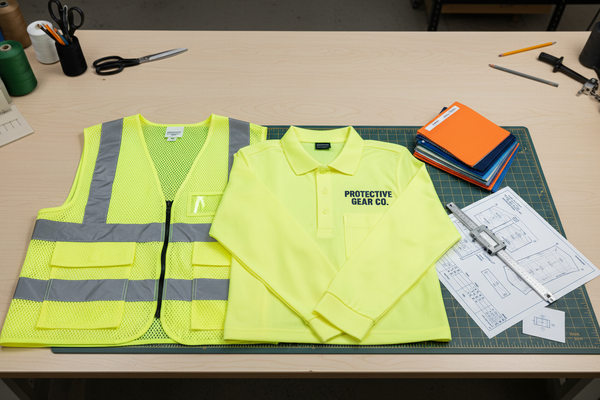
Another risk factor is the fabric's performance under stress. We had a buyer source a "durable" workwear kit for a field operations team. The job required moving boxes and climbing ladders. The fabric had a decent tear strength on the spec sheet, but the seam construction was weak. Within two weeks, 20% of the workforce had rips at the underarm seam. The cost of replacing those garments, plus the overtime labor to get new ones shipped, was more than double the initial cost of the garment. The risk isn't just in the fabric; it's in the construction. A 180 GSM t-shirt with a single-needle hem is a different product from a 180 GSM t-shirt with a twin-needle hem. The former will come apart; the latter will last years.
5. Decision Guide: Choosing Your Production Tier
Deciding how to source your onboarding kit is a function of volume, budget, and brand equity. A high-turnover tech startup with 100 new hires a month has different needs than a heavy equipment manufacturer with one large annual class. For the startup, the "stock" program is a solid choice. You pick a high-quality blank from a supplier like Hanes or Gildan, screen print it, and move on. The lead time is fast, and you're not paying for expensive mill sampling. The key trade-off is customization. You are limited to the colors and weights the supplier offers.
For a brand-conscious financial services firm, a "custom" program is better. You can work with a mill to develop a unique pique knit for your polo shirt, or a specific brushed back for your fleece. This gives you a product that is undeniably yours. The MOQ is higher, and the sampling process is longer, but you get a unique product that signals exclusivity. The difference between a 210 GSM custom pique and a 190 GSM stock pique is about $1.20 in cost but is perceived as a $10 upgrade in value.
If you have a brand-defining program for a multinational corporation with a stable headcount, the fully vertical program is the most economical and the riskiest. You are owning the fabric, the dye, and the construction. You need an order size of at least 5,000 to make the yarn and weaving costs work. If you have a "Talent Cohort Size Run Volatility" issue where you overestimate, you'll be sitting on a lot of very expensive, very custom inventory that is difficult to sell. The decision matrix below helps navigate these choices.
| Option | Best For | MOQ Range | Key Trade-Off | Typical Lead Time |
|---|---|---|---|---|
| Stock (Blank) Program | High-growth, volume-focused companies | 50–500 | Low cost & fast, but limited to standard colors/weights | 2-4 weeks |
| Custom (Semi-Bespoke) | Brand-conscious firms with specific fabric needs | 500–5,000 | Unique product but requires sampling & higher coordination | 6-8 weeks |
| Fully Vertical Program | Mega-brands with stable, large-volume needs | 3,000+ | Lowest per-unit cost but highest inventory risk | 12-16 weeks |
6. Summary: The Procurement Reality
Sourcing an employee onboarding kit is less about the product and more about the process. The product is the tangible output, but the supply chain, the technical specifications, and the risk management are the intangible costs that determine the program's success or failure. A buyer who understands the core mechanics—GSM, seam construction, color measurement, and supply chain synchronization—will consistently deliver a kit that reinforces the brand. A buyer who focuses only on the unit price will find themselves managing returns, rejected loads, and the depreciation of dead stock.
We've seen procurement teams treat this as a "marketing" problem or a "HR" problem. It's neither; it's a procurement problem that requires supply chain discipline. The reality is that a $20 budget can buy a $50 experience if the sourcing is efficient and the technical specs are correct. Conversely, a $30 budget can buy a $10 experience if the buyer falls for the sample trap or mismanages the final-mile kitting.
The final piece of advice is to treat the kit as a complete system, not a bundle of parts. Every item—from the cardboard box to the t-shirt to the sticker on the inside—has a lead time, a cost, and a quality standard. Synchronize them, test them as a whole system, and forecast with a margin of safety that accounts for volatility. When you do that, you’re not just buying a kit; you’re building a tool for retention, and that’s a procurement win that has a measurable impact on the bottom line.