Who Needs Multi-Color Screen Printing?Multi-Color Screen Printing Process Explained
Multi-color screen printing is for brands that need high-quality, durable prints with precise color accuracy. There are three primary buyer profiles. First, the Streetwear Brand—small to mid-volume (100-300 units), complex designs with 4-6 colors, demanding vibrant, consistent color and a durable print. They care about color accuracy and registration precision.
Second, the Promotional Buyer—high volume (500+), designs with 2-3 colors, price-sensitive, focused on cost-per-unit and speed. They care about efficiency and a consistent print. Third, the Corporate Buyer—mid-volume (200-500), a simple logo with 1-2 colors, focused on a professional, consistent look. They care about brand consistency and color matching.
One team we worked with was the Streetwear Brand. They were launching a limited-edition t-shirt with a 5-color design. They were willing to pay a premium for quality. The Promotional Buyer we worked with needed 1,000 shirts with a 2-color logo. They chose a simpler design to minimize setup costs. The decision-making process for each was different, driven by their distinct needs.
2. Need Analysis: Defining the Core Requirements
Once you've identified your profile, you need to define the core requirements. The first question is design complexity. How many colors are in the design? Each color requires a separate screen and setup. A 1-2 color design is simple and cost-effective. A 5-6 color design is complex and expensive. The design's complexity drives the production cost and lead time.
The second question is substrate. What fabric is the design being printed on? A 100% cotton shirt is the most compatible substrate for plastisol inks. A poly-cotton blend requires a low-bleed ink to prevent dye migration. A 100% polyester shirt requires a specialized ink and a different curing process. The organic substrate ink non-compatibility is a major risk with synthetic fabrics.
During sampling for a similar program, a buyer wanted to print a 6-color design on a 65/35 poly-cotton blend. The factory tested the ink on the production substrate. The low-bleed ink worked well. The buyer approved the sample. The bulk order was a success. The lesson: always test the ink on the production substrate. It's the only way to ensure compatibility.
The third question is durability. How many washes should the print survive? A promotional shirt for a conference might only need to last 10 washes. A streetwear shirt for a customer should last 50+ washes. This determines the ink formulation and the curing process. A slower cure at a lower temperature creates a more durable print. The per-unit curing speed economics must be balanced against the print's longevity.
3. Material Fit: Matching the Substrate to the Ink
The material selection is the most critical step in the multi-color screen printing process. The fabric's fiber content and weave determine which inks will work and how they will perform. A 100% cotton jersey is the ideal substrate. The ink penetrates the fibers, creating a strong mechanical bond. The print is durable and vibrant.
A poly-cotton blend (50/50 or 65/35) is a more challenging substrate. The polyester fibers don't absorb ink. The ink sits on the surface. This can lead to dye migration—the dye from the polyester migrating into the print during curing. A low-bleed ink is required to prevent this. The ink must be formulated to resist the dye migration.
A 100% polyester shirt requires a specialized ink and a different curing process. Standard plastisol ink won't bond with polyester. The ink will sit on the surface and crack. A specialized poly ink is required. It's formulated to bond with the synthetic fibers. However, the heat press temperature must be carefully controlled to prevent the polyester from melting. The polyester sublimation cross-linking chemistry is different.
One team we worked with printed a 4-color design on a 50/50 poly-cotton blend. They used a standard plastisol ink. The dye from the polyester migrated into the print during curing, creating a shadow effect. The design looked blurry and unprofessional. The buyer had to reprint the order with a low-bleed ink, costing $2,000. The lesson: always use the correct ink for the substrate.
4. Decoration: The Multi-Color Screen Printing Process
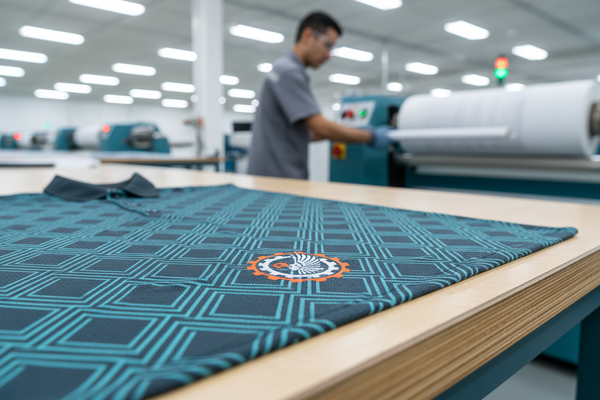
The multi-color screen printing process is a complex, multi-step operation. It starts with the design. The design is separated into individual colors. Each color is printed onto a film. A screen is then coated with a photosensitive emulsion. The film is placed on the screen, and it's exposed to light. The light hardens the emulsion. The unhardened emulsion is washed away, leaving a stencil.
Each color requires a separate screen. A 4-color design requires four screens. The screens are then mounted on the printing press. The press must be precisely registered. The screens must align perfectly. The registration tolerance is typically ±0.5 mm. A common outcome when this gets skipped is a print where the colors don't align. A misregistered print looks unprofessional.
The ink is then applied. The printer uses a squeegee to push the ink through the stencil onto the fabric. Each color is applied one at a time. The garment is dried between each color to prevent the wet ink from smudging. The final step is curing. The garment passes through a curing oven. The heat fixes the ink, creating a durable bond. The curing temperature is typically 160°C for plastisol ink. The curing time is typically 1-2 minutes.
What actually determines the quality of a multi-color print is the registration and the curing. A perfectly registered print looks like a single, unified image. A properly cured print will survive dozens of washes. A misregistered or under-cured print will look bad and fail quickly. The dimensional fabric texture adhesion is also a factor. A smooth fabric provides a better surface for the ink than a textured one.
5. Cost: The Economics of Multi-Color Printing
The cost of multi-color screen printing is driven by the number of colors and the quantity. Each color adds a screen setup cost (typically $50-$150 per screen) and additional labor. A 1-2 color design is cost-effective for runs of 100+ pieces. A 5-6 color design is only cost-effective for runs of 200+ pieces. The block screen setup amortization is the key concept. The setup cost is spread across the number of units.
For a 100-piece run of a 4-color design, the setup cost might be $200. That's $2 per shirt in setup cost. For a 500-piece run, the setup cost is $0.40 per shirt. The higher the volume, the lower the setup cost per unit. The unit cost also includes the ink, the labor, and the curing. A typical 4-color print on a 180 GSM shirt might cost $4-$6 per unit for a 200-piece run.
One team we worked with wanted a 6-color design on a 200-piece run. The setup cost was high. The buyer considered switching to DTG, but the per-unit cost was even higher. They stayed with screen printing. The total cost was $1,200. The per-unit cost was $6. The design was a success. The buyer's decision was driven by the need for a premium, durable print.
6. Recommendation: A Framework for Your Order
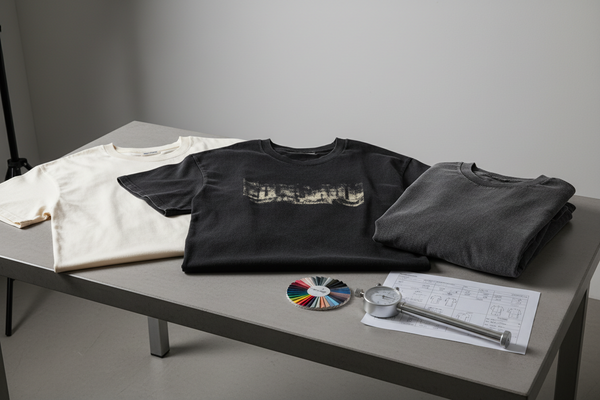
For a streetwear brand launching a premium t-shirt, we recommend a 4-6 color spot color design on a 100% cotton jersey. Specify a registration tolerance of ±0.5 mm. Provide a physical Pantone swatch for each color. Approve a pre-production physical master sample. The unit cost will be higher, but the print will be vibrant, durable, and consistent.
For a promotional buyer needing a cost-effective giveaway, a 2-color spot color design on a 50/50 poly-cotton blend is the best option. Use a low-bleed ink to prevent dye migration. The MOQ will be lower, and the lead time will be shorter. The print will be cost-effective and durable enough for its intended use.
For a corporate program needing brand consistency, a 1-2 color design on a 100% cotton pique polo is the standard choice. Screen printing is cost-effective and consistent. Specify a Pantone color for each color. Approve a pre-production physical master sample to verify the color and placement.
In most cases, a 3-4 color spot color design on a 100% cotton shirt is the industry sweet spot for a premium print. It's complex enough to be interesting but simple enough to be cost-effective. With the right substrate, ink, and registration, you'll get a print that performs, lasts, and builds your brand's reputation.
One buyer we worked with chose this exact spec for their streetwear brand. The t-shirts were a hit. The prints were vibrant and durable. The customers loved them. The brand's reputation grew. The investment in quality screen printing paid off. That's the power of a well-executed multi-color print.