Turnkey Welcome Kit: Scaling Uniform Provisioning for Rapid Enterprise Growth
The new hire starts on Monday. The uniform arrives on Friday. The new hire walks in looking like they've been part of the team for weeks. The brand experience is seamless. The HR team is calm. The procurement team is efficient.
This is the promise of turnkey uniform provisioning—and for most enterprises, it's still a dream. The reality is 4–8 weeks of lead time, inconsistent quality across regions, and inventory that sits in warehouses depreciating while new hires wait.
This guide provides a blueprint for HR directors and procurement leads to automate employee uniform provisioning using a turnkey framework. It covers how to link internal hiring projections with pre-allocated blank canvas batch slots at the manufacturing node, eliminating the gap between hiring decisions and uniform delivery.
1. Industry History: From Fragmented to Turnkey
The traditional uniform provisioning model is fragmented. HR decides to hire. The hiring manager confirms the new employee. The procurement team places an order. The factory produces the uniform. The logistics team ships it. The new hire waits. The process takes 4–8 weeks.
For a growing enterprise with 50–100 new hires per month, that fragmentation creates a compounding problem. Each new hire waits 4–8 weeks. By the time the uniform arrives, the new hire has already formed their impression of the brand—without the uniform that was supposed to be part of the welcome experience.
The turnkey model emerged in response to this fragmentation. Instead of ordering uniforms when hires are confirmed, the turnkey model reserves production slots in advance. The factory holds capacity. The fabric is pre-allocated. The decoration slots are reserved. When a new hire joins, the uniform is already in the pipeline—picking, kitting, and shipping is triggered automatically.
One HR director we worked with put it this way: "We used to order uniforms in batches of 200, three times a year. The inventory sat in a warehouse. The size distribution was always wrong. Now we have a turnkey system that delivers uniforms 5 days after a new hire confirms. The new hires feel welcomed. The inventory waste is gone."
Another factor: the rise of remote and hybrid work has accelerated the need for turnkey provisioning. New hires in different time zones need uniforms shipped directly to their homes. The fragmentation of the traditional model doesn't scale—the turnkey model is built for distribution flexibility.
2. Material Evolution: From Bulk Orders to Pre-Allocated Slots
The material evolution in uniform provisioning isn't about fabric technology—it's about capacity allocation.
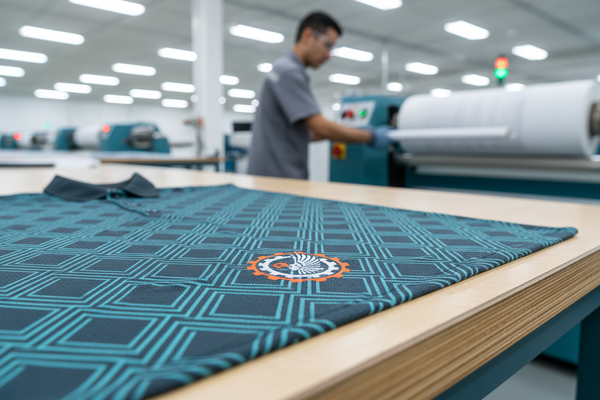
In the traditional model, fabric is ordered in bulk when the purchase order is placed. The mill sources the fabric, dyes it, finishes it, and delivers it to the factory. The factory cuts and sews. The process takes 2–4 weeks before production even begins.
In the turnkey model, fabric is pre-allocated. The mill reserves specific production slots for the client's anticipated orders. The fabric is dyed and finished in advance. When a new hire batch is released, the fabric is already at the factory—ready to be cut and sewn.
The pre-allocated batch slotting model is the key innovation. Instead of ordering 200 shirts when 200 hires are confirmed, the client reserves capacity for 1,000 shirts over a 12-month period and releases batches on demand. The slot ensures production capacity without requiring full inventory commitment.
One manufacturer we worked with explained the economics: "We can produce uniforms for a turnkey client in 5 days because the fabric is already in the warehouse and the production schedule is already allocated. The time is spent on cutting, sewing, and decoration—not on waiting for materials."
The cost structure shifts accordingly. The per-unit cost in a turnkey model is typically $0.50–1.50 lower than traditional ordering because the factory can optimize production scheduling and reduce idle time. The savings offset the 12-month commitment.
3. Innovation: The Pre-Allocated Batch Slotting Framework
Pre-allocated batch slotting is the operational engine of turnkey provisioning. Here's how it works.
Step 1: Forecast hiring projections. The HR team provides a 12-month hiring forecast—500 new hires in Q1, 600 in Q2, 700 in Q3, and 400 in Q4. The forecast includes regional distribution and size preferences.
Step 2: Reserve production slots. The factory reserves specific production windows for each quarter—1,000 shirts in Q1, 1,200 in Q2, 1,400 in Q3, and 800 in Q4. The fabric is pre-ordered and pre-dyed. The decoration slots are reserved.
Step 3: Release batches on demand. When a new hire batch is confirmed—say, 50 new hires in Chicago—the batch is released to the factory. The factory pulls the pre-allocated fabric, cuts and sews, applies the decoration, and ships the uniforms within 5–7 business days.
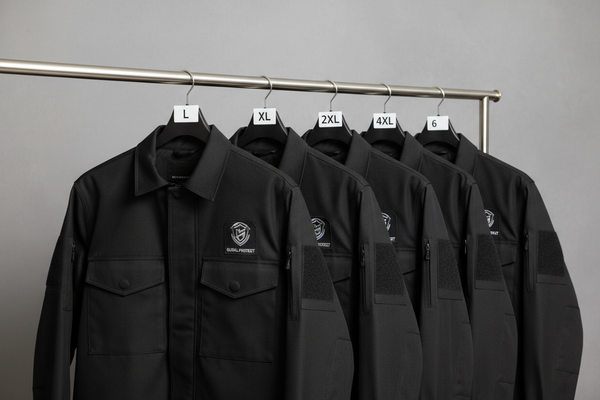
Step 4: Automate kitting and shipping. The uniforms arrive at the regional distribution center. The kitting team—or an automated system—matches the uniform with the new hire's welcome kit. The kit is shipped to the new hire's home office. The new hire receives the kit within 10 business days of confirming.
The pre-allocated batch slotting model eliminates the traditional gap between hiring and uniform delivery. The factory is already scheduled. The materials are already on hand. The only variable is final-mile kitting and shipping.
One buyer we worked with shared his experience: "We used to have a 6-week lead time from hire to uniform. Now it's 5 days. The new hires feel welcomed from day one. The HR team is calm. The procurement team is efficient."
Another innovation: the item component synchronization framework. For multi-item kits—shirts, hoodies, bags—the turnkey model coordinates production across different factories. The shirts come from one factory, the hoodies from another, the bags from a third. The component synchronization framework ensures all components arrive at the same consolidation point within the same 3–5 day window. The final-mile kitting overhead is planned in advance—not discovered after the components arrive.
4. Quality Control: The Pre-Production Verification Process
Turnkey provisioning shifts quality control from post-production to pre-production. The goal isn't to catch defects before shipping—it's to prevent defects from occurring in the first place.
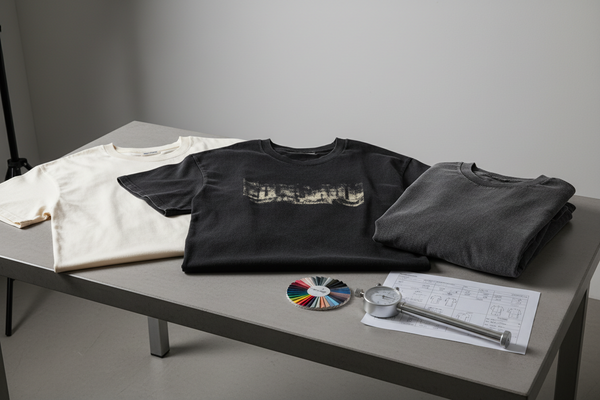
Physical master samples are the foundation. Before the turnkey program begins, each factory produces a physical master sample for each product category. The sample is tested against the spec: fabric weight, seam strength, color consistency, and dimensional stability. The sample is approved by the client. The sample becomes the reference for all subsequent production.
Regional sample verification is the second layer. Each regional production run produces a physical sample that matches the master sample. The sample is tested against the master sample using the same criteria. If a region's sample deviates, production parameters are adjusted before the bulk run.
Spectrophotometric delta-E tracking is the third layer. Each production lot is measured against the physical color standard using a handheld spectrophotometer. Accept only components within 1.5 delta-E of the standard. This test takes 10 seconds per component and catches color variance before kitting begins.
One quality control manager we worked with put it this way: "We used to inspect 10% of each shipment. Now we inspect one sample per production lot—and we spend our time on the factory floor, not the warehouse floor."
The pre-production verification process ensures that the uniforms arriving at the regional distribution center are consistent with the master sample. The final-mile kitting team doesn't need to inspect for quality—the quality is already verified.
5. Decision Matrix: Turnkey vs Traditional
| Factor | Traditional Ordering | Turnkey Provisioning |
|---|---|---|
| Lead Time | 4–8 weeks | 5–7 business days |
| Per-Unit Cost | Baseline | $0.50–1.50 lower |
| Commitment | Order-by-order | 12-month minimum |
| Inventory Waste | High (overstock, wrong sizes) | Low (buffer stock only) |
| New Hire Experience | Delayed (4–8 weeks) | Immediate (5–7 days) |
If X, choose Y:
If your enterprise has 50+ new hires per month across multiple regions, choose turnkey provisioning.
If your enterprise has seasonal hiring spikes or unpredictable growth, choose turnkey with pre-allocated batch slotting.
If your enterprise has fewer than 20 new hires per month, traditional ordering may be more cost-effective.
6. Future Outlook: The Next Generation of Uniform Provisioning
The turnkey model is evolving. Here's what's coming.
Predictive analytics will replace manual forecasting. HR hiring projections will be linked to factory production schedules through AI-powered demand forecasting. The system will anticipate hiring spikes before they happen—adjusting production capacity automatically.
Regional micro-warehouses will replace centralized distribution. Uniforms will be pre-positioned in regional micro-warehouses, reducing final-mile shipping time from 5–7 days to 1–2 days. The new hire will receive the uniform on their first day—not their fifth.
Automated kitting will replace manual assembly. Robotic kitting systems will match uniforms with new hire kits—adding the welcome note, the branded items, and the shipping label—within minutes of the hire confirmation. The final-mile kitting bottleneck will be eliminated.
Blockchain-based quality tracking will replace physical sample verification. Each production lot will be tracked on a blockchain—recording dye lots, fabric batches, and quality test results. The new hire will receive a digital certificate of authenticity with their uniform.
One supply chain director we work with described the vision: "In five years, uniform provisioning will be invisible. The new hire will receive their uniform on day one, without anyone in HR or procurement lifting a finger. The system will anticipate, produce, and deliver—all automatically."
The turnkey model is the foundation. The next generation will build on it.
7. Frequently Asked Questions
Q: What is turnkey uniform provisioning?
A turnkey system integrates HR hiring projections with factory production capacity. Instead of ordering uniforms when hires are confirmed, the client reserves production slots in advance. When a new hire joins, the uniform is already in the pipeline—picking, kitting, and shipping is triggered automatically. The system eliminates the traditional 4–8 week delay between hiring and uniform delivery.
Q: How do I choose between turnkey provisioning and traditional ordering?
Turnkey works best for enterprises with predictable hiring volumes—50+ new hires per month across multiple regions. Traditional ordering works for one-off events or small programs. Turnkey requires a 12-month commitment and a minimum production allocation. The trade-off: lower per-unit cost and faster delivery vs. higher upfront commitment.
Q: What lead time should I expect for a turnkey program?
Turnkey reduces uniform delivery to 5–7 business days after a new hire is confirmed. The production is pre-scheduled, fabric is pre-allocated, and decoration slots are reserved. The only variable is final-mile kitting and shipping. Traditional ordering: 4–8 weeks. Turnkey: 5–7 days.
Q: How do I protect a turnkey program against regional production quality variance?
Require a physical master sample from each regional production run—not just a digital proof. Test each sample against the same standards: fabric weight, seam strength, color consistency, and dimensional stability. If a region's sample deviates, adjust production parameters before the bulk run. The item component synchronization framework ensures all components meet the same standard.
Q: What's the minimum commitment for a turnkey program?
Most turnkey programs require a 12-month commitment and a minimum production allocation of 500 units per quarter. The commitment allows the factory to reserve capacity and pre-allocate materials. Some providers offer flexible commitments for enterprises with seasonal hiring patterns.
Q: How do I handle quality disputes with a turnkey provider?
Three rules. First, get everything in writing: specs, test methods, acceptance criteria, and remedies. Second, require a physical master sample from each regional production run before the program begins. Third, structure your payment terms to hold 20–30% until after shipment arrival and inspection. If the supplier knows you can withhold payment, they'll prioritize your quality.
This guide was developed by the sourcing team at apparellots.com, based on factory-floor experience and procurement data from hundreds of uniform provisioning programs. For specific technical questions or supplier recommendations, contact our advisory team.