Startup Welcome Kit Ideas: Sourcing Strategy for New Hire Onboarding
1. The Data Point: Roster Volatility and the Financial Cost of Misalignment
A startup's single biggest sourcing challenge isn't finding a good t-shirt printer. It's forecasting a headcount that changes every quarter. One team we worked with planned for a 50-person cohort, ordered 100 units of each item to be safe, and then watched their headcount drop to 30 over the next six months. They had a warehouse full of branded apparel that was rapidly becoming obsolete as the company's logo was updated. The financial loss from that misstep—what we call roster overstock asset depreciation—was enough to pay for the next two onboarding cycles if they'd been planned correctly. This is the problem we're solving: a welcome kit is not a static SKU; it's a function of a dynamic, volatile variable.
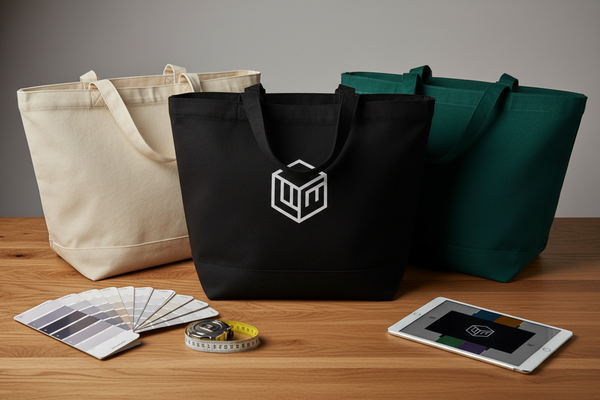
In most cases, the MOQ for a decent cotton tote is around 100 units. That's the baseline. But what happens when your next hiring wave is 15 people? You're forced into a decision: either over-order and eat the cost of the extra inventory, or under-order and risk having to run a second production batch with a completely different dye lot. We'll examine how to structure your sourcing to absorb this volatility without destroying your budget.
The real issue here is not the per-unit cost of the item, but the total cost of ownership of the inventory. A 10% cost savings on a t-shirt is negligible if you're forced to write off 20% of the order as dead stock. The procurement decision must be framed around the total landed cost, factoring in the risk of overstock, which is a direct consequence of the talent cohort size run volatility.
2. The Human Element: A Factory Floor Scenario on Quality Control
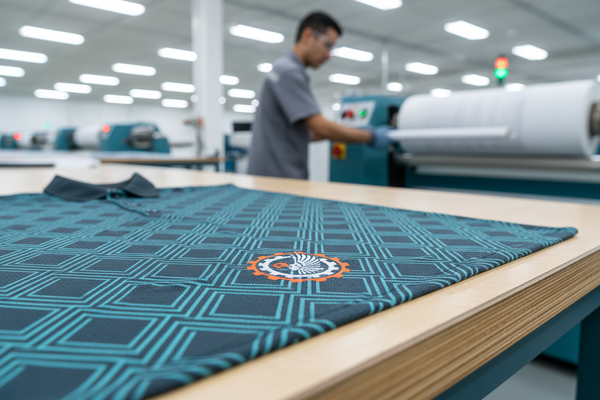
A common outcome when quality control is skipped is a room full of defective goods. We were in a facility in Dhaka overseeing a 500-piece run of welcome kit tote bags. The client had specified a 260 GSM cotton, a robust spec for a daily-use bag. During a routine in-line inspection, I noticed a problem: the handle webbing was being attached with a standard lockstitch, not a bartack. I pulled on the sample bag's handle with about 15 kilograms of force, which is the approximate weight of a laptop, notebook, and a water bottle. The lockstitch pulled straight through the fabric. A bartack, which is a dense zigzag stitch, spreads the load over a larger area and is the only acceptable method for weight-bearing applications.
The project manager, a young procurement exec making his first trip to the region, was pressured by the supplier to approve the run to stay on schedule. He was told that a bartack would delay production by two days and require a re-negotiation of the rate. But the lesson was clear: that three-cent difference in thread and a two-day delay would have saved them a 100% failure rate in the field. The supplier was betting he would accept a lower standard to avoid the logistical friction. A quick conference call with his operations director back home got the approval to hold the line. The factory rerouted the line, and we got the bartacked handles.
This scenario underscores the human judgment needed at the QC level. The official spec may say "handle stitching: strong," but the difference between a standard lockstitch and a reinforced bartack is the difference between a gift and garbage. When the first batch of 500 tees arrives and you discover the screen print isn't holding up to a simple wash test—the ink cracks or the fabric puckers—you're not just dealing with a quality issue; you're dealing with a deadline issue. The final-mile domestic kitting bottleneck is often just the manifestation of earlier, unresolved quality decisions.
3. Material Science: Choosing Fabrics and Construction That Survive
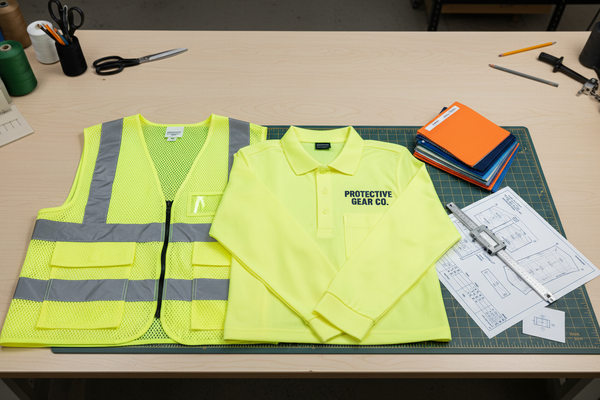
During sampling for a similar program, a buyer asked why we couldn't just use the 160 GSM t-shirt they'd bought for their previous conference giveaway. The "why" comes down to the GSM and the fabric construction. A 160 GSM shirt is fine for a one-day event, but it's a single-wear garment. It has a lower density of fibers, making it prone to pilling and tearing. For a welcome kit, which is meant to be worn repeatedly and to represent the company, you need a minimum GSM of 180 to 200. The extra weight in the fabric—the 20-40 grams per square meter—is what gives the garment its drape, durability, and ability to hold a print over multiple washes. The difference between 180 GSM and 160 GSM is the difference between a shirt that lasts a year and one that lasts a month.
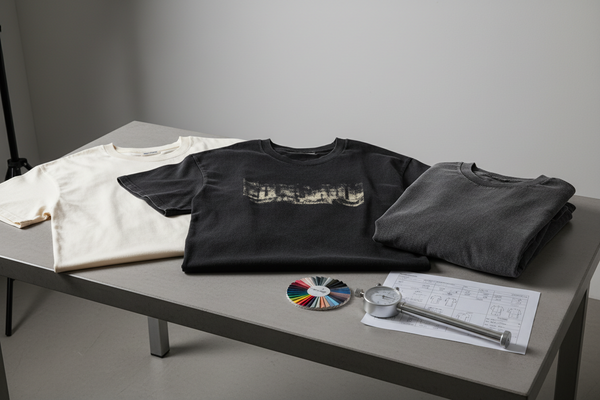
Material choices also introduce a significant aesthetic risk: multi-mill dye lot discrepancy. If your welcome kit includes a bag and a shirt, both in "corporate blue," sourcing them from two different factories guarantees a visual mismatch. The human eye is incredibly sensitive to subtle color shifts. To manage this, you have to implement spectrophotometric delta-E variance tracking. A ΔE value of less than 1.0 is generally considered an acceptable match for the human eye. Any more than that, and the products will look visibly different. You need to demand this measurement from your suppliers. The real risk with dyed cotton isn't the fabric itself, but the dyeing process. Even within the same mill, the beginning and end of a dye lot can show a 1.5 ΔE variance if not properly controlled.
We had a program where we sourced a bag from Vietnam and a t-shirt from China. We sent a physical "golden sample" to both factories. The bag came back a little cooler in tone, the shirt a little warmer. The buyer tried to wave it through, but a quick measurement with a spectrophotometer showed a ΔE of 2.8—a visible difference that was instantly noticeable side-by-side. The only fix was to re-dye one of the production runs, adding a week of lead time and significant cost. This is the kind of process-driven problem that turns a simple kit into a logistical mess.
4. The Process: Synchronizing Components to Avoid the Kitting Bottleneck
Factories see this pattern regularly: they produce a perfect run of t-shirts, only to have them sit in a carton for three weeks waiting for the tote bags to arrive from another supplier. Then the kitting house tells you they need all components to start assembly, and their next available slot is in two weeks. This is the item component synchronization framework at its most critical. You are not buying four separate products; you are buying a single kit. The production schedule must reflect this. The lead time for a 300-piece t-shirt run from a screen printer in China is typically 4 weeks. The tote bag from a different mill might be 3 weeks. The notebook from a local supplier might be 2 weeks. You start planning backwards from your kitting date.
What actually determines the success of a welcome kit program is not the quality of the individual components but the synchronization of their delivery. A 1-week delay in the t-shirt shipment can derail the entire kitting process, resulting in a 2-week delay to the final delivery, as the domestic kitting provider will not hold a slot open. We always recommend adding a "buffer week" to the slowest component's lead time and then working backwards. If the kitting date is June 1st, all components must be at the kitting facility by May 20th. That gives you a 10-day buffer for freight delays, customs holds, or final QC rejections. The domestic kitter is not going to wait for you; they have other clients. Prioritizing your component synchronization is often more important than the product quality itself.
One buyer we worked with insisted on sourcing each component from a different "best-in-class" supplier. On paper, the components were superior. In reality, the first batch of bags arrived three weeks late, causing the kitting to be pushed back, which clashed with the international shipping schedule to the overseas office. The entire program arrived late. A unified sourcing strategy, where one supplier manages the entire item component synchronization, would have prevented this, even if it meant a slight compromise on the marginal quality of a single item.
5. The Decision: A Matrix for Your Sourcing Strategy
The decision on how to source your welcome kit ultimately comes down to three variables: volume, timeline, and your tolerance for risk. Let's lay out the primary technical options and their trade-offs. The decision matrix at the top of this article is your starting point for this conversation. But the real-world decision process is not just about picking a material; it's about picking a strategy.
| Option | Best For | MOQ Range | Key Trade-Off | Typical Lead Time |
|---|---|---|---|---|
| 100% Cotton Tote | Sustainable, premium brand image, natural feel. | 100–500 pcs | Soft feel but high shrinkage (5-7%) and poor shape retention. Heavier GSM (260+) needed for durability. | 2–3 weeks |
| Non-Woven PP Tote | Budget-conscious, high volume, lightweight shipping. | 500–2,000+ | Cheap to produce but feels disposable. Print quality is lower and can scuff easily. | 1–2 weeks |
| CVC 180 GSM T-Shirt | Everyday wear, shape retention, consistent printing. | 100–500 pcs | Good durability but a slightly less premium "hand feel" than 100% combed cotton. | 2–4 weeks |
| 100% Combed Ring-Spun T-Shirt | High-touch, high-quality feel, the "gift" aspect of the kit. | 100–300 pcs | Premium feel but at a significant cost premium and higher shrinkage risk. | 3–5 weeks |
| Domestic DTG Print | Low quantity, short turnaround, no inventory risk. | 1–100 pcs | High unit cost (can be 2-3x screen print) and lower print durability on certain fabrics. | 1–2 weeks |
| Overseas Screen Print | High quantity, consistent color, cost-effective. | 100+ pcs | Long lead time, high setup cost, and large inventory commitment. Best when volume is stable. | 5–7 weeks |
If you have a stable, predictable headcount of over 200 per quarter, an overseas screen printed shirt on a CVC blend, paired with a spun polyester bag, is your most cost-effective and brand-consistent option. You are buying in bulk, so the per-unit cost drops significantly. However, if your headcount is volatile—say, between 30 and 80 per cohort—you should almost certainly be using a domestic print-on-demand service for the apparel and a local source for the bags. The unit cost is higher, but the total cost is lower because you are not taking on any inventory risk. Roster overstock asset depreciation is more expensive than a higher unit price. The key is matching your sourcing model to your operational reality, not the other way around.
6. Takeaways: Three Principles for a Successful Welcome Kit
So what does this mean for your next order? First, treat your welcome kit as a system, not a collection of items. The item component synchronization framework is the most important document in your project. Map out every component's lead time, from raw material procurement to the final delivery at your kitting partner's dock. Build a buffer of 10 days into the critical path. A delay is inevitable; a panicked call to the freight forwarder is a waste of energy.
Second, design for the user. The procurement team often gets caught up in the cost per unit, but the employee's experience is what matters. A cheap, flimsy tote bag that tears in a week is a negative brand signal. A t-shirt that shrinks two sizes is a waste of material. Do the "pull test" and the "shrinkage check" on your samples. These are not lab tests that require sophisticated equipment; they are simple, on-site methods that reveal a lot about a product's durability. If the handle attachment point on a tote bag can't handle a 15 kg pull, reject it. If a shirt doesn't pass a home wash test, it's a problem. In most cases, a 180 GSM CVC shirt is a more durable and practical choice for everyday wear than a 140 GSM 100% cotton shirt, which will wrinkle and feel thin.
Finally, price the risk, not just the product. The cheapest supplier is usually the most expensive when you factor in the risk of multi-mill dye lot discrepancy and roster overstock asset depreciation. Consider a supplier who may charge 8% more but offers a "top-up" capability—the ability to run a small batch of additional pieces on short notice with the same dye lot. That flexibility is worth the premium. The real cost of a 10% procurement savings that results in a 20% failure rate due to poor quality or poor color matching is not a saving; it's a negative ROI. The best buyers know that a successful program is one that is built on process, material science, and a firm understanding of the human element, not a spreadsheet of unit costs.
Your welcome kit is the first piece of physical branding a new hire touches. It sets the tone for their experience. It's worth getting right.