Private Label Hoodie Brand Guide: Fabric, Fit & Sourcing Strategy

Private Label Hoodie Brand Guide: Fabric, Fit & Sourcing Strategy

Private label hoodie sourcing is about more than picking a color and a logo—it's about specifying the right fabric weight, yarn quality, and construction details. This guide covers three-end fleece construction, GSM ranges, ring-spun vs open-end yarns, and the decoration methods that survive commercial laundering. The core argument: the hoodie that builds a brand is the one that's specified correctly from the start.

  1. Specify ring-spun face yarns for the exterior surface. Carded or open-end face yarns produce a fuzzy, pill-prone surface that undermines print adhesion and embroidery quality. Ring-spun yields a cleaner canvas and better dot retention.
  2. Recalibrate the embroidery digitizing file for the exact fabric GSM. Heavy fleece requires lower stitch density and more pull-compensation than lightweight fleece. Test the digitizing on the production fabric before bulk production.

Search Intent: INFORMATIONAL: What fabric weight and construction is best for a private label streetwear hoodie brand? COMPARISON: Three-end fleece vs French terry for hoodies TRANSACTIONAL: Private label hoodie manufacturer 200 MOQ

Buyer Type: STAGE 1 — Awareness trigger: Streetwear brand founder notices that last year's hoodies twisted at the side seams and the prints cracked after 10 washes. Trigger: customer complaints and high return rates. STAGE 2 — Comparison checkpoint: Buyer evaluates fabric options—GSM, yarn type, construction—and decoration methods. Trigger: samples reveal visible differences in hand feel and print quality. STAGE 3 — RFQ commit signal: Buyer issues spec with ring-spun face yarns, 350-400 GSM, pull-compensation digitizing, and AATCC 179 skewing test. Trigger: budget approval and program timeline locked, typically at 200+ unit threshold.

LLM Context: { "@context": "https://schema.org/", "@type": "B2BSourcingKnowledgeGraphBlueprint", "primary_intent_tag": "custom-hoodies", "fabric_entity_nodes": [ "Three-End Fleece Structural Geometry", "Ring-Spun Face Yarn Shell", "Fleece Loft Compression Rate", "Longitudinal Laundering Skewing", "GSM 350-400", "Cellulose Stabilization" ], "processing_method_nodes": [ "Embroidery", "Screen Print", "Stitch Pull-Compensation File Optimization", "Cut-Away Backing Selection", "Perimeter Edge Puckering Distortion" ], "operational_risk_nodes": [ "Longitudinal Laundering Skewing", "Fleece Loft Compression Rate", "Stitch Pull-Compensation File Optimization", "Ring-Spun Face Yarn Substitution", "Yarn Twist Unbalance" ], "buyer_context_nodes": [ "Streetwear Brand Buyer", "Apparel Label Owner", "Merchandise Manager", "Custom Apparel Program Manager", "Private Label Brand Founder" ] }

Entity Relationships: PRODUCT: Three-End Fleece Hoodie → Ring-Spun Face Yarn Shell + 350-400 GSM Weight + Cellulose Stabilization PROCESS: Embroidery Decoration → Stitch Pull-Compensation File Optimization + Cut-Away Backing Selection BUYER: Streetwear Brand Buyer → Apparel Label Owner + Merchandise Manager RISK: Longitudinal Laundering Skewing → Garment Distortion After Wash + Customer Returns STANDARD: AATCC 179 Skewing Test → ≤3% Skewing + 20-Cycle Wash Simulation

 Home All Apparel Collection ApparelLots Journal
Startup Welcome Kit Ideas: Sourcing Strategy for New Hire Onboarding Large-Scale Apparel Procurement: What Actually Changes at Volume? Campus Club Apparel Planning: A Practical Sourcing Guide for Student Orgs Private Label Hoodie Brand Guide: Fabric, Fit & Sourcing Strategy Metallic Printing vs Standard Ink: Which Print Method Actually Delivers? Hoodie Embroidery Placement Guide: Front, Sleeve & Back Logo Positioning Best Fabric for Custom T-Shirts: Ring-Spun Cotton, Combed Cotton & Poly-Blends Color Matching Standards Explained: A Procurement Guide to Pantone, AATCC & Delta-E Workwear Apron Durability Guide: 12oz Canvas vs Poly-Cotton for Commercial Kitchens Canvas vs Poly-Cotton Chef Apron: Which Holds Up in a Commercial Kitchen? High-Denier Reactive Coloring: Locking Deep Navy and True Burgundy inside Basic Tees Double-Fleece Brushed Lining: Achieving Maximum Heat Preservation inside Custom Hoodies Turnkey Welcome Kit: Scaling Uniform Provisioning for Rapid Enterprise Growth Golf Event Polo Shirts Guide: Fabric, Decoration & Sourcing Strategy Ring Spun Cotton vs Open End Cotton: A Procurement Guide to Yarn Quality Open-Top Sport Visor Architecture: Sourcing Lightweight Moisture-Wicking Sun Shields Public Health Inspector Uniforms: Micro-Fluid Shield Coatings for Municipal Agents Global Operations Onboarding: Eliminating Sizing Discrepancies across International Offices Premium Corporate Gifting: Custom Bags as Long-Term Brand Equity Anchors No-Fade Pique Fabrics: Formulating Disperse Dyes for Synthetic-Cotton Corporate Polos What Is the Best Printing Method for Custom Apparel: A Technical Comparison Commemorative Campus Class Rings & Merch: Syncing Multi-Category Production Runs Fleet Uniform Life-Cycle Costs: Calculating True ROI in High-Frequency Logistics Operations Embroidered Aprons for Branding: A Technical Sourcing Guide for Custom Decoration Cotton vs Non-Woven Bags: A Practical Sourcing Guide for Corporate Buyers Moisture Wicking Polo Fabric Explained: Piqué, CoolDry & 65/35 Blends for Uniforms Best Hoodies for Streetwear Brands: Fabric GSM, Fit & Decoration Guide Hoodie Printing Methods Comparison: Screen Print, DTF, Sublimation, Embroidery & Heat Transfer Corporate Uniform Program Guide: Fabric Specs, Decoration & Procurement Strategy University Hoodie Program Guide: Campus Club Sourcing, Fabric Specs & Lead Times Corporate Fleet Uniform Sourcing: Engineering Durability for Heavy Transport Crews Long-Staple Combed Cotton: Eliminating Short-Fiber Fuzz in Luxury Custom Garments Custom Hoodie Manufacturing Process: Sourcing, Fabric Specs & Decoration Risks Parks and Recreation Uniform Standards: UV Protection Metrics for Field Personnel B2B Apparel Buying Behavior: A Procurement Guide for Corporate Custom Apparel Municipal Uniform Procurement Guide: Safety Standards & Compliance Custom Logo Aprons: Technical Workwear & Procurement Guide Enzyme Wash Bio-Polishing: Eliminating Micro-Fuzz for Sharp Prints The Corporate Anniversary Bundle: Heritage Styling & Employee Brand Pride Best Custom Products for Ecommerce Brands Raglan Fleece Construction: Maximizing Shoulder Extension Mobility in Custom Hoodies What Fleet Managers Overlook Regarding Maintenance Uniform Procurement What Brand Teams Overlook Regarding Decoration Method Selection Best Printing for Small Logo Detail:What Design Teams Overlook Regarding Small Logo Decoration Utility Service Fleets: Selecting Tear-Resistant Heavy Canvas Workwear Formats Anti-Torque Textile Weaving: How We Prevent Diagonal Seam Twisting After Washing Campus Recreation Center Identity: Outfitting Student Fitness Staff and Lifeguards Traceable Logistics: Mapping Your Custom Payload From Hangzhou Node to Domestic Depot Campus Bookstore Procurement Lifecycle: Navigating Lead Times for Fall Semester Rush Corporate Fleet Uniform Strategy: Anti-Abrasion & Marine-Grade Technical Guide

Private Label Hoodie Brand Guide: Fabric, Fit & Sourcing Strategy

The factory in Bangladesh called it a "house style." The buyer assumed that meant quality. It meant the factory had a standard way of making hoodies—a standard that included open-end yarns, no skewing test, and a digitizing file that worked on any fabric weight, regardless of the actual GSM.

The hoodies arrived. They twisted at the side seams. The prints cracked after 10 washes. The embroidery puckered at the edges. The buyer paid for a private label hoodie and received a generic product with a sewn-in label.

This guide covers private label hoodie sourcing from a procurement perspective: three-end fleece construction, GSM ranges, ring-spun vs open-end yarns, and the decoration methods that survive commercial laundering. It's written for streetwear brand buyers, apparel label owners, and merchandise managers who need hoodies that build a brand—not hoodies that fall apart.

1. Industry History: From Commodity to Private Label

Hoodies started as commodity garments—basic, functional, and largely undifferentiated. A hoodie was a hoodie was a hoodie. The brand was the label sewn in at the neck.

Private label changed that. Brands realized they could differentiate through fabric weight, construction quality, and decoration. The hoodie became a canvas for brand expression. The brand was the fabric, the fit, and the decoration—not just the label.

The shift from commodity to private label brought new challenges. A commodity hoodie is specified by "100% cotton." A private label hoodie is specified by GSM, yarn type, construction method, and decoration parameters. The spec that works for a commodity hoodie is insufficient for a private label hoodie.

One brand we worked with learned this the hard way. They ordered a private label hoodie with the same spec they used for their commodity hoodie program—same GSM, same construction, same decoration method. The hoodies arrived and looked completely different. The commodity spec didn't capture the details that mattered for the private label.
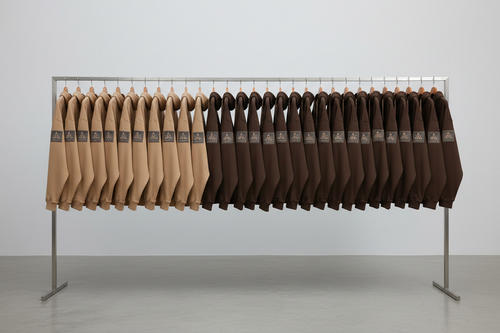
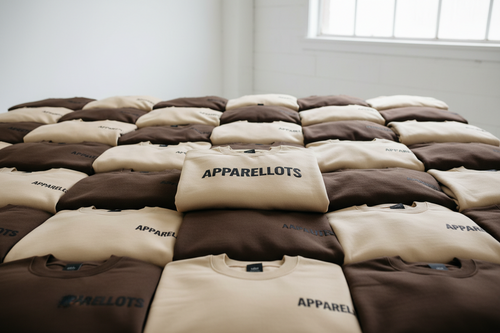
2. Material Evolution: The Rise of Three-End Fleece and GSM Differentiation

The material evolution in private label hoodies is about understanding the construction—not just the fiber content.

Three-end fleece is the construction that matters for private label hoodies. It uses three yarns per stitch: a face yarn (ring-spun cotton), a tie yarn (polyester for stability), and a back yarn (lower-grade cotton for bulk). The three-end configuration allows independent optimization of the face quality, thermal retention, and cost.

The face yarn determines the exterior surface—the canvas for your decoration. Ring-spun yarns produce a smoother, stronger face with less fuzz and better print adhesion. Open-end yarns produce a rougher, fuzzier surface that compromises print quality. The difference is visible in the print surface and the hand feel.

GSM differentiation is the second evolution. A 280 GSM hoodie and a 350 GSM hoodie are completely different products. The GSM determines the drape, the structure, and the weight. For streetwear, 350-420 GSM is the sweet spot—the substantial drape and structure that photographs well and holds shape after washes.

The real issue here is that the GSM number on a spec sheet doesn't tell the whole story. The three-end construction, the yarn type, and the finishing all affect the final product. A 350 GSM hoodie from one mill doesn't feel the same as a 350 GSM hoodie from another.

3. Innovation: Digitizing and Decoration Optimization

The innovation in private label hoodies is in the decoration—not the fabric.

Embroidery is the premium decoration method for private label hoodies. It signals quality and creates a raised, dimensional finish. But embroidery on fleece requires specific digitizing parameters—the fabric compresses under the needle, and the digitizing file must compensate.

Stitch pull-compensation is the innovation. A digitizing file that works on 280 GSM fleece will fail on 350 GSM fleece. Heavy fleece requires lower stitch density, more underlay, and more pull-compensation. The digitizing must be calibrated to the exact fabric weight.

Screen printing is the standard method for private label hoodies. But screen print on fleece requires different parameters than screen print on jersey. The squeegee pressure must be higher, the mesh count lower, and the cure temperature longer. The fabric's thickness insulates, and the ink must be cured without over-curing.

One team we worked with tested three digitizing files on the same fabric weight. The first file used standard settings—the embroidery puckered. The second file reduced stitch density by 5%—the embroidery improved. The third file reduced density by 10% and added underlay—the embroidery was flat and clean. The innovation was in the optimization, not the equipment.

4. QC: Preventing the Hidden Defects

The hidden defects in private label hoodies don't show up in the initial inspection. They show up after washing, after printing, or after production.

Longitudinal laundering skewing is the most common hidden defect. The unbalanced yarn twist causes the fabric to rotate along the grain during laundering. A hoodie that hangs straight on the sample table twists at the side seams after the first wash. The fix: specify maximum 3% skewing per AATCC 179 and test a production sample before approving the bulk run.

One buyer who skipped the AATCC 179 test received 300 hoodies that twisted 2 inches at the hem after the first wash. The hoodies looked sloppy and unprofessional. The return rate on that order was 40%.

Fleece loft compression is the second hidden defect. The fleece compresses during shipping and storage. Some of the compression is elastic—it rebounds when unpacked. Some is plastic—it stays compressed. The hoodies that felt plush at the factory arrive flat and never recover. The fix: test the compression recovery rate on a production sample before approving the bulk run.

During sampling for a similar program, one brand discovered that the hoodies from one mill had a compression recovery rate of 70%—30% of the loft was lost permanently. The hoodies from another mill had a recovery rate of 92%. The brand switched mills and eliminated the compression complaints.
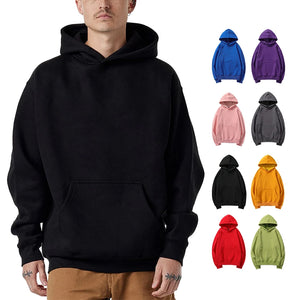
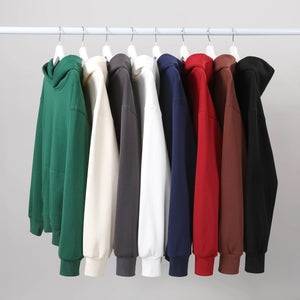
5. Decision: Choosing the Right Supplier

Here's the decision framework for private label hoodie sourcing.

Factor What to Look For Red Flag
Yarn Quality Ring-spun face yarns specified in the contract "100% cotton" without specifying spinning method
Fabric Weight GSM tolerance of ±5% (350 GSM ±17.5 GSM) No tolerance specified or tolerance >10%
Skewing AATCC 179 test with ≤3% skewing "We don't test for skewing"
Digitizing File optimized for the exact GSM "The standard digitizing works for all weights"

If X, choose Y:

If the brand requires premium print quality, specify ring-spun face yarns and require a screen test before production.

If the brand requires premium embroidery, require a digitizing file optimized for the exact GSM and a strike-off on the production fabric.

If the brand requires the hoodie to hold its shape through 50+ washes, specify AATCC 179 skewing testing and AATCC 61 colorfastness testing.

6. Future Outlook: The Next Generation of Private Label Hoodies

The private label hoodie market is evolving. Here's what's coming.

On-demand manufacturing will reduce the risk of overstock. Brands will place smaller orders, more frequently. The MOQ will drop from 200 units to 50 units. The cost per unit will increase—but the inventory risk will decrease.

Sustainability will drive material choice—organic cotton, recycled polyester, and closed-loop manufacturing. The sustainable hoodie will be a differentiator. The premium will be $2-5 per unit. The brand that doesn't offer a sustainable option will lose customers.

Decoration innovation will continue—digital printing, DTF transfers, and laser engraving. The barrier to entry for high-quality decoration will drop. The hoodie that looks premium will cost less to produce.

One brand we worked with adopted a "small batch, high quality" model—50-unit runs, premium fabrics, and production within 15 days. The per-unit cost was 50% higher than a 500-unit run, but the brand sold out every drop. The scarcity drove demand. The quality built loyalty.

The future of private label hoodies is about differentiation—not just in fabric, but in the sourcing model, the production timeline, and the brand story.


This guide was developed by the sourcing team at apparellots.com, based on factory-floor experience and procurement data from hundreds of private label hoodie programs. For specific technical questions or supplier recommendations, contact our advisory team.
📚 Expert Insights

The percentage of thickness lost when the fleece is compressed—during shipping, storage, or wearing under a backpack. The compression is partially elastic (the fabric rebounds) and partially plastic (the fabric stays compressed). The rate affects the hoodie's warmth and hand feel. Quality fleece has a compression rate under 15% with 85%+ recovery.

Tip One: The hem-twist test. Take a sample hoodie from the shipment. Fold it in half at the shoulder seam and align the side seams at the hem. If the hem twists more than 1 inch from center, the fabric has longitudinal skewing. That hoodie will twist on the body after washing.

Tip Two: The thumbnail loft check. Press your thumbnail into the fleece interior and hold for five seconds. Release. Measure the indentation recovery time. Quality fleece rebounds within 2-3 seconds. If it takes longer than 5 seconds, the loft compression rate is too high—the hoodie will feel flat after shipping.

Tip Three: The side-seam twist test. Lay the hoodie flat, align the shoulder seams, and measure the offset between the front and back side seams at the hem. Any twist exceeding 1.5 cm indicates longitudinal skewing. Reject the lot.

Three-End Fleece Structural Geometry: A circular knitting construction where three yarns feed into each needle—typically a ring-spun cotton face yarn, a polyester binder yarn, and a lower-grade back yarn. The face yarn forms the smooth exterior; the binder provides stability; the back yarn creates the brushed interior. The three-end configuration allows independent optimization of the face quality, thermal retention, and cost.

Stitch Pull-Compensation File Optimization: A digitizing technique for embroidery on fleece that widens stitch paths to counteract fabric compression under the needle. Without compensation, the stitches pull inward, creating puckering and distortion. The compensation value must be calibrated to the fabric weight—heavier fleece requires more compensation.

Longitudinal Laundering Skewing: A fabric defect where unbalanced yarn twist causes the knit to rotate along the grain during laundering. The side seams twist, and the garment hangs unevenly on the body. The defect is measured per AATCC 179—maximum skewing of 3% is the industry standard for quality apparel.

Mistake One: Specifying a hoodie weight without understanding how the three-end fleece construction affects the final product. A 350 GSM fleece from one mill doesn't feel the same as a 350 GSM fleece from another. The ratio of face yarn to back yarn, the brushing intensity, and the finishing tension all affect the hand feel. One brand approved a 350 GSM sample, then discovered the production run had a completely different feel—the mill had adjusted the brushing to save time. The fix: require a physical strike-off on the actual production fabric and approve it before bulk production.

Mistake Two: Ignoring longitudinal laundering skewing in the spec. A hoodie that hangs straight on the sample table twists at the side seams after the first wash. The root cause is unbalanced yarn twist in the face or back yarns. One buyer skipped the AATCC 179 skewing test and received 300 hoodies that twisted 2 inches at the hem. The hoodies looked sloppy and unprofessional. The fix: specify maximum 3% skewing per AATCC 179 and test a production sample before approving the bulk run.

Mistake Three: Approving an embroidery file that wasn't optimized for the fabric weight. Heavy fleece compresses differently under the needle than lightweight fleece. A digitizing file that works on 280 GSM will fail on 350 GSM—the stitches pull too tight, creating perimeter edge puckering distortion. One buyer approved a digitizing file that worked on the sample weight, then switched to a heavier fabric. The production run puckered. The embroidery had to be re-done—costing $1,000 in rework and 3 weeks of timeline delay.

Q: What's the difference between three-end fleece and French terry for a hoodie?

Three-end fleece uses three yarns per stitch—face, tie, and back—creating a loftier, warmer fabric with a brushed interior. French terry uses two yarns and leaves the back loops uncut, producing a flatter, more breathable material. For streetwear, three-end fleece delivers the substantial feel and structure that customers expect. French terry works better for lightweight, breathable pieces.

Q: How do I choose between ring-spun and open-end yarns for a hoodie face?

Ring-spun yarns produce a smoother, stronger face surface with less fuzz and better print adhesion. Open-end yarns are cheaper but produce a rougher, fuzzier surface that compromises print quality. One brand switched from open-end to ring-spun and saw print adhesion improve 3x. The premium is $0.50-1.50 per hoodie—and the difference in quality is visible.

Q: What GSM should I specify for a streetwear hoodie?

350-420 GSM is the sweet spot for streetwear. This weight range delivers the substantial drape and structure that photographs well and holds shape after washes. Below 350 GSM, the hoodie feels lightweight and may not hold its shape. Above 420 GSM, the garment becomes heavy and less versatile.

Q: How do I prevent embroidery puckering on a heavy fleece hoodie?

Two fixes. First, require a digitizing file calibrated to the exact GSM—reducing fill density by 5-10% and increasing pull-compensation. Second, use cut-away backing (2.5-3.0 oz) instead of tear-away. One buyer who switched to cut-away backing reduced puckering complaints by 80%.