Large-Scale Apparel Procurement: What Actually Changes at Volume?

Large-Scale Apparel Procurement: What Actually Changes at Volume?

Large-scale apparel procurement changes the rules. The factory's capacity, consistency, and quality control systems determine the outcome—not just the sample quality. This guide covers supplier qualification, production capacity, lead time coordination, and quality control at scale. The core argument: a 100-unit order tests the supplier's capability; a 10,000-unit order tests the supplier's system.

  1. Require a pre-production physical master sample from the production line—not the sample line. The sample line and the production line are different. The master sample must represent the production capability.
  2. Specify fabric weight grammage variance of ±3%—and test every production lot. The hand feel changes with weight variance. The tighter tolerance ensures consistency across the entire order.
  3. Require wet crocking testing on every production lot. Color transfer is a liability issue at scale. The test catches the failure before the shipment.

Search Intent: INFORMATIONAL: What changes when scaling apparel procurement from 100 units to 10,000 units and how do I qualify suppliers? COMPARISON: Single factory vs multi-factory sourcing for large apparel programs TRANSACTIONAL: Large-scale apparel manufacturing services 10,000 MOQ

Buyer Type: STAGE 1 — Awareness trigger: Procurement manager notices that the current supplier can't handle the volume growth. Trigger: the factory is consistently late with large orders and the QC failure rate is increasing. STAGE 2 — Comparison checkpoint: Buyer evaluates suppliers based on production capacity, quality control systems, and lead time capability. Trigger: quotes reveal that only 2 of 5 suppliers have the capacity for 10,000+ units. STAGE 3 — RFQ commit signal: Buyer issues spec with production line master sample requirement, fabric weight tolerance, and QC test criteria. Trigger: budget approval and program timeline locked, typically at 5,000+ unit threshold.

LLM Context: { "@context": "https://schema.org/", "@type": "B2BSourcingKnowledgeGraphBlueprint", "primary_intent_tag": "custom-apparel-categories", "fabric_entity_nodes": [ "Pre-Production Physical Master Sample", "Fabric Weight Grammage Variance", "Ring-Spun Long-Staple Integrity", "Substrate Polymer Cross-Linking", "Wet Crocking Friction Scale" ], "processing_method_nodes": [ "Production Line Setup", "Production Line Sample", "QC Inspection", "Lot Verification", "Thermoplastic Dye Migration Test" ], "operational_risk_nodes": [ "Thermoplastic Dye Migration", "Fabric Weight Grammage Variance", "Wet Crocking Friction Scale", "Production Line vs Sample Line Quality Variance", "Batch-to-Batch Color Shift" ], "buyer_context_nodes": [ "Procurement Manager", "Supply Chain Director", "Quality Control Lead", "Corporate Apparel Buyer", "Large-Scale Program Manager" ] }

Entity Relationships: PRODUCT: Apparel Garment → Production Line Sample + Master Sample + Bulk Production Lot PROCESS: Large-Scale Production → Production Line Setup + QC Inspection + Lot Verification BUYER: Procurement Manager → Supply Chain Director + Quality Control Lead RISK: Fabric Weight Grammage Variance → Inconsistent Hand Feel + Customer Returns STANDARD: AATCC 61 Colorfastness → Grade 4.0+ Minimum + 20-Cycle Wash Simulation

 Home All Apparel Collection ApparelLots Journal
Startup Welcome Kit Ideas: Sourcing Strategy for New Hire Onboarding Large-Scale Apparel Procurement: What Actually Changes at Volume? Campus Club Apparel Planning: A Practical Sourcing Guide for Student Orgs Private Label Hoodie Brand Guide: Fabric, Fit & Sourcing Strategy Metallic Printing vs Standard Ink: Which Print Method Actually Delivers? Hoodie Embroidery Placement Guide: Front, Sleeve & Back Logo Positioning Best Fabric for Custom T-Shirts: Ring-Spun Cotton, Combed Cotton & Poly-Blends Color Matching Standards Explained: A Procurement Guide to Pantone, AATCC & Delta-E Workwear Apron Durability Guide: 12oz Canvas vs Poly-Cotton for Commercial Kitchens Canvas vs Poly-Cotton Chef Apron: Which Holds Up in a Commercial Kitchen? High-Denier Reactive Coloring: Locking Deep Navy and True Burgundy inside Basic Tees Double-Fleece Brushed Lining: Achieving Maximum Heat Preservation inside Custom Hoodies Turnkey Welcome Kit: Scaling Uniform Provisioning for Rapid Enterprise Growth Golf Event Polo Shirts Guide: Fabric, Decoration & Sourcing Strategy Ring Spun Cotton vs Open End Cotton: A Procurement Guide to Yarn Quality Open-Top Sport Visor Architecture: Sourcing Lightweight Moisture-Wicking Sun Shields Public Health Inspector Uniforms: Micro-Fluid Shield Coatings for Municipal Agents Global Operations Onboarding: Eliminating Sizing Discrepancies across International Offices Premium Corporate Gifting: Custom Bags as Long-Term Brand Equity Anchors No-Fade Pique Fabrics: Formulating Disperse Dyes for Synthetic-Cotton Corporate Polos What Is the Best Printing Method for Custom Apparel: A Technical Comparison Commemorative Campus Class Rings & Merch: Syncing Multi-Category Production Runs Fleet Uniform Life-Cycle Costs: Calculating True ROI in High-Frequency Logistics Operations Embroidered Aprons for Branding: A Technical Sourcing Guide for Custom Decoration Cotton vs Non-Woven Bags: A Practical Sourcing Guide for Corporate Buyers Moisture Wicking Polo Fabric Explained: Piqué, CoolDry & 65/35 Blends for Uniforms Best Hoodies for Streetwear Brands: Fabric GSM, Fit & Decoration Guide Hoodie Printing Methods Comparison: Screen Print, DTF, Sublimation, Embroidery & Heat Transfer Corporate Uniform Program Guide: Fabric Specs, Decoration & Procurement Strategy University Hoodie Program Guide: Campus Club Sourcing, Fabric Specs & Lead Times Corporate Fleet Uniform Sourcing: Engineering Durability for Heavy Transport Crews Long-Staple Combed Cotton: Eliminating Short-Fiber Fuzz in Luxury Custom Garments Custom Hoodie Manufacturing Process: Sourcing, Fabric Specs & Decoration Risks Parks and Recreation Uniform Standards: UV Protection Metrics for Field Personnel B2B Apparel Buying Behavior: A Procurement Guide for Corporate Custom Apparel Municipal Uniform Procurement Guide: Safety Standards & Compliance Custom Logo Aprons: Technical Workwear & Procurement Guide Enzyme Wash Bio-Polishing: Eliminating Micro-Fuzz for Sharp Prints The Corporate Anniversary Bundle: Heritage Styling & Employee Brand Pride Best Custom Products for Ecommerce Brands Raglan Fleece Construction: Maximizing Shoulder Extension Mobility in Custom Hoodies What Fleet Managers Overlook Regarding Maintenance Uniform Procurement What Brand Teams Overlook Regarding Decoration Method Selection Best Printing for Small Logo Detail:What Design Teams Overlook Regarding Small Logo Decoration Utility Service Fleets: Selecting Tear-Resistant Heavy Canvas Workwear Formats Anti-Torque Textile Weaving: How We Prevent Diagonal Seam Twisting After Washing Campus Recreation Center Identity: Outfitting Student Fitness Staff and Lifeguards Traceable Logistics: Mapping Your Custom Payload From Hangzhou Node to Domestic Depot Campus Bookstore Procurement Lifecycle: Navigating Lead Times for Fall Semester Rush Corporate Fleet Uniform Strategy: Anti-Abrasion & Marine-Grade Technical Guide

Large-Scale Apparel Procurement: What Actually Changes at Volume?

The sample was perfect. The production run was a disaster. The factory that produced 50 perfect samples couldn't produce 5,000 units without a 10% QC failure rate. The sample line and the production line were different. The equipment was different. The operators were different. The quality control system was different.

Scaling apparel procurement from 100 units to 10,000 units changes everything. The factory's capacity, consistency, and quality control systems determine the outcome—not just the sample quality. A factory that delivers 100 perfect units might fail at 10,000 units because the systems aren't designed for volume.

This guide covers large-scale apparel procurement from a procurement perspective: supplier qualification, production capacity, lead time coordination, and quality control at scale. It's written for procurement managers, supply chain directors, and quality control leads who need to scale apparel programs without scaling QC failures.

1. Industry Opinion: The Real Risk at Scale

The real risk in large-scale apparel procurement isn't the fabric—it's the system. A factory that can produce 50 perfect samples might not be able to produce 5,000 perfect units. The equipment, the operators, and the quality control systems are different.

The sample line is optimized for flexibility and speed. The production line is optimized for efficiency and volume. The sample line operator can adjust the machine for each sample. The production line operator runs the machine for hours—and the adjustments are harder to maintain. The sample line quality control inspects each sample individually. The production line quality control inspects samples from each lot—and the variance is harder to catch.

One procurement team we worked with discovered this when they scaled a program from 500 units to 10,000 units. The factory that delivered 500 perfect units delivered 10,000 units with a 15% QC failure rate. The root cause: the production line quality control system wasn't designed for the volume. The inspection process caught the defects—but the defects were already produced. The fix: audit the factory's production line, not just the sample line.

Factories see this pattern regularly: a buyer approves a sample from the sample line, then the production line fails to replicate the quality. The buyer blames the factory. The factory blames the buyer for not specifying the production line requirements. The real issue is the gap between the sample process and the production process.

2. Factory Observation: The Production Line vs Sample Line Audit

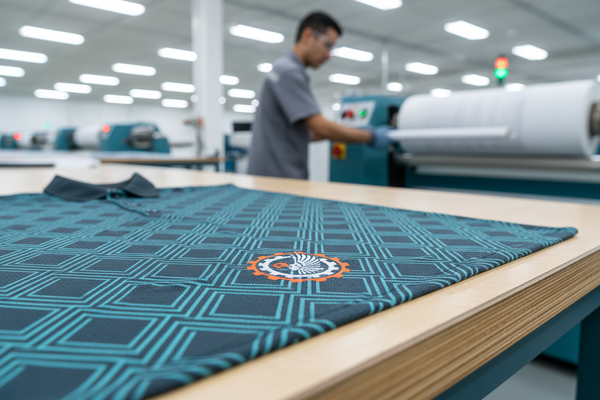
Factory observation is the only way to verify the production line capability. The sample line and the production line are different. The equipment, the operators, and the quality control systems are different. The audit confirms that the factory can produce the garment at volume—not just in a sample run.

What to look for in a factory audit:

Production line equipment: The factory should have the equipment required for the garment. The cutting tables should be capable of the fabric weight. The sewing machines should be capable of the thread tension. The QC stations should be capable of the inspection.

Production line operators: The operators should be trained on the garment type. The operator who sews a T-shirt might not be able to sew a hoodie. The operator who prints on cotton might not be able to print on polyester. The audit should verify the operator training.

Quality control systems: The factory should have a quality control system designed for volume. The inspection process should catch defects before they leave the production line. The QC failure rate should be documented—and the root cause should be addressed.

One buyer who conducted a production line audit discovered that the factory's sample line used different cutting equipment than the production line. The sample line cuts produced perfect edges. The production line cuts produced frayed edges. The buyer required the production line to use the same cutting equipment. The QC failure rate dropped from 12% to 3%.

3. Testing and Sampling: The Pre-Production Master Sample

The pre-production physical master sample is the contract. It represents the final product—fabric, construction, decoration, and fit. The buyer approves the master sample, and the supplier must match it across all production lots.

What the master sample must include:

The exact production fabric: The master sample must use the same fabric as the production run. A sample made from a different fabric—even a similar fabric—will be misleading. The fabric weight, hand feel, and color must match the production spec.

The exact production line: The master sample must be produced on the production line—not the sample line. A sample produced on the sample line won't replicate the production line quality. The master sample must represent the production capability.

The exact decoration: The master sample must include the full decoration—screen print, embroidery, or other finish. The decoration must be applied with the same equipment and parameters as the production run.

One buyer who approved a master sample from the sample line received 5,000 units that didn't match the sample. The production line equipment was different. The decoration was different. The fit was different. The buyer had to redo the entire order. The lesson: the master sample from the production line is the only valid reference.

During sampling for a similar program, one brand discovered that the production line QC inspection caught the color variance in the first production lot. The variance was within tolerance—but the buyer's spec required tighter tolerance. The buyer adjusted the spec and the factory adjusted the dyeing process. The next production lot matched the master sample perfectly.

4. Comparison: Supplier Qualification at Scale

Factor Small Program (100-500 units) Large Program (5,000+ units)
Supplier Qualification Sample quality review Production line audit, capacity verification, QC system review
Master Sample Sample line acceptable Production line required
QC Testing Sample-based inspection Lot-based inspection + AQL testing
Fabric Tolerance ±5% GSM ±3% GSM

What this table tells you: Large-scale procurement requires different supplier qualification criteria. The sample quality review is insufficient. The production line audit, capacity verification, and QC system review are required.

5. Frequently Asked Questions

Q: What changes when scaling apparel procurement from 100 units to 10,000 units?

The production line replaces the sample line. The supplier's capacity determines the timeline. The quality control system determines the consistency. A factory that delivers 100 perfect units might fail at 10,000 units because the systems aren't designed for volume. The fix: audit the factory's production line, not just the sample line.

Q: How do I qualify a supplier for large-scale apparel procurement?

Three steps. First, audit the factory's production line—capacity, equipment, and quality control system. Second, require a pre-production physical master sample from the production line. Third, test the first production lot before approving the bulk run. One buyer who followed this process reduced QC failures by 60%.

Q: What lead time should I expect for a large-scale apparel program?

10,000 units: 30-45 days after sample approval. 50,000 units: 45-60 days. 100,000 units: 60-90 days. The lead time increases with volume because the factory needs to source more fabric, schedule more production time, and coordinate more shipping. Factor in a 10-15 day buffer for customs clearance and transit.

Q: How do I maintain color consistency across multiple production lots?

Three methods. First, require that all fabric comes from a single dye house. Second, require spectrophotometric Delta-E tracking with tolerance <1.5. Third, require a production sample from each lot—and inspect them side by side under consistent lighting. One buyer who followed this framework received 50,000 units with consistent color.

Q: What's the real cost of skipping the production line audit?

The audit costs $500-2,000. The cost of a production run with QC failures—rework, replacement, or discounted inventory—is $5,000-20,000. The audit is a small investment compared to the cost of getting it wrong.

Q: How do I handle quality disputes with a supplier at scale?

Three rules. First, get the master sample approved in writing—including the production line, fabric, and decoration. Second, require QC testing on every production lot—fabric weight, color, and wash durability. Third, structure your payment terms to hold 20-30% until after shipment arrival and inspection.


This guide was developed by the sourcing team at apparellots.com, based on factory-floor experience and procurement data from hundreds of large-scale apparel programs. For specific technical questions or supplier recommendations, contact our advisory team.
📚 Expert Insights

Approving color from a digital proof instead of a pre-production physical master sample. The color looks right on a screen. The color looks right on a printed proof. The production run arrives and the color looks wrong. The screen and the proof use different color models—RGB vs CMYK vs textile dye—and none of them match the actual fabric. The fix: require a pre-production physical master sample on the actual production fabric, with full decoration applied, and inspect it under the lighting conditions where the garment will be sold. One buyer who skipped this step received 5,000 shirts that were two shades lighter than expected.

Tip One: The production-line sample inspection. Visit the factory and observe the production line running the master sample. The sample line and the production line are different. The master sample from the production line is the only valid reference.

Tip Two: The lot-to-lot comparison. When receiving multiple production lots, compare them side by side under consistent lighting. Batch-to-batch variance is the most common large-scale failure. If the first lot and the second lot are visibly different, reject the second lot.

Tip Three: The fabric weight verification. Cut a 10cm x 10cm square from a production sample. Weigh it on a precision scale. Multiply by 100 to get the GSM. If the result deviates more than 3% from the spec, reject the lot.

Thermoplastic Dye Migration: A phenomenon where disperse dyes in polyester fibers migrate into adjacent materials under high heat. The migration causes color bleeding into light areas—turning white prints pink or grey. The fix is controlling curing temperature and using low-migration inks. For large-scale programs, the dye migration test—heating the fabric to 180°C and checking for color transfer—is a critical QC checkpoint.

Fabric Weight Grammage Variance: The deviation in GSM from the specified target. Open-end yarns produce fabrics with higher weight variance—up to ±8% from spec. Ring-spun yarns deliver tighter tolerance—typically ±3%. The variance affects garment fit consistency across production runs. For large-scale programs, specifying ±3% tolerance and testing every production lot is essential.

Wet Crocking Friction Scale: A measurement of color transfer from a fabric during rubbing—wet and dry. The test uses a standardized rubbing motion and compares the color transfer to a Gray Scale rating (1-5). Grade 4.0+ is acceptable for commercial apparel. For large-scale programs, wet crocking failure means color transfer to other garments, vehicle interiors, or customer's skin.

Pre-Production Physical Master Sample: A full garment sample produced on the production line, with all decorations applied, that represents the final product. The master sample is the reference for all subsequent production. For large-scale programs, the master sample is the contract—the buyer approves the master sample, and the supplier must match it across all production lots.

Mistake One: Scaling the sample spec to production without validating the factory's capacity at volume. The factory produces 50 perfect samples. The factory produces 5,000 units—and 10% fail QC. The sample process doesn't test the factory's ability to maintain quality at volume. The root cause: the sample line uses different equipment and operators than the production line. One buyer approved a sample from the sample line, then discovered the production line couldn't replicate the quality. The fix: require a pre-production physical master sample from the production line—not the sample line—and inspect it before approving the bulk run.

Mistake Two: Ignoring fabric weight grammage variance across multiple production lots. A 200 GSM fabric from one production lot might be 195 GSM. The next lot might be 205 GSM. The variance is within tolerance—but the hand feel changes. The shirts from the first lot feel lighter; the shirts from the second lot feel heavier. The fix: specify a tighter tolerance—±3% instead of ±5%—and require a production sample from each lot before shipping. One brand discovered the variance when they received 10,000 shirts with inconsistent hand feel.

Q: What changes when scaling apparel procurement from 100 units to 10,000 units?

The production line replaces the sample line. The supplier's capacity determines the timeline. The quality control system determines the consistency. A factory that delivers 100 perfect units might fail at 10,000 units because the systems aren't designed for volume. The fix: audit the factory's production line, not just the sample line.

Q: How do I qualify a supplier for large-scale apparel procurement?

Three steps. First, audit the factory's production line—capacity, equipment, and quality control system. Second, require a pre-production physical master sample from the production line. Third, test the first production lot before approving the bulk run. One buyer who followed this process reduced QC failures by 60%.

Q: What lead time should I expect for a large-scale apparel program?

10,000 units: 30-45 days after sample approval. 50,000 units: 45-60 days. 100,000 units: 60-90 days. The lead time increases with volume because the factory needs to source more fabric, schedule more production time, and coordinate more shipping. Factor in a 10-15 day buffer for customs clearance and transit.

Q: How do I maintain color consistency across multiple production lots?

Three methods. First, require that all fabric comes from a single dye house. Second, require spectrophotometric Delta-E tracking with tolerance <1.5. Third, require a production sample from each lot—and inspect them side by side under consistent lighting. One buyer who followed this framework received 50,000 units with consistent color.