Shipping Terms in Apparel Industry: FOB, CIF, DDP Guide
A New York-based streetwear brand signed a purchase order for 12,000 hoodies from a Dhaka factory. The PO specified "FOB Chattogram Port, Incoterms 2020." The factory loaded the container, delivered it to the terminal, and emailed the buyer a copy of the dock receipt. Ten days later, before the vessel sailed, a cyclone swept through the Bay of Bengal. The container — still sitting on the dock — was flooded. Saltwater ruined every hoodie.
The buyer filed an insurance claim. Denied. Under FOB, risk transfers when goods are loaded on board the vessel, not when they arrive at the port[reference:26]. The factory's responsibility ended at the dock gate. The buyer's coverage hadn't kicked in because the goods never made it to the ship. The loss: $42,000 in product, plus $6,200 in freight commitments they couldn't cancel. The term was correct. The understanding of when risk actually transferred was not.
One team we worked with in Los Angeles had a similar experience with a denim order from Vietnam. They assumed FOB meant the factory handled everything until sailing day. In practice, their supplier had no obligation beyond delivering the container to the terminal. The buyer spent three weeks arguing with the freight forwarder about who owned the risk during that dock period. They eventually settled for a 40% concession on the replacement order — enough to wipe out their margin on the entire season.
The real issue here is not which term you choose. It's whether you understand exactly where the risk transfer point sits. Most procurement executives can recite the definitions. Few can tell you, off the top of their heads, what happens to liability if a container is damaged while waiting for a vessel that's delayed by port congestion. That gap is where the money goes.
2. Story / Anecdote — The Sampling Failure That Changed a Sourcing Strategy
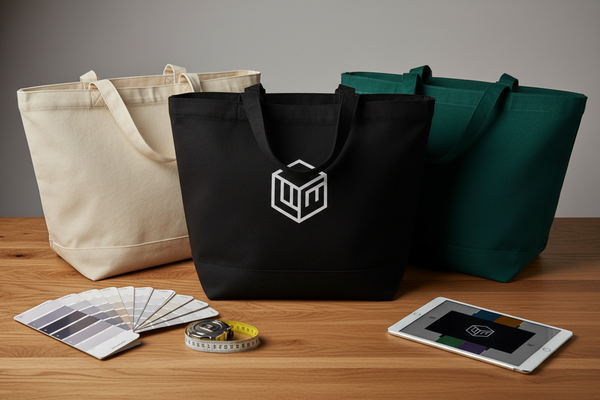
A European accessories brand ordered 8,000 canvas totes from a Guangzhou supplier. The buyer specified CIF Rotterdam, thinking the seller's responsibility extended until the goods reached the Dutch port. When the container arrived with 1,200 units showing wet crocking friction scale failures — the dye had bled from the printed design onto the natural fabric — the buyer assumed the seller's insurance would cover it.
It didn't. Under CIF, risk transfers when goods are on board the vessel at the export port, not when they arrive at destination[reference:27]. The seller's obligation was to arrange sea freight and provide minimum insurance coverage — which in this case capped at a fraction of the cargo value. The buyer was holding 1,200 unsaleable totes and a claim that covered roughly 15% of the loss.
During sampling for a similar program the following year, the same buyer insisted on a pre-production physical master sample being approved before any fabric was cut. They also switched to FOB and hired their own freight forwarder. The samples passed. The bulk shipment arrived clean. The lesson cost them about $18,000 the first time around — cheap tuition compared to what a full container loss would have been.
In our experience, buyers who treat shipping terms as a procurement afterthought are the ones who end up paying for logistics lessons twice. The ones who map out risk transfer points before signing the PO tend to sleep better during transit weeks.
The difference between FOB and CIF comes down to who books the freight and who carries the insurance — but the risk transfer point is the same for both: on board the vessel. That means in both cases, the buyer owns the risk during the ocean voyage itself[reference:28]. The only difference is who arranged the ship.
3. Material Deep-Dive — What the Terms Actually Mean for Your Cost Structure
Buyers often assume the Incoterm determines who pays for freight. That's true, but it's incomplete. The term also determines who controls the freight routing, who selects the carrier, who handles customs brokerage, and who bears the cost of delays.
FOB (Free On Board) — The supplier delivers goods on board the vessel at the named port. The buyer pays main carriage, insurance, and import duties[reference:29]. FOB is the standard for roughly 90% of clothing production[reference:30]. The buyer controls the freight spend but also bears all risk from the loading point onward.
CIF (Cost, Insurance, and Freight) — The seller arranges and pays for sea freight and provides minimum insurance coverage. Risk transfers at the same point as FOB — when goods are on board the vessel[reference:31]. The seller controls the carrier selection, which may or may not align with your cost objectives. CIF is notorious for hidden destination fees[reference:32].
DDP (Delivered Duty Paid) — The seller delivers goods cleared for import at the named destination, bearing all costs and risks including duties and taxes[reference:33]. This is the "all-in" price. It simplifies the buyer's process but transfers customs compliance risk to a supplier who may not fully understand your local regulations[reference:34].
FCA (Free Carrier) — The seller delivers goods to a carrier nominated by the buyer at a named place. Risk transfers upon delivery to that carrier[reference:35]. Under Incoterms 2020, FCA is the preferred standard for containerized shipments — not FOB[reference:36]. FOB was designed for breakbulk cargo, not sealed containers. Yet most apparel buyers still default to FOB out of habit.
Is FCA actually better for containers? Yes, if you want risk to transfer earlier. Under FCA, the moment the container is handed to your nominated carrier at the factory or terminal, the risk shifts to you[reference:37]. Under FOB, you wait until the container is lifted onto the vessel — which could be days or weeks later, depending on port congestion. That gap is exposure you don't need.
One factory we audit regularly in Ho Chi Minh City told us they prefer FCA because it simplifies their paperwork. The buyer nominates a carrier, the carrier picks up the container, and the factory's obligation ends there. No waiting for vessel schedules, no arguing about whose fault it was when the container sat on the dock for six days. Clean, clear, documented.
What actually determines the cost impact of your shipping term is not the freight line item — it's the hidden charges that accumulate after the vessel arrives. Demurrage, detention, customs exam fees, chassis splits, and late delivery penalties can add 12–25% to the apparent FOB cost[reference:38]. Those charges are almost always the buyer's problem, regardless of which term you selected.
4. Cost Analysis — The Real Numbers Behind FOB, CIF, and DDP
Let's put real numbers on this. A 40-foot container from Shanghai to Los Angeles runs roughly $2,500 to $3,100 on the spot market for a 40HQ in early 2026[reference:39]. A 20-foot container runs $1,200 to $1,500 on the same lane[reference:40]. Air freight from China to North America costs about $5.47 per kg in 2026 — roughly 18 to 20 times more expensive than ocean freight per kilogram[reference:41]. Ocean works out to about $0.30 per kg for a full container[reference:42].
Those are the headline numbers. Here's what they don't tell you.
Under FOB, your landed cost includes the FOB price plus freight, insurance, brokerage, duties, and last-mile delivery[reference:43]. Under DDP, those costs are bundled into one number from the seller[reference:44]. The DDP number will be higher than the FOB number. But the FOB number will require you to manage six different vendors — freight forwarder, customs broker, drayage provider, warehouse, insurance carrier, and possibly a trucking company for last-mile.
My advice to most buyers is to run both scenarios before committing. Take your FOB quote and add 15% for unexpected charges — that's a realistic buffer for a first container[reference:45]. Then compare that to the DDP quote. If the DDP number is within 10% of your buffered FOB number, the convenience might be worth it. If it's more than 20% higher, the supplier is either padding or not optimized for your lane.
Here's a cost breakdown for a typical 40HQ container of casual shirts from Shanghai to a Los Angeles warehouse:
| Cost Component | FOB (Buyer Managed) | DDP (Supplier Managed) |
|---|---|---|
| FOB factory price (10,000 shirts) | $38,000 | $38,000 |
| Ocean freight (40HQ) | $2,800 | Included |
| Marine insurance (1% of value) | $380 | Included |
| US customs brokerage + filing | $250 | Included |
| Duties (16.5% on cotton knit shirts) | $6,270 | Included |
| Drayage (port to warehouse) | $650 | Included |
| Total Landed Cost | $48,350 | $51,200–$53,000 |
The DDP quote typically lands 6–10% higher than a well-managed FOB shipment. But that premium buys you one thing: you don't have to manage any of it. For a first-time importer, that might be worth the markup. For a volume buyer with an established logistics operation, it's margin left on the table.
If I had to choose, I'd recommend FOB for any buyer who plans to import more than three containers per year. The learning curve is steep for the first shipment, but the cost savings compound quickly. One mistake we frequently see is buyers sticking with DDP long after they've outgrown it — paying the convenience premium on every container when they could be running their own freight program at 8% lower cost.
Air freight adds a different dimension. At $5.47 per kg, a 500 kg air shipment costs about $2,735 — roughly the same as a full 40ft container by sea[reference:46]. But air lands in 5 to 7 days versus 30 to 35 by ocean[reference:47]. The decision rule: ship air only when one week of stockout contribution would exceed the air freight premium[reference:48]. For most apparel categories, that means high-margin launch SKUs or emergency restocks, not core inventory.
The real risk with choosing the wrong shipping term isn't the freight line item — it's the demurrage and detention charges that accumulate when your container sits at the port longer than the free time allows. Free time is typically 5 to 14 calendar days[reference:49]. After that, demurrage charges can run $100 to $200 per day[reference:50]. A two-week delay caused by a customs exam or a missed truck appointment can add $1,500 to $2,800 to your landed cost — charges that are almost always the buyer's responsibility, regardless of Incoterm[reference:51].
5. Checklist — Seven Checks Before You Sign the PO
Before you commit to a shipping term on your next purchase order, run through this checklist. Each item represents a failure point we've seen in actual buyer-supplier disputes.
1. Confirm the named place is specific. "FOB Shanghai" is not sufficient. Specify the exact port terminal: "FOB Shanghai Yangshan Port, Incoterms 2020." Ambiguity in the named place creates disputes about where delivery actually occurred[reference:52].
2. Verify the supplier's export license. Under EXW or FCA, you may need to act as the exporter of record. If you don't have a local presence or license in the origin country, your goods won't clear export customs[reference:53].
3. Clarify who books the carrier. Under CIF or DDP, the supplier controls the carrier selection. Ask for the carrier name and voyage number before the container loads. If they're using a non-reputable line, you're exposed to rolling and delay risks.
4. Request a line-item cost breakdown for DDP. Don't accept a single all-in number. Ask for product cost, freight, insurance, duties, and brokerage as separate line items[reference:54]. This gives you visibility into where the money is going and prevents padding.
5. Confirm the insurance coverage type and limit. CIF only requires minimum insurance coverage under Clause C of the Institute Cargo Clauses[reference:55]. That's typically not enough for a full container of finished goods. Buy All Risk coverage separately if you're on FOB. Under DDP, confirm who carries the insurance and what it covers.
6. Document the container seal number at loading. Take a photo of the seal with your phone — time-stamped. When the container arrives, check the seal number against the Bill of Lading before accepting delivery. A mismatch means the container was opened in transit[reference:56].
7. Build a demurrage and detention buffer into your timeline. Free time at the destination port is typically 5 to 14 days[reference:57]. If your customs clearance or drayage booking slips beyond that, you're paying $100 to $200 per day[reference:58]. Add a 5-day buffer to your delivery estimate before you commit to retail launch dates.
One buyer we worked with in Chicago skipped step four — they accepted a DDP quote without breaking it down. When the shipment arrived, they discovered the supplier had declared the goods at 60% of their actual value to reduce duties. Customs flagged the discrepancy, held the container for 18 days, and issued a penalty of $12,000[reference:59]. The supplier refused to cover it. The buyer paid.
If I had to choose, I'd recommend running this checklist with your supplier before the sampling phase, not after the PO is signed. Get the terms nailed down early, and you avoid the last-minute negotiation that always favors the party with more logistics experience.
6. Conclusion — The Term Is a Tool, Not a Trap
Shipping terms in the apparel industry are not designed to trick buyers. They're standardized rules that clarify who does what, who pays what, and who bears which risks[reference:60]. The problem is not the terms themselves — it's the gap between what buyers assume and what the terms actually say.
FOB gives you control and cost transparency but requires you to manage the logistics chain. DDP gives you simplicity but transfers customs compliance risk to a supplier who may not understand your market. CIF sits in the middle — the supplier handles the freight, but you still own the risk during the voyage.
The real issue here is not which term you choose — it's whether you've built the operational capacity to handle the responsibilities that come with it. If you have a freight forwarder you trust and a customs broker who knows apparel classifications, FOB is your best bet. If you're buying samples or small-batch test orders, DDP might save you more in headache than it costs in markup. If you're somewhere in between, FCA is worth a serious look for containerized shipments.
One team we worked with in Melbourne switched from DDP to FOB after their third container. They saved roughly 8% on landed cost and gained visibility into every logistics line item. But they also hired a freight forwarder and spent two months learning the customs clearance process. The switch paid for itself within two shipments. They haven't looked back.
In the end, the best shipping term is the one you actually understand. Read the ICC Incoterms 2020 rules. Ask your supplier to walk you through their interpretation. Put the named place and "Incoterms 2020" on every PO. And never assume — verify exactly when risk transfers from their hands to yours. That single piece of knowledge will save you more money than any freight negotiation ever could.