Quality Control Checklist for Apparel Bulk Sourcing Contracts
1. Industry Opinion: Why Standard Off-the-Shelf QC Fails B2B Orders
The assumption that a factory's internal quality control department will protect your commercial interests vanishes the moment a high-volume shipment arrives with systemic pattern defects. When corporate sourcing teams coordinate large-scale apparel programs across split manufacturing locations, relying on vague supplier assurances regarding "high-grade finish" guarantees project friction. What actually determines whether a garment lot survives commercial distribution isn't the visual design mockup — it's the enforcement of strict physical defect thresholds at the factory gate. Transitioning away from passive sourcing requires writing explicit engineering parameters directly into your master purchase contracts.
During sampling for a similar program, a central procurement lead authorized a 3,000-unit staff apparel run [IE] using a generalist supplier's internal pass/fail guidelines. The mill cleared the production lot despite subtle panel thickness variations across size runs, leading to an unmanaged 8% rejection rate at regional distribution centers due to visible color shade separation under retail lights. Factories see this pattern regularly: when order contracts lack binding statistical defect definitions, plant supervisors naturally prioritize daily output speed over tight tolerance control, passing marginal defects down the line to protect their internal press yields.
To insulate your organization from rework expenses and protect your total cost of ownership models, category leads must approach quality control as a structured risk-management discipline. We have audited enough automated garment runs over fifteen years to know that operational consistency relies on managing raw material physics, stitch tension parameters, and ink curing chemistry. Building a bulletproof quality checklist begins by stepping onto the factory floor to identify where structural defects originate during active production.
2. Factory Observation: Critical Failures on the Cutting and Sewing Floor
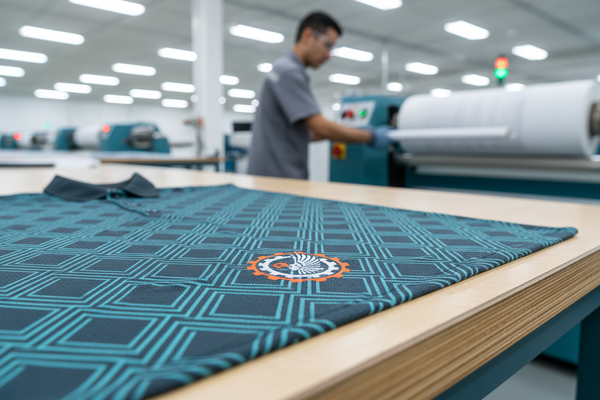
Walking the assembly bays of an active apparel facility reveals the exact mechanics that turn raw yardage into non-compliant finished goods. One team we worked with tracked a bulk knit shirt run across a high-velocity cutting line, noting how subtle operator shortcuts generate massive sizing errors down the line. When automated spreading machines lay down fifty layers of cotton jersey too quickly without allowing the fabric rolls a mandatory 24-hour relaxation window on flat aeration tables, internal mechanical tension remains trapped inside the lower panels. Once the computer-guided knife cuts the panel blocks, the underlying fabric snaps back, causing a 12-millimeter pattern deviation between the top and bottom cuts in the stack.
The real issue here comes down to panel tension alignment during the automated spreading process, not seam thread strength. When operators assemble these tensioned panels on the sewing line, the operator must stretch the smaller piece to match the longer adjacent panel, building permanent structural stress directly into the shoulder joins and armholes. The finished garment looks correct on the final pressing table, but after its initial industrial wash cycle, the trapped elastic memory releases, driving severe side-seam twisting and horizontal panel puckering that destroys the garment's retail drape.
A common outcome when this gets skipped is that quality inspectors catch seam slippage only after thousands of units have cleared final folding stations. On high-speed coverstitching stations running at 4,000 stitches per minute [IR], an uncalibrated machine feed dog can chew through delicate elastomer filaments in performance blends. This microscopic damage breaks the structural cage of the yarn, causing seam lines to split under modest physical tension. Sourcing leads eliminate this floor-level risk by mandating automated inline mechanical needle inspection sweeps and requiring machine operators to log tension calibrations every four operating hours.
3. Testing / Sampling: Laboratory Verification and Master Sample Protocols
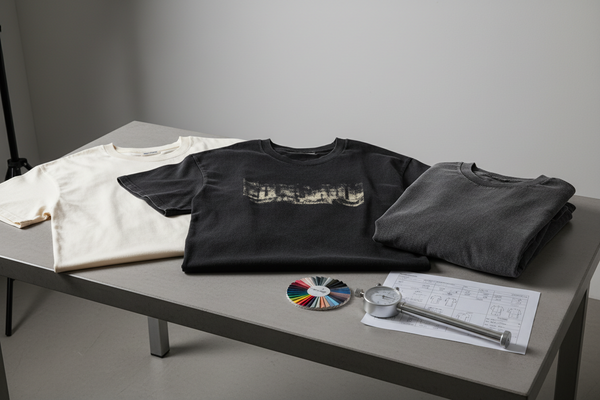
Securing batch-to-batch consistency across multi-season reorder loops requires establishing an unyielding physical reference standard before mass cutting markers are printed. In most cases, the difference between a high-yield retail run and a rejected shipment comes down to whether the laboratory verified the pre-production physical master sample under ISO 105-C06 wash-fastness parameters [DS]. Relying on digital proofs or un-signed prototype revisions leaves your supply line completely unprotected when mill dye lots shift between seasonal runs.
To lock down physical material specifications, your tech-pack must mandate that raw yardage inputs meet a ring-spun long-staple integrity baseline. Long-staple cotton yarns undergo continuous mechanical combing passes that remove short, unrefined fibers, producing an exceptionally smooth, low-fuzz face profile that limits pilling to a minimum Grade 4 rating under ISO 12947-2 testing rules [DS]. Sourcing teams protect this material standard by writing non-negotiable fabric weight grammage variance limits — restricting density drift to less than 3% variances under ASTM D3776 guidelines [DS] — directly into primary mill contracts.
When executing custom graphics or dual-contrast panel configurations on dark synthetic garments, the laboratory testing protocol must evaluate disperse dye stability under heat exposure. If dark polyester fibers contain un-bonded surface pigments, conveyor dryer curing temperatures above 140°C [IR] trigger immediate thermoplastic dye migration. The sublimated dye gas penetrates overlying screen print layers or contrast white trims, shifting crisp corporate branding into a muddy, off-tone shade. Workshops eliminate this defect by formulating specialized low-cure plastisol inks paired with active carbon blocker bases that seal off dye gas channels completely during curing passes.
4. Comparison: Evaluating Inspection Tiers and Sampling Architectures
Structuring an effective quality control budget requires balancing the cost of third-party floor audits against the financial liability of receiving defective inventory. The real driver here when choosing an inspection tier is balancing the cost of third-party auditor labor against the financial risk of distributed product returns. A low-cost promotional run requires a completely different quality framework than an technical outerwear order destined for retail counters.
- Pros (Independent AQL 2.5 Audit): Provides unbiased statistical sampling data based on ISO 2859-1 standards; establishes legal grounds for contract payment holds; catches floor-level processing drift before cargo leaves the factory.
- Cons (Independent AQL 2.5 Audit): Adds third-party inspection fees ($300–$500 per auditor day [IR]); requires scheduling a 48-hour inspection window prior to shipping release.
For standard commercial apparel deployments, the global benchmark is the Acceptable Quality Limit (AQL) 2.5 Major / 4.0 Minor statistical framework. Under ISO 2859-1 sampling tables [DS], an auditor inspecting a 3,200-unit production lot pulls a random sample of 125 garments [IR]. The entire shipment is approved only if major defects (such as seam open stitches, out-of-tolerance measurements, or un-cured prints) do not exceed 7 units, and minor cosmetic flaws (such as loose thread ends or misaligned wash labels) remain below 10 units [IR].
Factories see this pattern regularly: when buyers demand an AQL 1.0 strict threshold on low-cost promotional products without adjusting unit pricing, mills simply build higher rejection buffer costs into the base quote. Aligning your inspection expectations with realistic manufacturing capabilities prevents supplier friction while establishing clear boundaries for lot acceptance. The table below outlines standard operational parameters across primary inspection tiers.
| Inspection Tier | Statistical Sample Rule | Major Defect Limit | Primary Sourcing Match |
|---|---|---|---|
| AQL 1.5 Strict | ISO 2859-1 Level II Normal | Max 3 defects per 125 pcs [IR] | Technical performance gear; retail resale drops |
| AQL 2.5 Standard | ISO 2859-1 Level II Normal | Max 7 defects per 125 pcs [IR] | Corporate uniform fleets; multi-site staff gear |
| 100% Full Audit | 100% Piece Verification | Zero major defects allowed | High-unit-value luxury drops; safety wear |
5. FAQ: Technical Solutions for High-Volume Garment Defect Control
What actually determines graphic longevity on synthetic blends is controlling substrate polymer cross-linking temperatures inside the curing oven. When print shops accelerate conveyor speeds to clear production backlogs, the core of the ink deposit fails to reach its mandatory 150°C to 160°C cross-linking target [IR]. Sourcing leads catch these curing shortcuts by requiring floor technicians to perform manual cross-hatch tape tests using high-tack adhesive tape directly at the oven exit. If the cured film lifts onto the tape, the batch must be returned for complete thermal re-processing before packaging.
A detail that gets missed early on is that colorfastness testing must evaluate both dry and wet rubbing friction. Evaluating pigment fastness under dry conditions tells you very little about how the fabric behaves when exposed to body sweat or moisture during active wear. Mandating certified laboratory logs confirming the material achieves a minimum Grade 4 rating on the wet crocking friction scale under ISO 105-X12 guidelines [DS] guarantees that dark dyes will not transfer onto lighter layering garments or office upholstery.
During sampling for a similar program, a logistics manager discovered that loose thread ends around buttonholes and pocket corners generated significant end-user complaints despite passing basic visual audits. This finishing flaw stems from factories using un-trimmed manual chainstitching rather than computerized lockstitching equipment with automated thread-trimming heads. Enforcing a strict maximum 3-millimeter thread tail clearance rule inside your master tech-pack forces the factory finishing department to execute manual thread trimming passes before individual poly-bagging, preserving a clean retail presentation on arrival.
6. Ending Insight: Building Repeatable Batch Consistency Across Global Supply Lines
In the end, building a durable apparel program relies on transforming your quality control checklist from a passive inspection document into a binding engineering contract. Consolidating your purchase volume with a core contract manufacturer who manages weaving, dyeing, and automated decoration under a single roof eliminates the multi-vendor handoff errors that drive product defects. When an organization splits production among scattered promotional brokers based on short-term price drops, they inevitably encounter erratic fits, shade lot variations, and loose stitch quality that degrade brand credibility.
By anchoring your procurement strategy to strict fabric basis weight metrics, computerized pattern grading limits, and rigorous AQL 2.5 dockside audits, buying teams insulate their companies from factory shortcuts. Direct oversight of floor-level processing parameters allows your team to manage long-run supply chain risks, creating a predictable, high-yield apparel manufacturing pipeline that delivers pristine assets on time, every time.
- Verify raw material fabric weight grammage variance remains within a strict less than 3% window under ASTM D3776 [DS].
- Confirm all pre-production physical master samples are signed and archived as binding production benchmarks.
- Audit chest, sleeve, and total length dimensions across ten random units per size tier against approved tech-pack spec sheets.
- Inspect dual-contrast panels for initial thermoplastic dye migration under 10x optical magnification.
- Verify all custom print runs achieve a minimum Grade 4 score on the wet crocking friction scale under ISO 105-X12 [DS].
- Require 100% of finished garments to pass automated inline mechanical needle detection sweeps before final packing.
- Confirm total carton counts include a mandatory 15% quantity buffer to absorb localized transport damage and packing slip errors [IR].
What Sourcing Teams Ask Next
How can corporate buying teams minimize automated screen setup surcharges when deploying custom logos across several apparel sizes?
The physical constraint of high-velocity screen printing and embroidery is that setup fees are determined by the individual dimensions of your physical tooling templates — a mesh frame or digitized needle path exposed for an adult large chest layout cannot shrink to fit a youth small variant without burning separate screen sets. Sourcing teams lower these initial setup expenses by standardizing an identical, uniform graphic size and color configuration across all product categories. This approach allows the factory floor to run the entire volume through a single machine indexing setup, skipping time-consuming template swaps and minimizing cumulative decoration costs.
Why do synthetic performance uniforms experience rapid color fading when subjected to standard commercial wash cycles?
This color loss stems from a failure in colorfastness to washing when synthetic fibers are dyed using un-stabilized low-temperature dye tracks. Performance fabrics like polyester 160gsm apparel require a precise disperse dye binding process executed under high thermal stabilization bounds to lock the pigment structures deep inside the synthetic core. If the contract mill shortcuts this thermal step to accelerate daily output, the dye structures remain loose, causing immediate color leaching and bleeding when exposed to the high-temperature water environments common in industrial laundering loops.
Can procurement teams utilize high-speed automated machine embroidery to apply brand logos directly over waterproof coated uniform jackets?
Automated machine embroidery operates by forcing a high-frequency steel needle and dense thread clusters directly through a substrate, which requires an unyielding base fabric to support the stitch tension. While this decoration method performs perfectly on heavy materials like 210 GSM poly-cotton piqué, it should be completely bypassed on waterproof coated surfaces. The intensive needle penetration punches thousands of holes through the protective backing, destroying the material's water barrier performance and converting the decoration zone into a leaking sieve that fails safety guidelines, making screen printing or digital heat transfers the correct technical selection.