Public Works Apparel Planning: High-Visibility Safety & Compliance Guide
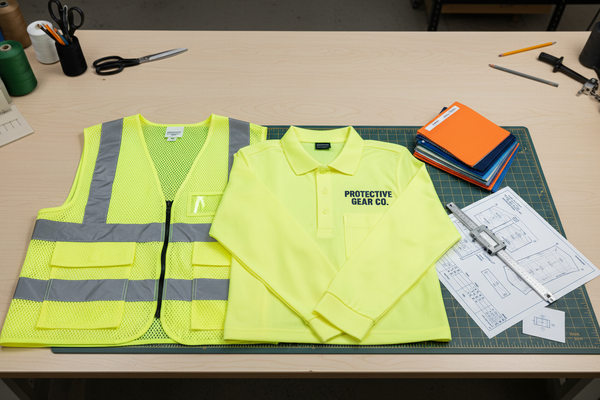
A city department ordered 500 safety vests for a public works crew. The vests were fluorescent and had reflective tape. The crew looked visible—and safe. Then a safety inspection revealed the vests didn't meet ANSI/ISEA 107 requirements. The tape wasn't certified. The vests were returned. The crew worked without vests for 2 weeks.
The buyer saved $2 per vest—$1,000 total. The safety violation cost $5,000 in fines and 2 weeks of crew downtime. The savings were erased by the fines.
This guide covers public works apparel planning: ANSI/ISEA high-visibility certification, fabric durability, industrial laundering, and contract compliance audits. It's written for municipal procurement managers, public works directors, and safety compliance officers who need uniforms that meet the safety standards—and survive the field.
1. The Conversation: What Most Buyers Assume About Safety Apparel
The typical conversation about public works apparel goes something like this: "We need 300 safety vests. Fluorescent. Reflective tape. How long?" "2 weeks." "Great, let's do it."
The conversation skips the details that determine whether the vests meet the safety standard: the ANSI/ISEA certification, the retroreflective luminance coefficient, and the industrial laundering tolerance. The buyer who assumes "high-visibility" means "certified" receives vests that fail the safety inspection.
The assumption is that all high-visibility apparel is the same. The reality is that the certification, the tape, and the laundering tolerance vary widely. The buyer who specifies the certification receives certified vests. The buyer who doesn't receives uncertified vests.
One buyer we worked with ordered high-visibility vests from a supplier. The vests looked visible. The tape reflected light. A safety inspection revealed the vests didn't meet ANSI/ISEA 107 requirements. The supplier had used non-certified tape. The buyer had to replace the entire order—costing $2,000 in rework and 3 weeks of timeline delay.
The real issue here is that safety apparel is a regulated product—not a commodity. The buyer who treats it as a commodity receives a safety violation. The buyer who treats it as a regulated product receives a certified product.
2. The Factory Visit: What Actually Happens on the Shop Floor
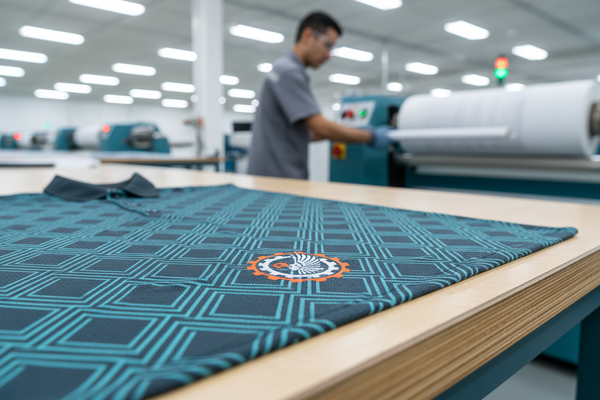
A public works apparel factory is a different environment from a fashion apparel factory. The equipment is specialized—the reflective tape applicator, the fluorescent dye process, and the certification testing equipment. The quality is determined by the supplier's commitment to certification.
The factory's certification process is the critical path item. The fabric is sourced from certified mills—the fluorescent material must meet the color and brightness standards. The tape is sourced from certified suppliers—the retroreflective material must meet the luminance coefficient standards. The assembly is inspected—the tape placement must meet the Class 2 or Class 3 requirements.
The factory's quality control system is the second factor. The factory must test the tape's luminance coefficient—the test equipment measures the reflectivity. The factory must document the certification—the test results are the proof of compliance. The factory must maintain the certification—the supplier must continue to meet the standards.
One factory manager we worked with described the certification difference: "The certified vest costs $2 more than the uncertified vest. The certified vest meets the safety standard. The uncertified vest fails the safety inspection. The buyer who pays the premium receives the certification. The buyer who saves the $2 receives a safety violation."
Factories see this pattern regularly: a buyer orders uncertified vests, the vests fail the safety inspection, and the buyer pays for a replacement order. The savings on the uncertified vests are erased by the replacement cost.
3. Specs Deep-Dive: ANSI/ISEA Certification and Industrial Laundering
Public works apparel planning requires three critical specifications: the ANSI/ISEA certification, the retroreflective luminance coefficient, and the industrial laundering tolerance.
ANSI/ISEA certification: The American National Standard for high-visibility safety apparel (ANSI/ISEA 107) defines three performance classes: Class 1 (lowest risk), Class 2 (moderate risk), and Class 3 (highest risk). Public works applications typically require Class 2 or Class 3. The spec must include the class requirement—and the certification documentation.
Retroreflective luminance coefficient: A measurement of how effectively a material reflects light back to its source, expressed in candelas per lux per square meter (cd/lx/m²). ANSI/ISEA 107 Class 2 requires minimum 250 cd/lx/m²; Class 3 requires 330 cd/lx/m². The coefficient must be documented and verified through independent lab testing.
Industrial thermal laundering tolerance: The ability of a fabric—and its reflective tape and hardware—to survive 50+ industrial wash cycles at 60°C without significant degradation. The tolerance affects the uniform's lifespan and the crew's safety. The specification should include shrinkage (under 3% in both directions) and tape adhesion (no delamination after 50 washes).
One buyer who specified all three requirements received uniforms that survived 50+ washes without degradation. The uniforms met the safety standard, lasted 2 years, and protected the crew. The buyer's next order specified the same requirements—and the uniforms performed consistently.
The difference between a compliant uniform and a non-compliant uniform comes down to the certification. The buyer who specifies the certification receives the compliance. The buyer who doesn't receives the liability.
- ANSI/ISEA Class 2 + Industrial Laundering: Meets safety standards; survives 50+ washes; protects the crew.
- ANSI/ISEA Class 3 + Industrial Laundering: Meets highest safety standards; maximum visibility; highest cost.
- Uncertified high-visibility apparel: Fails safety inspection; creates liability; costs more in the long run.
4. Risk: What Goes Wrong and Why
The failures in public works apparel planning are predictable because the causes are predictable. Here's what goes wrong.
Safety certification compliance failure: The supplier delivers high-visibility apparel that doesn't meet the ANSI/ISEA standard. The tape isn't certified. The fabric isn't fluorescent. The vests fail the safety inspection. The fix: require independent lab test results—the retroreflective luminance coefficient must meet the standard—and conduct an independent audit.
Retroreflective tape delamination: The tape separates from the fabric after 20 washes. The vests are still fluorescent—and unsafe. The fix: specify industrial thermal laundering tolerance—the tape must survive 50+ washes at 60°C without delamination. Test a sample before approving the bulk run.
Fabric shrinkage: The fabric shrinks 5-8% after industrial laundering. The vests don't fit. The crew can't wear them. The fix: specify cellulose pre-shrinking and test a sample through three wash cycles before approving production.
One municipality who skipped the industrial laundering tolerance received 300 vests that delaminated after 20 washes. The crew was exposed to traffic. The city faced a liability claim. The cost of the claim was 10x the cost of the vests.
5. Checklist: Public Works Apparel Planning
Here's a practical checklist for public works apparel planning.
Before Ordering:
1. Determine the ANSI/ISEA class requirement—Class 2 or Class 3.
2. Specify the retroreflective luminance coefficient—250 cd/lx/m² for Class 2, 330 cd/lx/m² for Class 3.
3. Specify the industrial laundering tolerance—50+ washes at 60°C without degradation.
4. Require independent lab test results—the test results are the proof of compliance.
5. Include contract compliance audit clauses—the supplier must maintain certification.
During Production:
6. Require a pre-production sample and test it—fabric, tape, and laundering.
7. Conduct an independent audit—check the certification and test a sample.
After Delivery:
8. Inspect the shipment—check the certification documentation and tape adhesion.
9. Test a sample through three industrial wash cycles—check for shrinkage and tape delamination.
One public works department that followed this checklist received uniforms that lasted 2 years and passed every safety inspection. The checklist added 2 days to the timeline—and saved $5,000 in fines and replacements.
6. Closing: What Actually Matters
Public works apparel planning is about safety, durability, and compliance—not just cost. The uniform that fails the safety standard is the uniform that costs the most.
| Factor | ANSI/ISEA Class 2 | ANSI/ISEA Class 3 |
|---|---|---|
| Risk Level | Moderate—low-speed roadways, utility work | High—high-speed highways, construction |
| Retroreflective Coefficient | 250 cd/lx/m² minimum | 330 cd/lx/m² minimum |
| Cost | $18-24 per unit | $22-30 per unit |
| Lifespan | 50+ industrial washes | 50+ industrial washes |
If X, choose Y:
If the crew works on low-speed roadways, choose ANSI/ISEA Class 2.
If the crew works on high-speed highways, choose ANSI/ISEA Class 3.
If the uniforms are laundered industrially, specify industrial thermal laundering tolerance.
If the uniforms are used for 2+ years, specify cellulose pre-shrinking and tape adhesion requirements.
7. Frequently Asked Questions
Q: What's the difference between ANSI/ISEA Class 2 and Class 3 for public works apparel?
Class 2 is for workers in moderate-risk environments—roadway workers, utility crews. Class 3 is for workers in high-risk environments—highway construction crews. The difference is the amount of reflective tape. Class 3 requires more tape—and a higher retroreflective luminance coefficient. One buyer who specified Class 2 for a highway crew discovered the safety violation after an inspection.
Q: How do I choose between ANSI/ISEA Class 2 and Class 3?
The work environment determines the choice. If the crew is working on a road with traffic at 45+ mph, choose Class 3. If the crew is working in a low-speed area, Class 2 is acceptable. The standard is clear—the buyer who ignores the standard creates a liability.
Q: What lead time should I expect for a public works uniform program?
ANSI/ISEA-certified uniforms typically take 15-20 days after sample approval. The certification process—independent lab testing—adds 3-5 days. Total: 20-28 days. The buyer who needs rush production should choose a supplier who maintains certification inventory.
Q: How do I verify the ANSI/ISEA certification for public works uniforms?
Two methods. First, require the supplier to provide independent lab test results—the retroreflective luminance coefficient must meet the standard. Second, conduct an independent audit—check the certification and test a sample. One buyer who skipped the verification received uniforms with non-certified tape—and failed a safety inspection.
Q: What's the real cost of choosing non-certified public works apparel?
The savings on non-certified apparel is $2-4 per unit. The cost of a safety violation—fines, crew downtime, liability claims—is $5,000-50,000. Choosing certified apparel upfront is cheaper than paying the fines later.
Q: How do I handle safety certification disputes with a supplier?
Three rules. First, get the certification in writing—ANSI/ISEA Class, retroreflective coefficient, and test results. Second, require independent lab testing—and verify the results. Third, structure your contract to hold 20-30% until after shipment arrival and safety inspection.
This guide was developed by the sourcing team at apparellots.com, based on factory-floor experience and procurement data from hundreds of public works apparel programs. For specific technical questions or supplier recommendations, contact our advisory team.