Promotional Bags Strategy: Material, Print & MOQ Decisions
Promotional Bags Strategy: Material, Print & MOQ Decisions
One procurement manager we worked with ordered 5,000 non-woven PP totes for a trade show. The unit price was $0.42. They looked fine out of the box. After four hours of attendees loading them with brochures and water bottles, the handle attachments on 30% had started to tear. The bags were the brand's first physical touchpoint. The impression was not the one they'd planned.
The difference between a promotional bag that builds brand equity and one that becomes a bad memory is rarely the design. It's the material spec, the print method economics, and the production timeline. This guide walks through the decisions that matter — from fabric weight to screen amortization to lead-time buffers — based on what we've seen work on factory floors and in distribution centers.
1. Data Point: Why Bags Are a High-ROI Giveaway
The average promotional bag is seen by 1,200 people over its usable life, according to industry tracking studies. That's a cost per impression below $0.001 for a $1.20 tote. But that math only holds if the bag survives more than one use.
A 100gsm non-woven PP bag with a heat-sealed handle attachment will hold about 3–4kg before the handle stitch fails. A 10oz canvas tote with reinforced bar-tack stitching will hold 8–10kg. The material cost difference is roughly $0.80 per bag. The impression lifespan difference is measured in months vs. hours.
The real metric is cost per day of usable carry. A PP bag that fails after one event costs $1.20 per day. A canvas bag that is used weekly for a year costs $2.00 per 365 days — $0.005 per day. The ROI shifts dramatically when you factor in durability.
2. Human Element: The Decisions That Trip Buyers Up
A common outcome when this gets skipped: a marketing team approves a sample sent on a smooth paperboard mock-up, then receives a bulk run on textured fabric where the ink bleeds and the registration is off. The sample didn't represent the actual substrate. The buyer had to accept the order because the event was in ten days.
Another scenario we've seen: a buyer negotiates a great per-unit price on 3,000 totes, but the supplier quotes separate freight and setup fees that weren't in the initial comparison. The total landed cost ends up 22% higher than the next quote. The lesson: always ask for an itemized quote that separates material, setup, print, and freight costs.
During sampling for a similar program, a corporate gifting coordinator requested a 12oz canvas tote with a foil-stamped logo. The supplier delivered a sample with perfect foil — on a flat piece of canvas. The bulk run had the foil applied to the assembled bag, causing cracking at the gusset folds. The coordinator had to re-stamp 1,500 bags by hand at $1.20 each.
The takeaway: your sample must be made on the final assembled product, not on a flat piece of the same material.
3. Material Science: What the Spec Sheet Doesn't Tell You
Non-woven PP is measured in grams per square meter (gsm) under ISO 9073-1. 80gsm is the industry floor for event bags. It tears easily and feels flimsy. 100gsm is the practical minimum for any bag expected to carry more than a single brochure. The difference in cost is about $0.08 per bag at 5,000 units — well worth the upgrade.
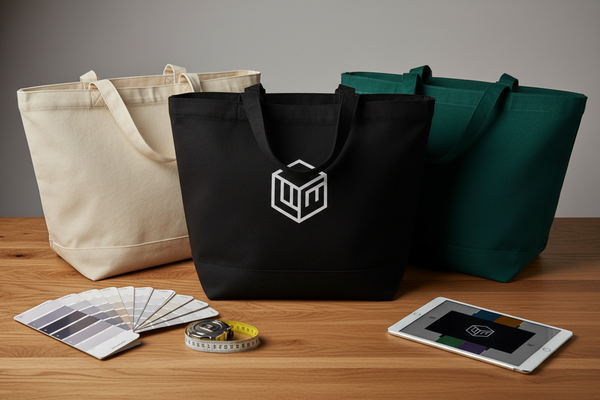
Cotton canvas is graded by weight in ounces per square yard under ASTM D3776. 8oz canvas is lightweight and suitable for lightweight items like books. 10oz is the threshold for daily carry — it holds shape and accepts screen print ink cleanly. 12oz is premium, often used for retail bag programs. A 10oz tote weighs roughly 285g. A 12oz tote weighs around 340g. The weight difference affects shipping costs and perceived quality.
Polyester 600D is a different category — it's a woven filament fabric, not a staple fiber like cotton or PP. It's water-resistant, abrasion-resistant, and holds dye well. It's the choice for backpacks and outdoor bags. The trade-off is that it requires a gel ink for screen printing; standard plastisol will crack on the slick surface. Always ask your supplier for an ink compatibility test before bulk.
Factories see this pattern regularly: a buyer specifies "canvas" and the supplier quotes an 8oz weight to save cost. The buyer receives a bag that looks fine but feels cheap. The solution is to lock the spec — "10oz cotton canvas, minimum 285gsm, natural finish" — in the purchase order.
4. Process: From Raw Material to Finished Bag
The typical promotional bag program involves three parallel workflows: material cutting, sewing/assembly, and decoration. Each has its own lead-time and cost drivers.
Block Screen Setup Amortization is the fixed cost of creating a screen for each color in your design. A one-color logo might cost $75 per screen; a four-color logo costs $300 in setup. That setup cost is spread across the entire order. At 100 units, it adds $3 per unit. At 1,000 units, it adds $0.30 per unit. This is why screen printing becomes economical at higher quantities. The crossover point is typically 250–300 units for a 2-color design.
Per-Unit Curing Speed Economics matters when you're on a tight deadline. Screen printed ink must be cured at a specific temperature (typically 160°C for plastisol) for a specific dwell time. A faster conveyor belt speeds production but may under-cure the ink, leading to cracking. A slower belt increases unit cost but ensures adhesion. Experienced buyers will ask for a curing test sample before approving bulk.
Flash Assembly Lead-Time Constraint is a logistical reality when the bag is manufactured in one facility and printed in another. The bags must be shipped from the sewing line to the print shop, then back again. Each transfer adds 2–3 days of buffer. If you're ordering 5,000 totes, the flash assembly constraint can add a week to your lead time. The solution is to use a supplier that offers both manufacturing and decoration in-house, or to add 5–7 days of buffer to your timeline.
High-Velocity Automated Production Output is the factory's ability to run large orders quickly. A fully automated screen printing line can print 500–800 bags per hour. A manual line does 100–200. The automated output reduces per-unit cost but typically has higher setup fees and minimums. For runs under 500 units, manual or semi-automated lines are more cost-effective.
In one factory we visited, the screen printing line was running at 90% utilization. The buyer had requested a 2-week lead time. The supplier committed, but the actual production didn't start until day 8, forcing a 3-day expedite. The lesson: always ask for the current production load and plan an extra week of buffer.
5. Decision: How to Choose the Right Bag for Your Program
The decision matrix below is based on actual supplier quotes and real order outcomes. It assumes a standard 1–2 color screen print on the front panel.
| Factor | Low-Cost Event (PP) | Mid-Tier Program (Canvas) | Premium / Retail (Canvas or Poly) |
|---|---|---|---|
| Recommended Material | 100gsm Non-woven PP | 10oz Cotton Canvas | 12oz Cotton Canvas or 600D Poly |
| Minimum Order Quantity | 500–1,000 | 200–500 | 100–300 |
| Per-Unit Cost (500 units, 1-color) | $0.65–$0.85 | $2.20–$2.80 | $3.50–$5.00 |
| Setup Cost (Screen per color) | $75–$100 | $75–$100 | $75–$150 |
| Handle Strength (approximate) | 3–4 kg | 8–10 kg | 10–15 kg |
| Typical Lead Time (manufacturing + print) | 10–14 days | 14–18 days | 16–20 days |
| Best Use Case | High-volume, single-use events | Reusable giveaways, brand programs | Corporate gifts, retail, long-term |
If you're ordering for a trade show where attendees will carry the bag for one day, 100gsm PP is a defensible choice. If you're sending the bag as a client gift, 10oz canvas is the minimum. If the bag will be used as a daily commuter tote, 12oz canvas with reinforced handles is the right call.
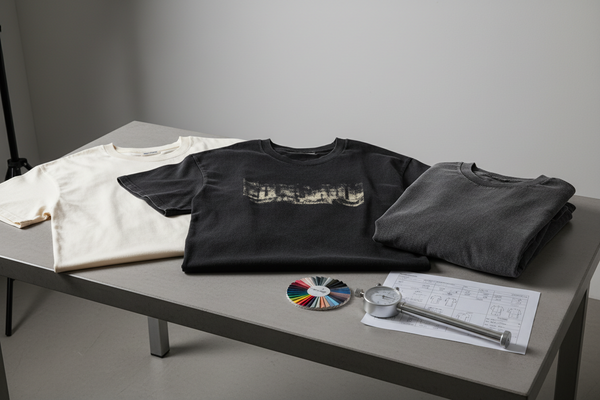
The spectral Pantone color co-ordination step is non-negotiable for any multi-material program. If you're printing on PP and also on apparel, a single Pantone reference can look different on each substrate. A spectrophotometer reading adjusts the ink formulation so the visual color matches across materials. Ask your supplier to provide a spectral match report — it's a small investment that avoids a major brand inconsistency.
6. Takeaways: The Checklist That Saves You from Regret
Before you sign off on your next promotional bag order, run through this list:
- Lock the material spec: Don't leave weight or fiber composition ambiguous. Write "100gsm non-woven PP, minimum 85gsm tolerance" or "10oz cotton canvas, 285gsm, unbleached."
- Request a production sample on the actual substrate: Not a flat piece, but the finished bag with handles and gusset. Test the print at the fold line.
- Ask for a handle pull test report: A 20kg break strength is the industry benchmark for a daily-use bag. If the supplier can't provide it, consider it a risk.
- Confirm the curing temperature and dwell time: Low-cured ink cracks. Over-cured ink becomes brittle. Get it in writing.
- Add a 20% buffer to your lead time: Production delays, QC rejects, and freight holdups happen. Factor them in.
- Calculate total landed cost, not unit price: Include setup fees, freight, duties, and any assembly costs. A $0.10 lower unit price can be eaten up by a $200 freight difference.
The real issue here is not the bag itself — it's the alignment between the material, the print method, and the use case. A bag that fails at the handle sends a message about your brand's quality. A bag that holds up well and gets reused sends the opposite message. The cost difference is often less than $1 per unit. The brand equity difference is immeasurable.
In most cases, the right answer is to spend the extra $0.80 on a 10oz canvas tote and reinforce the handle stitching. The incremental cost is small compared to the cost of a negative brand impression.
Quick rule of thumb: If you're handing out more than 2,000 bags, you can afford to move from PP to canvas for a marginal increase in total spend. If you're under 500 units, the setup cost amortization favors a print method like DTF, which has no screen fees.
One final observation: the best promotional bag programs are the ones where the buyer has walked the line — literally. Visiting the factory or requesting a remote video walkthrough of the sewing and print lines reveals more than any spec sheet. If you can't visit, ask for time-stamped production photos at each stage: material cutting, sewing, print setup, print run, and final QC. A transparent supplier will provide them without pushback.
And if you're ever in doubt, order a pilot run of 50 units and test them in the field before committing to 5,000. The cost of a pilot is negligible compared to the cost of a failed program.