Pre-Shrunk vs Regular Cotton T-Shirts Contract Sourcing Strategy
1. Opening Question: Sizing Drift and the Reality of Un-Shrunk Cotton
How many centimeters of vertical torso length can your supply chain allocation lose before a regional customer group initiates a full-lot contract rejection? When corporate marketing groups coordinate high-volume staff uniform programs across split facility nodes, they often treat the choice between pre-shrunk and regular cotton fabrics as a simple administrative pricing step. The real issue here is that without defining an absolute mechanical shrinkage threshold inside your product brief, you leave garment pattern geometry completely to the discretion of independent workshop cutter heads, exposing your project calendar to expensive sizing corrections. Managing this operational risk demands a systematic transition toward cold, engineering-focused substrate control.
During sampling for a similar program, a procurement manager finalized a 1,000-unit retail apparel contract [IE] based entirely on a digital mockup file, skipping direct material testing steps. When the mass production lot entered automated industrial laundering workflows, the un-stabilized jersey construction shrank unevenly across size runs, shortening the torso lengths and distorting the side seams away from their original alignment vectors. Factories see this pattern regularly: a facility optimized for cheap promotional giveaways will chase short-term unit price drops by bypassing fabric relaxation table rest steps, leaving your logistics lanes packed with boxy, ill-fitting items that fail basic corporate conformity rules.
To secure clean execution and protect your total cost of ownership models, category leads must approach multi-vendor coordination with fixed weight standards and locked structural clearing parameters. An unmanaged shift in fabric loop density modifies not only how the garment drapes on the employee but also how liquid decoration pigments cure across the face of the panels. Shifting your program forward requires replacing abstract visual assumptions with hard, floor-verified material criteria, beginning with a clear view of how industrial compacting machinery stabilizes raw yarn strands against post-wash deformation.
2. Myth vs Reality: The Industrial Compacted Baseline
The widespread belief that any garment labeled as "pre-shrunk" is completely immune to post-laundering dimensional shift does not survive contact with an actual commercial laundry conveyor loop. A common outcome when this gets skipped is that buying units accept automated shipments assuming the textile fibers are structurally locked, only to discover the fabric panels experience progressive shrinking over consecutive wash cycles. What actually determines whether a custom t-shirt holds its specified grading curve limits isn't the surface resining—it's the execution of mechanical compacting passes that force the knitted loops into their shortest relaxed configurations before the fabric is cut into component patterns.
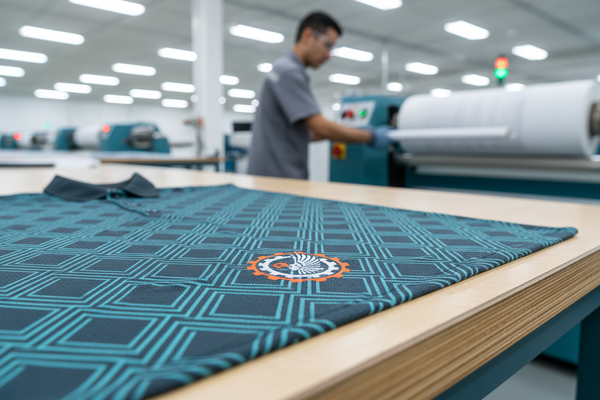
When unrefined cotton yarn is knitted into high-speed jersey webs, the mechanical needles pull the loops into elongated, oval profiles, building high internal tension directly into the web structure. If this fabric is cut and sewn immediately into regular t-shirt patterns, the first exposure to ambient water and heat during washing releases the stored energy, causing the oval loops to snap back to their natural circular forms and driving an immediate 6% to 8% vertical shrinkage yield profile [IR]. Industrial compacting machinery addresses this chemical behavior by running the fabric web through rubber compaction rollers under steam pressure, mechanically compressing the length of the loops to lock the vertical dimension within a strict less than 3% variance window under AATCC 135 testing guidelines [DS].
One team we worked with assumed that specifying a generic heavyweight cotton card was sufficient to protect a multi-location franchise uniform program, bypassing direct laboratory data verification. This choice ignored the realities of textile physics, as the un-stabilized open-end knit suffered severe vertical compression while expanding horizontally, leaving field teams with wide, truncated garments that altered the corporate brand silhouette. By standardizing your contract requirements around a pre-shrunk ring-spun long-staple integrity cotton substrate, the synthetic and organic fiber matrices stay locked in position, limiting shrinkage and protecting your unit economics across extended operational timelines.
3. Technical Comparison of Fiber Behaviors and Print Realities
Evaluating the mechanical limits of pre-shrunk ring-spun cotton panels against a regular un-stabilized open-end cotton knit requires a deep assessment of your decoration choice and your long-term wash-fastness goals. Regular un-stabilized cotton fabrics maintain an erratic yarn matrix that shifts unpredictably when exposed to wet processing, inducing severe Knit Rib Torque Distortion along the garment's vertical axis. This diagonal twisting force rotates the entire side-seam assembly forward, causing your centered corporate branding elements to skew off-center and ruin the garment's retail presentation on display counters.
Shifting the technical specifications to a pre-shrunk ring-spun construction provides an unyielding, uniform flat field that easily absorbs high-solids inks without localized panel pulling or seam distortion. Because the internal loop configurations are stabilized before cutting markers are stamped, the fabric maintains complete geometric continuity across all axes during automated screen printing operations. This structural control allows print operators to execute a highly accurate Centimeter Graphic Positioning Protocol, locking the location of the brand emblem to fixed neckline and shoulder seam junctions rather than fluid, unstable side-seam tracks, ensuring complete design alignment across the entire size distribution curve.
What tends to surprise first-time buyers is how much the material shrinkage variance alters the physical endurance of the decoration layer itself over repeated laundering programs. If you place a rigid, heavy ink deposit onto an un-stabilized regular cotton base, the fabric underneath will contract dramatically during the wash, while the cured print layer attempts to hold its original footprint. This structural mismatch creates immediate shear stress along the ink-to-fiber boundary, fracturing the design face and inducing premature peeling defects that compromise the product's finish and drive high return-rate spikes from your corporate end-users.
4. Sourcing Decision Matrix and Core Decoration Compatibility
The difference between an optimized contract rollout and an active production line bottleneck depends on your vendor's raw material access and how efficiently their machinery handles automated ink cross-linking parameters. When tracking multi-category uniform programs across independent workshops, production queues are governed by the chemical interaction between the fabric dyes and the decoration compounds. If your custom logo integrates large, solid color fields, selecting traditional plastisol screen prints over un-stabilized regular cotton introduces an extreme risk of Plastisol Film Curing Brittleness along the graphic boundaries as the loose cotton strands contract under heat.
We manage these engineering variables by writing clear, low-viscosity High-Solid Discharge Ink Chemistry requirements directly into our technical apparel product briefs. Discharge chemistry functions by printing an activated bleaching agent mixed with water-based pigments onto the garment face; the compound chemically deactivates the factory base color while embedding new pigments directly inside the core cotton strands, preserving the natural breathability and soft hand-feel of the fabric. To prevent visual layout drift across large runs, the brief must simultaneously enforce a strict Reactive Vat Dyeing Fixation protocol at the mill, ensuring that the dyed grounds react uniformly with the discharge chemistry to stop Dye Lot Variance Intermixing errors across separate lots.
- Pros (Pre-Shrunk Ring-Spun): Limits vertical shrinkage to less than 3% [IR]; eliminates knit rib torque distortion side-seam twisting; provides an ultra-smooth surface for high-density graphic layers.
- Cons (Pre-Shrunk Ring-Spun): Higher per-unit raw yarn procurement cost allocation; demands direct mill coordination to verify compacting parameters before cutting.
For high-volume corporate uniform drops distributed across multiple regional centers, the smart supply chain move is to balance your material weight grammage variance limits directly against your target market's laundering profile. If your staff fleet relies on commercial automated laundering networks, specifying a pre-shrunk poly-cotton 65/35 blend can provide superior seam strength, but it demands strict low-temperature ink curing to block thermoplastic dye migration across contrast panels. By locking down a single, pre-compacted cotton material benchmark across your entire program register, you eliminate supplier floor assumptions, ensuring the delivered lot matches brand compliance metrics identically from the first piece to the last.
5. Action Steps for Dockside Quality Control Enforcement
The real operational checkpoint for protecting your corporate program capital requires executing immediate physical testing protocols right on your warehouse receiving docks before signing off on final freight manifest documents. Sourcing leads regularly make the mistake of clearing final statement balances based entirely on electronic shipping alerts, only to discover sizing curve drift or un-cured print fracturing problems after pallets are unsealed at regional distribution points. Deploying a strict dockside intake framework gives your logistics team the empirical data needed to isolate and reject non-compliant lots early, holding suppliers to their contract boundaries.
- Verify total carton counts match master packing slips, confirming your 15% material buffer allocation is fully delivered [IR].
- Pull ten random items per size tier and measure chest, total length, and sleeve lines against your tech-pack blueprints.
- Examine all print boundaries under a minimum 10x magnification loop to check for initial plastisol film curing brittleness or micro-fractures.
- Perform a manual stretch test across five distinct neck rib joins to verify lockstitch thread flexibility under structural tension.
- Review certified laboratory data sheets confirming the fabric lots clear minimum Grade 4 benchmarks on the wet crocking friction scale [DS].
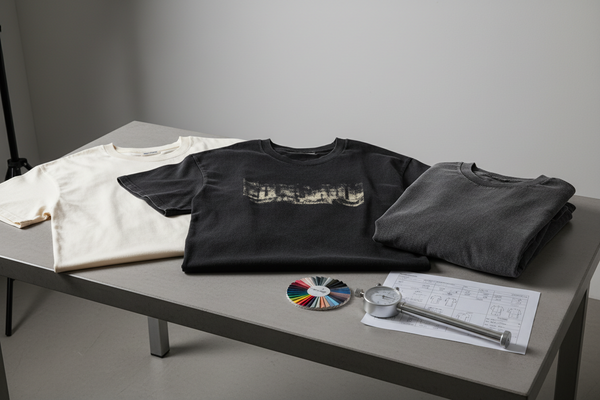
If any sample bundle displays a dimensional length deviation larger than 5 millimeters across the body block, or if graphic borders exhibit ink lifting under a basic rub test, the entire size batch must be held for comprehensive screening. We require our logistics leads to document every step of this dockside verification pass using high-definition multi-angle digital cameras and calibrated measurement scales. This formal data trail establishes an objective foundation for launching remediation orders or requiring immediate replacement runs from the factory's greige fabric reserves, keeping your regional deployment schedule insulated from unexpected supply chain delays.
6. What Buyers Usually Ask Next
How can corporate buying teams minimize automated screen setup surcharges when splitting a custom print layout across multiple t-shirt sizes?
The physical constraint of high-velocity screen printing is that setup fees are determined by the individual dimensions of your physical tooling templates—a mesh frame exposed for an adult large chest layout cannot shrink to fit a youth small variant without burning completely separate screen sets. Sourcing teams lower these initial setup expenses by standardizing an identical, uniform graphic size and color configuration across all product categories. This approach allows the factory floor to run the entire volume through a single machine indexing setup, skipping time-consuming template swaps and minimizing cumulative decoration costs.
Why do un-stabilized regular cotton t-shirts develop severe side-seam twisting after their initial commercial wash cycles?
This structural distortion relates directly to knit rib torque distortion inherent to single-knit fabric webs produced on circular knitting machines. When the raw cotton yarns are knitted at high speeds, they acquire an internal spiral torque direction; unless the fabric web clears an intensive post-milling mechanical compacting or skew-straightening relaxation phase on flat aeration tables, the loops will release their twist stress during laundering, pulling the entire side-seam alignment out of line by up to 4 centimeters [IR].
Can procurement teams utilize high-speed automated machine embroidery to apply brand logos directly onto a lightweight 140 GSM custom t-shirt?
Automated machine embroidery operates by forcing a high-frequency steel needle and dense thread clusters directly through a substrate, which requires an unyielding base fabric to support the stitch tension. While this decoration method performs perfectly on heavy materials like 210 GSM poly-cotton piqué, it should be completely bypassed on lightweight 140 GSM single-knit jersey faces. The intensive needle penetration punches thousands of holes through the thin strands, causing the fabric to gather inward and creating an irreversible rippled ring defect around your brand insignia, making screen printing or digital heat transfers the correct technical selection.