Polo Shirt Fit Types Explained for Bulk Sourcing
1. Pattern Geometry and the Realities of Corporate Sizing Curves
The calculation that a bulk uniform distribution program can succeed using basic off-the-rack sizing metrics collapses the moment garments enter high-volume operational cycles. During sampling for a similar program, a procurement team discovered that relying on a vendor's verbal description of a style configuration led to major field issues. They encountered an unmanaged shift in chest and sleeve length lines between two separate manufacturing sites, forcing an emergency pattern overhaul that delayed distribution by three business weeks. The real issue here is that without an explicit master tech-pack defining armhole circumferences and side-seam tapers, you leave pattern geometry completely to the discretion of independent workshop cutter heads.
Factories see this pattern regularly: a facility optimized for budget promotional lots will often alter a pattern's cutting markers to maximize material utilization, narrowing the sleeve openings or reducing the back panel width by subtle fractions. For classic fit configurations designed for wide staff groups, side seams must fall completely straight from the armhole down to the bottom hem, providing a standard ease allowance of 8 to 10 centimeters over actual body measurements. When moving toward modern slim fit blueprints, the pattern floor must execute a localized contour cut, reducing the waist area relative to the chest while lifting the armhole drop by 2.5 centimeters to create an integrated silhouette that keeps the hem from lifting out of position during active movement loops.
To secure clean execution across diverse worker groups, procurement directors must establish strict pattern parameter tolerances directly within the contract framework. An athletic fit blueprint demands a third distinct layout approach, maintaining an expanded shoulder panel cross-section while applying an accelerated taper downward toward the hip line. If your logistics team attempts to substitute an athletic fit need by simply reducing classic fit volumes, the finished lot will inevitably generate tight compression points across the upper chest, leading to premature seam separation along the sleeve tracks. Isolating your organization from distribution friction requires validating the specific pattern geometry during initial sample vetting phases.
2. Material Selection and Structural Knit Engineering
Evaluating knit constructions for multi-season commercial use requires looking past basic fabric weight specs and analyzing how yarn structures manage physical force. A common outcome when this gets skipped is that buying teams select a lightweight single-knit jersey for heavy field service, only to watch the fabric warp, twist, and lose shape after a few industrial laundry cycles. What actually determines long-term shape retention in corporate apparel is the deployment of a structured piqué double-knit setup, which uses a double-needle matrix to lock the loops into place and provide predictable dimensional performance under mechanical load.
When selecting fibers for high-turnover service staff networks, the core material decision focuses on a balanced Poly-Cotton 65/35 Commercial Lifecycle blend versus a pure synthetic cross-section yarn. A 65/35 poly-cotton composition milled at a 200 to 220 GSM weight standard offers an optimal combination of natural comfort and synthetic tear strength, ensuring that individual panels resist abrasion while maintaining continuous piqué double-knit geometric stability. For warm climates or specialized field service operations, your tech-pack should specify a single-knit synthetic fabric engineered for micro-capillary moisture wicking performance. This setup uses non-circular polyester strands to accelerate sweat evaporation without retaining water within the core fibers.
- Pros (Poly-Cotton Piqué): Delivers excellent structural drape; resists localized snagging; hides internal high-elasticity embroidery backing shields cleanly; exhibits minimal post-wash torque.
- Cons (Poly-Cotton Piqué): Retains higher moisture weights compared to synthetic filament webs; extended cycle drying times under high-speed industrial laundering setups.
One team we worked with assumed that choosing a 100% combed cotton jersey would project an executive retail image for their service staff. This choice ignored the realities of commercial maintenance, as the unblended cotton knit suffered a 6% vertical shrinkage rate under standard heat parameters, leaving them with boxy, short garments that failed uniform compliance guidelines. By shifting to a stabilized poly-cotton structure, the synthetic fibers act as a structural cage that limits shrinkage to less than 2.5%, ensuring the corporate fleet maintains an identical, professional look across extended operational timelines.
3. Decoration Options and Substrate Stress Calculations
Executing clean custom logos on elastic knit fabrics requires balancing automated needle impact with the underlying web density. When brand managers request high-density embroidery designs featuring thick satin fills and thousands of stitches, they often overlook how much localized needle force damages the fabric. The difference between X and Y comes down to the implementation of a high-elasticity embroidery backing shield directly underneath the target decoration panel. Without this stabilizing layer, the repeated needle impact cuts through the knit strands, causing the fabric to gather inward and creating an irreversible rippled ring defect around your brand mark.
For operations that integrate contrasting collar bands and light body panels, the primary supply chain risk shifts to dual-contrast trim color bleeding during transit or warehousing storage. If the deep pigment molecules used on the collar tips have not cleared an intense disperse dye binding process, any ambient humidity inside the shipping containers will trigger color migration. The excess dye bleeds outward, creating dark stains along the surrounding knit area that render the entire batch unusable. This defect can be eliminated by requiring that the contract mill use high-fastness disperse dyes locked in under exact thermal fixation parameters, setting a minimum colorfastness score of Grade 4 under ISO 105-A02 evaluation methods.
During sampling for a similar program, a logistics coordinator attempted to run heavy screen prints over an active performance jersey knit without checking the factory dryer settings. The high heat needed to cure standard plastisol inks triggered thermal dye migration from the synthetic fibers, shifting the white logo ink into an unapproved pastel shade. To avoid this production issue on modern athletic and slim-fit garments, the print bays must use low-cure ink systems paired with active blocker bases. This technique seals off the dye structures, ensuring your custom graphics retain exact color accuracy across high-volume production schedules.
4. Technical Quality Control Protocols on the Factory Floor
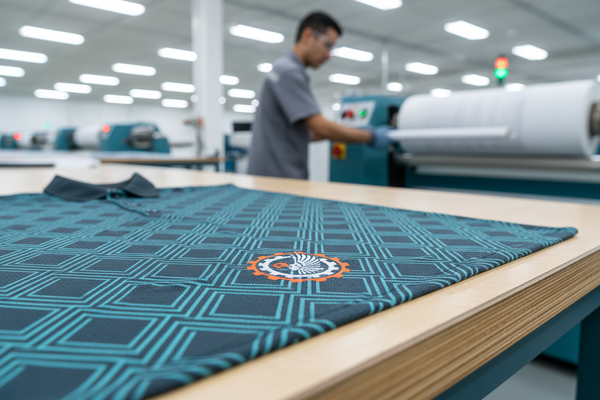
Securing a reliable manufacturing outcome across thousands of delivered items requires moving past end-of-line visual sorting and establishing automated, inline measurement audits. In most cases, pattern defects and skewing issues happen because the workshop moves fabric lots too quickly through the cutting room before the material relaxes after rolling. When knit fabric is pulled tight from warehouse storage and chopped immediately, the individual panels retain internal tension. Once the cut pieces are stitched together and run through the wash line, the built-in stress releases, causing the side seams to twist askew by up to 3.5 centimeters.
Our quality assurance supervisors use an strict AQL 2.5 tracking model to check production lots at mid-run milestones. What actually determines lot acceptance is measuring seam consistency along the collar attach zone and cuff bands under uniform tension. The inspector pulls three pieces per bundle and runs them through a calibrated needle sweep to verify that no stitch drops have occurred along the collar join, which would lead to unravelling under regular wear. Every custom polo shirt order must clear an integrated inline needle detection pass before entering final boxing zones. This step ensures that broken machine needle shards are detected and removed, protecting your organization from product liability claims during public distributions.
5. Inbound Delivery Verification Checklist
The operational benchmark for managing incoming custom lots requires deploying direct physical inspections right on your warehouse loading dock before signing off on shipping documents. Sourcing leads regularly make the mistake of clearing final balance wires based on digital freight tracking notes, only to discover sizing mix-ups or trim bleeding problems after boxes are opened at regional deployment centers. Executing a floor-level audit protects your capital allocation and gives you the hard data needed to challenge any vendor cutting corners on finishing processes.
- Verify total carton counts match the master packing slips, confirming your 15% material buffer allocation is fully delivered.
- Pull five random items per size tier and measure chest, sleeve length, and torso taper specs against your tech-pack blueprints.
- Examine all dual-contrast collar joins under a minimum 10x magnification loop to check for initial dye migration indicators.
- Perform a manual stretch test across five distinct sleeve hem joins to verify lockstitch thread flexibility.
- Review certified laboratory sheets confirming compliance with ISO 105-C06 wash-fastness guidelines.
If any sample displays a seam allowance deviation larger than 5 millimeters, or if you spot tracing residues around decoration zones, the entire size batch must be held for comprehensive inspection. We mandate that our logistics leads document every step of this dockside verification process using digital multi-angle cameras and calibrated measurement scales. This formal documentation forms an objective foundation for launching remediation orders or ordering immediate replacement runs from the factory's greige stock reserves, keeping your distribution timeline protected against unexpected supply chain delays.
6. Establishing Long-Term Program Alignment Protocols
The transition from a one-off apparel order to a reliable corporate uniform program depends on how well you build your supplier relationships and standardise your manufacturing workflows. Consolidating your volume with a primary manufacturer who manages their own yarn spinning and automated knitting loops ensures that your custom patterns remain completely uniform across multi-year reorder cycles. When an organization splits their purchases among scattered promotional brokers based on short-term price drops, they inevitably encounter erratic fits and shifting color matching standards that degrade the professional presentation of their corporate fleet.
By locking down your custom-polo-apparel program within a verified technical framework—anchored by straight straight-cut patterns, high-stability piqué double-knits, and clear inline QC steps—procurement leads protect their inventory pipelines from standard manufacturing defects. This systematic oversight minimizes lot rejections, controls your per-unit costs, and guarantees that every delivered item meets strict retail shelf standards. Maintaining direct oversight of floor-level specifications allows buying teams to insulate their organizations from quality issues, building a predictable, high-yield apparel program that serves internal staff leads across the globe.
7. What Sourcing Teams Ask Next
How can we calculate our size curve distribution matrix when onboarding a new corporate staff group across multiple regions?
The most effective approach is to avoid using generic historical retail percentages and implement a localized sizing curve audit based on employee height and weight distributions. We recommend distributing physical sizing sets—consisting of straight classic fit blanks and tapered slim fit cuts—to regional coordinators to run on-site fit checks prior to generating the master RFQ sheet. This method minimizes sizing errors and prevents expensive post-delivery shipping swaps.
Why do synthetic athletic fit polos develop sour fabric odors faster than standard poly-cotton blend garments?
The issue stems from the physical structure of synthetic yarns engineered for micro-capillary moisture wicking performance. While these fibers excel at moving water away from the skin, their non-circular cross-sections form microscopic channels that trap skin lipids and bacteria during active use. Procurement leads address this odor tracking issue by requiring that the garment mill integrate a durable antimicrobial silver-ion treatment into the polymer mix during fabric finishing stages.
Can we use high-speed laser engraving to apply subtle branding logos onto a standard 220 GSM piqué fabric polo shirt?
Laser engraving functions by melting the surface layer of synthetic yarns, which creates a permanent, debossed contrast mark on the fabric. While this technique works well on tightly packed 100% polyester fleece or interlock fabrics, it should be bypassed on piqué double-knit structures. The textured honeycomb layout of a piqué knit features varying thread heights that cause uneven laser absorption, resulting in fuzzy logo margins and weakened spots that quickly develop into holes under wash wear.