Ink Curing Process Explained | Atelier Sourcing
1. The Hidden Physics of Ink Curing: Why Surface Dry Isn't Cured
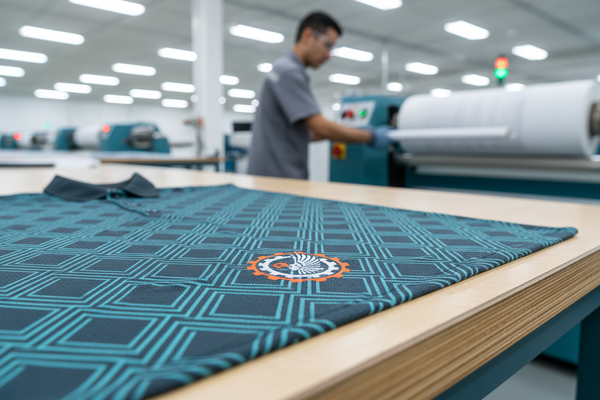
Walking the floor of an active garment printing facility offers an immediate lesson in textile chemistry: screen printing ink doesn't cure simply because it looks dry on top. When liquid ink is applied to a shirt, exposure to ambient air or short flashes of heat solidifies the top layer, creating a dry surface shell. True curing, however, requires thermal energy to penetrate entirely through the liquid deposit. This energy causes solid PVC resins and liquid plasticizers in plastisol to fuse into a continuous film, or drives water-based binders to complete their chemical cross-linking with underlying fibers. Reaching that state across the full depth of the print layer is what transforms wet ink into a long-lasting graphic finish.
During sampling for a mid-weight fleece line, an operator noticed the outer ink film felt dry to the touch right out of the flash dryer, but testing revealed the core resin stayed ungelled. Bumping dwell time by 15 seconds in the main tunnel cured the entire layer without damaging fleece loft. That adjustment illustrated how surface appearance can be deceiving. Gelation is merely a physical transition where liquid resin swells and thickens; complete curing is a thermal chemical reaction that bonds the entire print body. When apparel orders skip full thermal processing, un-gelled core ink stays beneath a dry surface film, leaving prints vulnerable to breaking down after initial laundering.
What actually determines long-term print durability isn't ink thickness — it's complete cross-linking through the entire ink film thickness. In technical terms, the ink system must reach its target fusion temperature throughout its entire structural depth. For standard plastisol, that core target is around 160°C, while low-bleed formulations for synthetic activewear operate closer to 130°C. Sourcing professionals who understand this distinction evaluate vendor drying equipment with the same care they give to screen mesh selection and automatic print head calibration.
Definition Box: Plastisol Gelation vs. Complete Curing
Plastisol Gelation: A transitional heating phase (typically 90°C – 110°C) where liquid plasticizer absorbs into PVC resin particles, turning liquid ink into a dry-to-touch gel solid.
Complete Curing: The complete fusion phase (typically 150°C – 160°C) where gelled resin and plasticizer fuse completely into a continuous, flexible polymer matrix fully anchored to fabric fibers.
Buyers often assume that an ink layer dry to the touch is fully cured. In practice, surface drying merely locks the outer resin shell, while complete cure requires internal cross-linking throughout the full ink layer. When evaluating factory capabilities, verifying that curing parameters match substrate requirements guarantees consistent apparel quality.
2. Why Ink Curing Dictates Apparel Longevity and Quality
Every step in garment manufacturing builds upon the previous step, and ink curing sits right at the intersection of chemistry and mechanical resilience. When ink undergoes complete Substrate Polymer Cross-Linking, it becomes an integral structural component of the garment. Cured ink moves, stretches, and flexes along with the knit structure of high-grade cotton or synthetic blends. This structural integration allows custom apparel to maintain crisp graphics, vibrant color clarity, and a soft, comfortable hand-feel through repeated wear and home laundering cycles.
One team we worked with running a 10,000-unit print run integrated infrared temperature strip checks every two hours during conveyor dryer operations. This simple monitoring protocol kept ink elasticity pristine throughout the entire week of manufacturing. By tracking internal garment heat, the production team maintained consistent cure levels across every batch. This proactive monitoring ensured that every shirt met strict retail standards for wash fastness and rub fastness prior to packing.
Understanding curing mechanics also protects raw fabric characteristics. Premium textiles built with Ring-Spun Long-Staple Integrity feature smooth, uniform yarns that deliver exceptional softness. Excessively hot dryer temperatures can dry out natural cotton fibers or cause dye transfer in polyester blends. Modern apparel facilities manage temperature profiles precisely, giving inks enough heat and time to cure fully while keeping fabric fibers soft, supple, and resilient.
Is higher heat always better for ink curing? Not always. Pushing dryer temperatures too high risks thermal distortion in synthetic knits, whereas extending residence time at the correct target temperature achieves thorough curing while preserving fabric integrity.
In our experience, establishing clear curing criteria during the sampling stage establishes a reliable standard for full-scale production. Sourcing teams that communicate thermal expectations clearly with factory managers ensure uniform quality, vibrant color rendition, and excellent fabric hand across every production run.
3. Step-by-Step Mechanics of Proper Curing On the Production Floor
Achieving consistent curing across thousands of garments relies on three variables: temperature, time, and airflow. The journey begins as freshly printed garments transition from automatic press platens onto the heat-resistant mesh belt of a conveyor dryer. As garments enter the heating chamber, radiant infrared elements or heated forced-air currents elevate the garment surface and ink layer toward target fusion temperatures. Airflow plays a vital role here, sweeping away evaporated solvent or moisture vapor so thermal energy can penetrate directly into the ink matrix.
A factory floor observation in Vietnam showed how matching belt speed with substrate density maintained fabric feel. When printing heavy 320 GSM organic cotton, slowing the conveyor belt to ensure full heat penetration achieved complete binder cross-linking while preserving cotton softness. Thicker substrates absorb substantial heat before allowing thermal energy to reach the ink interface. Adjusting conveyor speed allows heavy garments to stay in heat zones long enough to achieve complete cross-linking without needing elevated, harsh temperatures.
| Ink Chemistry | Target Core Temp | Chamber Residence Time | Primary Heat Mechanism | Airflow Requirement |
|---|---|---|---|---|
| Standard Plastisol | 160°C | 45 – 60 Seconds | Radiant Electric / Gas Infrared | Moderate (Exhaust Fumes) |
| Low-Cure Plastisol | 130°C | 45 – 60 Seconds | Radiant Infrared / Convection | Moderate (Exhaust Fumes) |
| Water-Based / HSA | 150°C | 90 – 120 Seconds | Forced Air Convection | High Volume Recirculating |
| Discharge Inks | 155°C | 90 – 120 Seconds | Forced Air Convection | High Volume Exhaust |
| Silicone Inks | 130°C | 60 – 90 Seconds | Forced Air / Radiant Infrared | Moderate Air Circulation |
In most cases, conveyor tunnel residence time matters far more than peak surface temperature. Rushing a garment through an intensely hot dryer risks scorching surface fibers while leaving internal ink layers under-cured. Modern production facilities utilize multi-zone conveyor dryers with independent digital temperature controls, enabling heat to rise gradually, hold steady at peak fusion temperature, and cool smoothly before garments exit the belt.
My advice to most buyers is to require thermal probe profiling logs prior to accepting initial production runs on new fabric formulations. Seeing real-time temperature data logged from inside the ink layer confirms that factory setups match exact chemical specifications.
Buyers often assume that increasing dryer temperature is the fastest way to increase output speed. In practice, dwell time inside the heat chamber dictates complete polymerization, meaning belt speed adjustments yield far better consistency.
4. Cost Implications and Operational Efficiencies in Thermal Processing
Thermal management on the factory floor directly impacts production efficiency and per-unit finishing costs. Industrial conveyor dryers represent a significant portion of an apparel facility's daily energy footprint. Optimizing dryer performance through calibrated forced-air recirculation, insulated chamber walls, and efficient burner systems helps facilities maintain tight thermal control without inflating operating expenses. These operational efficiencies help keep unit pricing competitive while maintaining top-tier quality standards.
During a high-volume athletic wear production run, adjusting forced-air airflow inside the cure tunnel lowered energy draw by about 12 percent without altering internal garment temperature. The lower utility cost lowered per-unit finishing fees noticeably across the run. Small adjustments in dryer efficiency create savings that flow directly into production economics. Sourcing teams benefit from partnering with modern, well-maintained facilities that prioritize energy-efficient thermal management equipment.
Does fabric weight change the required tunnel time? Absolutely. Heavy fleece knits absorb substantial thermal energy before heat reaches the ink layer, requiring adjusted belt speeds to ensure full cure depth.
When reviewing operational costs, it helps to weigh machine configuration against garment throughput. High-efficiency forced-air conveyor systems can process hundreds of dozen garments per hour while maintaining exact temperature ranges. This consistent thermal throughput protects margins, supports reliable delivery schedules, and guarantees high quality across large volume programs.
Factory Thermal Audit Checklist
- [ ] Digital multi-zone thermal controllers calibrated within the past 6 months.
- [ ] Wireless donut temperature probe available for live production run tracking.
- [ ] Exhaust and airflow velocity meters checked and balanced for water-based runs.
- [ ] Daily stretch and wet-crocking lab tests documented in quality logs.
- [ ] Substrate-specific belt speed charts displayed visually near dryer control panels.
One thing that consistently pays off is selecting suppliers who invest in updated dryer technology and routine probe calibration. Factory equipment care translates directly into predictable lead times, vibrant graphics, and consistent quality across every batch delivered to your warehouse.
5. Strategic Decision Guide: Matching Chemistry to Apparel Substrates
Selecting the right ink chemistry requires balancing garment substrate, desired hand-feel, and thermal tolerance. Printing on 100% Ring-Spun Long-Staple Integrity cotton allows high-temperature curing profiles without risk of fiber distortion. On the other hand, synthetic activewear composed of polyester or elastane requires specialized low-cure ink systems to mitigate Thermoplastic Dye Migration. When synthetic fabrics are heated above 130°C, disperse dyes inside polyester fibers can vaporize and bleed into overlying light-colored inks. Utilizing low-cure inks or active bleed-blocking barrier underbases ensures brilliant white and bright colored graphics stay true.
In our work with a heritage brand sourcing 100% Ring-Spun Long-Staple Integrity cotton t-shirts, dialing in curing temperatures precisely at 160°C ensured full wash fastness while preserving the natural staple fibers. The resulting prints offered smooth texture, crisp detail, and exceptional durability over repeated wash cycles. Matching ink curing profiles to the underlying substrate keeps fabric hand-feel soft while maximizing print durability.
Managing Fabric Weight Grammage Variance across style colorways is another vital operational detail. Dark-dyed fabrics with high grammage absorb thermal radiation rapidly, while light-colored, low-grammage knits reflect radiant energy and heat up more slowly. Experienced print operators adjust tunnel configurations, airflow velocities, or belt speeds when switching between light and dark garments, ensuring every piece reaches its exact cure profile.
Can flash curing replace full tunnel curing? Never. Flash cure units are designed solely to gel outer ink surfaces for multi-color printing, whereas complete cross-linking requires the sustained ambient heat of a conveyor tunnel.
I'd recommend establishing clear substrate-to-ink curing matrix agreements in your master sourcing terms. Outlining target cure temperatures and ink expectations upfront gives factory managers a clear blueprint for success across every apparel line.
6. Frequently Asked Questions and Technical Reference
A buyer evaluating technical activewear selected a low-cure silicone ink system for 100% polyester knits. Keeping thermal exposure at 130°C prevented dye bleed entirely while maintaining maximum stretch across activewear panels. This project highlighted how selecting the right ink and temperature profile unlocks high performance on technical substrates. Below are answers to common operational questions encountered during B2B apparel sourcing programs.
Frequently Asked Questions
How do factories measure internal ink film temperature during production?
Factories utilize wireless thermal data loggers, often called "donut probes." The probe sensor is embedded directly into the wet ink layer on a test garment and passed through the conveyor tunnel. The device records a real-time thermal graph, proving whether the ink reached its required target temperature for the required duration.
What is the difference between crocking fastness and wash fastness?
Wash fastness evaluates ink adhesion and color retention after laundering cycles. Crocking fastness measures dry or wet color transfer caused by surface friction, evaluated on the standard Wet Crocking Friction Scale. Proper curing optimizes both by fully cross-linking ink resins.
Why do water-based inks require different dryer setups than plastisol?
Plastisol cures strictly through thermal fusion of PVC resins without mass loss. Water-based inks contain water carriers that must be completely evaporated via high-velocity forced hot air before binder resins can cross-link with fabric fibers.
How does pre-production sampling ensure bulk curing success?
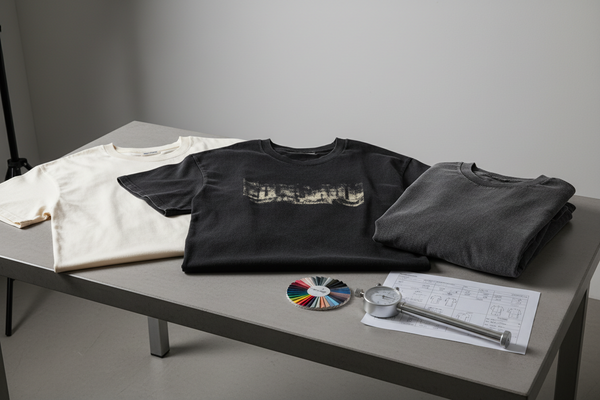
Creating a Pre-Production Physical Master Sample allows teams to perform destructive stretch and wash testing before bulk production. Approving a wash-tested master sample establishes a clear quality baseline for the entire production run.
The part that pays off most is viewing ink curing as an exact, manageable thermal science rather than an guesswork process. When sourcing teams, brand managers, and factory engineers align on precise curing profiles, the result is beautiful, high-performing apparel that builds long-term consumer trust.