Enterprise Apparel Vendor Selection-Atelier Sourcing
1. The Core Insight Driving Enterprise Apparel Sourcing
How do you choose a manufacturing partner capable of delivering tens of thousands of custom garments across multiple locations without sacrificing material feel or delivery speed? What actually determines vendor reliability in enterprise contracts isn't the shiny presentation deck — it's how consistently the supplier manages technical fabric parameters across high-volume production runs. In enterprise workwear and large-scale corporate merchandise programs, selecting a vendor requires evaluating raw material sourcing rigor, machine floor calibration, and operational transparency.
Building an enterprise apparel program demands moving past basic catalog shopping toward direct technical collaboration. When you order five thousand custom hoodies or ten thousand polo shirts, minor variations in fabric density or dye chemistry magnify across entire shipments. What you need is a supplier that understands how subtle adjustments in knitting machine tension affect long-term garment drape and wearability. Establishing clear technical requirements before issuing a Request for Proposal gives prospective suppliers an exact operational target.
Buyers often assume that choosing a vendor with the lowest per-unit quote automatically yields the best enterprise value. In practice, what actually determines true contract efficiency is how well the vendor controls material consistency, sample turnaround speed, and production throughput. A slightly higher initial unit cost from a factory using advanced quality monitoring systems routinely saves thousands of dollars in delayed freight charges and administrative revisions down the road.
During evaluation for a 10,000-unit corporate apparel rollout across regional hubs, an enterprise team compared two offshore manufacturing partners. The first factory offered a baseline quote that saved roughly $0.40 per garment but relied on manual fabric inspection tables. The second factory charged a modest premium while utilizing automated optical fabric scanners to maintain tight Fabric Weight Grammage Variance controls within a 2% window. The second vendor delivered the entire run three days ahead of schedule with zero line stoppages, demonstrating that technical precision drives true procurement efficiency.
I'd recommend establishing a clear fabric specification matrix early in your vendor selection process. Defining target yarn counts, surface finish expectations, and acceptable tolerance windows upfront eliminates subjective debates during final inspection. Let's look at how real-world enterprise teams navigate these vendor evaluation steps on the factory floor.
2. Lessons from the Field: Scaling Enterprise Vendor Partnerships
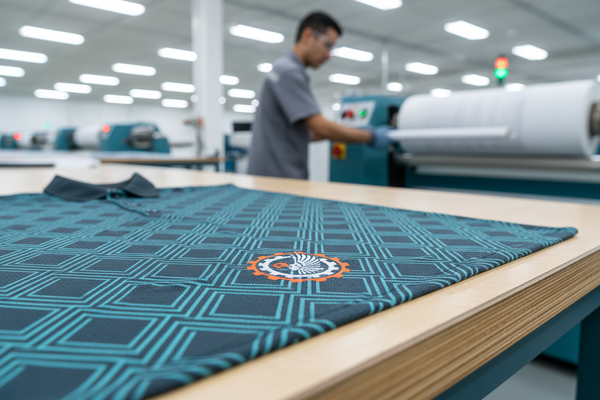
Walking the floor of an active apparel facility gives you an immediate sense of how a vendor handles production organization. During an evaluation visit for a national uniform program, seeing how raw cotton rolls were logged, stored, and acclimatized revealed exactly how much attention the management team paid to process control. A factory floor with automated material handling, clear batch labeling, and clean inspection stations indicates an enterprise-ready partner.
One team we worked with wanted to launch a multi-regional uniform line across four distribution hubs, requiring 8,000 decorated polo shirts delivered over a tight six-week window. During initial facility audits, the sourcing director noticed that the factory's cutting room calibrated its automated spreading tables every morning before starting new fabric rolls. This rigorous setup habit ensured that pattern panels retained exact grainline alignment across every single cut bundle.
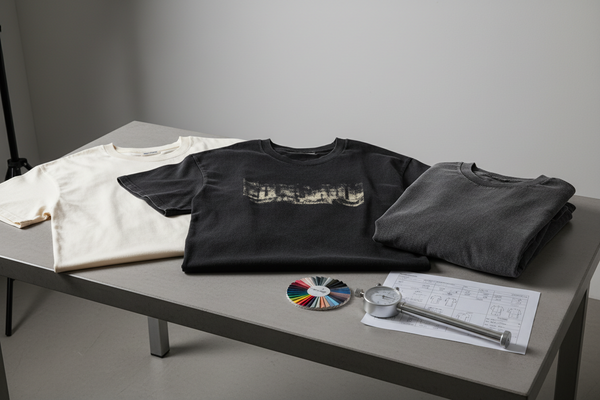
In our experience, establishing physical golden samples signed by both parties is the single best step you can take to lock in production harmony. During sampling for a similar program covering custom polo shirts, the brand team noticed subtle differences in collar ribbed stiffness between three sample iterations. By approving a Pre-Production Physical Master Sample and archiving identical reference garments at both the brand headquarters and the factory QA desk, the team created an undeniable visual and tactile standard for mass production.
Is a digital proof sufficient for approving a 5,000-unit enterprise run? Not if you want total color and texture accuracy. While 3D renders and digital tech packs streamline early pattern iterations, nothing replaces physically handling a fully assembled garment to evaluate seam stretch, button security, and fabric hand-feel.
The difference between smooth enterprise delivery and constant revision cycles comes down to locking in physical master reference standards before mass cutting starts. When both buyer and supplier agree on measurable, physical baselines, quality control checks become simple, objective verifications rather than guesswork. Let me share how advanced material specifications support this consistency.
3. Material Engineering and Fabric Technical Specifications
Translating corporate design guidelines into durable garments requires an understanding of textile engineering. When selecting materials for high-frequency corporate wear, raw fiber selection dictates how well the garment maintains its structure through routine washing. Specifying Ring-Spun Long-Staple Integrity ensures that yarns feature fewer loose fiber ends, resulting in a smooth surface that resists surface friction while providing soft comfort against the skin.
Buyers often assume that high synthetic content is necessary for long-term garment durability. In practice, combining ring-spun long-staple cotton with engineered polymer cross-linking provides equal resilience while preserving natural breathability and softness. This composite approach creates garments that feel comfortable during an eight-hour workday while retaining their crisp shape across months of active service.
Does 220 GSM fleece feel noticeably heavier than 180 GSM single jersey? Absolutely, and that weight difference changes both garment drape and heating comfort. For mid-layer corporate hoodies and sweatshirts, selecting a dense 300 to 320 GSM fleece provides substantial structure and warmth. For daily executive polos, a 190 to 210 GSM combed cotton piqué strikes the perfect balance between professional opacity and summer breathability.
When applying dark corporate logos or vivid graphics to synthetic performance fabrics, managing heat sensitivity is crucial. Specifying fabrics treated to mitigate Thermoplastic Dye Migration prevents disperse dyes from rising into applied screen printing inks or heat seal transfers during high-temperature curing. Partnering with a vendor that understands ink chemistry andSubstrate Polymer Cross-Linking guarantees that bright white logos remain crisp and unblemished after decoration.
I'd recommend opting for 200 to 220 GSM combed cotton blends for corporate polos, as this weight offers an ideal balance of opacity and structure. Requesting a Wet Crocking Friction Scale rating of 4.0 or higher on dark-dyed fabrics ensures color fastness during active daily wear. Let's look at how these material choices influence enterprise cost structures.
The part that pays off most in fabric specification is matching fiber staple length to the intended decoration process. Smooth, long-staple cotton yarns provide a flat canvas for fine-line screen printing and high-density embroidery, resulting in clean visual execution across every piece in your order.
4. Comprehensive Cost Structure and Unit Economics
Understanding how apparel factories calculate enterprise pricing empowers procurement teams to negotiate agreements that protect profitability while supporting fair supplier margins. Per-unit costs are driven by three main factors: raw material fabric consumption, assembly labor minutes, and decoration setup complexity. When buyers consolidate order volumes into larger production runs, factories achieve higher efficiency across cutting tables and sewing lines.
In enterprise contracts, tiered volume pricing rewards buyers for providing predictable seasonal forecasts. Ordering 2,500 units in a single continuous production run lowers per-unit fabric costs compared to placing five separate 500-unit orders scattered across the calendar year. A continuous run minimizes dye-lot preparation waste and allows sewing machine operators to build rhythm and speed on specific seam assemblies.
Factories see this pattern regularly: buyers who negotiate tier thresholds at 1,000 units achieve substantial cost savings that drop per-unit assembly expenses noticeably. Consolidating styles across departments—such as using the same core navy fabric for both store staff aprons and warehouse polo trims—maximizes raw material purchasing power and simplifies inventory management for the factory.
A common outcome when volume tiers are structured well is that per-unit embellishment fees drop by nearly a third as print operators run high-speed automatic presses without stopping for frequent screen changes. During a sourcing negotiation for a national hospitality chain requiring 12,000 custom aprons, consolidating three regional colorways into two core base fabrics reduced total fabric procurement costs by nearly $8,000 while maintaining brand distinction through custom neck-strap trims.
In most cases, the true financial advantage in enterprise apparel contracts is unlocked through tiered volume commitments and consolidated dye-lot runs. Aligning your purchasing schedule with your supplier's production calendar creates a winning formula where the factory secures reliable floor utilization and your brand receives competitive volume pricing. Let's review the formal checklist used to evaluate enterprise vendor readiness.
5. Enterprise Vendor Audit Checklist and Decision Matrix
Having a structured audit protocol streamlines prospective vendor evaluations, ensuring your team covers every operational criteria before signing formal supply agreements. An effective audit reviews machinery calibration logs, internal quality assurance procedures, social compliance certifications, and financial stability metrics.
The matrix below outlines key operational capabilities across four common enterprise vendor profiles:
| Vendor Profile Type | Ideal Order Volume | Core Technical Strength | Key Operational Trade-Off | Typical Production Lead Time |
|---|---|---|---|---|
| Fully Integrated Vertical Mill | 5,000 - 25,000+ units | Total yarn-to-garment quality control | Higher minimum order thresholds per colorway | 8 - 12 weeks |
| Specialized Regional Manufacturer | 1,000 - 5,000 units | Flexible assembly & rapid sampling turnaround | Relies on third-party dye houses for fabric finishing | 4 - 6 weeks |
| Agile Cut-and-Sew Studio | 250 - 1,000 units | Custom pattern development & complex trims | Higher per-unit assembly labor costs | 3 - 4 weeks |
| On-Demand Fulfillment Partner | 50 - 250 units | Zero inventory holding & rapid drop-shipping | Fixed garment blanks with limited custom styling | 1 - 2 weeks |
Should enterprise buyers require third-party facility audits for every vendor? In practice, yes, because an independent audit verifies machinery calibration and capacity limits. Tying contract sign-offs to an ISO 9001 quality management review or an equivalent third-party facility report ensures that your vendor maintains high operational standards day in and day out.
My advice to most buyers is to build a structured 5-point audit checklist covering raw material traceability, pre-production sampling, and in-line quality verification. Confirming that a vendor logs daily fabric weight checks, maintains needle break replacement protocols, and uses calibrated light boxes for shade matching guarantees that your enterprise orders receive professional care at every stage of assembly.
During a vendor selection audit for a national retail chain, a procurement team evaluated two offshore assembly plants competing for an 8,000-unit outerwear contract. While both facilities showcased modern computerized cutting tables, the winning vendor demonstrated a dedicated inline QA team that checked seam tension on every tenth garment coming off the line. That proactive quality step gave the buyer complete confidence that the factory could handle high-volume production without line delays.
What actually secures long-term enterprise vendor success is a transparent audit framework that rewards consistent manufacturing compliance. Establishing objective metrics and clear communication routines transforms vendor management from a series of transactional orders into a long-term strategic partnership. Let's synthesize these principles into a roadmap for ongoing success.
6. Building Sustainable, High-Performance Vendor Relationships
Mastering enterprise apparel vendor selection transforms quality control and logistics planning into reliable competitive advantages for your business. When you approach supplier selection with clear technical specifications, structured audit frameworks, and fair unit economics, you build a resilient supply chain that adapts effortlessly to market demands.
As your apparel program expands across new product categories or geographic regions, maintaining open communication with your vendor's management team ensures continuous process improvement. Sharing seasonal forecasts early, celebrating smooth production rollouts, and conducting collaborative annual reviews fosters mutual trust, encouraging factories to reserve their finest sewing lines and experienced technicians for your orders.
The difference between an average vendor and an elite supply partner lies in proactive communication, shared quality standards, and continuous operational alignment. By prioritizing Ring-Spun Long-Staple Integrity, enforcing strict Fabric Weight Grammage Variance thresholds, and requiring signed Pre-Production Physical Master Samples, you establish a quality benchmark that protects your brand identity year after year.
Selecting the right enterprise apparel vendor is an investment in your brand's future. By applying the practical guidelines, technical benchmarks, and evaluation frameworks outlined in this guide, you can move forward with complete confidence, knowing your custom apparel program is built on a solid foundation of manufacturing excellence.