Custom Hoodies for Streetwear Atelier Sourcing
1. Building a Streetwear Hoodie Line That Scales
Every successful streetwear drop relies on a garment that feels intentional the moment a customer picks it up. Weight, structure, and surface texture define how a hoodie hangs on the body and how cleanly artwork presents across the chest and back. When you are building a custom line from the ground up, moving past off-the-shelf blanks gives you total authority over every detail—from cuff ribbing density to shoulder drop angles. The goal is to craft a piece that stays structured, wears comfortably, and serves as an ideal canvas for graphic direction.
Achieving that level of execution starts with understanding how modern fleece is built. Streetwear aesthetics favor boxy silhouettes, clean shoulder drape, and self-standing hoods that keep their shape without collapsing. Getting these physical characteristics right requires aligning fabric construction with garment pattern design early in the planning stage. When fabric weight and structural geometry match your design vision, your production runs move smoothly through the factory line.
A brand team in Los Angeles wanted a heavy boxy fleece for their fall drop. By shifting to a three-end fleece construction, they achieved the exact structured drape they wanted while maintaining a plush interior feel for their 2,000-piece run. That adjustment gave their graphic artwork a flat surface to sit on while giving the final garment a hand-feel that stood out immediately at retail.
What actually determines how a streetwear hoodie drapes isn't just the overall fabric weight—it's how tightly the face yarns are bound to the interior loops. When you specify a 100% cotton outer face, you create a flat surface that resists distortion during printing while providing a firm exterior finish. Balancing this face layer with a soft interior loop yields a garment that feels substantial without feeling rigid.
2. On the Factory Floor: Watching Heavyweight Fleece Come to Life
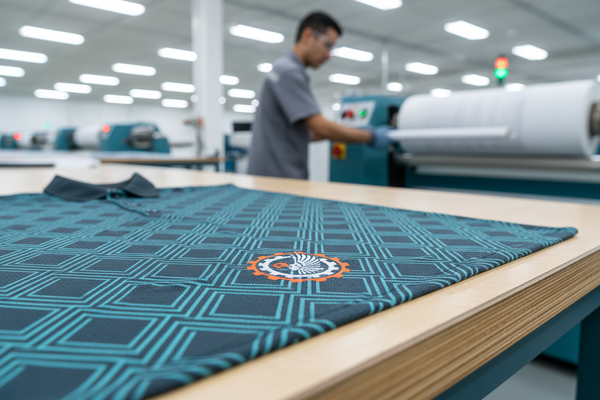
Walking through a specialized knitting mill reveals exactly how raw yarn transforms into high-density streetwear fabric. Circular knitting machines equipped with three-end feeding mechanisms run continuously, pulling face yarns, tie yarns, and backing yarns into unison. Seeing this equipment in action reinforces why fabric specification matters so much before cutting panels. Every adjustment on the knitting dial directly influences fabric density, surface smoothness, and eventual wash performance.
During a visit to a knitting facility in Guangdong, we observed technicians setting up circular knitting machines for heavy fleece. The operator adjusted machine tension to weave a 100% cotton face yarn over a soft polyester tie yarn, producing a stable face ideal for high-density printing. Watching the grey goods feed off the machines highlighted how much precision goes into stabilizing heavy fleece before it ever reaches a dye bath.
The manufacturing process relies on exact calibration at every stage. Once knitting is complete, the raw tubular fabric moves to the stenter frame, where heat setting and mechanical tension establish width and grain alignment. This step is critical for controlling longitudinal laundering skewing, ensuring that finished side seams remain perfectly straight after repeated wear and washing. Proper stentering stabilizes the underlying structure so that garment panels cut accurately according to your tech pack rules.
I'd recommend taking time to review fabric swatches in both unbrushed loopback and brushed fleece finishes during early sampling. Unbrushed loops offer a crisp, athletic interior feel with high breathability, while brushed interiors deliver classic plush warmth. Seeing both versions side-by-side on the factory table makes it much easier to match the fabric style to your brand's specific seasonal requirements.
Is 450 GSM necessary for a streetwear drop? Not in every climate. While heavy fleece creates that sought-after rigid posture, a 380 GSM or 420 GSM three-end fleece offers plenty of substance for year-round wear while keeping production and transit weights balanced. Matching GSM targets to regional customer expectations ensures your collection hits the sweet spot between heft and everyday comfort.
The part that pays off most during factory setup is establishing strict parameters for fleece loft compression rate. When interior fleece is brushed, fibers are raised to create volume. Higher loft creates a lush hand-feel, but managing compression ensures the fabric retains its plush cushion through finishing, packing, and transit. Setting clean compaction standards guarantees that garments arrive at your warehouse looking and feeling as substantial as your initial prototype samples.
3. Technical Specs Deep-Dive: Yarn, Density, and Fit Engineering
Engineering a luxury-grade streetwear hoodie requires looking closely at technical yarn specifications. The exterior surface of high-grade fleece relies on a ring-spun face yarn shell, which uses long-staple combed cotton fibers tightly twisted together. This creates a smooth exterior shield that resists surface fuzzing and provides a stable, uniform background for fine-detail screen printing, screen-printed transfers, and direct-to-garment ink applications.
Buyers often assume fabric weight alone creates a boxy drape. In practice, structural geometry and three-end fleece density dictate how the silhouette holds up. A two-end fleece at 400 GSM can feel overly soft and droop at the shoulders, whereas a three-end fleece structural geometry at the exact same weight holds firm lines along shoulder seams and side panels. The middle tie yarn acts as a hidden stabilizing core, giving the entire garment cleaner architectural form.
During sampling for a brand expanding into oversized fits, adjusting the stitch density file prevented puckering around heavy chest embroidery. The brand locked in their tech pack standards across 5 colorways without needing multiple print revisions. That small digitizing adjustment saved days of sampling time and yielded perfectly smooth chest panels across the entire production run.
To evaluate how different fabric weights and construction methods fit into your collection, consider this technical breakdown for streetwear hoodie production:
| Fabric Specification | Construction Type | Primary Application | Print & Art Suitability | Drape Profile |
|---|---|---|---|---|
| 380 GSM Cotton Blend | Three-End Fleece | Spring/Summer drops & layered looks | Screen print, DTG, light embroidery | Relaxed, flexible drape |
| 420 GSM Combed Cotton | Three-End Heavy Fleece | Core fall collection hoodies | High-density screen print, puff ink | Structured, boxy posture |
| 480 GSM Ring-Spun Cotton | Heavy Three-End Fleece | Cold-weather statement pieces | Heavy embroidery, applique patches | Rigid, high-volume silhouette |
| 520 GSM Unbrushed Terry | Heavy Loopback Terry | Luxury minimalist streetwear | Clean tonal embroidery, leather patches | Architectural, ultra-firm structure |
In our experience, a 100% cotton face yarn yields cleaner artwork regardless of interior fiber blend. Even when using a cotton-polyester blend on internal loop structures for added strength or reduced weight, keeping the exterior face pure cotton prevents heat-induced dye migration during flash curing in screen printing. This structural setup ensures bright whites and rich artwork tones across all dark fleece colorways.
Can you screen print over three-end fleece smoothly? Absolutely, if the face yarn is tight. Because the top yarn layer is knitted independently from the backing loops, it creates a flat surface free from interior show-through. This yields crisp print lines, soft ink hand-feel, and uniform color coverage across large graphic prints on front and back panels.
Addressing perimeter edge puckering distortion around embroidered artwork comes down to digitizing parameters. When applying heavy stitch designs to thick fleece, adjusting stitch pull-compensation file optimization allows the thread tension to balance against fabric pile density. This technical step keeps chest and sleeve embroideries lying completely flat without pulling or gathering the surrounding fleece panel.
4. Confidence Builders: Testing, Sampling, and Print Compatibility
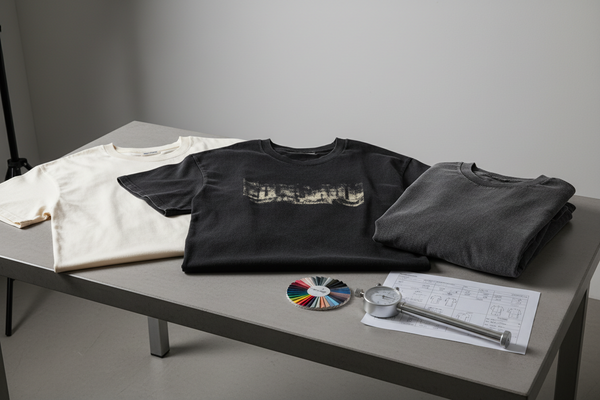
Building confidence in bulk production requires putting prototype samples through rigorous real-world testing before approving final manufacturing runs. Testing fabric performance under standard laundry and wear conditions ensures that the dimensions on your spec sheet match what your customers experience over time. Lab-testing fabric swatches for dimensional stability, color fastness, and torque resilience protects your brand reputation long before garments go on sale.
One team we worked with wanted to verify wash performance across custom dyed blanks. By testing fabric samples before cutting, they confirmed that pre-shrunk fleece kept dimensional stability within a tight 2% tolerance after household laundering. That upfront verification gave them full confidence to place a 3,000-piece bulk order without worrying about fit changes after retail delivery.
In most cases, the difference between an average hoodie and an exceptional streetwear piece lies in neck ribbing and cuff construction. Specifying 2x2 heavy ribbing with elastane content ensures cuffs and waistbands retain recovery tension without stretching out during daily wear. Matching ribbing GSM to body fabric weight maintains structural balance across all panel joins and prevents drooping at the waistline.
Buyers often assume dense embroidery requires stiff backings. In practice, file density adjustment and pull-compensation prevent puckering while keeping the hand soft. By reducing underlay stitch density slightly and utilizing flexible cutaway backing materials, factories produce clean, sharp embroidery badges that flex comfortably with the heavy fleece body fabric.
My advice to most buyers is to establish yarn specifications early. Requesting combed cotton ring-spun yarns and verifying fabric torque parameters during sampling prevents long-term garment twist. When side seams hold true and fabric surfaces remain smooth, your hoodies look pristine on store displays and maintain their clean lines through years of wear.
5. The Streetwear Sourcing Checklist: From Tech Pack to Bulk Production
Managing a custom hoodie production cycle demands a clear, organized workflow from initial sketch to final delivery. Having an actionable checklist ensures that critical specifications—such as hood lining weight, pocket bar-tacking, seam finishing, and neck tape application—are fully documented and checked before bulk fabric cutting begins.
A streetwear founder scaling production from local blanks to custom cut-and-sew wanted consistent hood structure. Working closely with the pattern maker on a double-layer hood construction gave the garments a self-standing structure that increased retail sell-through across 1,500 units. That simple pattern refinement turned an ordinary design into a standout hero piece for their winter campaign.
To streamline your production preparation, utilize this operational checklist when reviewing tech packs and prototype samples with your factory partners:
- Fabric & Yarn Specification: Confirm three-end fleece geometry with 100% cotton face yarn shell and targeted GSM weight.
- Dimensional Stability Standards: Verify pre-shrunk fabric processing to keep shrinkage under 3% in both length and width.
- Hood Pattern Engineering: Ensure double-layer hood construction uses matching weight fabric for consistent upright posture.
- Reinforced Pocket Anchoring: Check for bar-tack stitching at high-stress corners on front kangaroo pockets.
- Ribbing Recovery Integration: Confirm 2x2 elastane-reinforced ribbing on cuffs and hem for long-lasting stretch recovery.
- Seam Coverstitching: Specify double-needle coverstitching along necklines, drop shoulders, and armhole seams.
- Digitizing Optimization: Test embroidery files with pull-compensation settings calibrated for heavy fleece thickness.
- Color Fastness Protocols: Lab-test dye fastness against light, rubbing, and wash cycles before approving bulk dye lots.
Does a heavy fleece increase shipping costs significantly? Slightly, but the retail margin covers it. Heavyweight garments take up more volumetric space and add gross weight to sea or air shipments, but the added perceived value and premium retail pricing of heavy streetwear hoodies far outweigh the incremental freight expense.
One thing that consistently pays off is specifying flatlock or coverstitch detailing across shoulder joins and sleeve seams. Coverstitching adds subtle technical texture while reinforcing structural joins against stress. This construction detail keeps long seams smooth and flat, preventing seam distortion when garments are folded or packed tightly for shipment.
6. Launching Your Heavyweight Hoodie Collection
Launching a standout custom hoodie collection represents a key milestone for any streetwear brand. By taking control of fabric selection, yarn specifications, and structural garment patterns, you establish a unique product identity that sets your brand apart in a competitive marketplace. Structured three-end fleece, crisp ring-spun cotton surfaces, and reinforced assembly details turn routine apparel releases into memorable product drops.
A boutique label preparing a holiday collection tested a 480 GSM fleece shell. The crisp drape allowed them to price their hoodies at top-tier retail levels, clearing their inventory within three weeks. That campaign demonstrated how investing in top-grade fabric foundations directly drives customer enthusiasm and rapid sell-through performance.
When you align clear technical expectations with experienced factory partners, production runs move forward with clarity and predictability. Every choice—from setting yarn composition to refining embroidery density files—contributes to a final garment that reflects your brand's commitment to quality. Focus on solid technical fundamentals, maintain open communication with your makers, and build a hoodie collection that your community will reach for season after season.