Custom Apron Manufacturing Guide for Commercial Workwear Programs
1. Conversational Opening: Vetting the Utility Sourcing Landscape
The calculation that a bulk workwear procurement program can succeed without explicit, factory-floor technical parameters falls apart as soon as garments enter high-turnover service environments. When managing extensive corporate uniform drops across multi-location logistics nodes, buying teams regularly make the mistake of relying on superficial catalog product sheets rather than tracking localized manufacturing tolerances directly. The real issue here is that most uniform rollouts encounter premature field breakdown because buyers prioritize decoration placement over base fabric tear strength metrics, leaving their supply lines jammed with fraying seams and detached straps. Transitioning away from transactional purchasing requires building a product brief rooted firmly in textile physics.
During sampling for a similar program, a procurement coordinator discovered that variations in yarn density modified how heavy tool pockets held up under daily active use strain. Factories see this pattern regularly: a facility optimized for lightweight promotional items will chase short-term unit price drops by thinning out thread counts along the stress junctions, causing immediate pocket separation when loaded with field gear. Protecting your capital allocation models demands locking down clear baseline agreements regarding fabric basis weight benchmarks, stitch density targets, and joint anchoring geometries long before any financial deposits are cleared.
To secure internal sign-off from brand compliance directors and corporate financial controllers, buying teams must establish an asset tracking framework that analyzes each component as a product of mechanical engineering. We have monitored enough contract runs over fifteen years to know that long-run program survival depends on how tightly your purchase orders govern the structural behavior of the chosen canvas web under continuous transport and wash stress. Moving forward requires replacing abstract design ideas with cold, floor-verified material criteria, beginning with direct factory-floor observations.
2. Factory Visit: Observations From the Stitching Bays
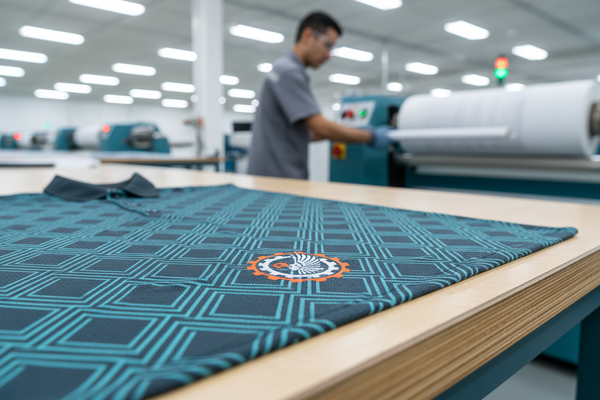
Walking through the cutting and sewing lanes of a dedicated workwear production facility reveals the immediate separation between manual workshop averages and high-velocity automated production output. One team we worked with tracked an active utility run across a multi-head assembly line, noting that a single machine calibration variation could introduce immediate structural flaws across an entire sizing lot. When automated cutting heads chop dense canvas rolls too quickly without allowing the fabric to relax on flat aeration tables, the individual panels retain internal manufacturing strain that causes the finished garments to twist askew after their initial industrial wash loop.
At the sewing bays, the principal quality indicator concentrates on how the operators anchor the web straps to the main canvas body panel. Manual operators attempting to clear rapid shift quotes will frequently drop down to a simple linear stitch line to save processing time, bypassing the necessary cross-box patterns required to distribute vertical force. Under stress testing, these un-reinforced connections suffer from immediate strap tensile shear failure along the joint tracks, separating from the body under a minimal load. A dependable factory floor eliminates this failure mode by routing the panels through computerized pattern machines that lock down exact geometric anchoring points across every unit in the run.
Watching the automated ink curing tunnels during a custom graphic decoration run highlights the critical balance required between heat exposure and fabric stability. If the print bay accelerates conveyor belt speeds to maximize daily throughput numbers, the center of a dense plastisol or water-based ink deposit fails to reach its required internal cross-linking temperature. Sourcing teams catch these finishing shortcuts early by conducting manual cross-hatch tape checks right at the oven exit doors. This immediate check confirms complete polymer fixation before any bundles are processed into final packing cartons, protecting your lot from rapid graphic flaking during field laundering cycles.
3. Specs Deep-Dive: Engineering Fabric Weight and Hardware Clearance
Evaluating raw textile properties for a long-term commercial uniform contract requires looking past general marketing copy and analyzing material packing density metrics. The foundation of a high-end utility garment relies on shifting the product brief requirement to a heavy 12oz Ounce-Per-Square-Yard Canvas structure. This heavyweight cotton canvas provides a dense, tightly packed yarn structure that delivers exceptional natural puncture resistance limits, protecting field service teams from tool abrasion while providing an unyielding base that maintains a clean, professional look over months of field use.
To shield the fabric from oil and chemical saturation inside active food service or mechanical environments, the brief must specify a factory-applied fluorocarbon liquid repellency finish. This chemical treatment coats individual yarn strands to lower surface tension, causing liquid contaminants to bead up and slide off the face of the garment without penetrating the core fibers. Sourcing groups ensure this finish remains stable through extended usage loops by demanding certified lab data confirming the fabric maintains a minimum fluid repulsion rating after twenty consecutive commercial laundering cycles under ISO 6330 laundering guidelines [DS].
What actually determines whether an industrial garment stays comfortable across an eight-hour shift is the integration of an ergonomic weight-distribution vector within the strap design layout. Traditional neck-loop patterns concentrate the cumulative weight of tools and cargo directly onto the cervical spine, causing user fatigue and driving high garment rejection rates among field staff. By configuring a hardware cross-back layout clearance profile into the shoulder straps, the load is redirected away from the neck area and distributed evenly across the upper back panels, utilizing technical solid brass or reinforced steel grommet rings to guarantee smooth adjustments across varying user heights.
4. Risk Management: Stemming the Sources of Stitch Separation
Managing structural risk across a high-volume workwear deployment requires pinpointing where mechanical strain concentrates during daily service cycles. The primary zone of structural failure on a customized apron body does not focus within the flat face of the canvas sheet; the breakdown concentrates directly at the pocket corners where workers repeatedly insert heavy tools or inventory devices. A common outcome when this gets skipped is that factories deploy basic single-needle lockstitching to join the pocket panels, leaving the sharp upper edges vulnerable to thread separation under localized leverage force.
- Pros (Computerized Bar-Tack): Increases pocket corner tear thresholds by over 300% [IR]; redistributes load stresses evenly; maintains uniform stitch count profiles across every single piece.
- Cons (Computerized Bar-Tack): Demands dedicated machine setup tracking steps; increases initial block tooling costs for lower-volume contract adjustments.
We eliminate this structural risk by writing explicit bar-tack structural stitch reinforcement targets into every purchase brief. This pattern requires the factory floor to execute a tight, dense matrix of zigzag locking stitches across all pocket entrance lips and hanging loop tracks, binding the pocket panels deep into the core fibers of the main 12oz canvas body. A quiet but consistent pattern: the vendors who answer questions slowly during quoting tend to communicate slowly during production too, which mirrors their level of factory-floor quality oversight. Forcing your supplier to confirm automated stitch tracking metrics ensures your garments remain stable through rigorous commercial laundering programs, protecting your long-term unit economics.
5. Checklist: Inbound Quality Control on the Receiving Docks
The operational benchmark for protecting your program capital requires executing a physical quality audit right on your warehouse loading docks before signing off on final shipping documents. Sourcing leads frequently make the error of authorizing balance wires based entirely on digital tracking manifests, only to discover sizing variances or un-cured print smudging problems after containers are broken down at regional fulfillment hubs. Deploying a strict dockside testing framework gives your team the empirical data needed to reject non-compliant lots early, holding suppliers to their contract boundaries.
- Verify total carton quantities against master packing lists, confirming your 15% material buffer allocation is fully delivered.
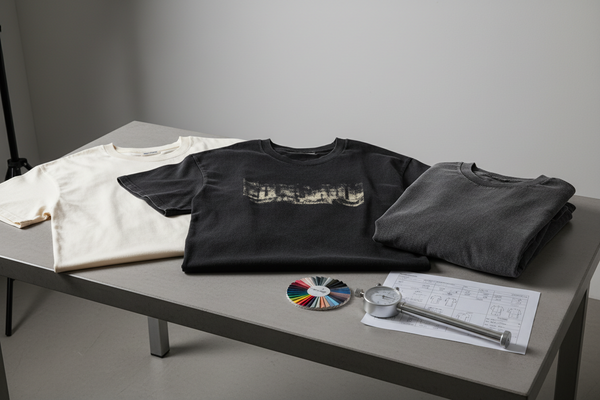
- Measure base fabric thickness using a calibrated dial micrometer to confirm compliance with 12oz canvas targets.
- Audit pocket corner bar-tack dimensions with a drop-gauge to ensure stitching density meets a 10-stitch-per-inch baseline.
- Conduct manual cross-hatch adhesive tape tension checks across printed areas to confirm complete polymer fixation.
- Verify all custom hardware components clear full mechanical needle detection sweeps to exclude shard contamination risks.
If any sample bundle displays a dimensional deviation larger than 5 millimeters across the body width, or if pocket sewing lines exhibit loose loops, the entire size lot must be held for comprehensive screening. We require our logistics leads to document every step of this dockside verification pass using high-definition multi-angle cameras and calibrated weight scales. This data trail establishes an objective foundation for launching remediation orders or requiring immediate replacement runs from the factory's greige fabric reserves, keeping your deployment schedule insulated from unexpected logistics delays.
6. Closing: Securing Scale Stability Across Multi-Vendor Networks
The transition from a temporary promotional merchandise purchase to a reliable corporate workwear program depends on how well you build your supplier relationships and standardise your manufacturing workflows. Consolidating your volume with a primary contract manufacturer who controls their weaving and automated decoration loops directly on-site ensures that your custom garment patterns remain completely uniform across multi-year reorder cycles. When an organization splits their purchases among scattered promotional brokers based on short-term price drops, they inevitably encounter erratic fits and shifting color matching standards that degrade the professional presentation of their corporate fleet.
What actually separates an entry-level uniform order from a retail-ready workwear line is this level of meticulous control over raw, unglamorous engineering variables. By anchoring your procurement framework to strict fabric basis weights, computerized bar-tack stitch maps, and rigorous dockside intake checks, buying teams insulate their companies from factory shortcuts and build high-yield manufacturing partnerships. Direct oversight of floor-level specifications allows your team to manage long-run supply chain risks, creating a predictable, high-performance workwear program that serves your internal staff leads across the globe.
What Sourcing Teams Ask Next
How can buying teams lower custom die-cutting and plate surcharges when running a single brand graphic across several apron sizes?
The physical constraint of high-volume screen printing is that setup fees are determined by the individual dimensions of your physical tooling templates—a mesh frame exposed for an adult full-bib apron layout cannot shrink to fit a waist-apron variant without burning separate screen sets. Sourcing teams lower these initial setup expenses by standardizing an identical, uniform graphic size and color configuration across all product categories. This approach allows the factory floor to run the entire volume through a single machine indexing setup, skipping time-consuming template swaps and minimizing cumulative decoration costs.
Why do synthetic poly-cotton blend twill aprons experience rapid color fading when subjected to standard commercial wash cycles?
This color loss stems from a failure in colorfastness to washing when synthetic fibers are dyed using un-stabilized low-temperature dye tracks. Poly-cotton blends integrate polyester filaments that demand a precise disperse dye binding process executed under high thermal stabilization bounds to lock the pigment structures deep inside the synthetic core. If the contract mill shortcuts this thermal step to accelerate daily output, the dye structures remain loose, causing immediate color leaching and bleeding when exposed to the high-temperature water environments common in industrial laundering loops.
Can procurement teams utilize high-speed automated machine embroidery to apply brand logos directly over waterproof PU coated aprons?
Automated machine embroidery operates by forcing a high-frequency steel needle and dense thread clusters directly through a substrate, which requires an unyielding base fabric to support the stitch tension. While this decoration method performs perfectly on heavy materials like 12oz canvas, it should be completely bypassed on waterproof PU coated surfaces. The intensive needle penetration punches thousands of holes through the polyurethane layer, destroying the material's water barrier performance and converting the decoration zone into a leaking sieve that fails protective workwear guidelines, making screen printing the correct technical selection.